To create beautiful tree landscaping in your yard, start by choosing the right tree species for your climate. Consider planting striking specimen trees as focal points and layering different heights for depth. Incorporate smaller trees alongside perennials for a vibrant garden bed and use dense trees for privacy and noise reduction. Seasonal care is also key to maintaining your trees’ health. There’s much more to explore about enhancing your landscape’s beauty and functionality.
Key Takeaways
- Select striking specimen trees like oak or weeping cherry as focal points to enhance visibility and beauty in your yard.
- Create layered landscapes by mixing tree heights and shapes, placing tall trees at the back and small ones at the front for depth.
- Incorporate trees into garden beds alongside perennials and shrubs for contrasting textures and colors, ensuring they have adequate growing space.
- Position tall, dense trees along property lines for privacy and noise reduction, utilizing evergreens for year-round coverage.
- Regularly maintain trees with seasonal care, including proper watering, pruning, and mulch application to keep your landscape vibrant and healthy.
Choosing the Right Tree Species for Your Climate
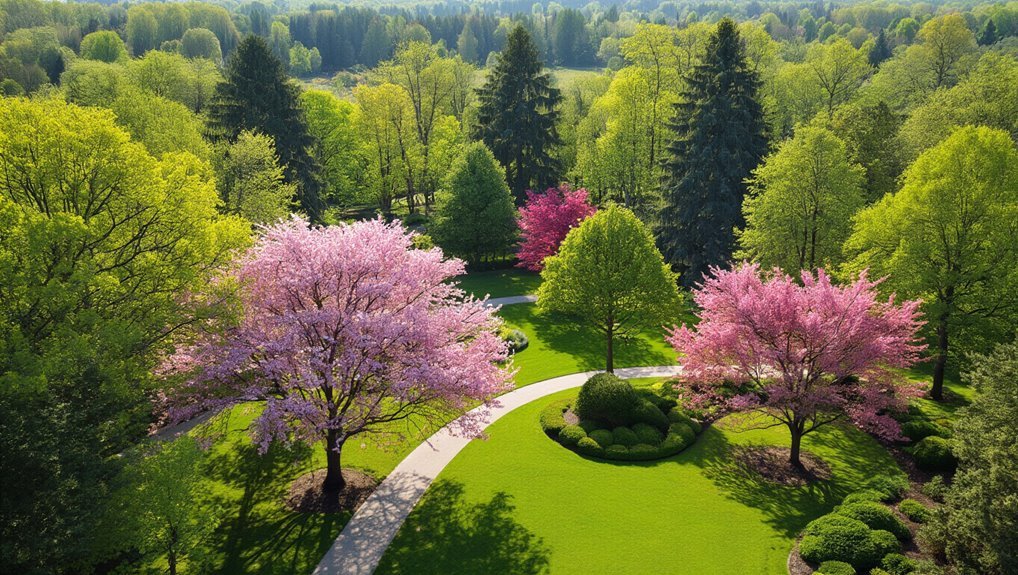
When you’re planning your yard, choosing the right tree species for your climate is crucial, as it ensures your landscape thrives for years to come.
Begin by researching your USDA Plant Hardiness Zone, which helps you identify trees that can withstand your local temperatures. Consider factors like rainfall, soil type, and sunlight availability, as these elements influence a tree’s growth and health. Choosing the right trees lays the foundation for a healthy landscape, but using organic mulching materials like straw around your trees can help regulate soil temperature and retain moisture.
Native species often adapt better to local conditions and require less maintenance. Additionally, think about the tree’s mature size and shape, so it fits well in your space without crowding other plants.
For optimal tree health and moisture retention, be sure to use mulch in your garden, as it provides numerous benefits for both the soil and your plants.
Creating a Focal Point With Specimen Trees
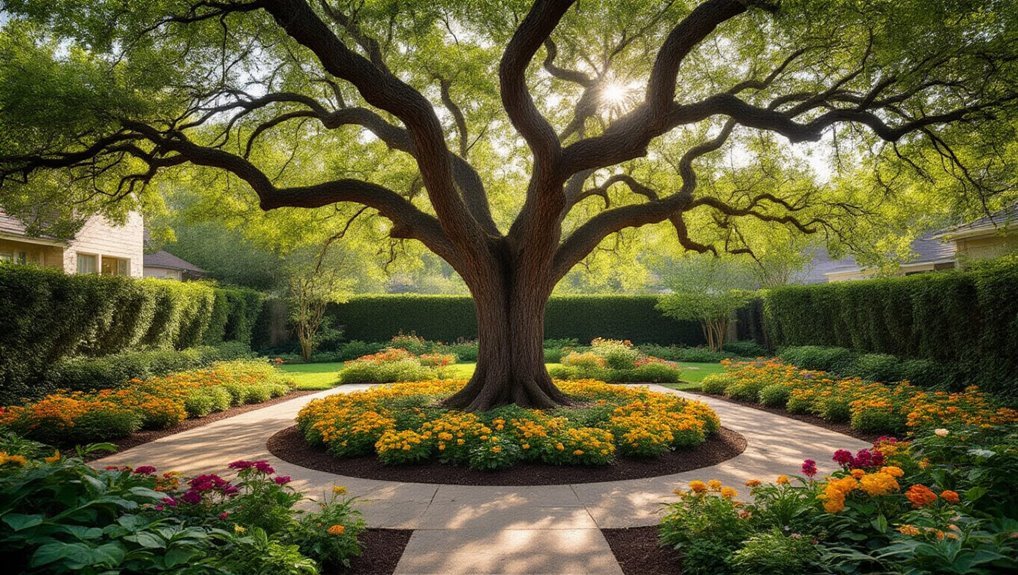
A striking specimen tree can transform your yard into an eye-catching landscape.
Whether it’s a majestic oak, a vibrant red maple, or an elegant weeping cherry, choosing the right tree as a focal point elevates your outdoor space. Incorporating garden arches nearby can beautifully frame your specimen tree and create graceful transitions in your landscape.
Position your specimen tree where it can be easily seen from windows, patios, or pathways.
Consider complementary elements, like a stone bench or decorative boulders, to enhance its presence.
Pay attention to the tree’s shape and color, as these features will draw the eye and create interest throughout the seasons.
Remember to maintain enough space around your specimen tree to showcase its beauty without overcrowding.
For an added touch, place your specimen tree in proximity to beautiful plant pots to further elevate your space with coordinated garden accents.
With thoughtful placement, your chosen tree can become the stunning centerpiece of your yard.
Layering Trees for Depth and Dimension
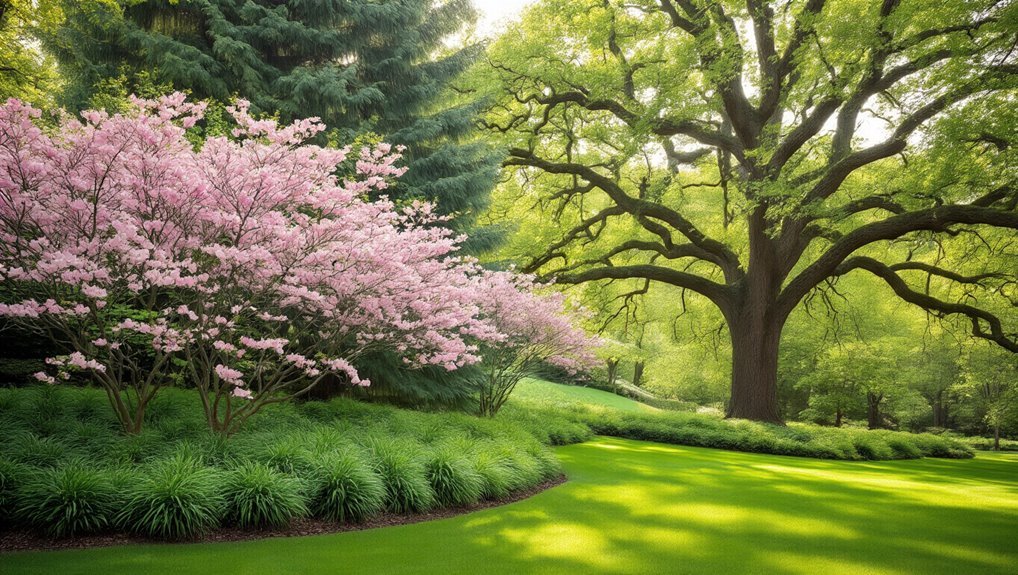
To create a visually engaging landscape, layering trees is essential for adding depth and dimension to your yard. By mixing different heights, shapes, and colors, you can enhance your outdoor space dramatically. Start with taller trees in the back, followed by medium-sized ones, and finish with smaller varieties in the front. This arrangement not only creates a natural look but also allows each tree to shine. For gardens with climbing plants, quality trellis netting can provide additional vertical structure and support for healthy growth.
Here’s a simple guide to help you layer effectively:
| Tree Type | Height Range |
|---|---|
| Tall Trees | 30+ feet |
| Medium Trees | 15-30 feet |
| Small Trees | 5-15 feet |
| Shrubs | Under 5 feet |
Implementing this strategy will transform your yard into a lush, inviting retreat. For even more visual interest and vertical appeal, consider adding beautiful trellises to complement your tree landscaping and support climbing plants.
Incorporating Trees Into Garden Beds and Borders

Layering trees not only adds depth to your landscape but also offers opportunities to integrate them into garden beds and borders.
Consider planting smaller trees, like Japanese maples or flowering dogwoods, alongside perennials and shrubs. This creates a visually appealing contrast while providing a natural backdrop. When shaping or maintaining your trees, using pruning shears ensures clean cuts and promotes healthy growth.
Use trees to frame your garden beds, enhancing the overall design and drawing the eye toward focal points. You can also mix different tree types, playing with varying heights, colors, and textures.
Just ensure the trees have enough space to grow without overshadowing your plants. Adding mulch around the base of the trees can help retain moisture and suppress weeds, making your garden beds look tidy and well-maintained while benefiting all the plants involved. For the best results when planting or maintaining around trees, consider using the perfect garden trowel to make digging and transplanting easier and more precise.
Using Trees for Privacy and Noise Reduction
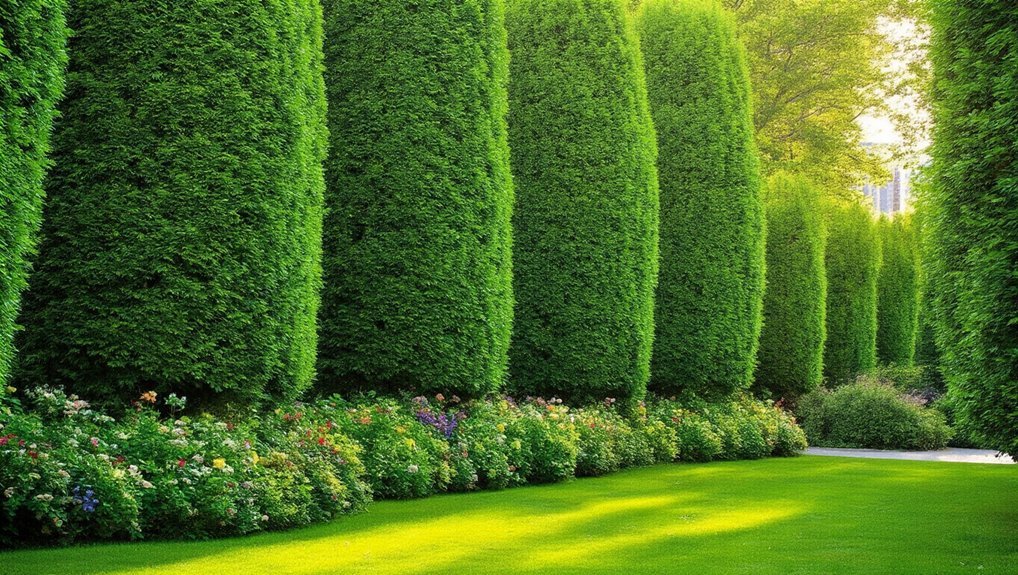
Creating a serene outdoor space often involves the strategic use of trees for privacy and noise reduction. Position tall, dense trees along property lines to form a natural barrier that shields you from prying eyes and unwanted noise.
Consider evergreens, like arborvitae or pines, which provide year-round coverage. Planting a mix of deciduous trees can also enhance your landscape while offering seasonal beauty. For the best results, try combining trees with raised garden beds to elevate both aesthetics and plant health in your yard.
For added impact, group trees together to create a lush, thick screen. You can also incorporate smaller trees or shrubs at the base to further obscure views and dampen sounds.
For even greater protection and support, consider using garden netting to safeguard young trees and plants while enhancing the overall health and appearance of your landscape.
Artistic Tree Pruning Techniques
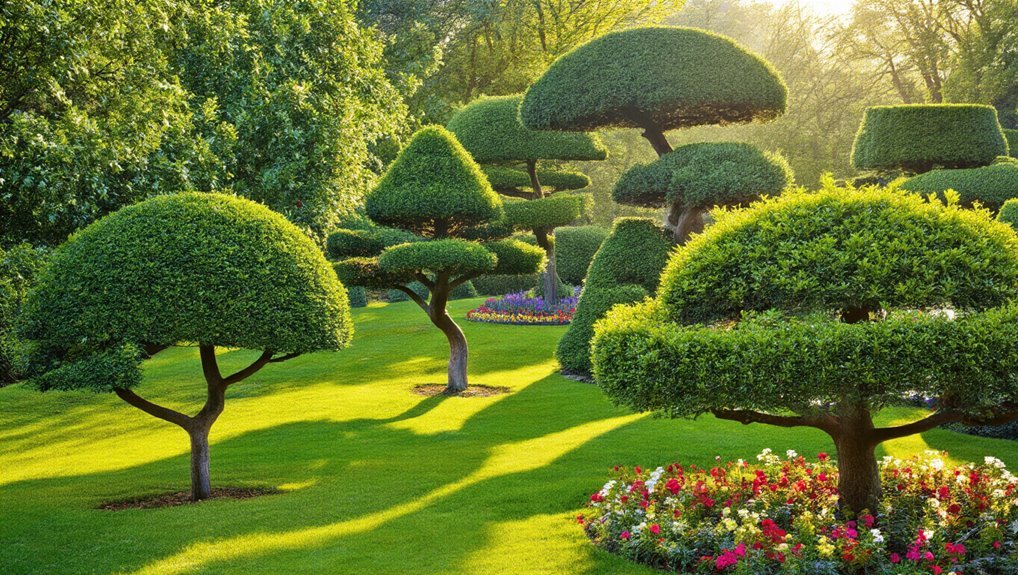
While many homeowners focus on the basics of tree care, artistic tree pruning techniques can transform your landscape into a work of art. By employing various pruning methods, you can enhance the natural beauty of your trees while promoting their health. For optimal results, it’s important to use gardening hand tools sets that are specifically designed for precision pruning and ease of use. Here are some techniques to consider:
| Technique | Description | Best For |
|---|---|---|
| Crown Thinning | Removing select branches to allow light through | Overcrowded trees |
| Espalier | Training branches to grow flat against a wall | Small spaces |
| Topiary | Shaping trees into decorative forms | Unique focal points |
| Pollarding | Cutting back branches to encourage new growth | Creating a canopy |
Using these techniques, you’ll not only improve your trees’ aesthetics but also create an eye-catching landscape. For best results, pair your pruning with garden harvesting tools designed for precision and comfort.
Seasonal Considerations for Tree Landscaping
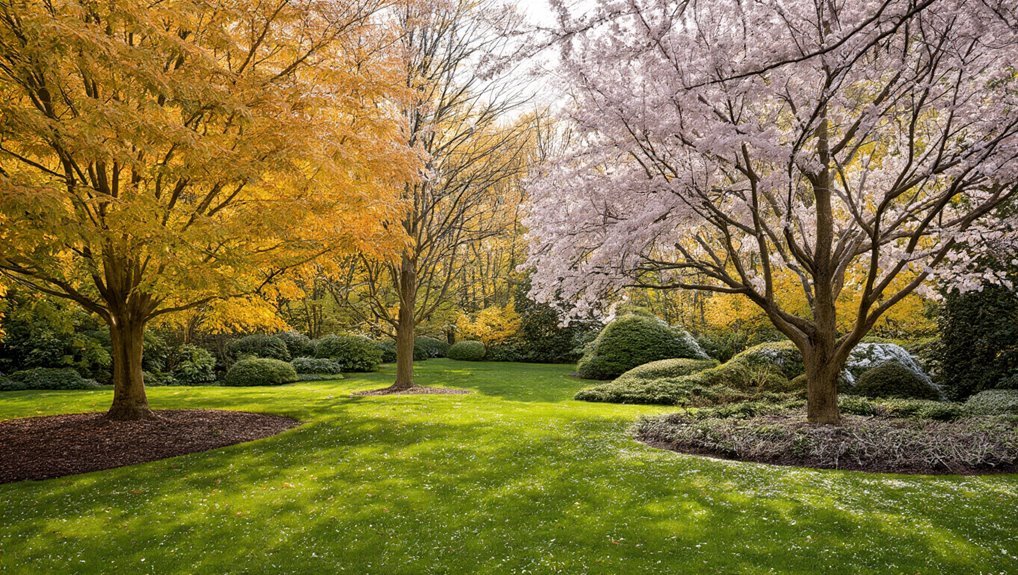
As you plan your tree landscaping, it’s crucial to consider the seasons and how they affect your trees’ health and appearance.
In spring, focus on planting and nurturing young trees, as they thrive in the warmer weather. Incorporating outdoor composting systems during this time can significantly enhance soil fertility and support healthy root development.
Summer requires regular watering and mulching to retain moisture and protect roots from heat.
Fall is the ideal time for pruning; it helps your trees prepare for winter and encourages healthy growth in spring.
During winter, you should inspect your trees for damage and ensure proper snow load management to prevent breakage.
By understanding each season’s unique needs, you can create a vibrant, thriving landscape that enhances your yard’s beauty year-round.
Prioritizing seasonal care leads to healthier trees and a stunning outdoor space.
For gardeners looking to boost their soil quality and tree health, using compost bins can provide nutrient-rich compost that supports robust growth throughout the year.
Frequently Asked Questions
How Do I Maintain the Health of My Trees?
To maintain your trees’ health, water them regularly, check for pests, and prune dead branches. Mulching around the base helps retain moisture and provides nutrients. Ensure they receive adequate sunlight and avoid damaging their roots.
When Is the Best Time to Plant Trees?
Think of planting trees like starting a new friendship. The best time is during early spring or fall when temperatures are mild. You’ll give your trees a solid chance to establish roots before harsher weather arrives.
Can Trees Improve Property Value?
Yes, trees can significantly improve your property value. They enhance curb appeal, create shade, and provide privacy. Investing in well-placed trees not only beautifies your yard but also attracts potential buyers and increases market interest.
What Are the Best Trees for Small Yards?
If you’re considering a small yard, try planting a Japanese maple. Its stunning foliage and compact size won’t overwhelm your space. You’ll create a beautiful focal point while enjoying shade and seasonal color.
How Do I Choose Trees for Wildlife Attraction?
To choose trees for wildlife attraction, consider native species that provide food and shelter. You’ll want to select varieties that produce berries or nuts, and ensure a mix of heights to create diverse habitats.
Conclusion
As you embark on your tree landscaping journey, remember that each tree is a brushstroke on the canvas of your yard, creating a masterpiece that changes with the seasons. By choosing the right species and arranging them thoughtfully, you can craft a sanctuary reminiscent of the serene groves in a Monet painting. Embrace the beauty and tranquility trees bring, and watch your outdoor space transform into a living work of art that invites inspiration and peace.