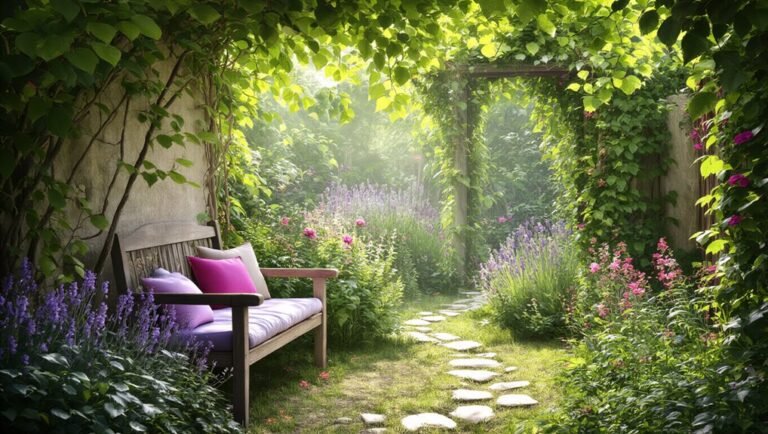
If you’re looking to add stunning purple flowers to your garden, consider lavender for its fragrance and elegance. Purple coneflowers attract pollinators while blooming all summer long. For vertical interest, try clematis, climbing high with vibrant blooms. Alliums offer bold, architectural charm, while bellflowers make delightful ground cover. These choices will not only enhance your garden’s color but also invite beneficial creatures in. Discover more about these beautiful blooms and how they can elevate your outdoor space.
Key Takeaways
- Lavender offers elegance and fragrance while thriving in sunny spots with well-drained soil, requiring minimal maintenance.
- Purple Coneflower attracts pollinators and provides continuous blooms from early summer to fall, ideal for vibrant gardens.
- Clematis features stunning climbing flowers in various purple shades, perfect for trellises and enhancing outdoor spaces.
- Allium boasts bold, architectural blooms and adds visual interest, while attracting pollinators and maintaining beauty with its seed heads.
- Bellflower serves as an enchanting ground cover, producing vibrant purple blooms and thriving in sun or partial shade, attracting beneficial insects.
Lavender: The Classic Purple Perennial
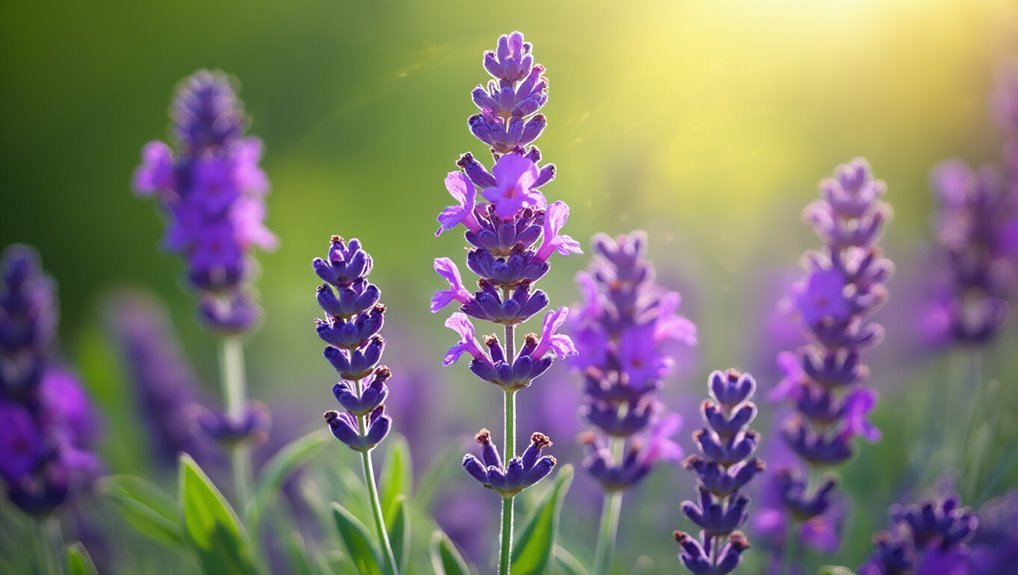
If you’re looking to add a touch of elegance and fragrance to your garden, lavender is the perfect choice. This classic purple perennial not only enhances your landscape but also brings a soothing aroma that can transform your outdoor space.
Lavender thrives in well-drained soil and loves sunny spots, making it easy to grow in most gardens. For those interested in unique culinary experiences, you can even grow Edible Flower Seeds like lavender for both beauty and taste in your garden. With its stunning purple blooms, it attracts beneficial insects and adds visual interest throughout the growing season.
Plus, it’s drought-resistant, which means less maintenance for you! You can use lavender in borders, containers, or even as a hedge.
Harvesting its flowers for sachets or culinary uses is an added bonus. Embrace the charm of lavender and elevate your garden effortlessly! In addition to its visual appeal, lavender is known for being one of the insect repellent plants that can help keep pests away from your garden naturally.
Purple Coneflower: A Pollinator’s Paradise
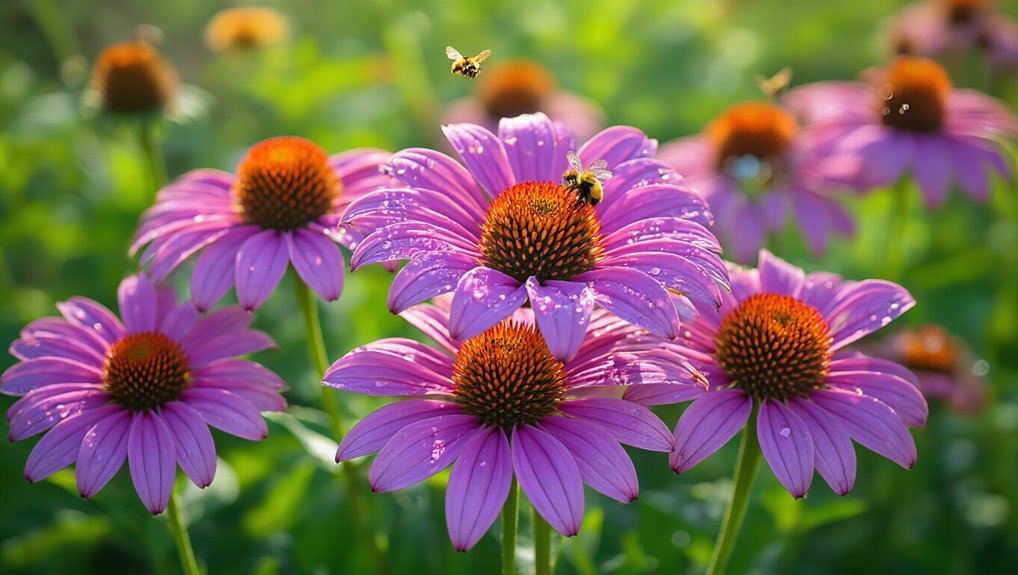
The purple coneflower, with its striking petals and prominent seed cone, is a must-have for any garden looking to attract pollinators.
This hardy perennial thrives in full sun and well-drained soil, making it an easy addition to your landscape. Its vibrant blooms draw in bees, butterflies, and hummingbirds, creating a lively atmosphere in your garden. Adding decorative birdhouses for gardens can further enhance your outdoor space and provide shelter for feathered friends.
You’ll love how these flowers bloom from early summer to fall, providing a continuous source of nectar. Plus, their seed heads offer food for birds in the winter.
Plant them in clusters for a stunning display, and you’ll soon find your garden buzzing with life. Don’t miss out on this essential flower that combines beauty and biodiversity!
For those wanting to support birds year-round, consider pairing your garden with essential bird feeders to create a true backyard sanctuary.
Clematis: Climbing Beauty in Shades of Purple
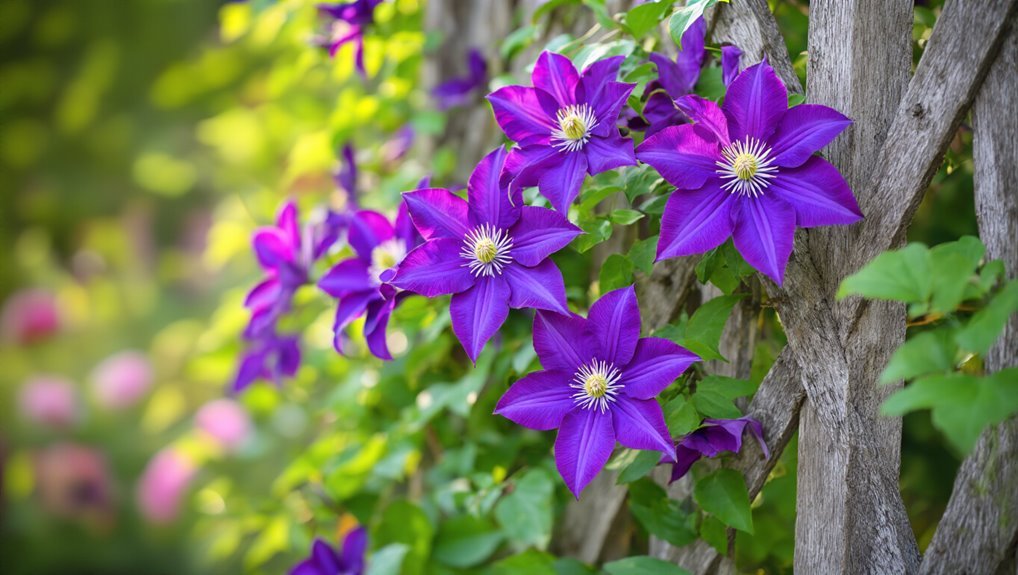
Clematis vines add a stunning touch to any garden, especially when they bloom in various shades of purple.
These versatile climbers can reach impressive heights, making them perfect for trellises, arbors, or fences. When you choose clematis, you’ll find a spectrum of purple hues, from soft lavender to deep violet. They bloom from spring through fall, ensuring your garden stays vibrant for months. Supporting your clematis with quality trellis netting ensures they have the structure needed to climb and display their blooms beautifully.
To thrive, plant clematis in well-draining soil and provide plenty of sunlight. They appreciate a bit of shade at their roots, so consider mulching around the base.
With a little care, your clematis will flourish, producing breathtaking flowers that attract butterflies and enhance your outdoor space. Enjoy the beauty and elegance they bring!
If you want to showcase your clematis, consider supporting them with beautiful trellises to create a striking vertical display in your garden.
Allium: Bold and Architectural Blooms
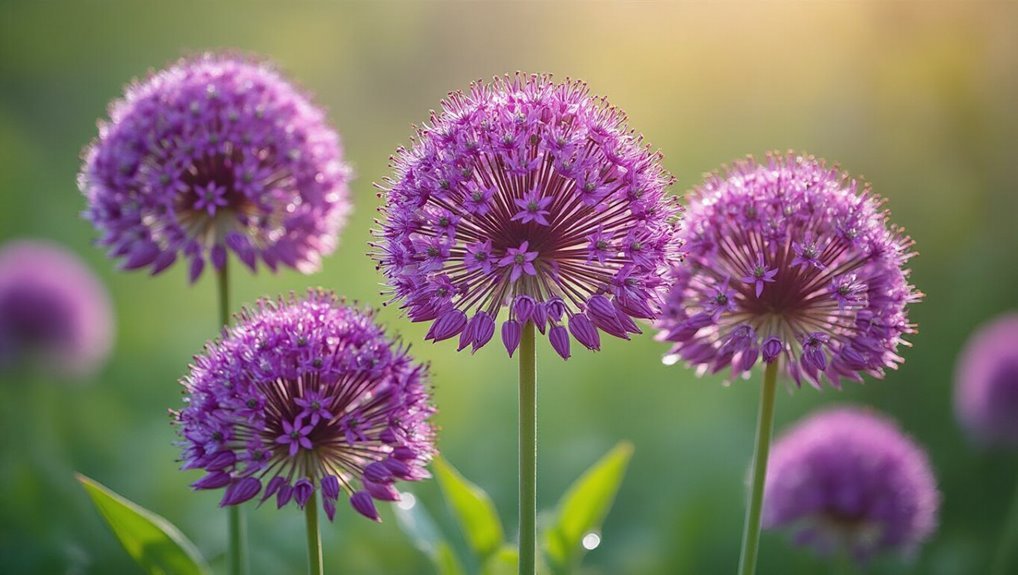
Allium brings a striking presence to your garden with its bold, spherical blooms that stand tall on sturdy stems.
These unique flowers, ranging from deep purple to lavender, create a stunning focal point, drawing the eye and adding dimension to your landscape. For those looking to give their alliums the best start, using seed starting kits can help ensure healthy and robust growth from the very beginning.
Plant them in clusters for maximum impact, or mix them with other perennials for a dynamic effect.
Alliums thrive in well-drained soil and prefer sunny spots, making them low-maintenance favorites.
They also attract pollinators, so you’ll support local wildlife while enjoying their beauty.
As the blooms fade, the seed heads maintain interest in your garden, offering architectural charm long after the flowers have gone.
For larger garden projects, you might find it easier to transport your allium bulbs and soil using a quality wheelbarrow, ensuring efficient and convenient planting.
Add alliums, and watch your garden transform into a vibrant masterpiece.
Bellflower: Delicate Charm for Ground Cover
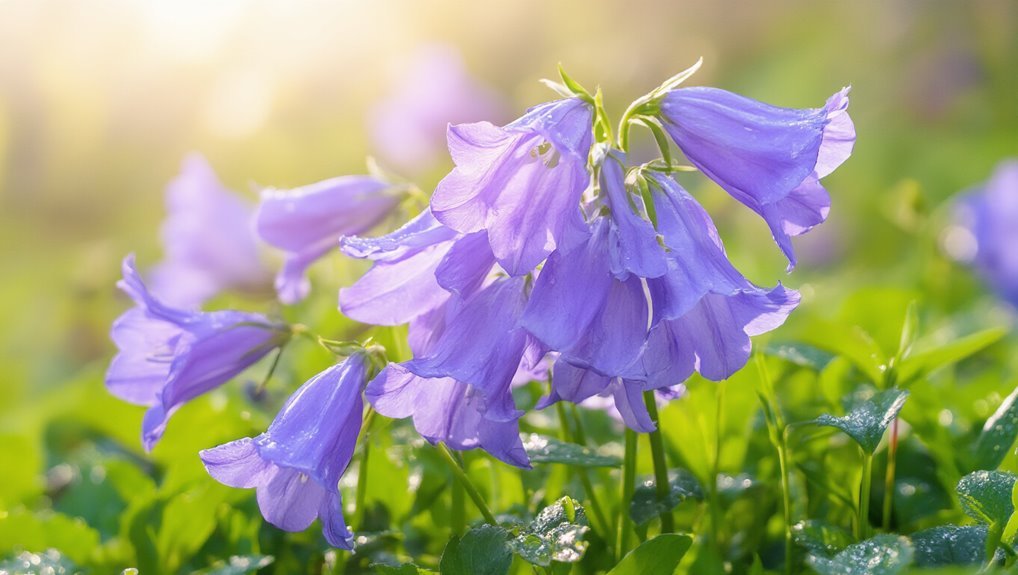
After enjoying the bold presence of alliums, you might want to consider adding bellflowers to your garden for a touch of delicate charm.
These graceful perennials are perfect for ground cover, thanks to their low-growing habit and vibrant purple hues. They bloom from late spring into early summer, creating a stunning carpet of color that complements your existing plants. For gardeners seeking lower maintenance, bellflowers can also thrive in self-watering planters, making them an excellent choice for both in-ground beds and containers.
Bellflowers thrive in well-drained soil and can handle both sun and partial shade, making them versatile for various garden layouts. They attract pollinators like bees and butterflies, enhancing your garden’s ecosystem.
Plus, their charming, bell-shaped flowers add an enchanting touch that beckons visitors. With minimal care, bellflowers will spread beautifully, filling empty spaces and bringing a soft elegance to your landscape.
To encourage even more vibrant blooms and healthy growth, consider using plant fertilizer tablets to give your bellflowers the nutrients they need.
Frequently Asked Questions
How Do I Care for Purple Flowers During Winter Months?
To care for purple flowers during winter, you should mulch around the base to insulate roots, water them sparingly, and protect them from harsh winds. Don’t forget to prune any dead or damaged stems!
Can Purple Flowers Thrive in Shaded Areas?
Did you know nearly 30% of flowering plants thrive in shade? Yes, purple flowers can flourish in shaded areas, especially varieties like violets and hostas. Just ensure they receive proper moisture and nutrients for best results!
What Are Companion Plants for Purple Flowers?
If you’re considering companion plants for purple flowers, think about using white daisies or yellow coreopsis. These colors create a stunning contrast and can enhance your garden’s overall appeal while ensuring healthy growth together.
How Often Should I Water Purple Flowers?
You should water your purple flowers regularly, about once a week, ensuring the soil stays moist but not soggy. Adjust the frequency based on weather conditions, especially during hot, dry spells or heavy rainfall.
Are Purple Flowers Deer-Resistant?
Yes, some purple flowers are deer-resistant. You’ll find options like lavender and salvia that deer typically avoid. Planting these can help keep your garden vibrant while minimizing the risk of deer damage.
Conclusion
Adding stunning purple flowers to your garden not only enhances its beauty but also invites a host of pollinators. Whether you choose the classic lavender, the striking allium, or the delicate bellflower, each plant brings its unique charm. So, why not infuse your outdoor space with vibrant shades of purple? You’ll create a colorful oasis that not only delights the eye but also supports local wildlife. Dive into the world of purple blooms and watch your garden flourish!