To add charm and greenery to your garden, consider climbing vines like wisteria for its stunning blooms or bougainvillea for vibrant colors. Fast-growing options like morning glory cover trellises quickly, while hardy varieties such as climbing hydrangea thrive in cooler climates. For minimal upkeep, try evergreen jasmine or hardy kiwi. Don’t forget to support your vines with trellises or netting for optimal growth. There’s a wealth of options and tips waiting for you to explore further.
Key Takeaways
- Choose flowering vines like wisteria and climbing roses for stunning blooms that add charm to your garden.
- Fast-growing vines such as morning glory and trumpet vine quickly cover structures, enhancing greenery in no time.
- Hardy options like climbing hydrangea and hardy clematis thrive in various climates with minimal maintenance.
- Utilize sturdy support structures like trellises and arbors to help climbing vines grow healthily and attractively.
- Incorporate natural pest control methods and garden netting to protect and support your climbing vines effectively.
Choosing the Right Climbing Vine for Your Garden
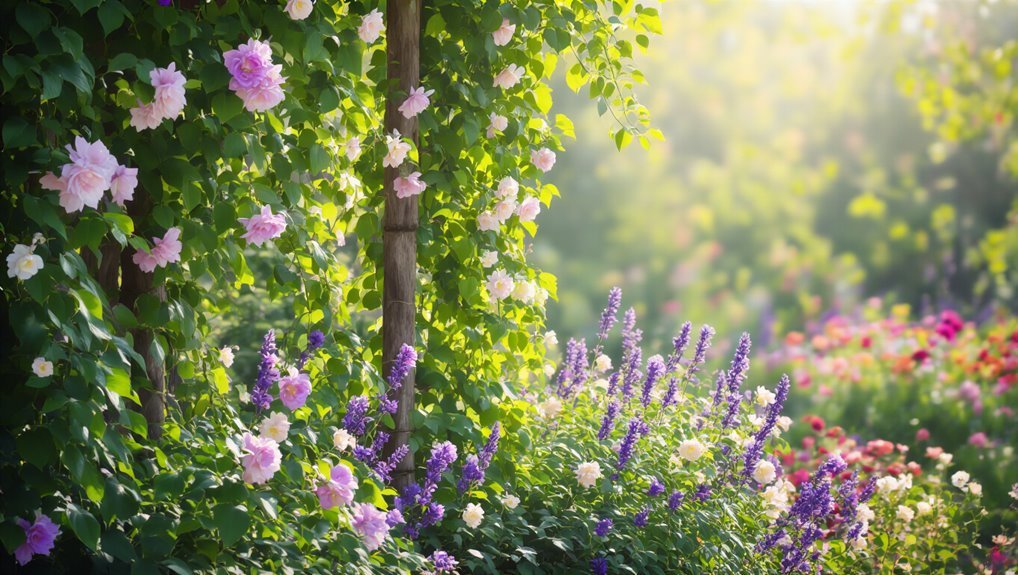
When choosing the right climbing vine for your garden, what factors should you consider? First, think about your climate and the vine’s hardiness. Some vines thrive in full sun, while others prefer shade.
Next, consider the growth rate; fast-growing vines can quickly cover walls or trellises but may require more maintenance. If you want to support your plants as they grow vertically, consider using garden trellis netting to enhance both stability and aesthetics.
You’ll also want to evaluate how much space you have available. Some vines can spread aggressively, so think about their potential size and how that aligns with your garden’s design.
Finally, assess the support structures you have in place, like fences or arbors, to ensure your chosen vine has what it needs to grow successfully.
Taking these factors into account will help you select the perfect climbing vine for your garden. For even more support and visual interest, you might want to explore adding beautiful trellises to enhance your garden’s design and provide an ideal structure for your climbing plants.
Popular Flowering Climbing Vines
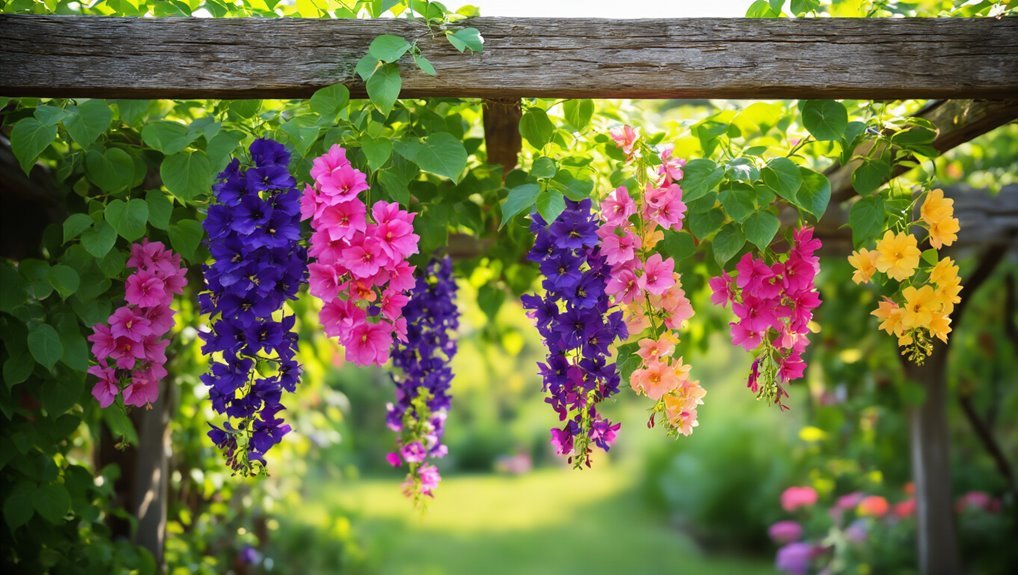
For adding vibrant color and fragrance to your garden, popular flowering climbing vines can be an excellent choice.
Consider the enchanting Wisteria, with its cascading clusters of purple blooms that create a stunning focal point. You can also complement these vibrant vines with decorative birdhouses for gardens, adding both charm and a welcoming space for local birds.
If you prefer a tropical vibe, try Bougainvillea; its bright colors will instantly uplift your space.
Honeysuckle is another fantastic option, attracting bees and butterflies while filling the air with its sweet scent.
For a classic touch, the clematis offers diverse varieties, showcasing large, star-shaped flowers in various colors.
Finally, the climbing rose brings timeless charm, with its romantic blooms and delightful fragrance.
To further enhance your outdoor area, pairing these vines with beautiful garden statues can add elegance and personality to your garden retreat.
Each of these flowering vines can transform your garden into a vibrant, inviting retreat.
Fast-Growing Vines for Instant Impact
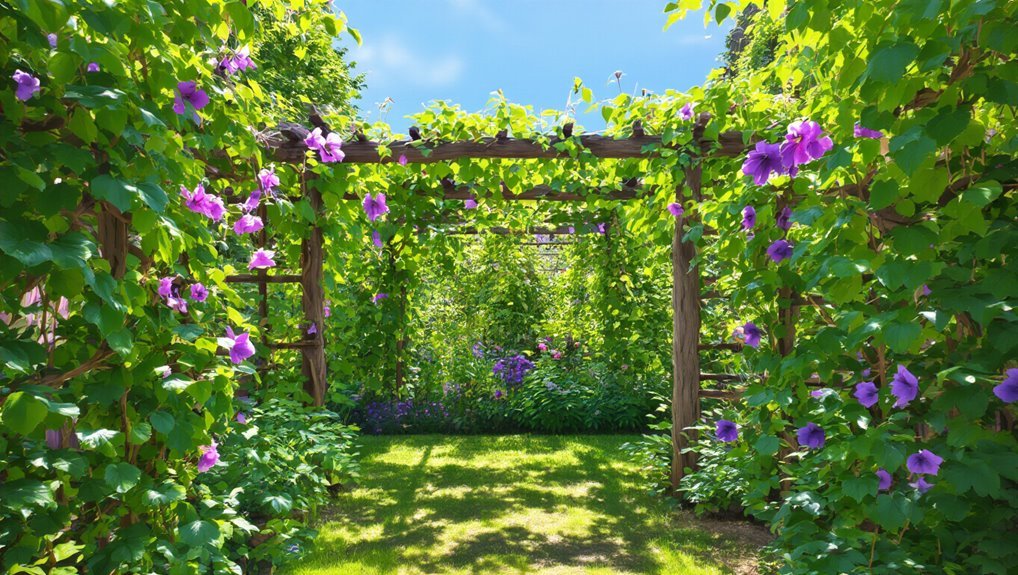
If you want to create an eye-catching garden quickly, fast-growing vines are the perfect solution.
These vigorous climbers can transform your outdoor space in no time. Consider using varieties like morning glory or sweet pea, which can cover trellises and fences in just a few weeks. For those seeking a more organized approach, vertical garden kits offer a convenient way to train and display your vines for maximum impact.
For a more lush look, try the popular trumpet vine or climbing hydrangea; they’re not only fast-growing but also add stunning visual interest.
You’ll appreciate how they draw the eye and create a vibrant atmosphere. Just remember to choose a spot with plenty of sunlight and provide support for these eager climbers.
With the right vines, you’ll enjoy a beautifully green space that feels inviting and alive, all within a season!
For even better results, consider planting your vines in raised garden beds to improve soil quality and drainage, which encourages healthier and faster growth.
Hardy Vines for Cooler Climates
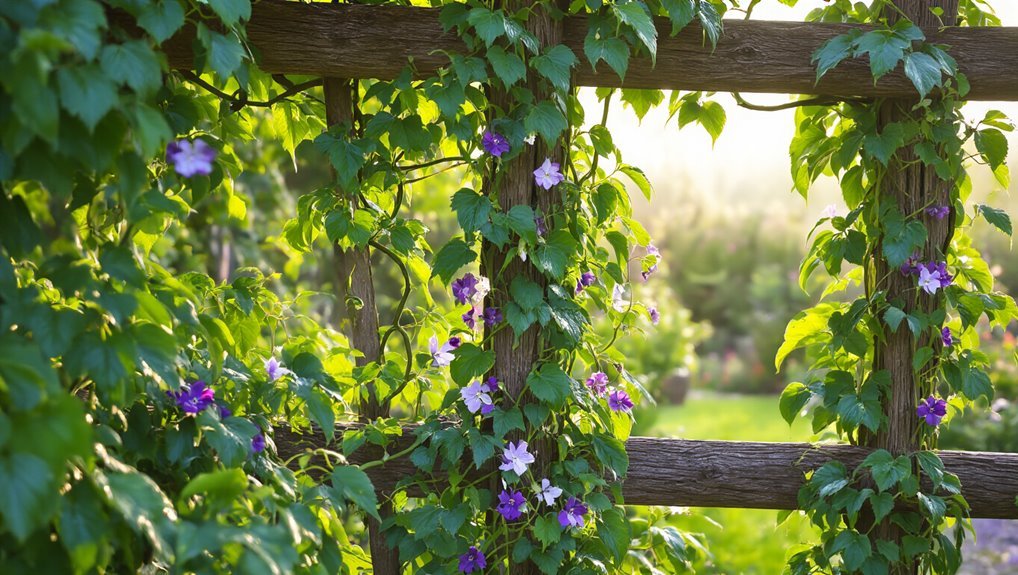
Even in cooler climates, you can still enjoy the beauty of climbing vines that thrive despite the chill.
Consider planting the hardy clematis, which boasts vibrant blooms and can endure frost. Another excellent choice is the climbing hydrangea, known for its stunning white flowers and ability to cover walls and fences gracefully. To help these vines retain moisture and suppress weeds, add a layer of mulch around their base.
If you’re looking for something unique, the Siberian pea shrub vine provides both beauty and nitrogen fixation for your soil. For a touch of nostalgia, try the sweet-smelling honeysuckle, which attracts hummingbirds and butterflies.
These vines not only add charm to your garden but also withstand colder temperatures, ensuring your outdoor space remains lush and inviting year-round.
You can further enhance your garden’s appeal by incorporating edible flower seeds, which offer both visual interest and culinary possibilities alongside your hardy vines.
Embrace these hardy options for a vibrant garden!
Low-Maintenance Options for Busy Gardeners
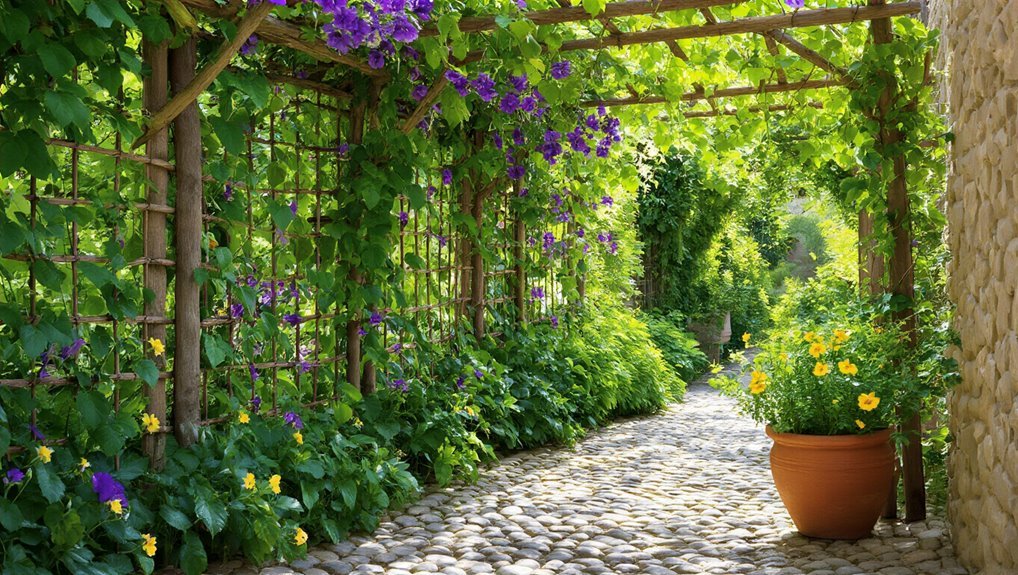
When you want a beautiful garden without the hassle of constant upkeep, low-maintenance climbing vines are the perfect solution.
These hardy plants thrive with minimal attention, allowing you to enjoy their beauty without the stress. Consider options like clematis, which offers stunning blooms and doesn’t require much pruning. For gardeners interested in propagating their own vines, plant propagation stations make it easy to root cuttings and expand your collection with ease.
Another great choice is the evergreen jasmine, providing year-round greenery and delightful fragrance with very little care. You might also love the fast-growing trumpet vine, which attracts hummingbirds and flourishes in various conditions.
Lastly, try the hardy kiwi vine, which is resilient and adds a lush touch. If you’re interested in growing more plants with minimal effort, consider starting with herb garden kits with seeds and pots that make it easy to add both beauty and utility to your garden.
Edible Climbing Vines for a Productive Garden
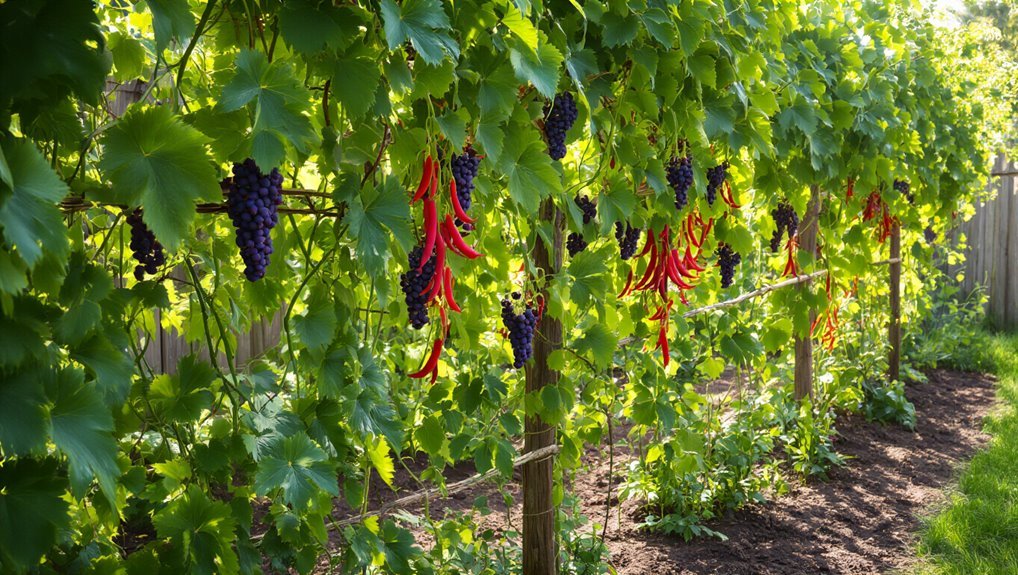
For those looking to maximize their garden’s productivity, incorporating edible climbing vines can transform vertical spaces into a bounty of delicious fruits and vegetables. These plants not only save ground space but also add beauty to your garden. Many of these vines benefit greatly from hydroponic nutrient solutions, which provide essential elements for robust growth and increased yields. Here are some top choices for edible climbing vines:
| Plant Name | Harvest Time |
|---|---|
| Sweet Peas | Early summer |
| Pole Beans | Mid to late summer |
| Cucumbers | Summer |
| Kiwi | Late summer |
| Grapes | Late summer |
To help these edible vines thrive and produce abundantly, providing them with the best plant food ensures they receive the nutrients needed for healthy growth.
Vines for Privacy and Shade
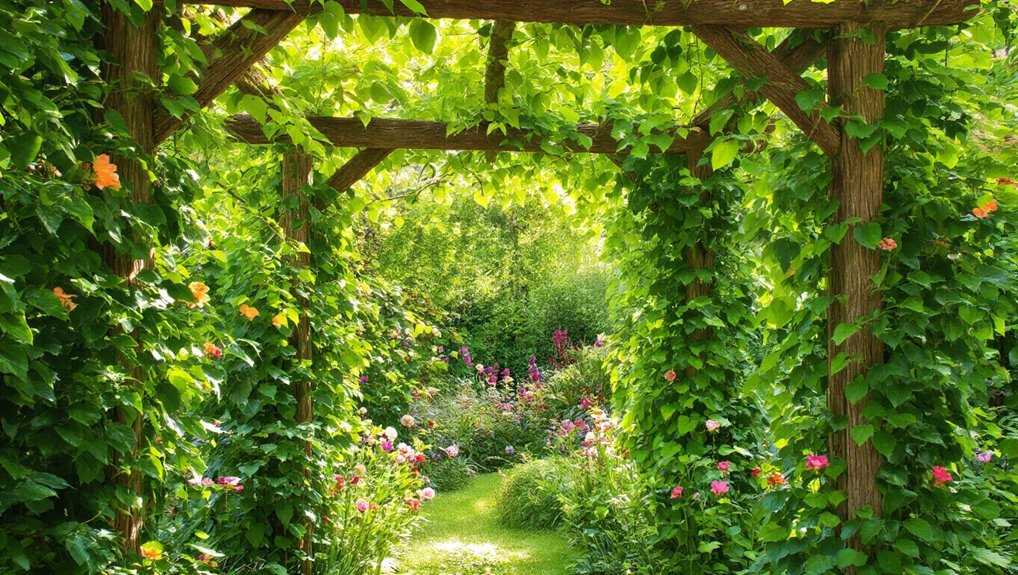
While edible climbing vines can enhance your garden’s productivity, many gardeners also seek ways to create privacy and shade in their outdoor spaces. For this purpose, consider planting vigorous options like clematis or wisteria.
These vines grow quickly and can cover fences or trellises, providing a lush green backdrop. Jasmine and honeysuckle not only offer beautiful blooms but also fill the air with delightful scents while acting as effective privacy screens. To keep your garden healthy and free from unwanted insects, consider using pest control products alongside your chosen vines.
If you’re looking for dense coverage, consider the fast-growing trumpet vine, which attracts hummingbirds and provides ample shade.
With these choices, you’ll enjoy a more secluded garden oasis while adding beauty and character to your outdoor retreat. Embrace nature’s charm while enjoying your private space! You can also enhance your garden’s natural pest control by incorporating insect repellent plants like citronella among your climbing vines.
Tips for Supporting and Training Your Climbing Vines
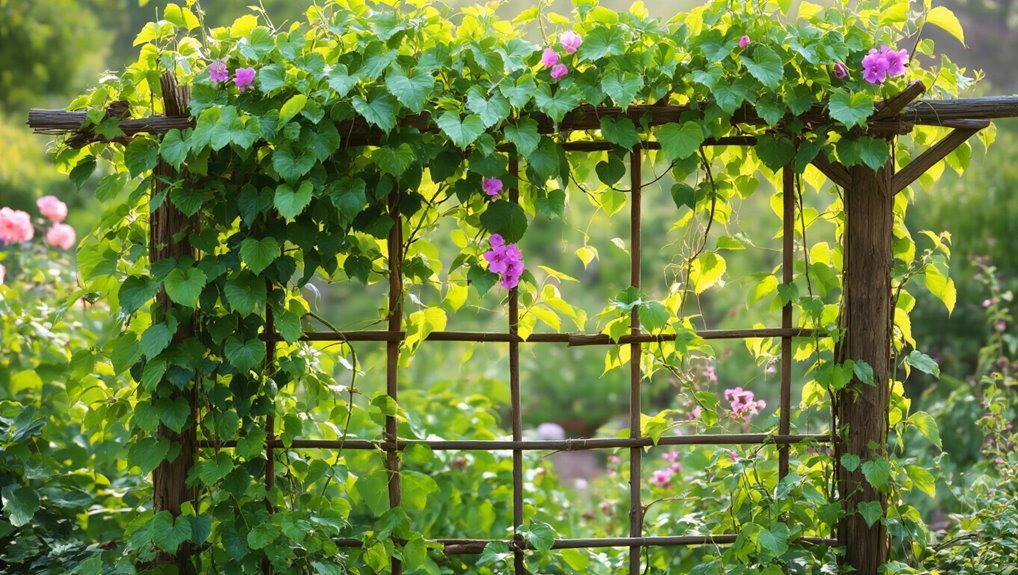
To ensure your climbing vines thrive and flourish, providing the right support is essential. Start by choosing sturdy structures like trellises, arbors, or fences that can handle the weight of your vines. For added stability and convenience, many gardeners rely on plant support clips to securely fasten stems to their chosen supports. Use wire or twine for training the vines to grow in the desired direction. Regularly check for any loose or broken supports, and make adjustments as needed.
As your vines grow, gently guide them along their support, ensuring they attach securely without damaging their stems. Prune regularly to encourage bushier growth and remove any dead or weak stems.
Lastly, consider rotating your vines to prevent them from taking over a single area, promoting healthy growth and making maintenance easier for you. For an extra layer of support and to protect your plants from pests, consider using garden netting, which is specifically designed to safeguard and support your climbing plants.
Frequently Asked Questions
Can Climbing Vines Damage My Home or Structure?
Yes, climbing vines can damage your home if they grow unchecked. Their roots might infiltrate cracks, and their weight can stress structures. Regular maintenance helps prevent potential harm and keeps your home safe and sound.
How Do I Prevent Pests on Climbing Vines?
An ounce of prevention’s worth a pound of cure. To prevent pests on your climbing vines, regularly inspect for signs, maintain plant health, and use organic treatments like neem oil or insecticidal soap as needed.
When Is the Best Time to Plant Climbing Vines?
You should plant climbing vines in early spring or fall when temperatures are mild. This timing helps them establish roots before summer heat or winter cold sets in, ensuring a healthier, more robust growth.
Can I Grow Climbing Vines in Containers?
Sure, you can grow climbing vines in containers, but who wouldn’t want them sprawling everywhere? Just choose the right variety, ensure proper drainage, and watch them thrive, proving that space is just a state of mind.
What Type of Soil Is Best for Climbing Vines?
Climbing vines thrive in well-draining soil enriched with organic matter. You’ll want a mix of potting soil and compost to provide nutrients. Ensure it retains moisture without becoming waterlogged, promoting healthy growth for your vines.
Conclusion
Incorporating climbing vines into your garden can transform it into a lush, vibrant space. Did you know that adding vertical greenery can increase your garden’s aesthetic value by up to 20%? Whether you choose flowering, edible, or hardy varieties, these plants not only enhance your garden’s charm but also provide privacy and shade. With the right support and care, your climbing vines will thrive, bringing beauty and life to your outdoor oasis. So, get climbing!