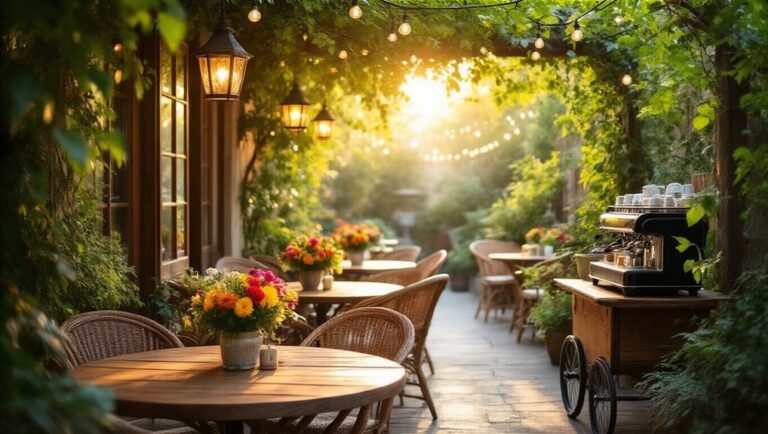
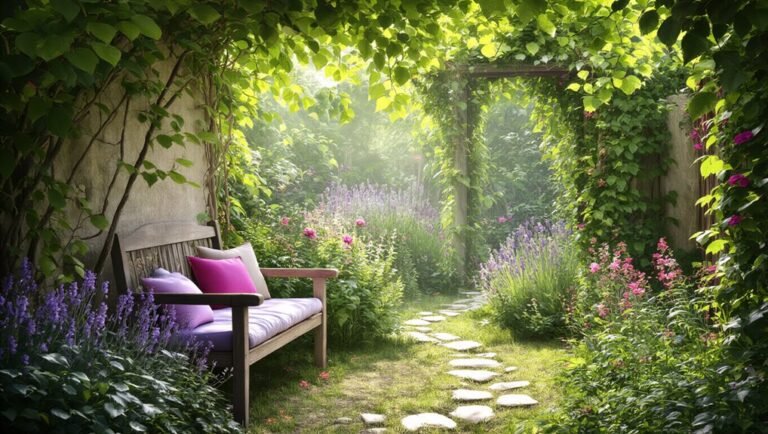
To transform your outdoor space, start by assessing your yard’s size, shape, and existing features like trees and pathways. Choose the right plants based on your climate and sunlight conditions, opting for native species for easy maintenance. Incorporate hardscaping elements like patios and walkways for structure and visual appeal. Enhance your landscape with strategic lighting and consider adding water features for tranquility. If you’re eager for more tips, there’s plenty more to explore!
Key Takeaways
- Assess your outdoor space’s size, shape, sunlight, and existing features to identify design opportunities and challenges.
- Choose native plants suited to your climate and soil for low maintenance and resilience, matching them to sun and shade patterns.
- Incorporate hardscaping elements like patios and walkways to create structure, define spaces, and enhance visual interest in your landscape.
- Enhance your outdoor area with layered lighting for ambiance and functionality, ensuring safety along pathways and highlighting key features.
- Regularly maintain your landscape through weeding, pruning, mulching, and monitoring for pests to promote healthy plant growth and vibrant aesthetics.
Assessing Your Outdoor Space
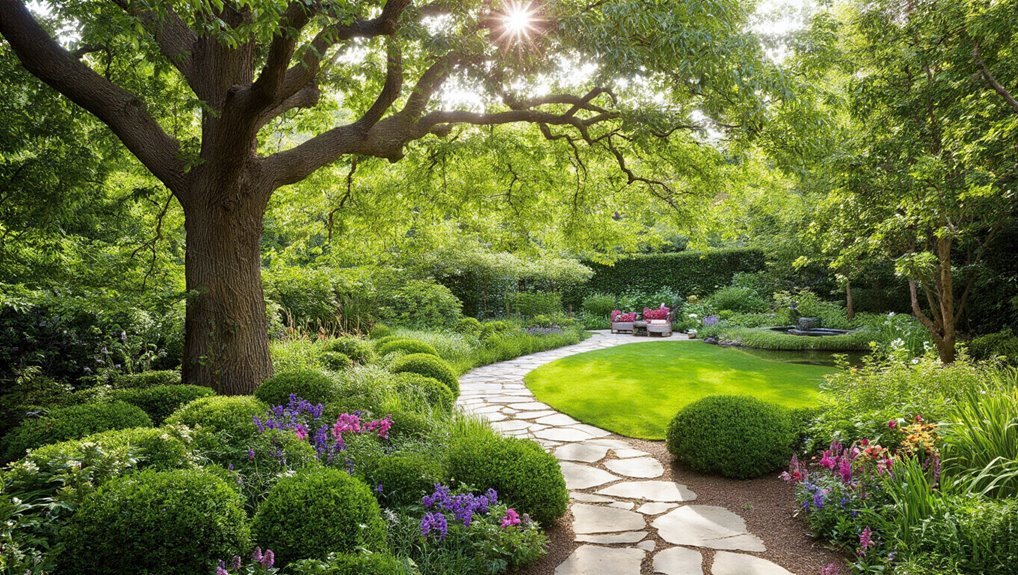
Before you dive into landscaping, it’s essential to assess your outdoor space.
Start by evaluating the size and shape of your yard; this helps determine what’s possible. Take note of existing features like trees, pathways, and fences, as they’ll influence your design. Ensuring you have garden hoses on hand can make watering and maintaining your landscape much easier.
Consider sunlight patterns throughout the day; some areas may be sunny while others are shaded. Think about drainage and soil quality too; these factors affect plant growth.
Don’t forget to observe how you currently use the space and envision how you want to use it in the future.
For optimal plant health, choosing the best garden soil for your specific needs can make a significant difference in how well your landscaping thrives.
Choosing the Right Plants
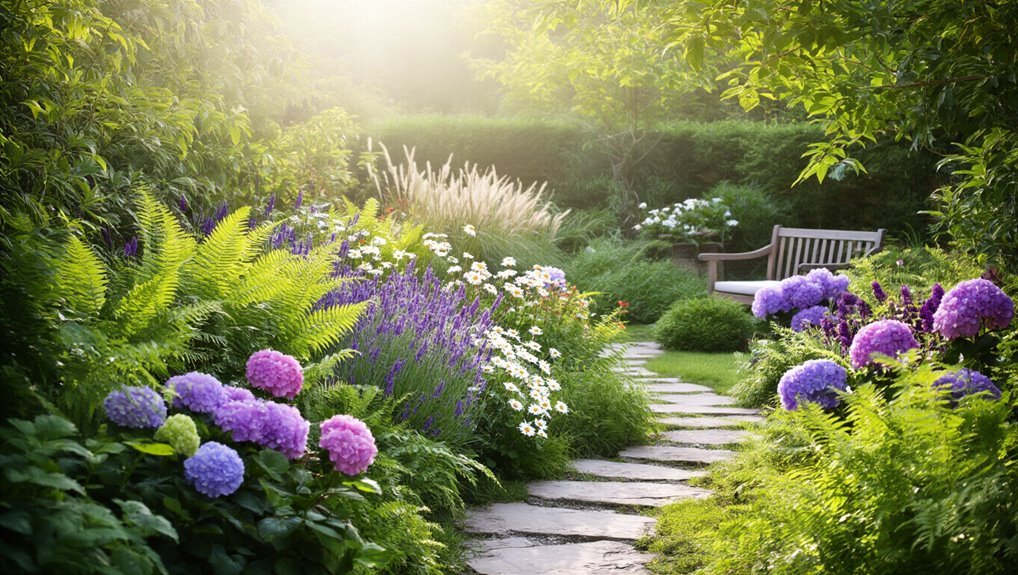
How do you choose the right plants for your landscape? Start by considering your climate and soil type. Research native plants that thrive in your area, as they require less maintenance and are more resilient. Before planting, make sure you have the right garden trowel to help with precise digging and transplanting.
Think about the sun and shade patterns in your yard; some plants need full sunlight, while others prefer shade.
Next, determine your desired aesthetic. Do you want vibrant flowers, lush greenery, or structured hedges? Mixing textures and colors can create visual interest.
Also, consider the plants’ growth habits. Will they fit in the space as they mature?
Finally, assess your maintenance commitment. Choose plants that suit your lifestyle—low-maintenance options can save you time and effort while still looking great.
For an extra touch of beauty and practicality, consider adding Edible Flower Seeds to your outdoor space, as they can provide both stunning blooms and unique culinary options.
Incorporating Hardscaping Elements
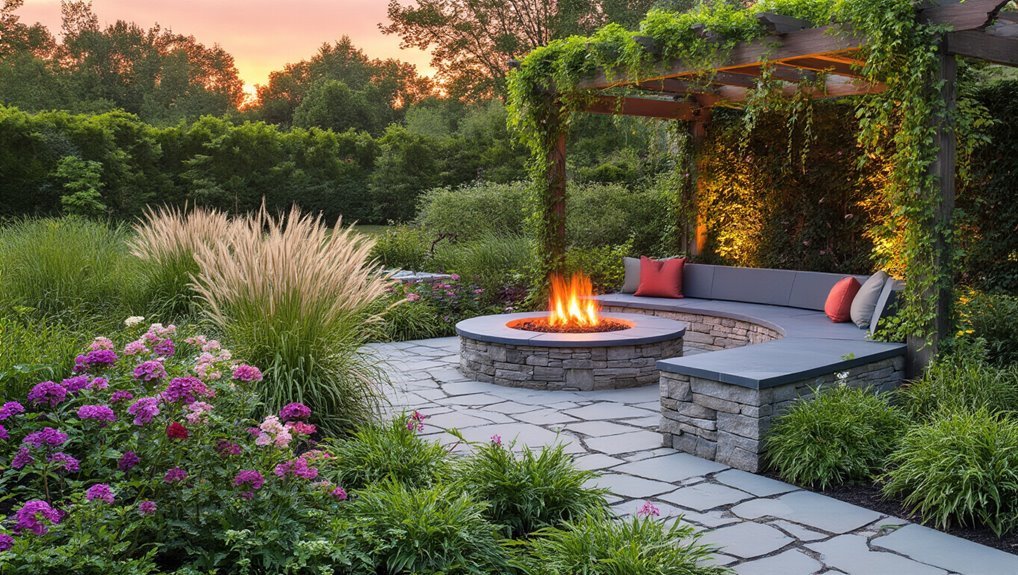
In addition to selecting the right plants, incorporating hardscaping elements can significantly enhance your landscape’s functionality and aesthetic appeal.
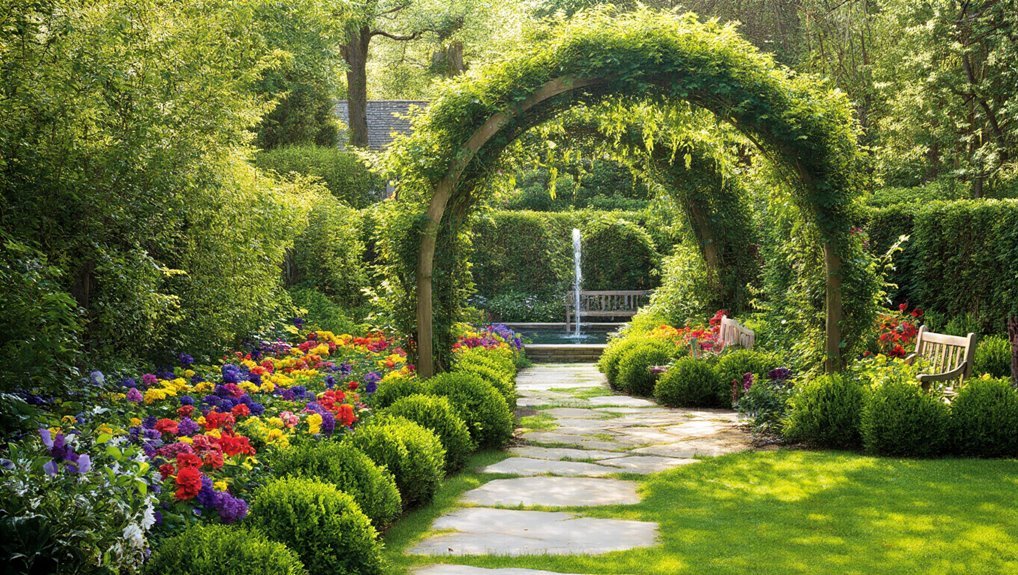
Think about adding features like patios, walkways, or retaining walls to create structure and visual interest. These elements not only guide the flow of your outdoor space but also provide practical areas for entertaining or relaxing. To further accentuate your garden, you could include beautiful trellises that support climbing plants and add vertical dimension to your outdoor design.
Materials like stone, brick, or gravel can complement your plant choices, creating a cohesive look. You might also consider raised beds or planters that blend hardscaping with greenery, offering a polished appearance.
Don’t forget about lighting! Incorporating outdoor lighting can highlight your hardscaping features, making your space inviting even after the sun sets.
To further elevate your garden design, consider adding garden arches as a focal point and a way to introduce vertical interest to your landscape.
Creating Defined Areas and Zones
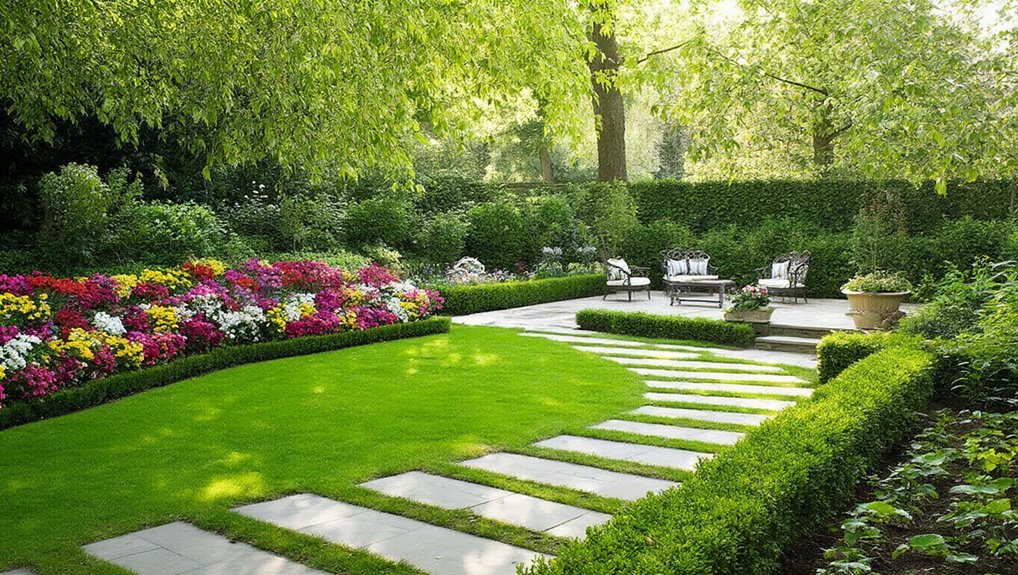
Creating defined areas and zones in your landscape not only enhances its visual appeal but also improves functionality. You can create distinct spaces for relaxation, dining, and gardening by using plants, pathways, or hardscaping elements. This organization helps you make the most of your outdoor area. Raised garden beds can be a great addition to your landscape, as they help organize your gardening space while also making plant care more accessible. For those interested in year-round gardening, consider incorporating mini and large greenhouses into your zones to extend your growing season and protect delicate plants.
Here’s a simple way to visualize possible zones:
| Zone Type | Features | Purpose |
|---|---|---|
| Relaxation Area | Lounge chairs, shade trees | Rest and unwind |
| Dining Zone | Table, chairs, grill | Outdoor meals |
| Garden Bed | Flowers, vegetables | Grow food/beautify |
| Activity Space | Play equipment, open lawn | Family fun and games |
Enhancing With Lighting
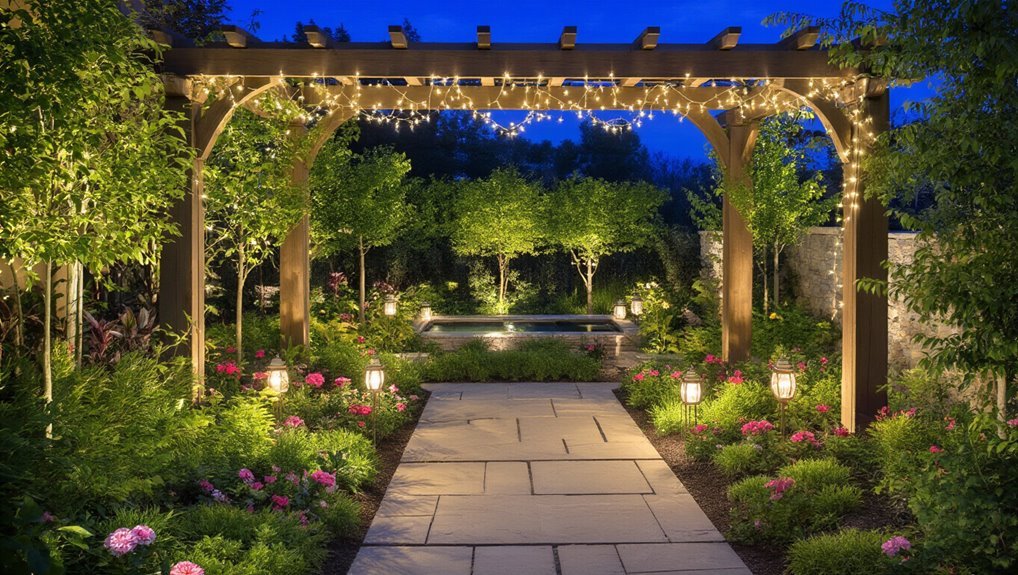
While you focus on defining areas in your landscape, don’t overlook the transformative power of lighting. Properly placed lights can highlight pathways, accentuate plants, and create a warm, inviting atmosphere.
Consider using solar lights along walkways for safety and charm. Spotlights can draw attention to your favorite trees or garden features, while string lights add a cozy, festive touch for gatherings. You can further elevate your outdoor design by incorporating solar-powered water features, which add movement, sound, and visual interest to your garden.
Think about layering your lighting; combine ambient, task, and accent lights to create depth and interest.
Don’t forget about timers or smart controls to adjust lighting based on the time of day. With thoughtful lighting choices, you’ll extend the enjoyment of your outdoor space well into the evening, making it a magical retreat.
For an eco-friendly and cost-effective option, try incorporating solar lighting solutions into your garden design to illuminate your space sustainably.
Adding Water Features
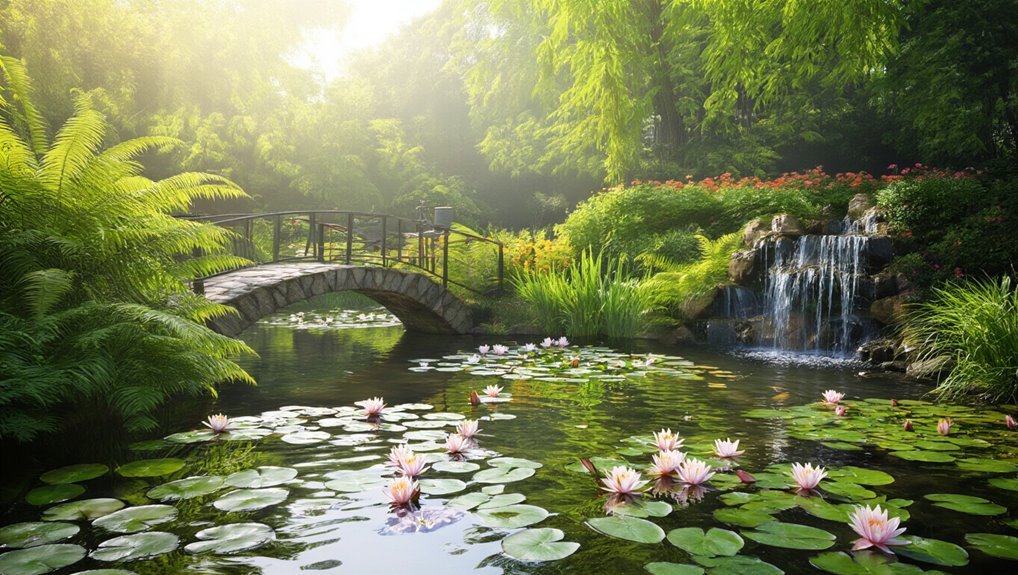
How can you elevate your landscape’s appeal with the soothing sounds of water? Adding water features like fountains, ponds, or waterfalls can create a serene atmosphere in your outdoor space.
These elements not only enhance visual interest but also attract local wildlife, offering a vibrant ecosystem. For an extra touch of charm, consider incorporating decorative birdhouses for gardens to complement your water features and provide functional beauty.
Consider your available space and choose a feature that complements your landscape style. A small fountain can add charm to a patio, while a larger pond can become a stunning focal point.
Incorporate plants around the water feature to provide a natural look and improve biodiversity.
Remember to select materials that blend with your existing landscape for a seamless transition.
With the right water feature, you’ll transform your yard into an inviting retreat.
To ensure your outdoor space is comfortable throughout the year, consider adding outdoor thermometers to help you monitor the temperature and make the most of every season.
Maintaining Your Landscape
To keep your landscape looking its best, regular maintenance is essential.
Start by mowing your lawn regularly to maintain an even height and promote healthy growth. Water your plants deeply but infrequently, allowing the soil to dry out between sessions. This encourages strong root systems. In addition, using mulch throughout your garden offers the benefit of improved soil temperature regulation and reduces water evaporation.
Don’t forget to weed your garden; they compete for nutrients and water. Prune shrubs and trees to remove dead or overgrown branches, promoting healthier growth and improving aesthetics.
Mulching helps retain moisture and suppress weeds, so consider applying a fresh layer annually. For excellent results, use organic mulching materials like straw to improve soil health and further enhance moisture retention.
Finally, keep an eye out for pests and diseases. Early detection can save your plants and maintain your landscape’s beauty.
With these practices, you’ll enjoy a vibrant outdoor space year-round.
Frequently Asked Questions
What Is the Best Season to Start Landscaping Projects?
The best season to start landscaping projects is spring. You’ll enjoy milder temperatures and increased rainfall, which helps plants establish roots. Plus, you can get ahead of the summer heat while bringing your vision to life!
How Much Does Professional Landscaping Typically Cost?
Imagine turning your yard into a paradise. Professional landscaping typically costs between $1,000 and $10,000, depending on size and complexity. You’ll find that quality investment pays off in both beauty and property value.
Can I Landscape on a Budget?
Absolutely, you can landscape on a budget! Start by prioritizing your needs, using native plants, DIY projects, and repurposing materials. Simple changes can create a stunning outdoor space without breaking the bank. Get creative!
What Tools Are Essential for DIY Landscaping?
Think of your yard as a canvas; essential tools for DIY landscaping include a shovel, rake, pruners, a hose, and gloves. With these, you’ll create a masterpiece that reflects your style and vision!
How Do I Choose a Landscaping Professional?
Choosing a landscaping professional involves researching local options, checking reviews, and asking for references. You should also get multiple quotes and ensure they’re licensed and insured to find the best fit for your project.
Conclusion
Transforming your outdoor space isn’t just about aesthetics; it can boost your mood and well-being. Studies show that spending just 20 minutes a day in nature can significantly lower stress levels. So, by following these landscaping tips, you’re not only creating a visually appealing environment but also nurturing your mental health. Embrace the beauty of your outdoor space, and let it become a sanctuary where you can unwind, recharge, and connect with nature.