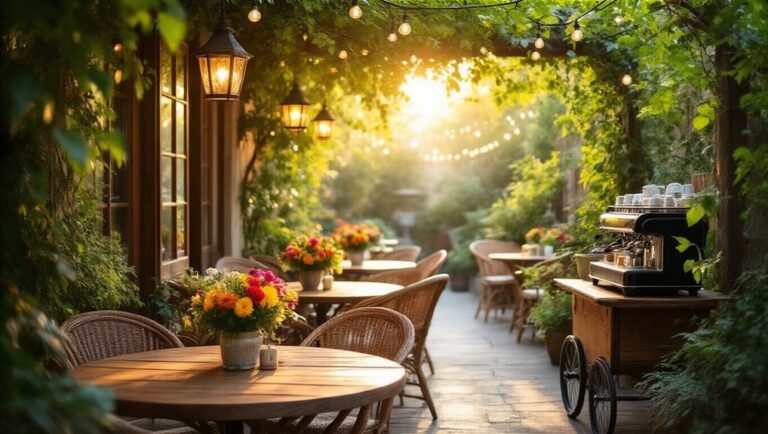
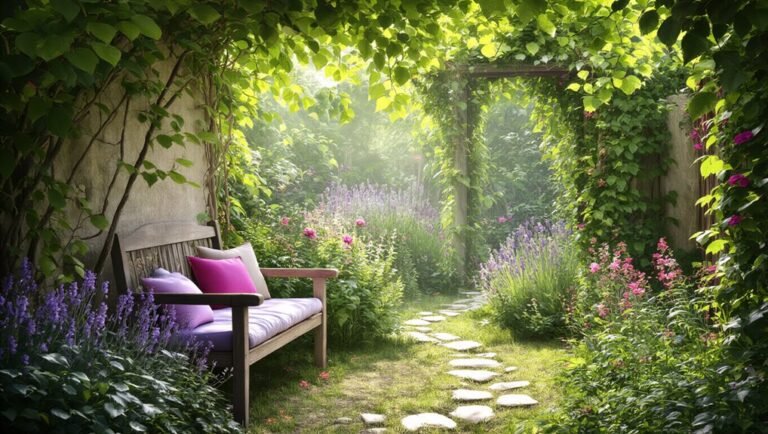
To create a balanced and beautiful garden, start by assessing your yard’s dimensions and sunlight exposure. Choose plant combinations that complement each other in color and texture, mixing different bloom times for seasonal interest. Incorporate pathways and focal points to guide visitors and add visual interest. Utilize vertical space for added dimension, and always aim for a cohesive color palette. With these tips, you can design a captivating outdoor space that reflects your personal style. There’s more to explore to enhance your garden planning!
Key Takeaways
- Begin by assessing your yard dimensions and existing features to inform your design choices and ensure a functional layout.
- Choose a harmonious color palette and mix plants with varying textures for visual depth and seasonal interest throughout the garden.
- Create pathways that guide visitors and incorporate focal points like sculptures or vibrant flower beds to enhance the garden’s atmosphere.
- Utilize vertical space with trellises and wall-mounted planters to maximize planting areas and add dimension to your design.
- Maintain balance by mixing bold and subtle colors, ensuring a cohesive look that enhances both aesthetics and plant health.
Assessing Your Space and Needs
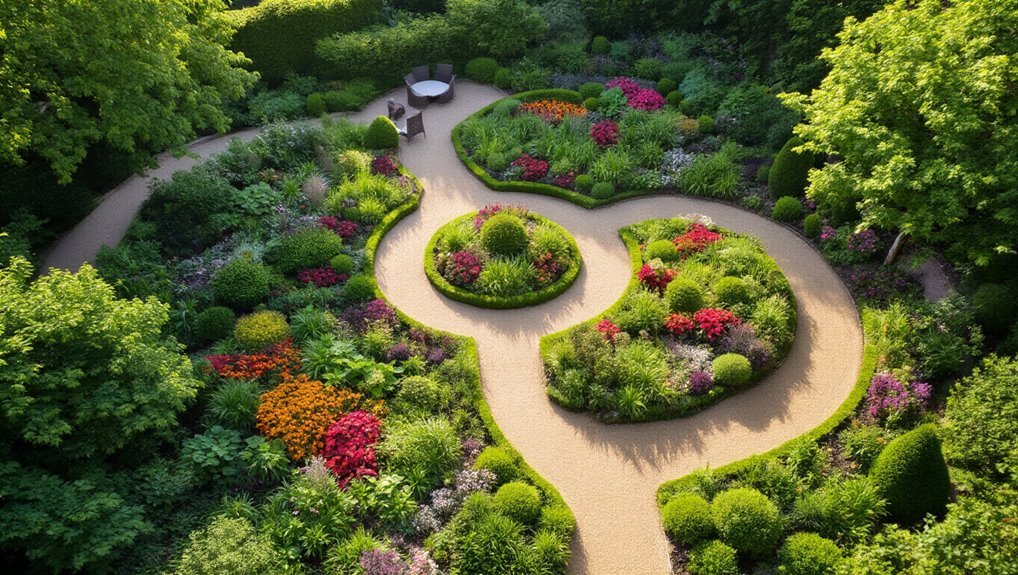
How do you envision your ideal garden? Start by assessing your space and needs.
Take a good look at your yard; measure its dimensions and note any existing features like trees, fences, or pathways. Think about how much sunlight different areas receive throughout the day. Are there shaded spots you could utilize? When planning the storage of your tools, consider incorporating garden tool organizers to keep your equipment tidy and easily accessible.
Next, consider your gardening goals. Do you want a vibrant flower display, a vegetable patch, or a relaxing retreat? Understanding your lifestyle is crucial; if you have kids or pets, design with their needs in mind.
Also, factor in your maintenance preferences—do you want a space that’s low-maintenance, or are you ready to roll up your sleeves? This clarity will guide your layout decisions.
If you’re planning to move soil, plants, or tools, having the right garden carts can make your gardening tasks much easier and more efficient.
Choosing the Right Plant Combinations
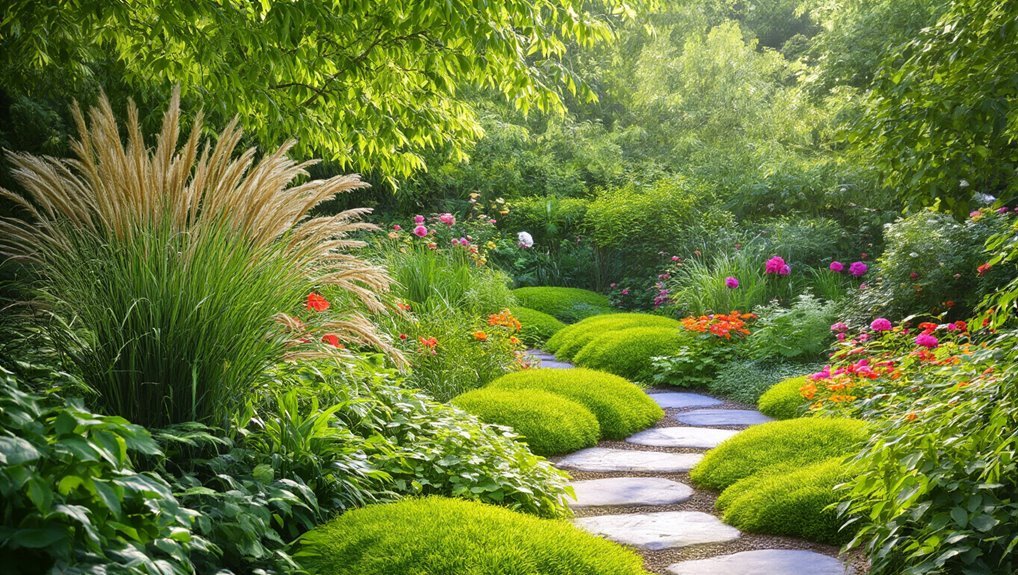
When selecting plant combinations for your garden, it’s essential to consider factors like color, texture, and growth habits to create a cohesive and lively space.
Start by choosing a color palette that complements your home and surrounding environment. Mix flowering plants with varying bloom times to ensure seasonal interest. For optimal growth, ensure your selections receive proper nutrition with plant food to support their health and vibrant appearance.
Incorporate plants with different textures—smooth leaves alongside feathery fronds can add depth. Think about the growth habits as well; pairing tall plants with shorter ones creates visual layers.
Don’t forget about foliage; plants with interesting leaves can enhance the aesthetic even when flowers fade.
Lastly, consider the plant’s sunlight and water needs to ensure they thrive together. Thoughtful combinations will lead to a vibrant and balanced garden.
For a unique and colorful addition, consider planting Edible Flower Seeds to enhance both the beauty and culinary potential of your garden.
Incorporating Pathways and Focal Points
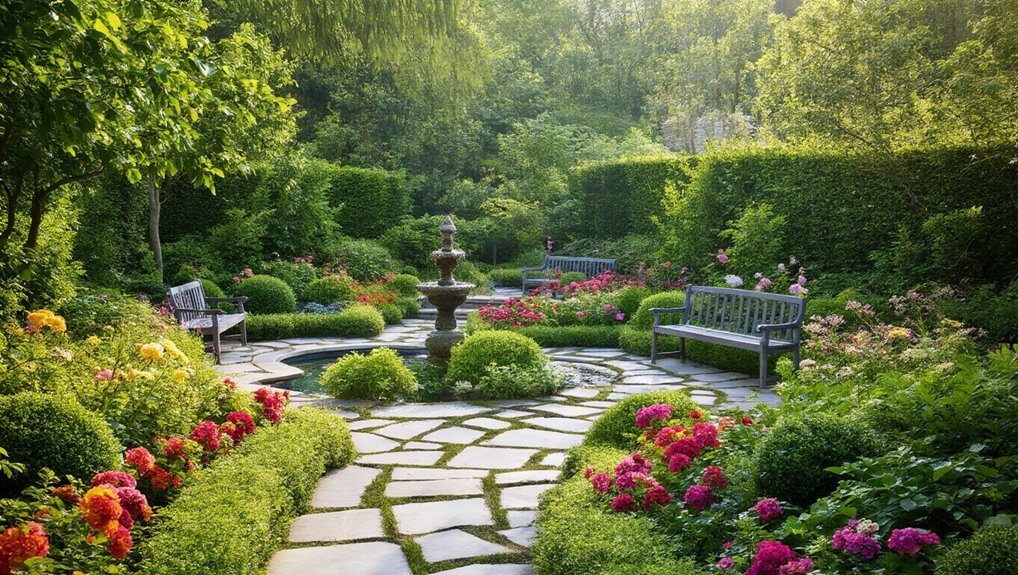
While you design your garden, incorporating pathways and focal points can significantly enhance its overall appeal. Pathways guide visitors through your space, creating a sense of exploration. Choose materials like gravel, stone, or wood to match your garden’s style. Focal points, such as sculptures, water features, or vibrant flower beds, draw the eye and provide visual interest. Adding garden statues as a focal point can instantly elevate your space and create a unique atmosphere. You can also use beautiful trellises to add vertical interest and support climbing plants, making your garden feel more dynamic and lush.
Here’s a quick overview of ideas for pathways and focal points:
| Pathway Ideas | Focal Point Ideas |
|---|---|
| Gravel paths | Ornamental trees |
| Wooden boardwalks | Water fountains |
| Flagstone walkways | Colorful flower beds |
| Brick pathways | Artistic sculptures |
| Pebble paths | Garden benches |
Utilizing Vertical Space for Dimension
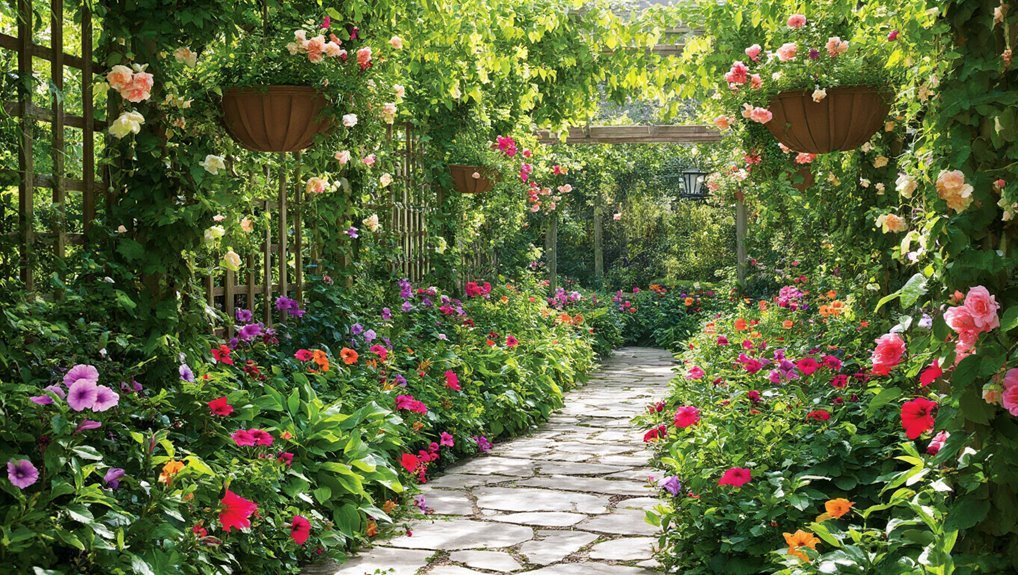
To create a more dynamic garden, make the most of vertical space by incorporating elements like trellises, vertical gardens, and hanging planters. Utilizing these features not only adds dimension but also maximizes your area, allowing you to showcase beautiful greenery and flowers. For gardeners looking to support climbing plants, Garden Trellis Netting offers a reliable and versatile solution to encourage upward growth.
Here are some ideas to get you started:
- Trellises: Train climbing plants to grow upward, creating a stunning vertical display.
- Vertical Gardens: Use wall-mounted planters or living walls to bring greenery to empty spaces.
- Hanging Planters: Suspend pots from ceilings or hooks to add layers and interest.
- Ladders or Shelves: Stack plants on decorative ladders or shelves for a unique, eye-catching arrangement.
You can easily transform small patios or balconies by installing vertical garden kits, which are designed to help you elevate your space and make the most of limited square footage.
Maintaining Balance With Color and Texture
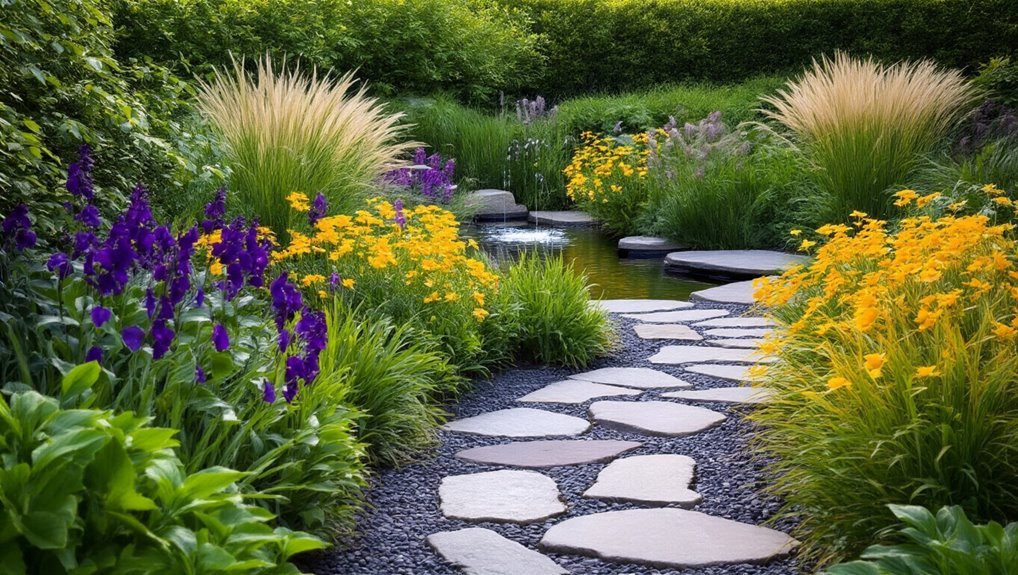
Achieving balance in your garden requires careful consideration of color and texture, as these elements can significantly influence the overall aesthetic.
Start by selecting a color palette that resonates with your style and complements the surrounding environment. Use a mix of bold and subtle colors to create visual interest without overwhelming the space. Elevate your plants by displaying them on stylish plant stands, which can enhance the overall visual harmony of your garden.
Incorporating various textures—like smooth leaves, rough bark, and delicate flowers—adds depth and dimension. Layering plants with different textures can enhance the visual appeal, making your garden feel more dynamic.
Don’t forget to consider the harmony between colors and textures; aim for a cohesive look that feels intentional.
Choosing the right plant pots can further elevate your garden, providing both functional support for your plants and an opportunity to introduce additional colors and textures.
Planning for Seasonal Changes and Growth
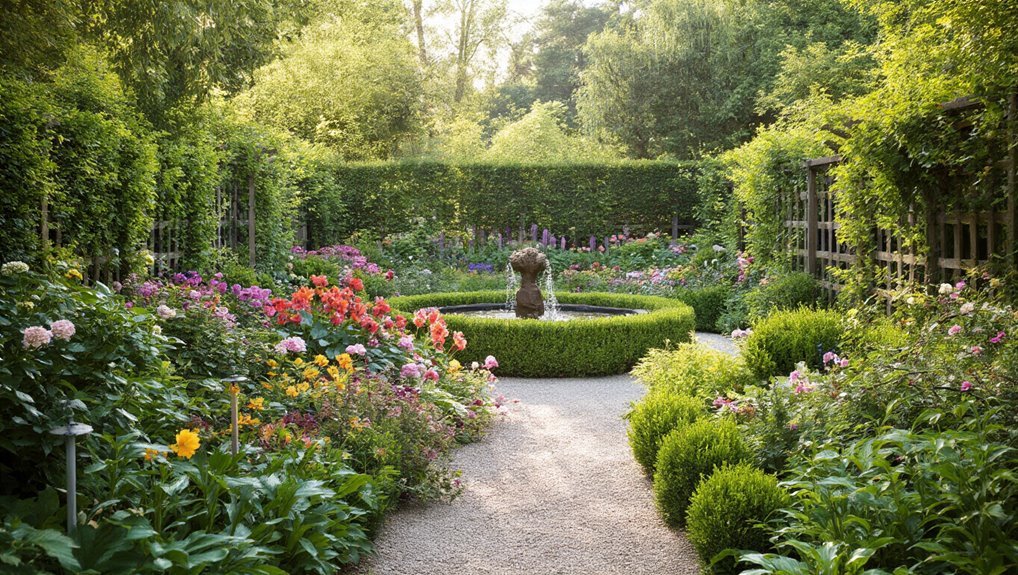
As you plan your garden, keep seasonal changes and growth patterns in mind, since they play a crucial role in the overall success of your layout.
Understanding how plants evolve throughout the year will help you create a dynamic space that remains beautiful and interesting. By consulting planting calendars, you can better anticipate the best times to plant and maintain your chosen varieties.
Consider these tips:
- Choose plants with varied bloom times to ensure continuous color and interest.
- Incorporate evergreens for year-round structure and greenery.
- Plan for growth sizes; remember that many plants expand as they mature.
- Rotate seasonal plants to keep your garden fresh and engaging.
If you’re looking to deepen your knowledge and skills, exploring gardening books can provide valuable insights and inspiration for planning a garden that thrives through every season.
Frequently Asked Questions
What Budget Should I Set for My Garden Design Project?
You should set a budget based on your goals, the size of your space, and the materials you prefer. Consider costs for plants, hardscaping, and any professional help you might need to achieve your vision.
How Do I Choose the Right Garden Style for My Home?
Imagine stepping into a serene oasis. To choose the right garden style for your home, consider your architecture, personal taste, and the atmosphere you want to create. Let your vision flourish with inspiration!
When Is the Best Time to Start Planting?
The best time to start planting depends on your climate. Generally, wait until after the last frost in spring for most plants. Check local frost dates, and plan accordingly to ensure a successful garden.
Can I Incorporate Edible Plants Into My Garden Design?
Absolutely, you can incorporate edible plants into your garden design! Consider mixing herbs, vegetables, and fruits with ornamental plants. It’ll create visual interest while providing fresh produce right from your garden. Enjoy the bounty!
How Do I Attract Wildlife to My Garden?
Your garden’s a vibrant canvas, inviting nature’s brushstrokes. Plant native flowers, provide water sources, and create shelter with shrubs. These elements weave a welcoming tapestry, drawing in butterflies, birds, and beneficial insects to your flourishing sanctuary.
Conclusion
Incorporating these garden design tips will help you create a balanced and beautiful outdoor space that reflects your style. For instance, imagine transforming a small backyard by adding vertical planters filled with vibrant flowers, a winding pathway leading to a cozy seating area, and strategically placed sculptures as focal points. This not only maximizes your space but also ensures visual interest throughout the seasons, making your garden a delightful retreat all year round.