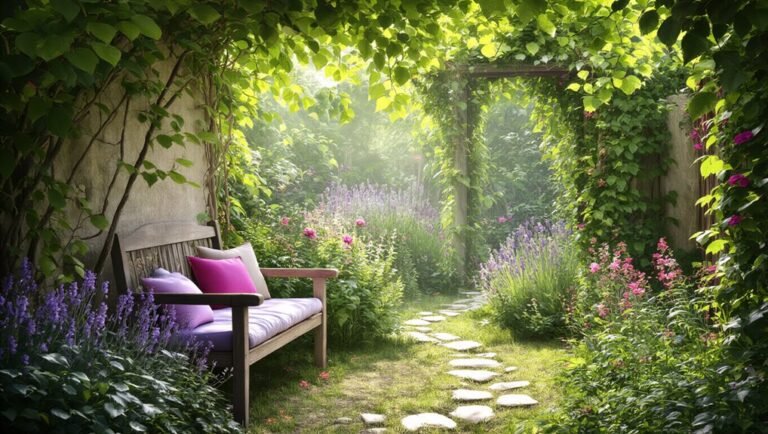
Designing a succulent garden is all about choosing the right plants and keeping it simple. Pair diverse succulent varieties for visual appeal, and consider creating rock gardens or container displays for easy maintenance. Incorporate vertical gardens or fairy elements for added charm. Using succulents as ground cover can also minimize upkeep. By focusing on seasonal care tips, you can ensure your garden stays vibrant. Explore more ideas to create your perfect low-maintenance oasis.
Key Takeaways
- Select drought-tolerant succulent varieties that require minimal water and care, ensuring a low-maintenance garden.
- Use well-draining soil and pots with drainage holes to prevent root rot and promote healthy growth.
- Group succulents with similar water needs together to simplify care and maintenance routines.
- Incorporate gravel or sand as ground cover to enhance drainage while adding visual interest to the garden.
- Design with a mix of heights and textures for a dynamic look that requires less upkeep and attention.
Choosing the Right Succulents for Your Garden
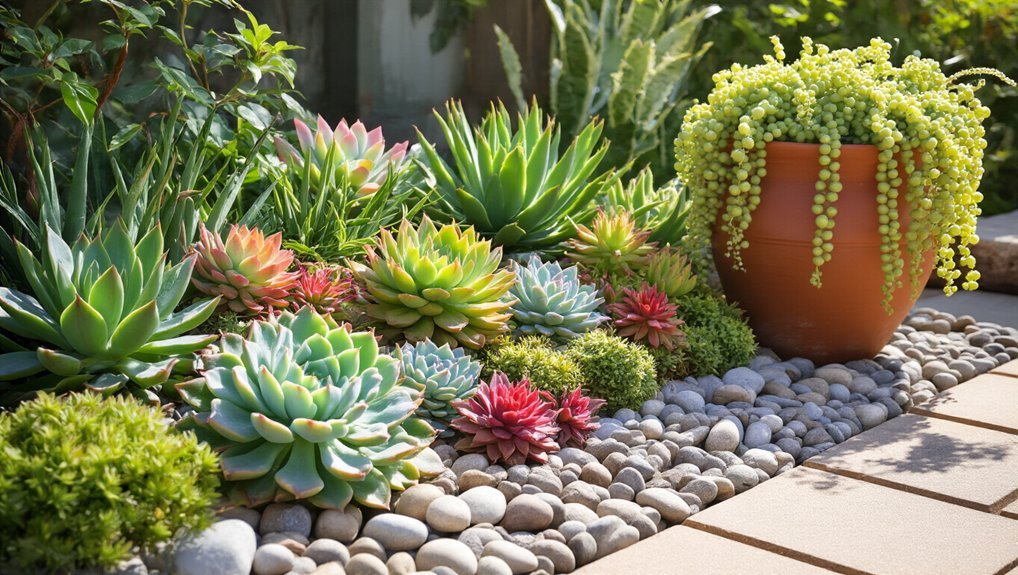
When choosing the right succulents for your garden, what factors should you consider to ensure a thriving landscape?
Start by assessing your climate. Some succulents thrive in hot, dry conditions, while others prefer cooler temperatures. In addition to climate, consider using grow bags to give your succulents optimal root aeration and drainage.
Next, think about the sunlight your garden receives. Most succulents need plenty of bright light, but some can tolerate partial shade.
Don’t forget about soil drainage! Well-draining soil is crucial to prevent root rot.
Consider the size and growth habits of different succulents too; you’ll want a mix that complements each other without overcrowding.
Lastly, remember to choose varieties suited to your gardening style—whether you prefer vibrant colors or unique shapes, there’s a succulent for every taste.
If you want your plants to flourish, consider using essential plant care kits designed specifically for succulents to provide the right nutrients and tools for maintenance.
Happy gardening!
Designing a Succulent Rock Garden
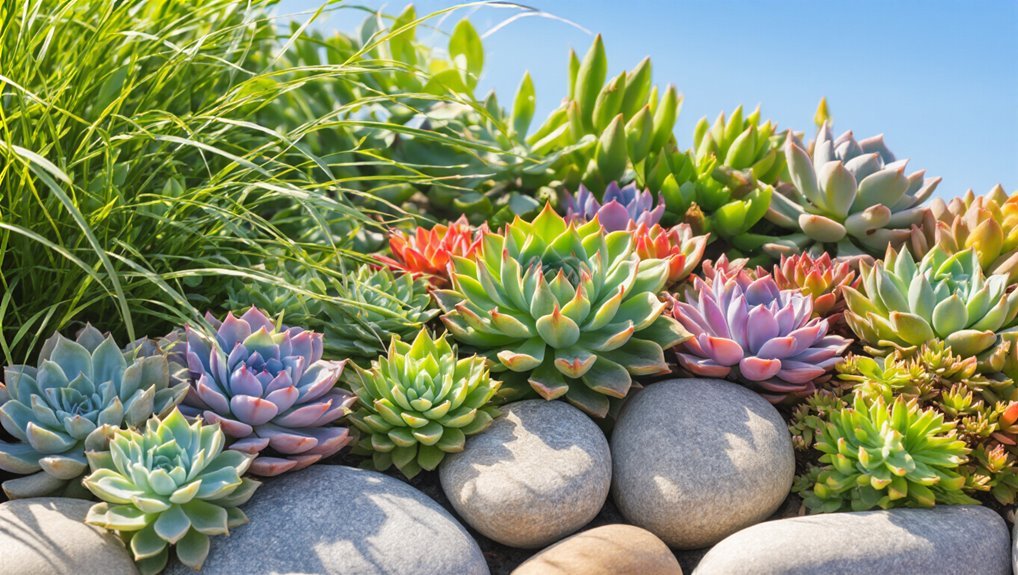
Creating a stunning succulent rock garden starts with a solid foundation of design elements that enhance their natural beauty.
Begin by selecting a variety of rocks in different sizes and textures to create visual interest. Arrange the rocks in a way that mimics a natural landscape, forming clusters and pathways. For even more gardening versatility, consider using raised garden beds to define the borders of your succulent rock garden and improve soil drainage.
Choose succulents that complement the colors and shapes of your rocks, placing taller varieties at the back and shorter ones in front for depth. Incorporate gravel or sand as ground cover to improve drainage and highlight your plants.
Remember to group succulents with similar water needs together. Finally, consider adding driftwood or ornamental stones for added character, making your rock garden a true focal point in your outdoor space.
For those with limited yard space or seeking a modern look, consider integrating vertical garden kits into your succulent garden design for an elevated and space-saving display.
Creating a Succulent Container Garden
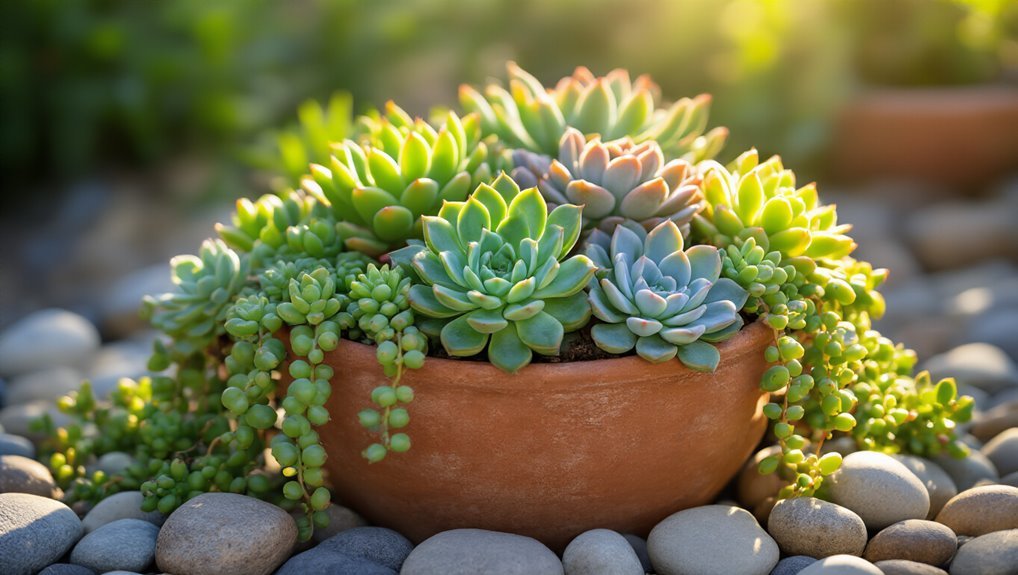
If you want to bring a touch of greenery to your space, a succulent container garden is an excellent choice.
These low-maintenance plants thrive in various environments and add a unique charm to your decor. Displaying your arrangement on stylish plant stands can elevate your greenery and make your succulents stand out as a design feature. Here’s how to create a stunning succulent container garden:
- Choose the right container: Select a pot with drainage holes to prevent water accumulation. Terracotta or ceramic pots work beautifully.
- Pick your succulents: Combine different shapes, sizes, and colors for visual interest. Consider varieties like Echeveria, Haworthia, or Sedum.
- Use quality soil: Opt for a well-draining cactus mix. This ensures your succulents get the right nutrients without sitting in water.
For the best results, consider displaying your arrangement in beautiful plant pots to elevate the look of your space and make your succulent garden a true focal point.
With these steps, you’ll have a thriving succulent garden that brightens your space effortlessly!
Incorporating Succulents Into Vertical Gardens
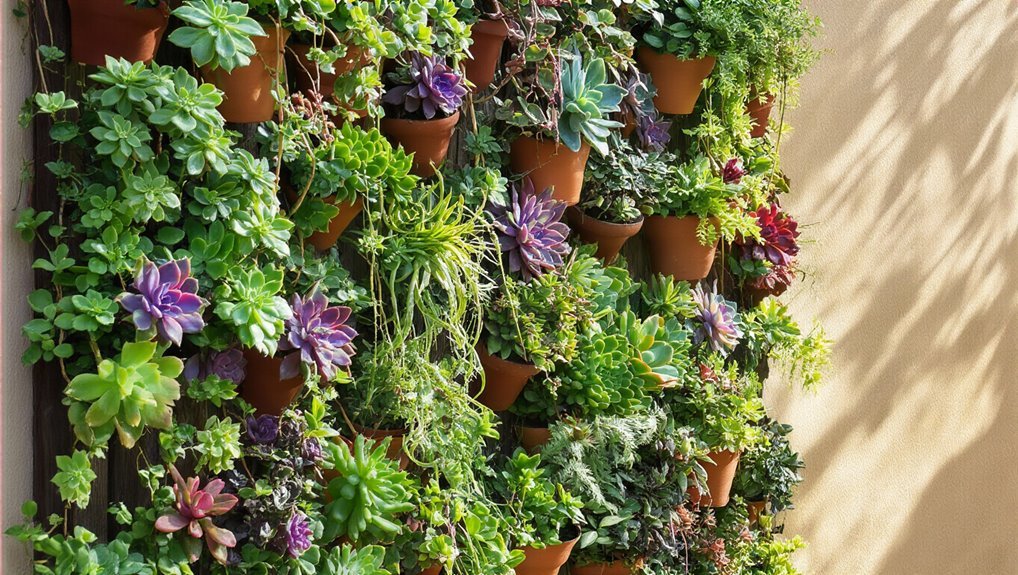
As you explore ways to enhance your outdoor or indoor space, incorporating succulents into vertical gardens offers a striking solution.
These vibrant plants thrive in limited soil, making them perfect for stacked planters or wall-mounted displays. Start by selecting a variety of succulents with different shapes, colors, and textures to create visual interest. For even less maintenance, consider using self-watering planters to ensure your succulents receive consistent moisture without overwatering.
Use a sturdy support structure, like a wooden frame or metal grid, to secure your plants. Ensure each succulent has adequate drainage and consider using a lightweight potting mix.
Regularly check for moisture, as succulents prefer drier conditions. With minimal upkeep, your vertical garden will flourish, adding a unique, lush element to your environment.
Embrace the beauty and charm of succulents in a space-saving design! For the best results when starting your vertical succulent garden, consider using seed starting kits to give your young plants a healthy and strong beginning.
Crafting a Succulent Fairy Garden
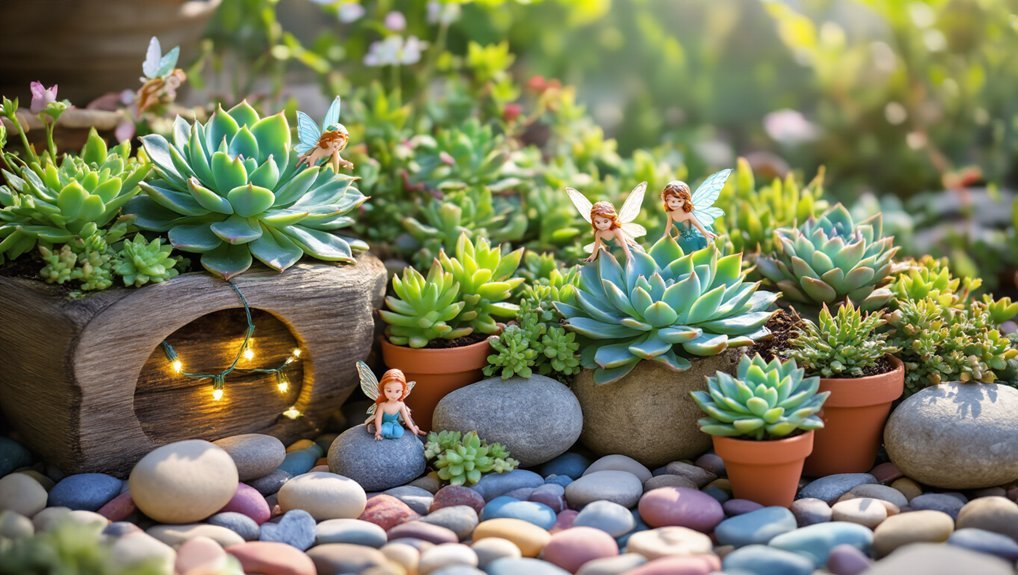
Transforming a small corner of your garden or a tabletop into a whimsical succulent fairy garden can spark joy and creativity.
Here’s how you can create your enchanting retreat:
- Choose Your Succulents: Select a variety of colors and shapes, like Echeveria, Sedum, or Haworthia, to add visual interest.
- Add Miniature Accessories: Incorporate tiny fairies, houses, or decorative stones to enhance the magical feel of your garden. For those interested in expanding their gardening skills, you might explore Herb Garden Kits with seeds and pots to complement your succulent display.
- Create Layers: Arrange your succulents at varying heights using small pots or rocks to add depth and dimension.
For those who love propagating their own plants, displaying cuttings in a Plant Propagation Station can perfectly complement your fairy garden and spark even more creativity.
With just these simple steps, you’ll create a captivating space that’s not only low-maintenance but also a delightful escape for your imagination.
Get ready to enjoy the charm of your own succulent fairy garden!
Using Succulents as Ground Cover
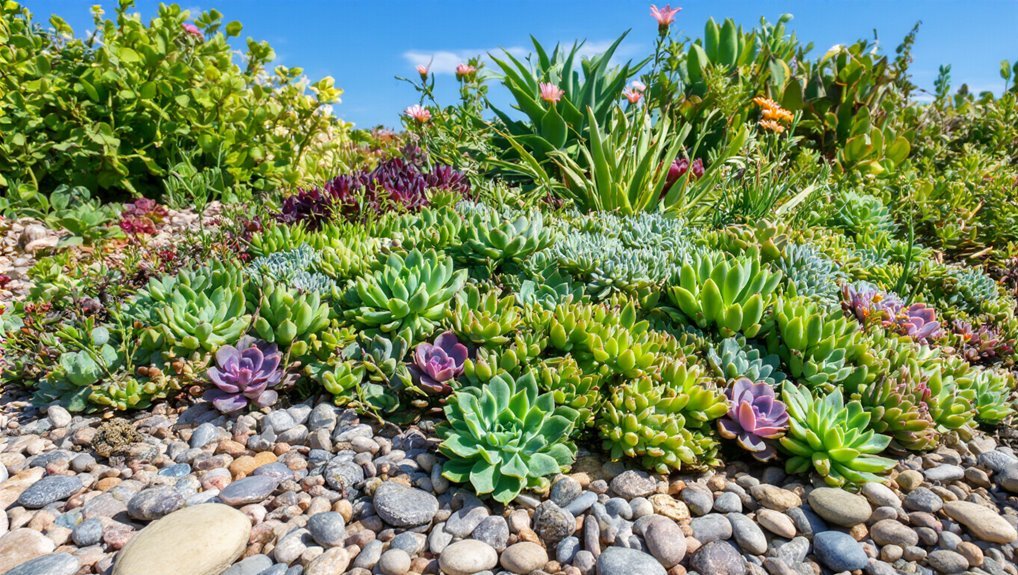
Using succulents as ground cover not only adds a unique aesthetic to your landscape but also provides practical benefits.
These hardy plants thrive in various conditions, requiring minimal water and care. You can create a vibrant tapestry of colors and textures that enhances your garden’s appeal while suppressing weeds. For best results and to define your succulent beds neatly, consider using edging tools to separate succulents from lawns or pathways.
Choose low-growing varieties like Sedum or creeping Thyme, which spread quickly and fill bare spots effectively. Their ability to retain moisture helps prevent soil erosion, making them an eco-friendly choice.
Plus, they’re perfect for areas where traditional grass struggles. With a little planning, you can design a stunning, low-maintenance ground cover that showcases the beauty of succulents while benefiting your garden environment.
For an extra pop of color and culinary interest, consider incorporating Edible Flower Seeds into your design to complement the succulents and attract pollinators.
Embrace this sustainable solution today!
Seasonal Care Tips for Your Succulent Garden
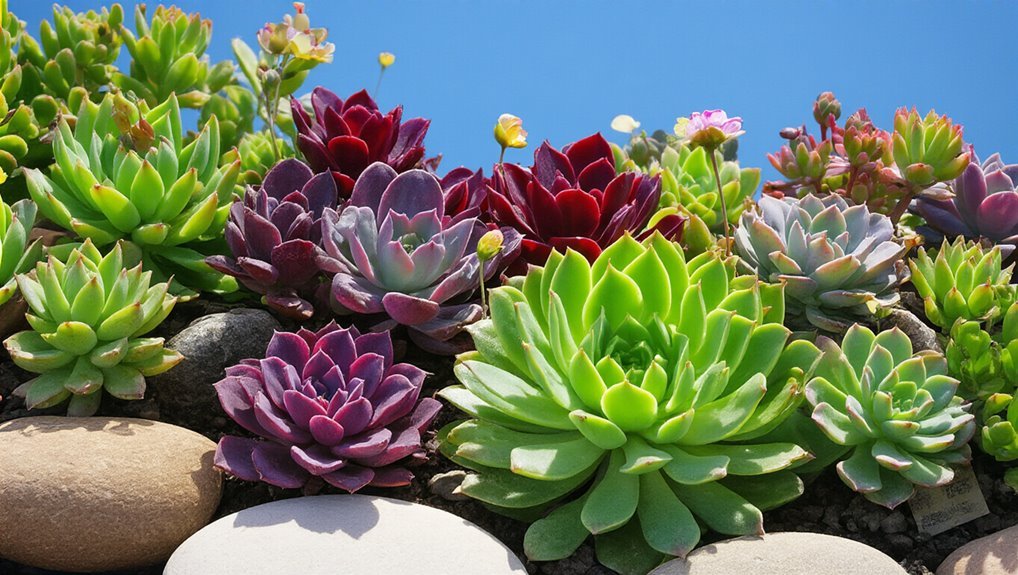
To keep your succulent garden thriving throughout the seasons, it’s essential to adapt your care routine accordingly. When preparing your garden for each season, using the right garden trowel can help with planting, soil mixing, and transplanting tasks.
Here are three key tips to ensure your succulents stay healthy:
- Spring: As temperatures rise, increase watering frequency. Check for pests and prune any dead leaves to encourage new growth.
- Summer: Provide partial shade during extreme heat. Monitor soil moisture, and ensure proper drainage to prevent rot. Fertilize lightly every month.
- Fall/Winter: Reduce watering as succulents enter dormancy. Move pots indoors if temperatures drop below freezing, and place them in a bright spot to maintain light exposure.
For tidier maintenance and healthy growth, using pruning shears can make trimming dead or damaged leaves much easier and more precise.
Frequently Asked Questions
Can Succulents Survive in Extreme Temperatures?
Yes, succulents can survive extreme temperatures, but they thrive best in moderate conditions. You should protect them from frost and intense heat, ensuring proper drainage and adequate watering to maintain their health during temperature fluctuations.
How Often Should I Fertilize My Succulent Garden?
Fertilizing succulents too often can be tempting; after all, who wouldn’t want them to thrive? However, you only need to fertilize your succulent garden every four to six weeks during the growing season.
What Pests Commonly Affect Succulent Plants?
Common pests that affect your succulent plants include mealybugs, aphids, and spider mites. Regularly inspect your plants for signs of damage, and treat infestations promptly to keep your succulents healthy and thriving.
Are There Indoor Succulents That Thrive Without Sunlight?
Think of indoor succulents as resilient warriors. While most need sunlight, some like snake plants and pothos thrive in low light. You’ll enjoy their unique shapes and colors, even in dim corners of your home.
How Can I Propagate Succulents Effectively?
To propagate succulents effectively, you’ll need to take healthy leaf or stem cuttings. Let them callous for a few days, then plant in well-draining soil. Water sparingly until roots develop, and watch them thrive!
Conclusion
In a world where gardens demand constant attention, succulents stand out as the low-maintenance divas. Who would’ve thought that a garden could thrive on neglect? With just a sprinkle of creativity and a dash of care, your succulent paradise transforms into a stunning spectacle. So, while your friends toil away in their flower beds, you’ll be sipping lemonade, basking in the beauty of your effortless oasis. Embrace the irony—sometimes, less really is more!