To grow your own herbal tea garden, start with mint, chamomile, and lemon balm. Mint thrives in sunny spots and well-drained soil—just snip off the leaves when they’re vibrant. Chamomile loves sun and produces pretty blooms with a sweet fragrance, making it perfect for calming teas. Lemon balm’s citrus aroma enhances any garden and brings stress relief. These herbs are easy to care for, and there’s so much more information to help you succeed!
Key Takeaways
- Start with easy-to-grow herbs like mint, chamomile, and lemon balm for a delightful herbal tea garden.
- Plant in sunny spots with well-drained soil for optimal growth and flavor.
- Regularly water your herbs, keeping the soil slightly moist for healthy plants.
- Harvest leaves as needed; snip vibrant leaves for mint or collect chamomile blooms for tea.
- Consider using containers to manage spreading herbs like mint and to enhance garden aesthetics.
Mint: A Refreshing Classic
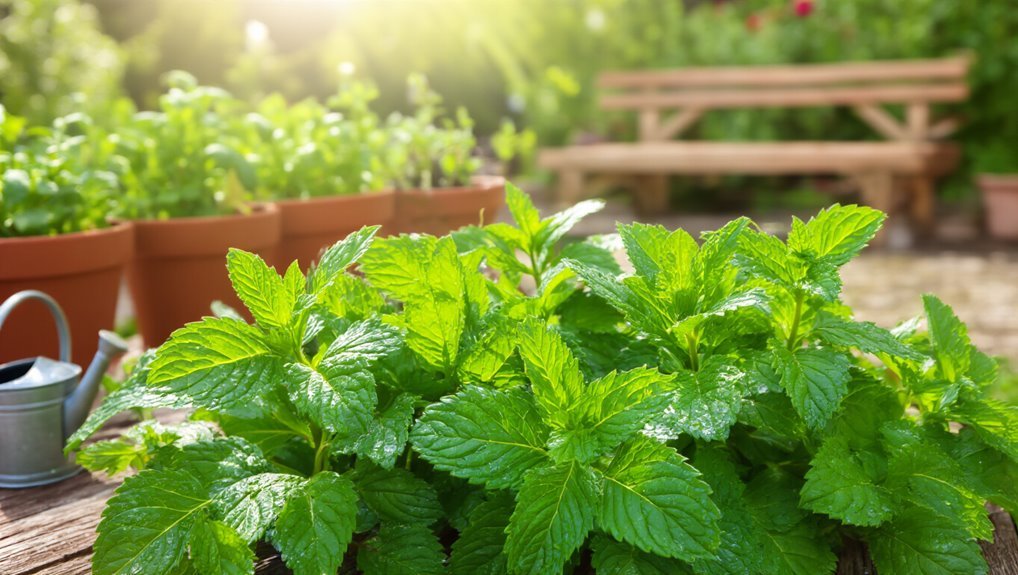
Mint is one of the most popular herbs for a reason—its refreshing flavor and aroma can instantly uplift your mood.
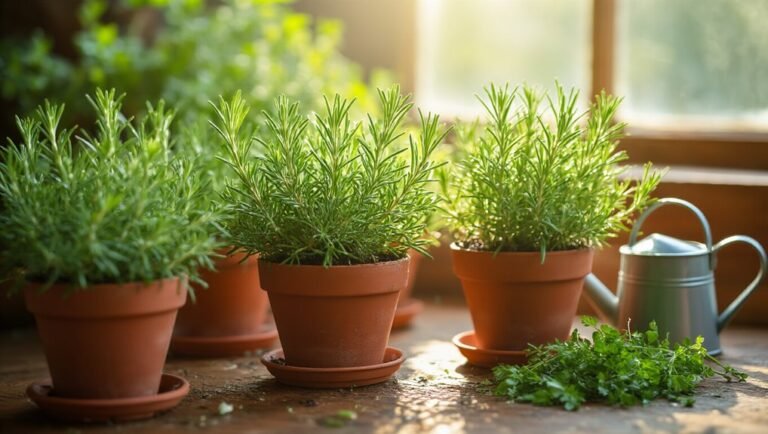
Growing mint in your herbal tea garden is a breeze. You can start with seeds or young plants, but be careful; mint can spread quickly. Choose a sunny spot with well-drained soil, and consider planting it in a container to manage its growth. For best results, try starting your mint seeds with a seed starting kit to ensure healthy and robust seedlings right from the beginning.
Water it regularly, but don’t overdo it; mint prefers slightly moist soil. When the leaves are vibrant and fragrant, it’s time to harvest! Just snip off what you need and let the rest thrive.
Enjoy your freshly brewed mint tea hot or iced, and savor the delightful taste while reaping the health benefits. You won’t regret it!
If you’re just starting out, consider using one of our Herb Garden Kits with Seeds and Pots to make growing mint and other herbs even easier.
Chamomile: The Soothing Flower
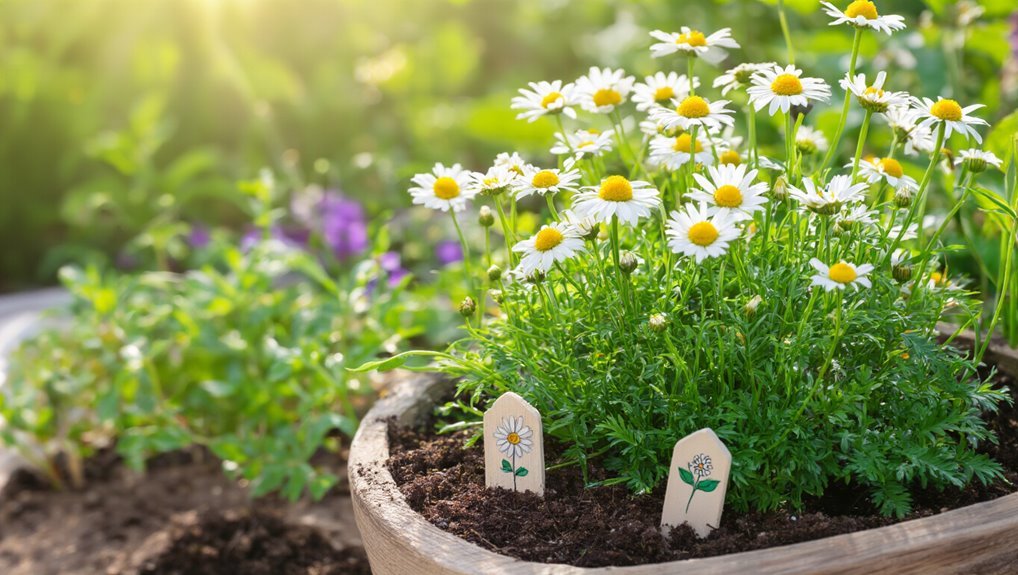
After enjoying the invigorating taste of mint, you might want to explore another delightful addition to your herbal tea garden: chamomile. This soothing flower is perfect for calming your mind and aiding sleep.
Here’s why you should consider growing chamomile:
- Easy to Grow: Thrives in various conditions, from full sun to partial shade.
- Attractive Blooms: Features beautiful daisy-like flowers that brighten your garden.
- Aroma Therapy: Emits a gentle, sweet fragrance that can enhance any space. Adding decorative birdhouses to your garden can complement the charm of chamomile and attract helpful birds.
- Health Benefits: Known for its anti-inflammatory and calming properties.
- Versatile Use: Enjoy it fresh or dried, in teas, or as a calming infusion.
If you want to deepen your knowledge about growing chamomile and other herbs, you might find gardening books to be an essential resource for every gardening enthusiast.
Add chamomile to your garden, and you’ll have a soothing remedy at your fingertips whenever you need it!
Lemon Balm: A Citrus Delight
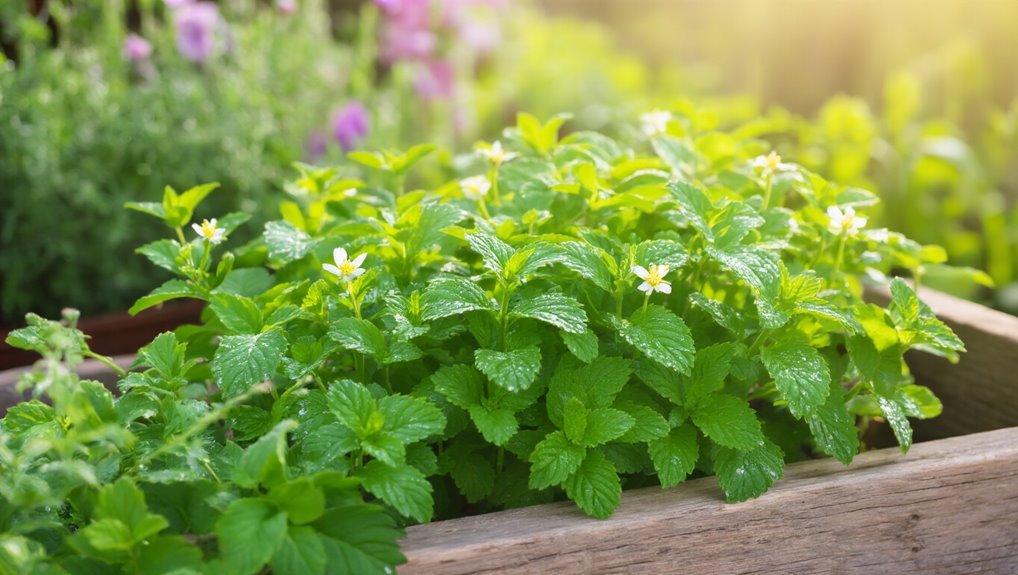
If you’re looking to add a refreshing twist to your herbal tea garden, consider lemon balm, a delightful herb that brightens both your garden and your cup. This easy-to-grow plant thrives in sunny spots with well-drained soil. Its vibrant green leaves release a lovely citrus aroma, making it a favorite among gardeners and tea lovers alike. For those interested in keeping their herbs healthy, using pest control products can help protect lemon balm from unwanted insects and maintain plant vitality. To harvest, simply snip off the leaves as needed; they’ll continue to grow back.
When you brew lemon balm tea, you’ll enjoy a calming, slightly sweet flavor that’s perfect for any time of day. Plus, it’s known for its soothing properties, helping reduce stress and promote relaxation. If you want to keep pests away from your lemon balm naturally, try using organic pest control solutions that are safe for both your plants and your home garden.
Frequently Asked Questions
What Type of Soil Is Best for Herbal Tea Plants?
For herbal tea plants, well-draining soil is essential. You’ll want a mix of loamy and sandy soil, rich in organic matter. This combination promotes healthy root growth and ensures your plants thrive beautifully.
How Much Sunlight Do Herbal Tea Plants Need Daily?
Herbal tea plants generally thrive with six to eight hours of direct sunlight daily. Ensure you place them in a sunny spot, and they’ll flourish, providing you with vibrant flavors for your brews.
When Is the Best Time to Harvest Herbal Tea Leaves?
Timing’s everything, so you’ll want to harvest herbal tea leaves just before the plants bloom. This ensures maximum flavor and potency. Early morning is ideal, as the leaves are fresh and full of essential oils.
Can I Grow These Herbs Indoors?
Yes, you can grow these herbs indoors! Just ensure they get enough sunlight, keep the soil moist but not soggy, and provide good air circulation. With some care, your indoor herbal garden will thrive beautifully!
How Do I Store Dried Herbal Tea Leaves?
Like a treasure hunter, you’ll want to keep your dried herbal tea leaves in airtight containers, away from light and moisture. Label them clearly and store them in a cool, dark place for maximum freshness.
Conclusion
Now that you know how to grow mint, chamomile, and lemon balm, you’re ready to create your own herbal tea garden! Did you know that studies show drinking herbal tea can reduce stress by up to 50%? Imagine sipping your own fresh brews while reaping those calming benefits. So, grab some pots, get planting, and enjoy the journey of nurturing these delightful plants. Your tea time will never be the same again!