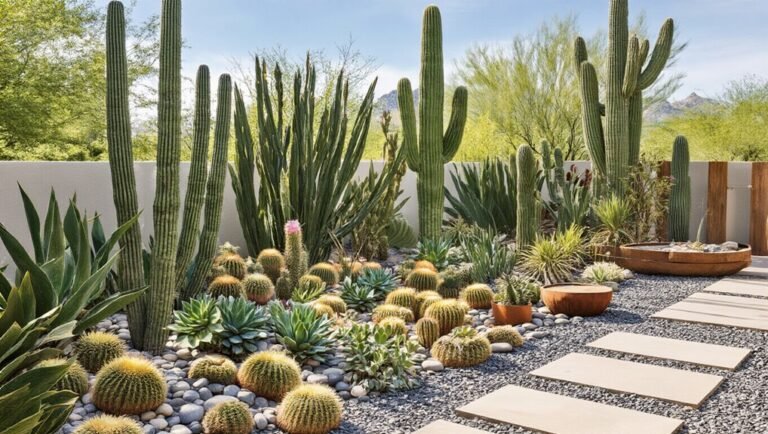
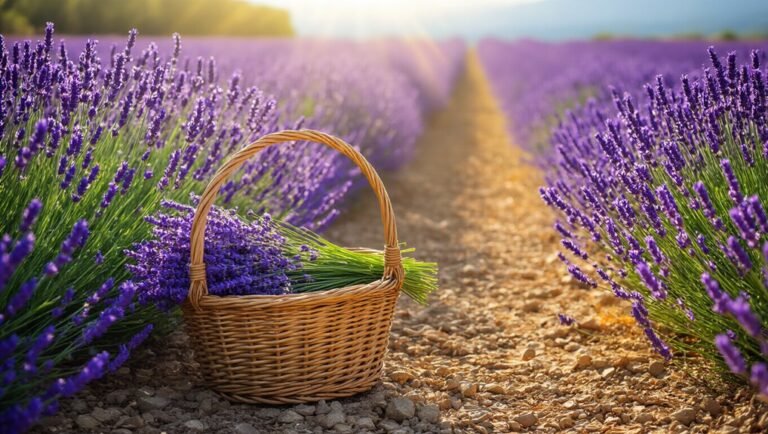
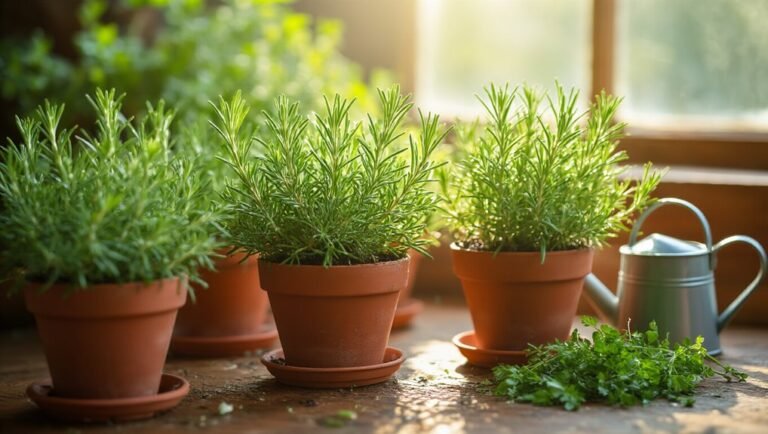
To create a drought-tolerant, low-water backyard garden, start by selecting native plants with deep root systems. Group them by their water needs and design your layout to maximize shade and minimize evaporation. Implement water conservation techniques, like using mulch and drip irrigation. Maintain your garden by removing weeds and monitoring plant health. Finally, support local wildlife with native species and a water source. Discover more tips to enhance your garden’s resilience and beauty.
Key Takeaways
- Select native plants with deep root systems to enhance drought resistance and adaptability to local conditions.
- Group plants with similar water needs to streamline irrigation and reduce water waste.
- Implement mulch around plants to retain soil moisture and suppress weed growth effectively.
- Use drip irrigation systems for targeted watering, minimizing evaporation and maximizing efficiency.
- Incorporate hardscaping materials like gravel to enhance moisture retention and create functional pathways.
Selecting the Right Plants for Drought Resistance
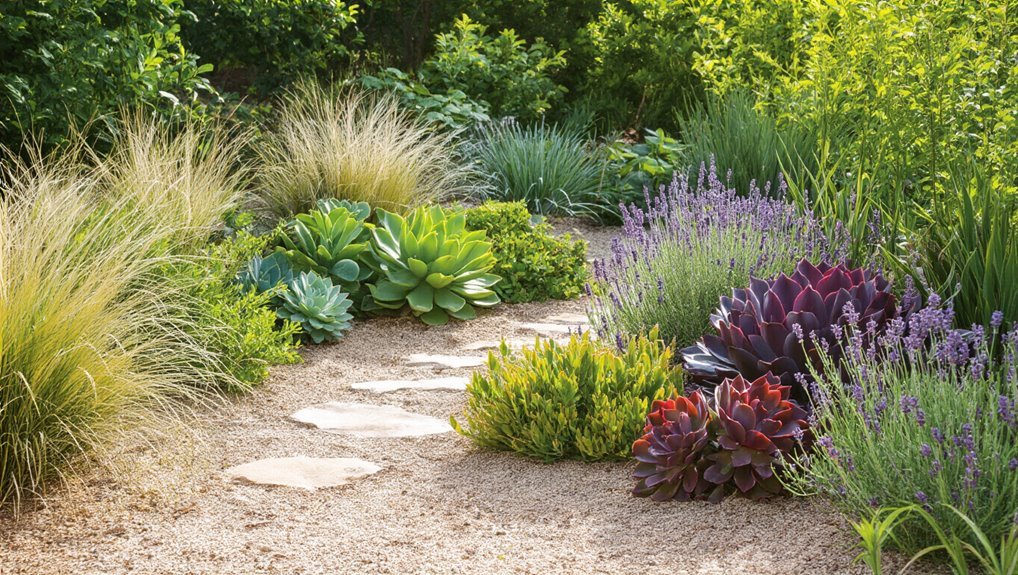
When you’re planning a drought-tolerant garden, selecting the right plants is crucial for success.
Start by choosing native species that thrive in your climate; they’re adapted to local rainfall patterns and soil types. Look for plants with deep root systems, as these can access moisture stored deeper in the ground. Consider mixing in insect repellent plants such as citronella, which can naturally help protect your garden from pests without extra water input.
Succulents and cacti are excellent options, offering unique shapes and colors while requiring minimal water. Don’t overlook ornamental grasses, which add texture and movement to your garden.
Always check for drought-resistant varieties of popular flowers and shrubs, as many exist. Lastly, consider grouping plants with similar water needs together to make maintenance easier.
You might also consider incorporating edible flower seeds into your garden, as many edible flowers are surprisingly drought-tolerant and can add both color and culinary value to your landscape.
With the right selections, your garden can flourish with beauty and resilience.
Designing Your Garden Layout for Water Efficiency
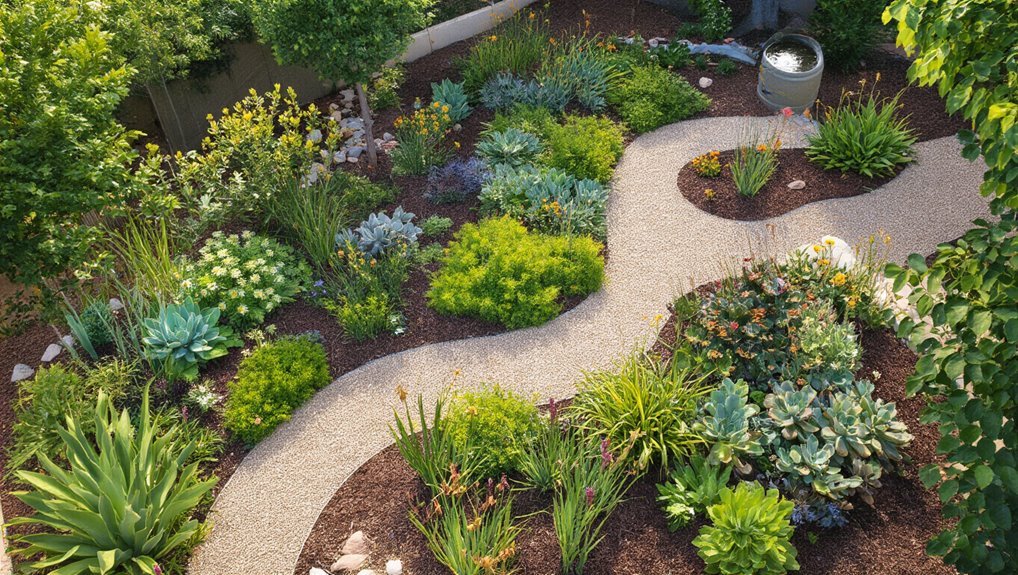
After selecting the right plants for your drought-tolerant garden, the next step is to design a layout that maximizes water efficiency.
Consider the following strategies to create a sustainable garden:
- Group plants with similar water needs to reduce overwatering.
- Position taller plants to shade shorter ones, minimizing evaporation.
- Use contouring or raised beds to capture and direct rainwater.
- Incorporate hardscaping materials, like gravel or stones, to help retain moisture.
- Plan for pathways that minimize soil compaction, allowing for better water absorption. Investing in essential garden hoses ensures you can deliver just the right amount of water to specific areas without waste.
Choosing the right garden soil can further enhance your plants’ ability to thrive in low-water conditions by improving moisture retention and soil structure.
Implementing Effective Water Conservation Techniques
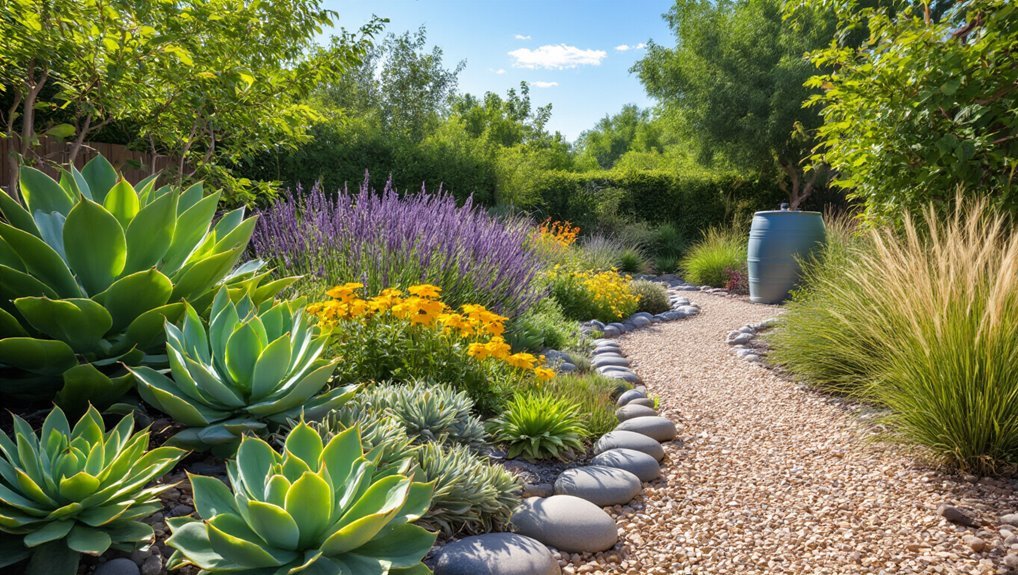
To create a truly drought-tolerant garden, implementing effective water conservation techniques is essential.
Start by using mulch around your plants; it retains moisture and reduces evaporation. Organic mulching materials such as straw mulches are excellent for conserving soil moisture and suppressing weeds naturally. Consider drip irrigation systems, which deliver water directly to the roots, minimizing waste. These drip irrigation systems are specially designed to maximize your garden’s watering efficiency by reducing runoff and evaporation.
Water your garden early in the morning or late in the evening to avoid evaporation during peak heat. Group plants with similar water needs together to optimize your watering schedule.
Incorporate rain barrels to collect and reuse rainwater for irrigation.
Finally, choose native plants that are adapted to your climate, as they require less water and maintenance.
Maintaining Your Low-Water Garden
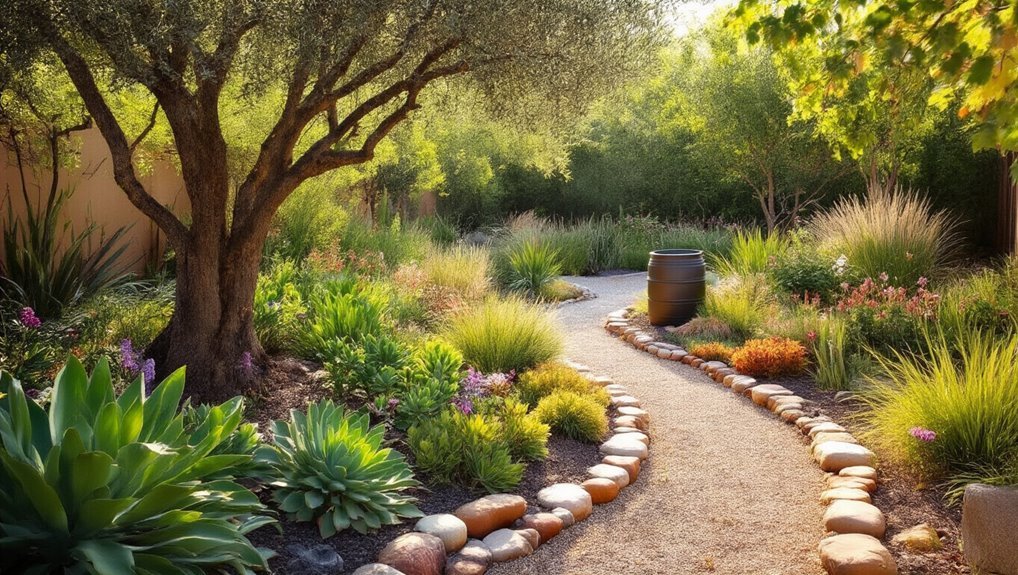
While a drought-tolerant garden requires less water, it still needs regular maintenance to thrive.
To keep your low-water garden in top shape, focus on these key tasks:
- Weeding: Regularly remove weeds that compete for nutrients and water.
- Mulching: Apply a layer of mulch to retain moisture and suppress weeds.
- Pruning: Trim dead or overgrown plants to promote air circulation and health.
- Monitoring: Keep an eye on plant health for signs of pests or disease.
- Fertilizing: Use organic fertilizers as needed to enhance soil nutrients without overdoing it.
Incorporating the benefits of using mulch can not only help conserve water but also improve soil quality and reduce weed growth in your garden. For added protection during unexpected cold spells, consider using a frost protection cover to shield sensitive plants and extend your growing season.
Supporting Local Wildlife in Your Drought-Tolerant Space
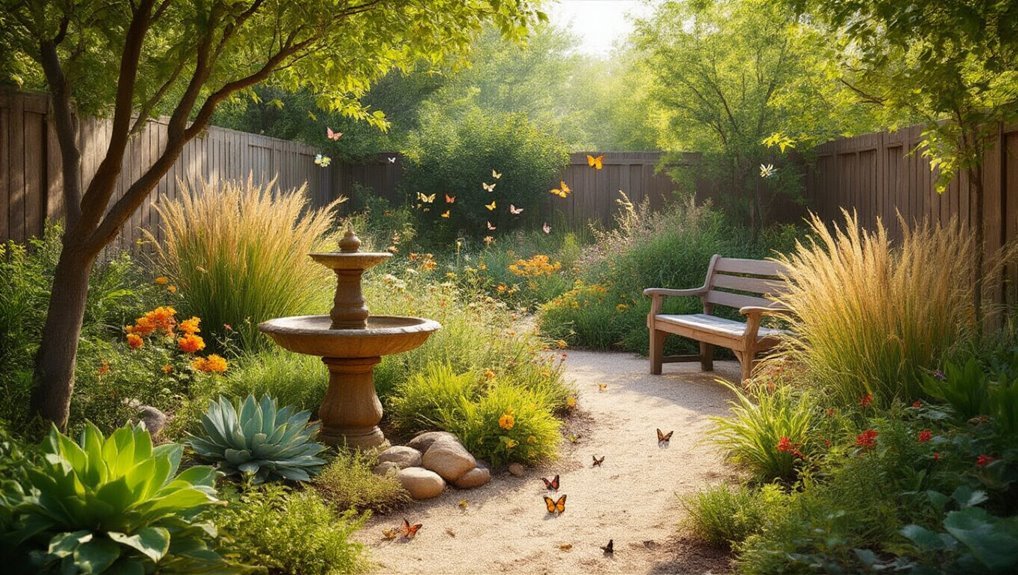
Creating a drought-tolerant garden not only conserves water but also provides a refuge for local wildlife. By selecting native plants, you’re attracting pollinators like bees and butterflies, while also creating habitats for birds and beneficial insects. Here are some simple ways to enhance your garden’s wildlife support:
| Action | Benefits | Recommended Plants |
|---|---|---|
| Plant native species | Attracts local pollinators | Milkweed, Sage |
| Add a water source | Provides hydration for wildlife | Birdbath, Small pond |
| Create shelter | Offers protection from predators | Shrubs, Groundcovers |
| Avoid pesticides | Protects beneficial insects | N/A |
With these steps, you’ll foster a vibrant ecosystem that thrives even in dry conditions.
Frequently Asked Questions
What Are the Best Soil Types for Drought-Tolerant Gardens?
For drought-tolerant gardens, well-draining soils like sandy or loamy types work best. They allow excess water to escape while retaining enough moisture for plants. Amending with organic matter can further enhance water retention and nutrient availability.
How Do I Choose Mulch for Water Retention?
Choosing mulch is like dressing your garden in a cozy blanket. You’ll want organic options like wood chips or straw that trap moisture and nurture the soil, allowing your plants to thrive without constant watering.
Can I Grow Vegetables in a Low-Water Garden?
Yes, you can grow vegetables in a low-water garden! Focus on drought-tolerant varieties, use mulch for moisture retention, and implement efficient watering techniques to ensure your plants thrive without excessive water use.
How Often Should I Fertilize Drought-Tolerant Plants?
You know what they say, “A little goes a long way.” For drought-tolerant plants, fertilize sparingly—about once or twice a year—using a slow-release formula to avoid overwhelming their natural resilience.
Are There Any Specific Pests to Watch for in These Gardens?
In your garden, watch for pests like aphids, spider mites, and mealybugs. They can thrive in dry conditions, so regularly inspect your plants. Catching infestations early makes managing them much easier and keeps your garden healthy.
Conclusion
Creating a drought-tolerant, low-water backyard garden can be as refreshing as a cool breeze on a hot day. By selecting the right plants, designing an efficient layout, and implementing smart water conservation techniques, you’ll cultivate a vibrant space that thrives with minimal resources. Plus, maintaining this garden not only supports local wildlife but also adds beauty to your home. Embrace the challenge, and watch your garden flourish while conserving precious water.