The key to fast, strong hydroponic growth is optimizing your lighting setup. You need to understand your plants’ light requirements, including intensity and duration. Choose the right type of grow lights based on their needs, and ensure you provide the correct light spectrum for healthy growth. Position your lights properly, monitor their intensity, and avoid common mistakes. You’ll unlock even more tips to maximize your system’s efficiency and boost your plants’ health.
Key Takeaways
- Provide 14-18 hours of light daily for most plants to ensure vigorous growth and strong root establishment.
- Utilize a mix of blue and red light spectrums to promote both vegetative growth and flowering effectively.
- Choose energy-efficient LED grow lights to reduce heat output while maximizing light intensity and spectrum.
- Implement timers for consistent lighting schedules, mimicking natural sunlight cycles to avoid overexposure.
- Regularly monitor light intensity with a PAR meter to fine-tune conditions for optimal plant health.
Understanding Plant Light Requirements
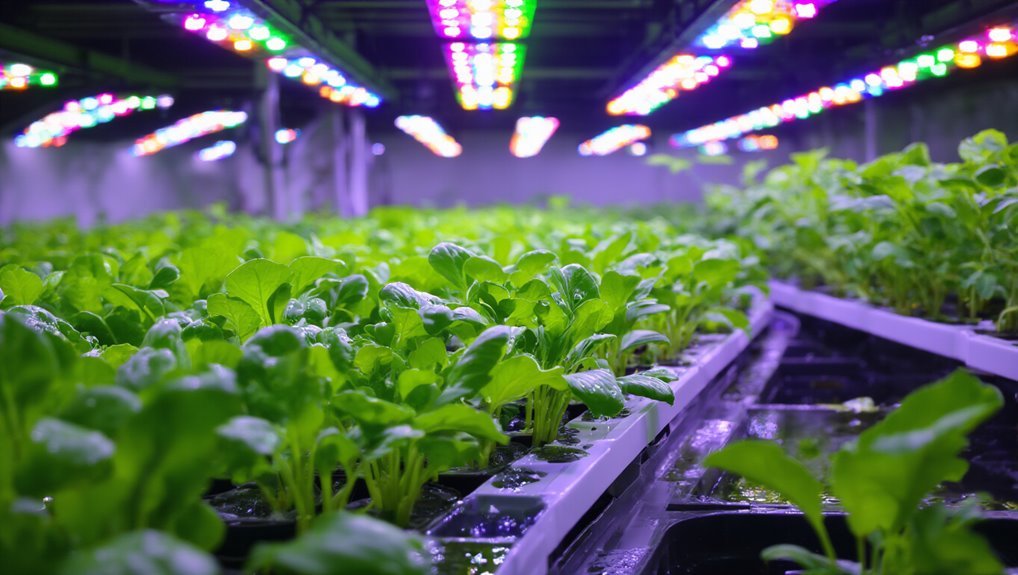
While you might think any light is good enough for your plants, understanding their specific light requirements is crucial for successful hydroponic growth.
Different plants need varying intensities and durations of light to thrive. For instance, leafy greens generally prefer lower light levels, while fruiting plants like tomatoes need stronger light. Along with proper lighting, providing your plants with hydroponic nutrient solutions is essential to support healthy growth and maximize yield in your system.
You’ll also want to consider the light cycle; most plants benefit from 14-18 hours of light daily.
Pay attention to how your plants respond to light. If they’re stretching towards the source, they might need more intensity. Conversely, if leaves are burning or yellowing, it could indicate excess light.
To maximize your results, make sure to choose hydroponic gardening systems that offer adjustable lighting solutions tailored to your plant’s needs.
The Importance of Light Spectrum
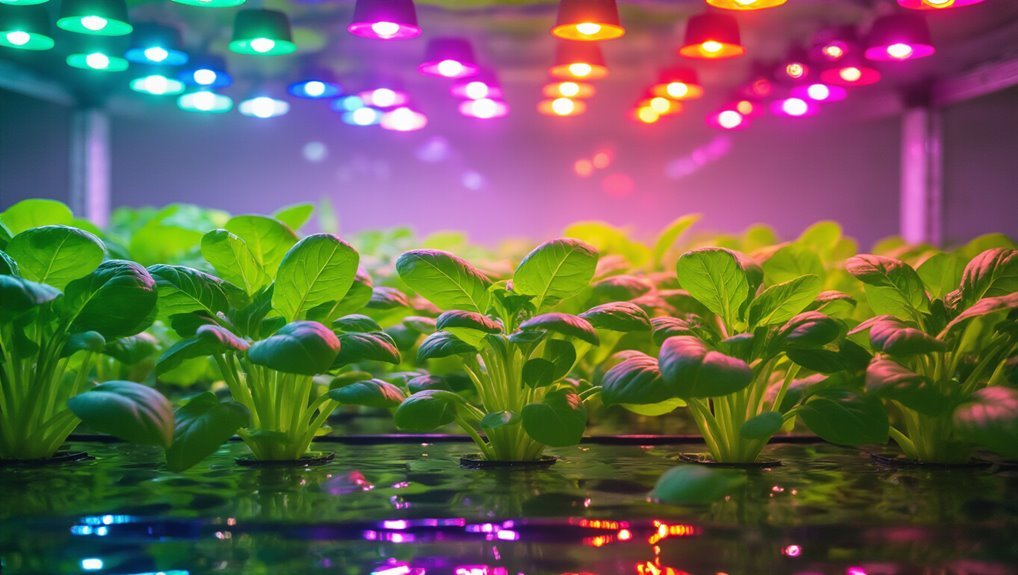
Understanding the light spectrum is essential for maximizing your hydroponic plants’ growth potential. Different wavelengths of light play distinct roles in plant development. For example, blue light promotes vegetative growth, while red light encourages flowering and fruiting. If you’re just getting started, using a seed starting kit can help you establish strong seedlings before moving them to a hydroponic system.
By effectively combining these wavelengths, you can create an optimal environment for your plants.
Additionally, plants have specific light absorption peaks; knowing these helps you tailor your lighting setup to meet their needs. The right light spectrum boosts photosynthesis, leading to faster, healthier growth.
Ignoring the importance of light spectrum may result in poor yields and stunted plants. For even greater convenience and consistent moisture, many hydroponic gardeners incorporate self-watering planters to support robust, healthy plant development.
Types of Grow Lights
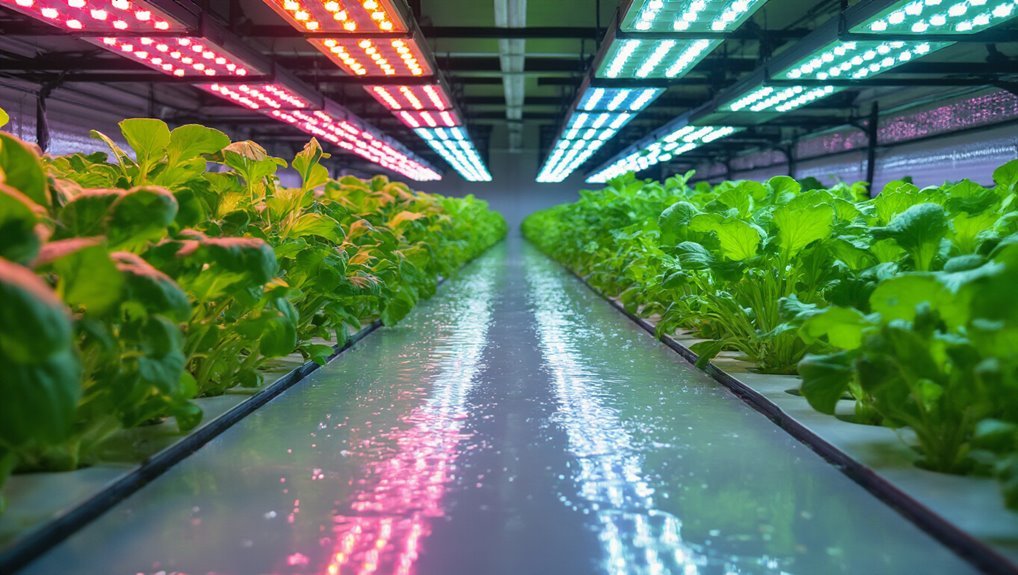
Choosing the right type of grow lights is key to harnessing the benefits of the light spectrum for your hydroponic plants.
Different grow lights cater to various needs, so understanding your options can make a significant difference in your plants’ growth and health. Incorporating grow bags into your hydroponic setup can also improve root health and drainage, supporting better overall plant growth.
- LED Grow Lights: Energy-efficient and long-lasting, these lights offer a full spectrum and low heat output.
- Fluorescent Lights: Ideal for seedlings and low-light plants, they’re affordable and easy to use, but less powerful than other options.
- HID Lights: High-intensity discharge lights provide robust light for larger plants but require proper ventilation due to heat.
To further optimize your garden, consider integrating drip irrigation systems to efficiently manage water delivery alongside your lighting setup.
Pick the type that suits your setup best, and watch your plants thrive!
Determining Light Intensity
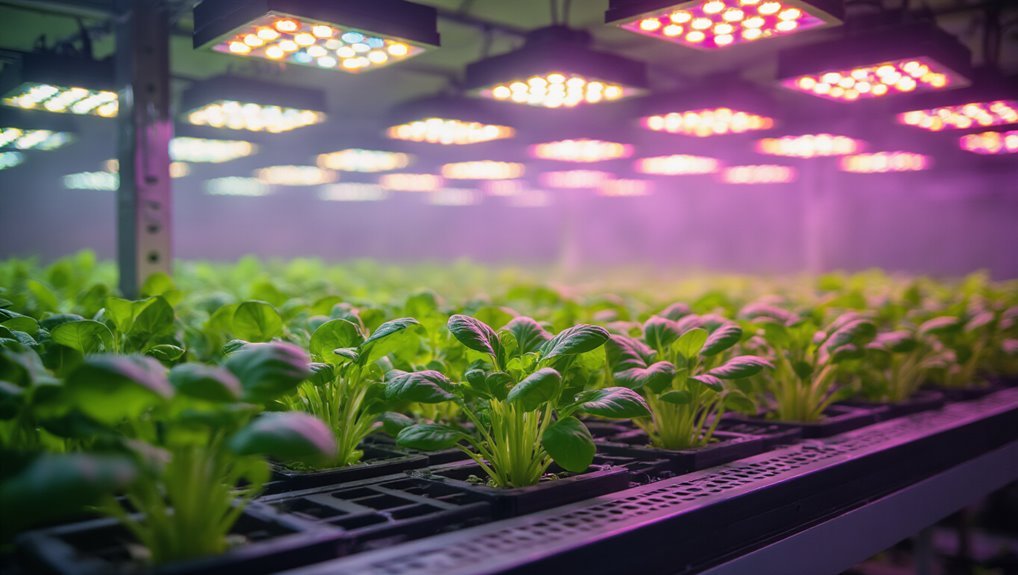
When it comes to hydroponic gardening, light intensity is crucial for plant health and growth. To determine the right intensity for your plants, you need to assess their specific light requirements. Most leafy greens thrive with around 200-400 µmol/m²/s, while fruiting plants like tomatoes may need 600-800 µmol/m²/s. You can measure light intensity using a PAR (Photosynthetically Active Radiation) meter, which gives you precise readings. Remember, too much light can lead to leaf burn, while too little can stunt growth. Adjust your grow lights accordingly, keeping them at an appropriate distance from your plants. Garden hoses are also indispensable for gardeners who need to water outdoor beds or container plants, ensuring flexibility and coverage beyond what hydroponic systems provide. Regularly monitor their responses, as this helps you fine-tune the intensity for optimal growth and health in your hydroponic setup.
For gardeners interested in traditional methods, using watering cans remains an essential part of maintaining a healthy garden alongside hydroponic systems.
Light Duration and Photoperiods
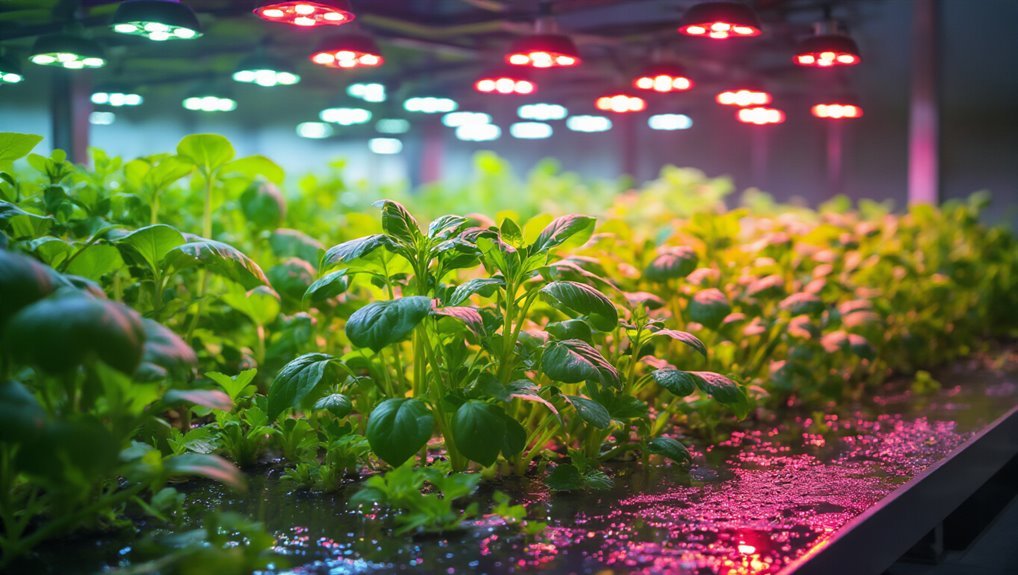
Light duration and photoperiods play a vital role in the growth cycles of your hydroponic plants. Understanding how long to keep your lights on can significantly impact growth rates, flowering, and overall health.
Most plants thrive on a cycle, such as 18 hours of light followed by 6 hours of darkness during the vegetative stage.
Here are some key points to remember:
- Seedlings often need 16-18 hours of light to establish strong roots.
- Flowering plants usually benefit from 12 hours of light and 12 hours of darkness to trigger bud development.
- Leafy greens can grow well with 14-16 hours of light, promoting lush, vibrant growth.
Adjusting these durations can help you maximize your hydroponic garden’s potential!
Positioning Your Grow Lights
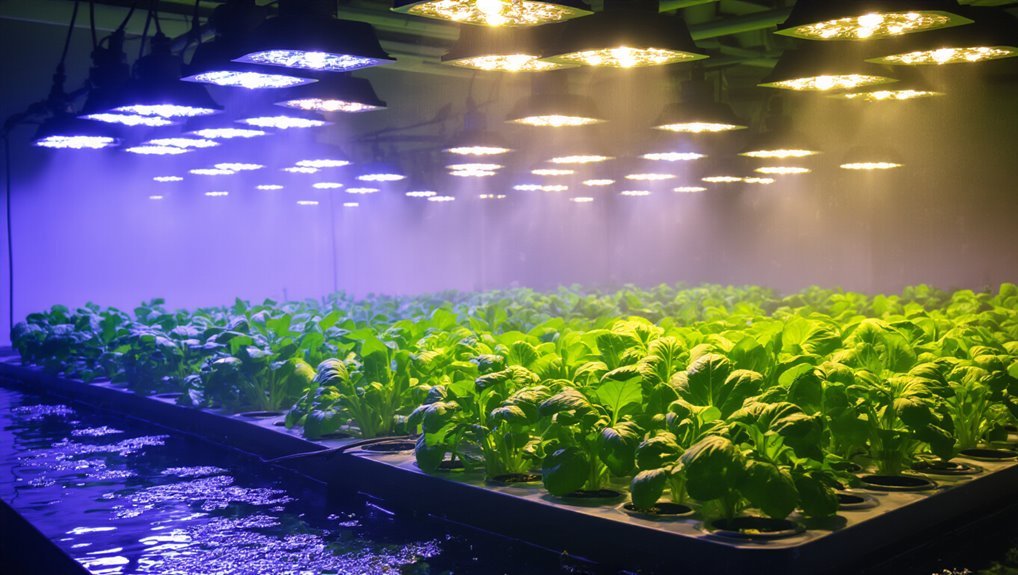
Properly positioning your grow lights is key to ensuring your hydroponic plants receive the right amount of light for optimal growth.
Start by placing the lights close enough to your plants to deliver strong light intensity, but not so close that you risk burning the leaves. A good rule of thumb is to keep lights 12 to 24 inches above the canopy, depending on the type of light you’re using.
Adjust the height as your plants grow to maintain consistent light exposure. Remember to angle the lights if you’re using reflectors, directing light towards the center of your grow area.
Regularly check your plants for signs of light stress, and fine-tune the positioning as needed for healthy, robust growth.
Common Lighting Mistakes to Avoid
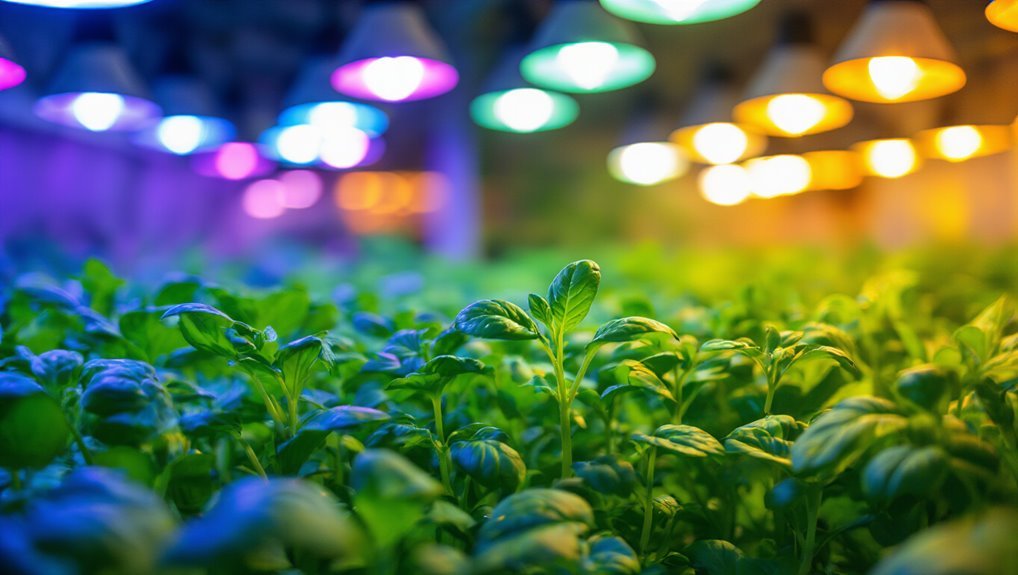
While many growers focus on the type and intensity of their lights, overlooking the basics can lead to common mistakes that hinder plant growth.
To ensure your hydroponic garden thrives, be mindful of these pitfalls:
- Inconsistent Light Schedules: Plants need a regular cycle of light and darkness. Changing schedules can stress them out.
- Neglecting Light Distance: Keeping lights too close can scorch your plants, while placing them too far can stunt growth. Find that sweet spot!
- Ignoring Plant Color: If your plants are stretching towards the light or showing yellowing leaves, it’s a sign they need adjustments in light intensity or positioning.
Avoid these mistakes, and you’ll set your hydroponic system up for success!
Maximizing Efficiency and Energy Use
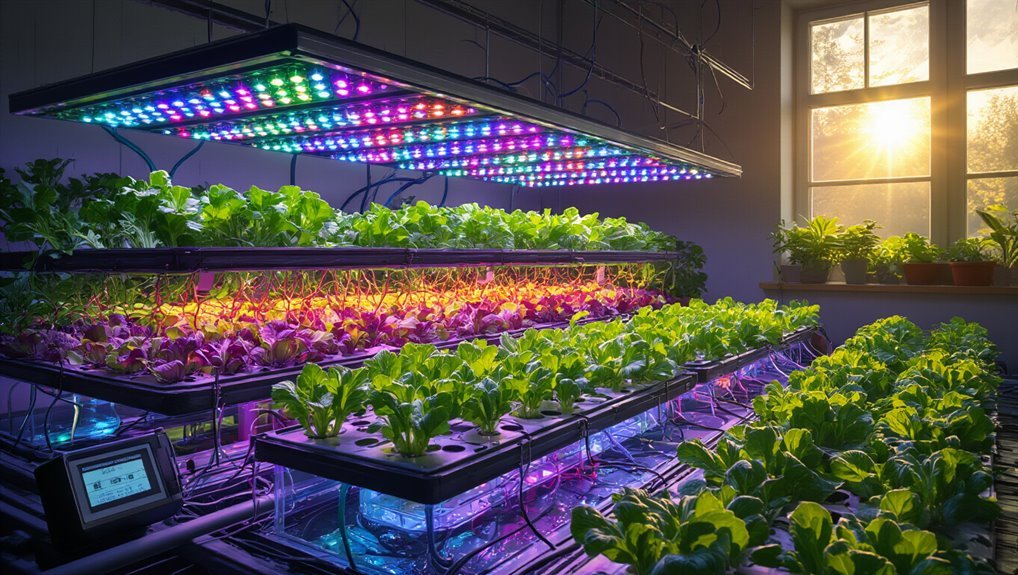
To achieve optimal growth in your hydroponic garden, it’s important to not only focus on the right lighting but also to maximize efficiency and energy use.
Start by using LED lights, as they consume less energy and produce less heat compared to traditional bulbs. Position your lights at the optimal distance to ensure your plants receive adequate light without wasting energy.
Utilize timers to provide a consistent light schedule, mimicking natural sunlight cycles, which helps prevent overexposure.
Consider reflective materials in your setup to enhance light distribution, reducing the need for additional fixtures.
Lastly, regularly monitor your energy consumption to identify any areas for improvement, ensuring your hydroponic system remains both productive and sustainable.
Frequently Asked Questions
How Can I Tell if My Plants Need More Light?
You can tell your plants need more light if they’re stretching towards the light source, showing pale leaves, or growing slowly. Adjust their lighting conditions to boost growth and keep them healthy and vibrant.
What Are the Best Grow Lights for Beginners?
Choosing grow lights can feel like finding a needle in a haystack! For beginners, LED lights are fantastic—they’re energy-efficient, long-lasting, and produce minimal heat. You’ll love how easily they help your plants thrive!
Can I Use Regular Bulbs for Hydroponic Lighting?
You can use regular bulbs for hydroponic lighting, but they won’t provide the optimal spectrum plants need for growth. Investing in specialized grow lights is a better choice for healthier, faster-growing plants in your system.
How Often Should I Replace My Grow Lights?
You should replace your grow lights every 12 months or sooner if you notice diminished plant growth. Regularly check their intensity and spectrum; this ensures your plants receive optimal light for healthy, vibrant growth.
Are There Specific Light Requirements for Different Plant Types?
Yes, different plant types have specific light requirements. For instance, leafy greens thrive in cooler light, while fruiting plants need more intense, warmer light. Adjust your grow lights according to each plant’s needs for optimal growth.
Conclusion
In conclusion, investing in the right lighting for your hydroponic setup is crucial for fast, strong growth. You might think it’s too complicated or costly, but the truth is, understanding light requirements and selecting the right spectrum can save you time and money in the long run. By avoiding common mistakes and optimizing your light usage, you’ll create an environment where your plants thrive, ensuring a bountiful harvest without breaking the bank. Your plants deserve it!