When choosing between yellow, red, and white onions, consider their distinct flavors and uses. Yellow onions are versatile and great for caramelizing, while red onions are milder and add sweetness to salads. White onions have a sharper taste, perfect for Mexican dishes. Each type brings something unique to your meals. Want to explore more about their culinary uses and nutritional benefits? Let’s discover how to select the right onion for your dishes.
Key Takeaways
- Yellow onions have a strong flavor that mellows when cooked, making them ideal for soups and stews.
- Red onions are milder and sweeter, perfect for salads, salsas, and as burger toppings.
- White onions offer a sharp taste, making them great for tacos and Mexican dishes.
- Sweet onions are incredibly mild and sugary, excellent for caramelizing.
- Each onion variety enhances dishes uniquely, so choose according to your recipe needs.
Overview of Onion Varieties
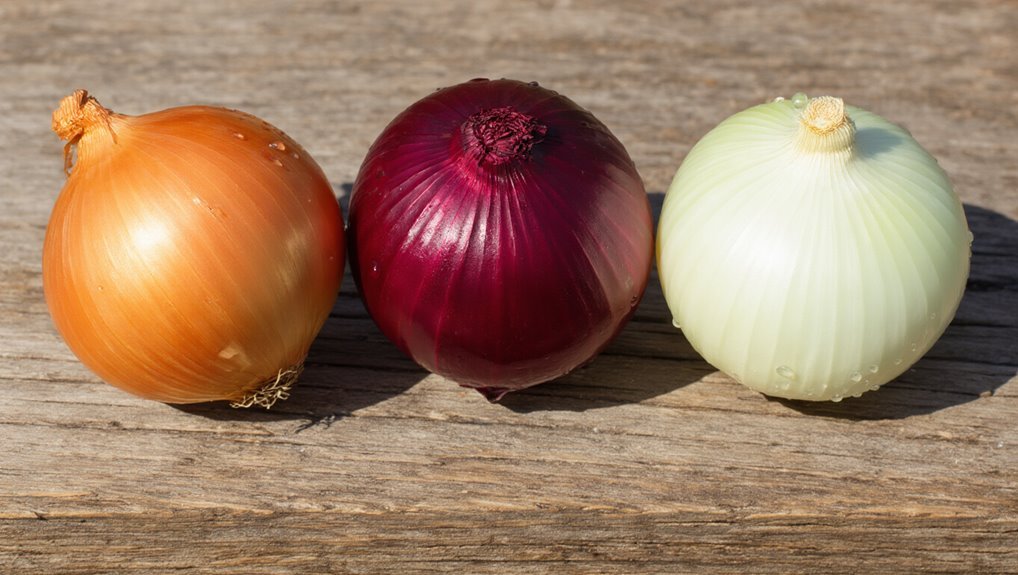
When you dive into the world of onions, you’ll discover a rich variety of types, each offering unique flavors and uses in the kitchen.
Yellow onions are the workhorses of cooking, perfect for caramelizing and adding depth to dishes. For gardeners, selecting the ideal garden trowel can make planting onions and other bulbs much easier and more efficient.
Red onions, with their vibrant color and mild flavor, shine in salads and salsas.
White onions, known for their crisp texture and sharp bite, are great for adding a punch to tacos and guacamole.
Each variety brings something special to the table, whether you’re sautéing, grilling, or raw.
You can experiment with these onions to find the perfect match for your culinary creations.
Understanding these differences helps elevate your cooking and enhances your meals.
For optimal onion growth in your garden, starting with the best garden soil ensures your plants will thrive and produce flavorful bulbs.
Flavor Profiles
Onions are a flavor powerhouse, each variety boasting a distinct profile that can transform your dishes.
Here’s a quick breakdown to help you choose the right onion for your culinary adventures:
- Yellow Onions: They’ve a strong, pungent flavor that mellows when cooked, making them versatile for many recipes.
- Red Onions: These are milder and sweeter, perfect for salads or pickling, adding a pop of color and flavor.
- White Onions: With a sharper taste, they’re great in salsas and Mexican dishes, providing a crisp bite. In kitchens where freshness is key, organic pest control solutions can help keep your ingredients safe from unwanted invaders.
- Sweet Onions: These are incredibly mild and sugary, ideal for caramelizing or eating raw.
- Green Onions: Also known as scallions, they offer a fresh, mild onion flavor, perfect as a garnish.
If you’re looking to keep your kitchen pest-free while cooking with onions, consider browsing pest control products for effective solutions.
Choose wisely, and let your dishes shine!
Culinary Uses
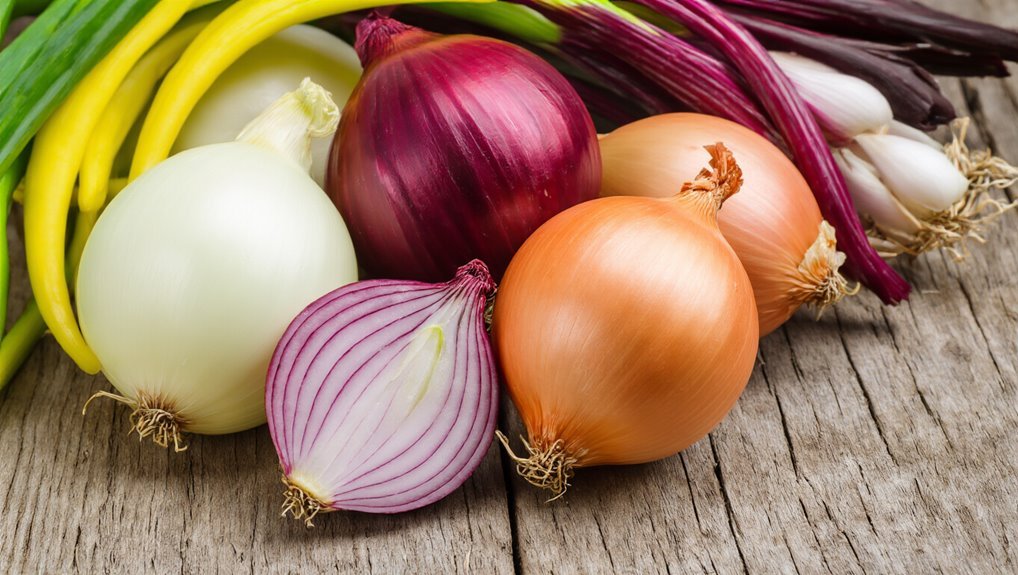
With their diverse flavor profiles, onions play a vital role in countless culinary applications. Whether you’re sautéing, roasting, or grilling, these versatile vegetables enhance dishes with their unique tastes.
Yellow onions are perfect for caramelizing and adding depth to soups and stews. Red onions, with their vibrant color and milder flavor, shine in salads, salsas, and as toppings for burgers. White onions offer a sharp bite, making them an ideal choice for Mexican cuisine, especially in tacos and guacamole. For gardeners, using the right pruning shears can make harvesting onions easier and more efficient.
You can also use them raw in sandwiches for an added crunch. No matter your cooking style, incorporating the right onion can elevate your meals, bringing out a range of complex flavors that delight the palate. For anyone spending time in the kitchen or the garden, wearing gardening gloves can help protect your hands while preparing or harvesting these flavorful vegetables.
Nutritional Benefits
Although you might think of onions merely as flavor enhancers, they also pack a nutritional punch that can benefit your health.
Including onions in your diet can offer several advantages:
- Rich in antioxidants: Help combat oxidative stress in your body.
- High in vitamins: Provide essential nutrients like vitamin C, B6, and folate.
- Anti-inflammatory properties: May reduce inflammation and support overall wellness.
- Support heart health: Contain compounds that can lower blood pressure and cholesterol.
- Aid digestion: Provide fiber, which promotes a healthy digestive system.
You can also discover more about gardening magazine subscriptions that feature expert advice on growing and using onions and other healthful plants. If you’re interested in learning more about the nutritional value of onions and other plants, you might enjoy exploring gardening books that offer in-depth guides and essential tips for gardening enthusiasts.
Storage Tips
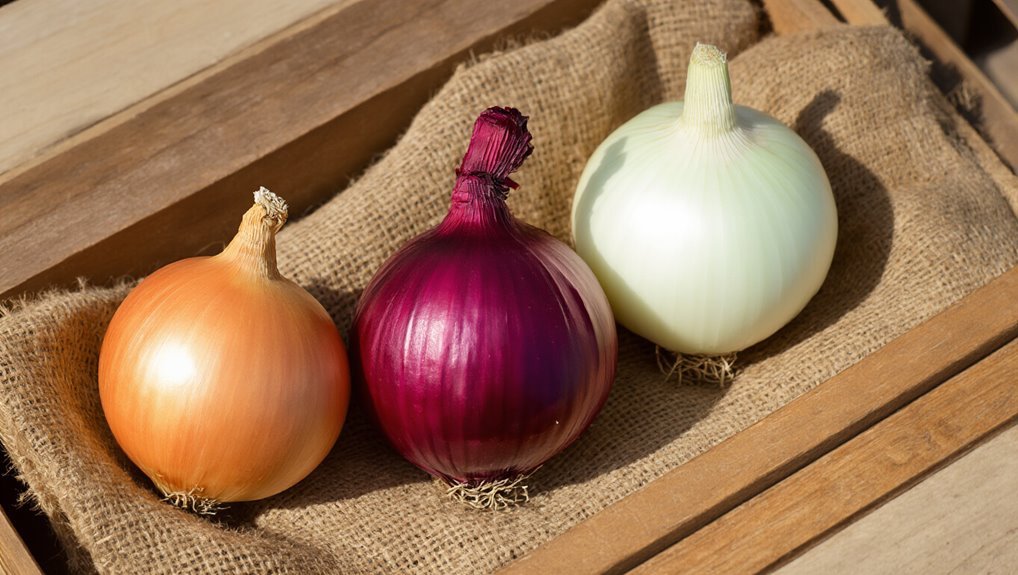
Properly storing onions can significantly extend their shelf life and maintain their flavor.
Keep your onions in a cool, dry, well-ventilated place, away from direct sunlight. A pantry or a mesh bag works well. Avoid plastic bags, as they trap moisture and lead to spoilage.
If you’ve cut an onion, store the leftover pieces in an airtight container in the refrigerator. They’ll stay fresh for about a week. Remember to keep them separate from potatoes, as the gases they emit can cause each other to spoil faster.
For longer-term storage, consider freezing chopped onions. Just remember to blanch them briefly before freezing to preserve their flavor and texture.
Following these tips ensures your onions stay fresh and flavorful longer!
Cooking Techniques
Now that you’ve got your onions stored properly, it’s time to explore various cooking techniques that can bring out their incredible flavor.
Each type of onion has its own strengths, and you’ll want to use them to your advantage. Here are some popular techniques to try:
- Sautéing: Quickly cook onions in oil over medium heat for a sweet, caramelized flavor.
- Roasting: Bake them at a high temperature for a rich, deep taste.
- Grilling: Add onions to the grill for a smoky, charred flavor that enhances any dish.
- Pickling: Preserve onions in vinegar for a tangy crunch that livens up salads and sandwiches.
- Caramelizing: Slowly cook onions over low heat until they’re golden brown and sweet.
Experiment with these methods to discover your favorites!
Popular Recipes
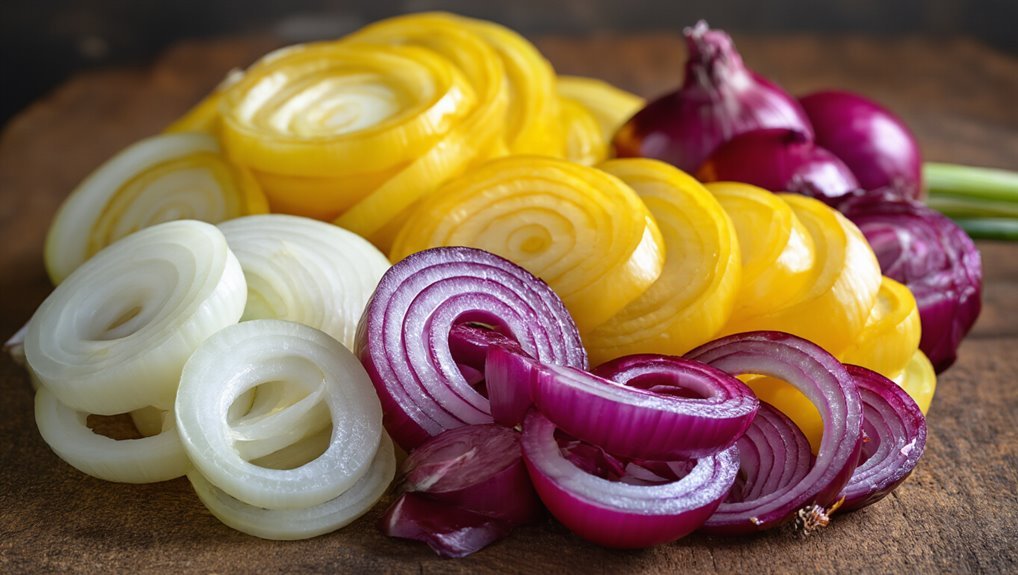
Onions are a versatile ingredient that can elevate countless dishes, adding depth and flavor. Whether you’re making a hearty stew, a fresh salad, or a savory stir-fry, choosing the right onion can make all the difference. Here are some popular recipes to inspire your cooking:
| Dish | Recommended Onion |
|---|---|
| French Onion Soup | Yellow Onion |
| Salsa | Red Onion |
| Caramelized Onions | Yellow or White Onion |
| Pickled Onions | Red Onion |
| Fajitas | White Onion |
Experimenting with different types of onions in your recipes will enhance the taste and bring out unique flavors. So, grab your favorite onion and start cooking!
Choosing the Right Onion for Your Dish
Choosing the right onion for your dish can significantly impact the final flavor profile, especially since different varieties bring unique tastes and textures. Here’s a quick guide to help you decide:
- Yellow Onions: Great for caramelizing; they develop a sweet flavor when cooked.
- Red Onions: Perfect for salads and salsas; their color and mild flavor add a fresh crunch.
- White Onions: Ideal for Mexican dishes; they’re sharper and less sweet than yellow onions.
- Shallots: Excellent for dressings and sauces; they offer a delicate, mild taste.
- Green Onions (Scallions): Best as a garnish; they provide a fresh, slightly spicy kick.
Frequently Asked Questions
Can Onions Cause Tears When Chopped?
Yes, onions can cause tears when you chop them. They release enzymes that create a gas, which irritates your eyes. To minimize tearing, try chilling the onion beforehand or using a sharp knife.
Are Some Onions Sweeter Than Others?
Did you know sweet onions can have up to 10 times more sugar than regular ones? Yes, some onions are definitely sweeter than others, and choosing the right variety can enhance your dish’s flavor significantly.
Do Onions Have Any Health Risks?
While onions are generally safe, some people might experience digestive issues or allergic reactions. If you notice discomfort after eating them, it’s best to consult a healthcare professional to address any potential health risks.
How Do I Know if an Onion Is Bad?
To know if an onion’s bad, check for soft spots, discoloration, or a foul odor. If it’s sprouting, it’s still edible but may not taste as good. Trust your senses to guide you.
Can I Freeze Onions for Later Use?
Imagine a winter pantry, stocked with vibrant onions. You can freeze them for later use! Just chop, spread on a tray, freeze, then store in bags. You’ll have flavorful bursts waiting for your culinary adventures.
Conclusion
When you choose the right onion, you’re not just enhancing flavor—you’re elevating your entire dish. It’s funny how something as simple as an onion can transform a meal, just like how a chance encounter can change your life. Whether you reach for yellow, red, or white onions, each brings its unique taste and benefits to the table. So next time you cook, remember: the right onion can make all the difference in your culinary adventure!