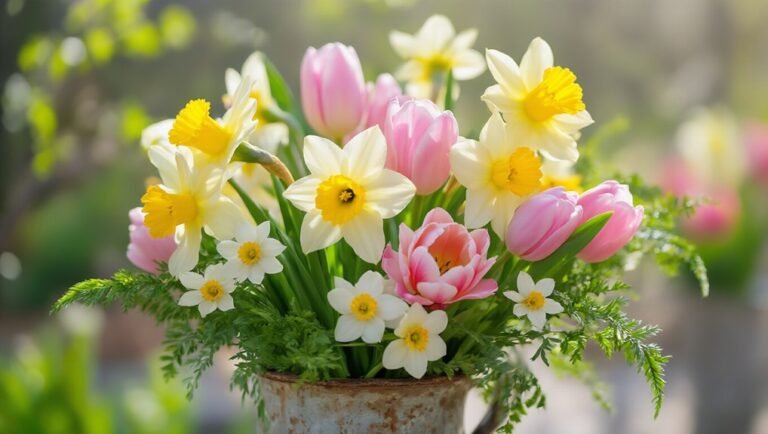
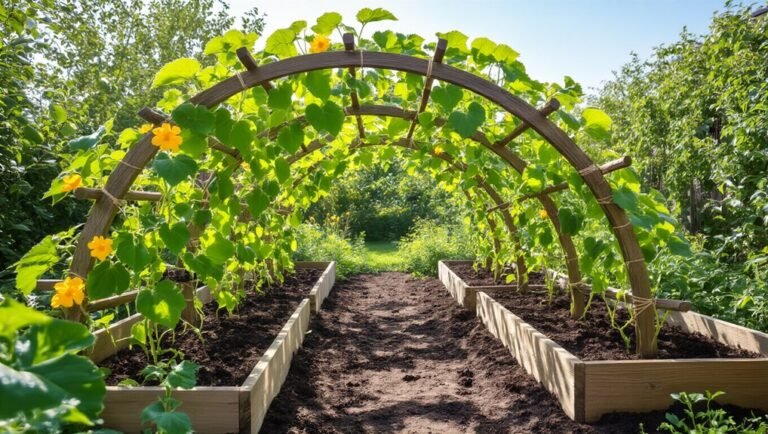
If you’re looking for easy-to-grow spring flowers, marigolds and zinnias are excellent choices. They thrive in sunlight and bring vibrant colors to your garden. Pansies and nasturtiums are perfect for cooler days, adding cheerful hues and even edible blooms. For shaded areas, try hostas and bleeding hearts. With a mix of these plants, you’ll create a colorful, lively garden. Want tips on planting and care to help your flowers thrive? You’ll find helpful insights ahead!
Key Takeaways
- Choose Easy-to-Grow Varieties: Marigolds, pansies, and zinnias are vibrant options that thrive with minimal care.
- Consider Climate and Sunlight: Select flowers suited to your gardening zone and ensure they match your garden’s sunlight exposure.
- Mix Bloom Times: Combine early, mid, and late-spring flowers for continuous color throughout the season.
- Opt for Low-Maintenance Plants: Snapdragons and nasturtiums require less upkeep while adding visual interest to your garden.
- Utilize Creative Arrangements: Layer flowers and mix colors for a dynamic and eye-catching garden display.
Top 5 Easy-to-Grow Spring Flowers for New Gardeners
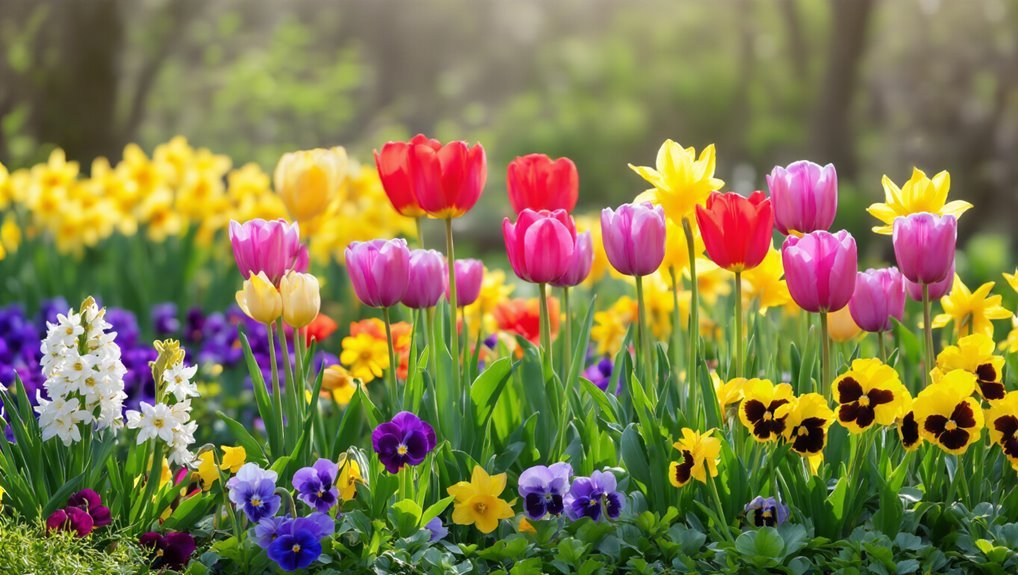
If you’re new to gardening, starting with easy-to-grow spring flowers can boost your confidence and brighten your space.
Consider planting marigolds for their vibrant colors and pest-repelling qualities.
Pansies are another great choice; they thrive in cooler temperatures and add cheerful hues.
Nasturtiums not only offer striking blooms but are also edible, making them a fun addition.
Snapdragons bring vertical interest and are relatively low-maintenance, perfect for beginners.
Lastly, zinnias are hardy and come in various colors, making them a favorite for many new gardeners.
Each of these flowers is forgiving and can flourish with minimal care, allowing you to enjoy the process of gardening without feeling overwhelmed.
Happy planting!
How to Choose the Right Flowers for Your Garden
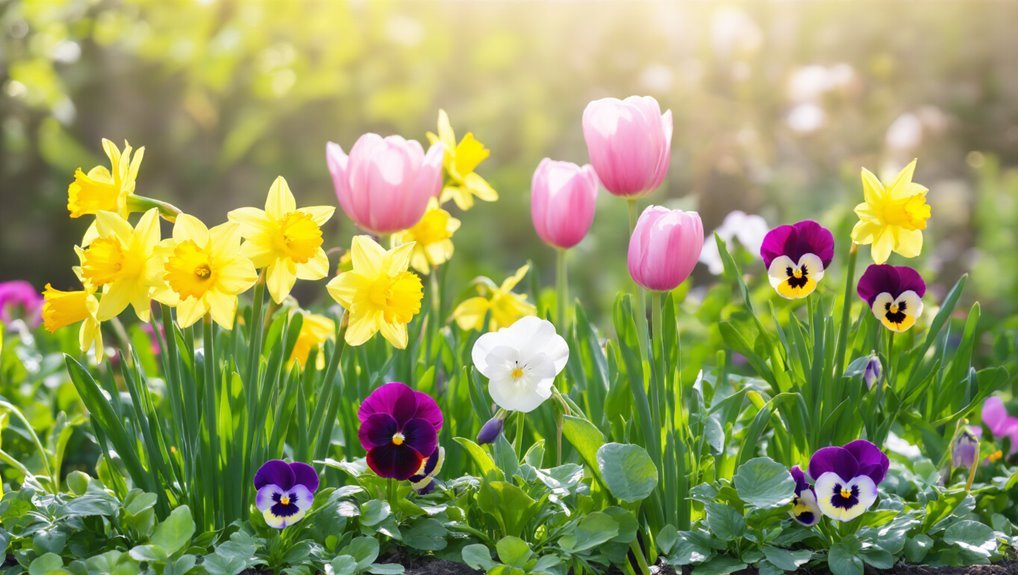
How do you decide which flowers to plant in your garden? Start by considering your climate and the amount of sunlight your space receives. Different flowers thrive in various conditions, so know your zone.
Next, think about the colors and styles you love. Do you prefer bold, vibrant hues or soft pastels? This will help create a cohesive look.
Also, consider the bloom time. Mixing early, mid, and late-spring flowers ensures continuous color.
Lastly, factor in maintenance. Some flowers require more care than others, so choose based on how much time you can dedicate.
Discover Sun-Loving Flowers for Bright Gardens
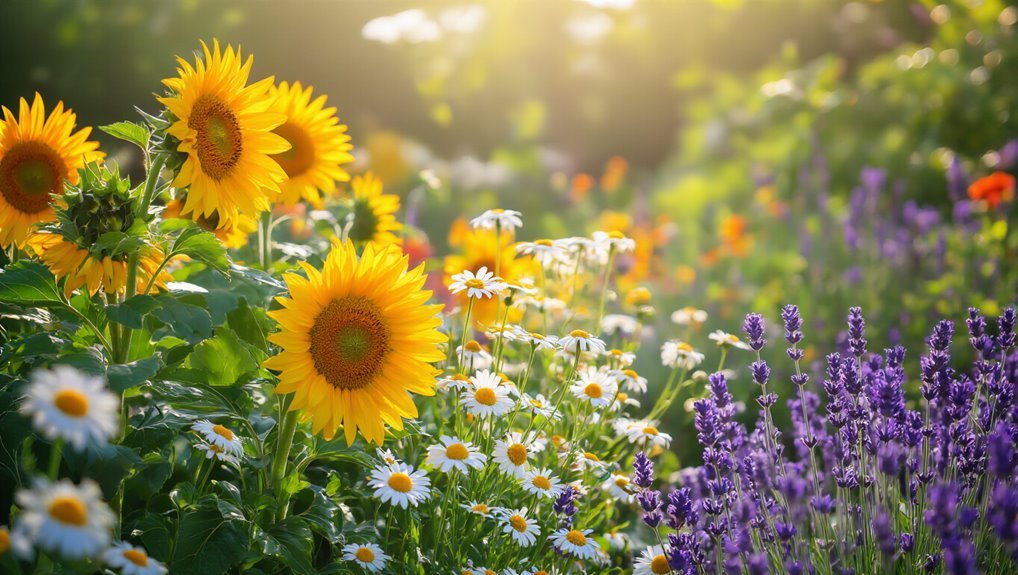
Choosing the right flowers sets the stage for a vibrant garden, especially when you focus on sun-loving varieties.
Consider planting cheerful marigolds, which thrive in full sun and bring a splash of orange and yellow. Zinnias are another fantastic choice; they’re easy to grow and bloom in a rainbow of colors, attracting butterflies to your garden.
Don’t overlook sunflowers; their towering presence and cheerful faces create a striking focal point. For a softer touch, try cosmos, with their delicate blooms dancing in the breeze.
Finally, petunias are versatile and can fill pots or borders with brilliance.
Best Shade-Tolerant Flowers to Brighten Up Your Garden
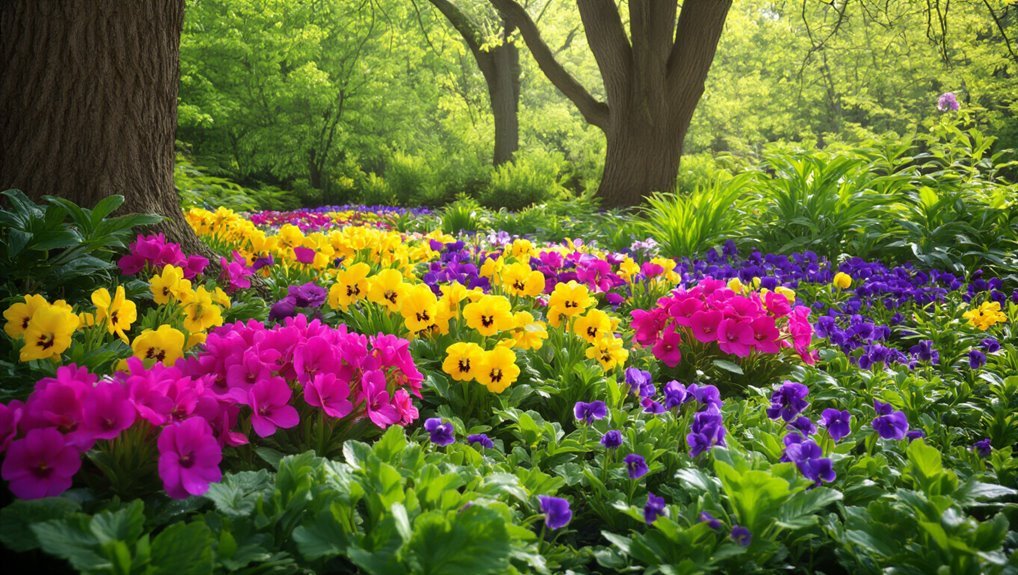
While many gardeners focus on sun-drenched blooms, shade-tolerant flowers can bring vibrant life to those cooler, dimmer corners of your garden.
Consider planting hostas, with their lush foliage and subtle blooms, or astilbes, which offer feathery flower spikes in shades of pink and white.
Bleeding hearts are another stunning choice, showcasing heart-shaped flowers that add a whimsical touch.
If you want a pop of color, try impatiens; they thrive in low light and come in various vibrant hues.
For a more natural look, consider ferns, which provide texture and greenery year-round.
By incorporating these shade-loving plants, you’ll transform your shaded areas into delightful retreats filled with beauty and charm.
Enjoy creating your inviting, colorful garden space!
Top Low-Maintenance Perennials for Your Spring Garden
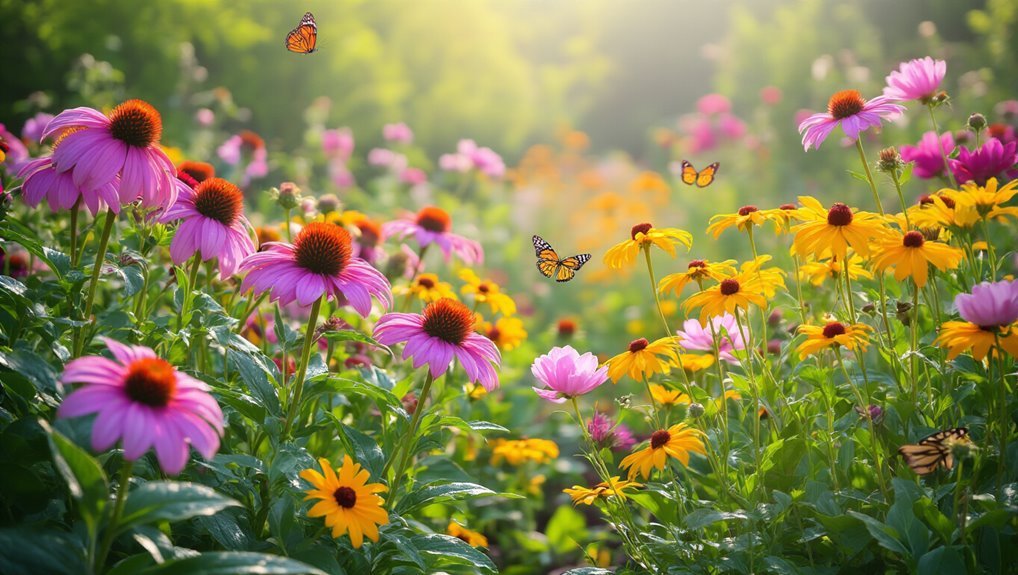
If you want a vibrant spring garden without the constant upkeep, low-maintenance perennials are the perfect solution.
These sturdy plants will reward you with beautiful blooms year after year, allowing you to enjoy your garden without the hassle.
Here are three top picks to consider:
- Daylilies – These resilient flowers thrive in various conditions and require minimal care.
- Sedum – Perfect for hot, dry spots, sedum adds texture and color with very little attention.
- Black-eyed Susans – With their cheerful yellow petals, these hardy flowers attract pollinators and bloom reliably every spring.
Plant these perennials, and you’ll have a stunning garden that’s easy to maintain!
Impactful Annuals for Your Spring Garden
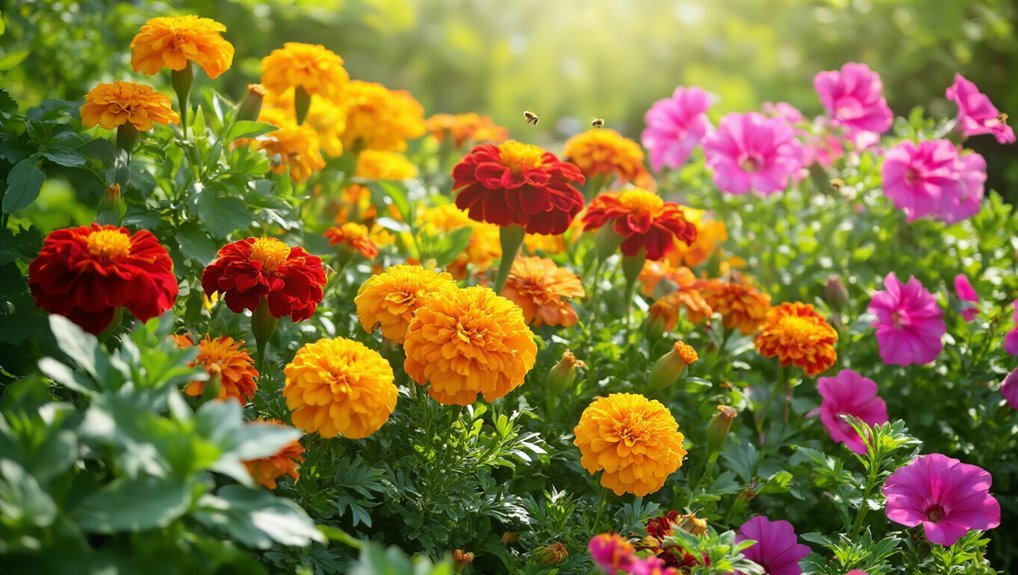
To create a vibrant spring garden that bursts with color, impactful annuals are essential. These flowers not only provide immediate beauty but also fill your garden with lively hues throughout the season.
Consider planting bright petunias, which thrive in various conditions and offer a rich palette. Marigolds are another fantastic choice; their cheerful blooms deter pests while adding warmth to your landscape.
Zinnias, with their bold colors and easy care, can attract butterflies, enhancing your garden’s allure. Don’t overlook cosmos for their airy elegance and ability to thrive in poor soil.
Lastly, consider snapdragons for vertical interest and striking blooms. By incorporating these annuals, you’ll create an eye-catching display that brings joy all spring long.
Planting and Care Tips for Spring Flowers
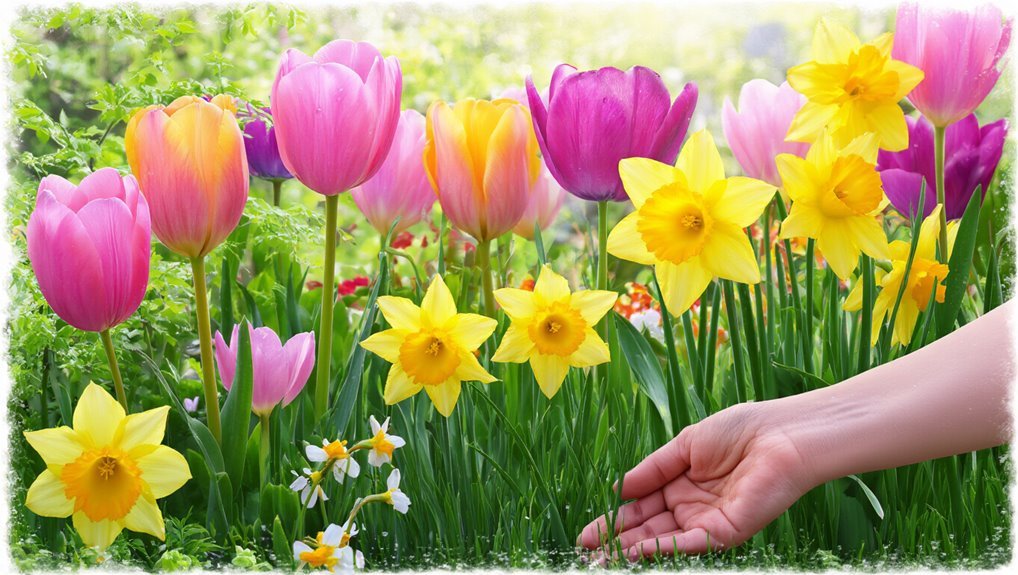
Adding beautiful spring flowers to your garden is just the beginning; knowing how to plant and care for them is key to ensuring they thrive.
Follow these essential tips for success:
- Choose the Right Spot: Select a location with at least 6 hours of sunlight per day. Proper light is crucial for vibrant blooms.
- Prepare the Soil: Ensure your soil is well-draining and enriched with organic matter. This promotes healthy root growth and nutrient absorption.
- Water Wisely: Water your flowers in the early morning or late afternoon. Keep the soil moist but avoid overwatering, as it can lead to root rot.
With these tips, you’re well on your way to a stunning spring flower garden!
Creative Arranging: Making the Most of Your Flower Garden
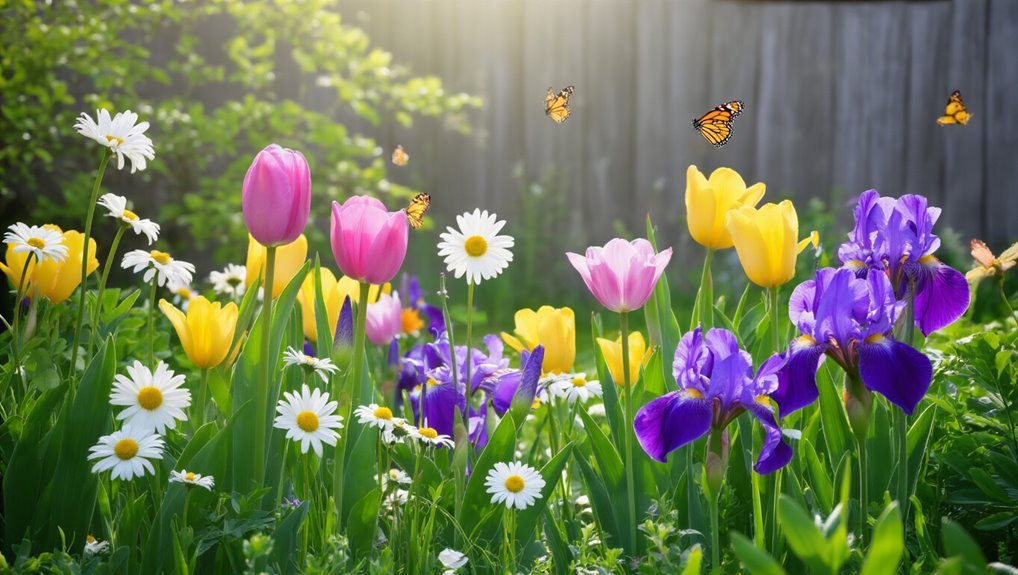
While planning your flower garden, think about how you can creatively arrange your blooms to maximize their impact. Layering your flowers by height helps create depth, while mixing textures adds interest. Grouping similar colors together can create a stunning focal point, drawing the eye.
Here’s a useful guide to help you choose arrangements:
| Arrangement Style | Description |
|---|---|
| Vertical Stacking | Tall flowers in the back, shorter in front |
| Color Blocks | Group similar colors together for a bold look |
| Mixed Textures | Combine different types for a dynamic display |
| Seasonal Rotation | Change arrangements with the seasons for variety |
Experiment with these styles, and don’t hesitate to rearrange until you find what feels right. Your garden will flourish with creativity!
Frequently Asked Questions
When Is the Best Time to Plant Spring Flowers?
The best time to plant spring flowers is after the last frost, typically in early to mid-spring. Check your local frost dates, and prepare your soil to give your flowers the best start possible.
How Do I Prevent Pests in My Flower Garden?
To prevent pests in your flower garden, regularly inspect plants, remove debris, and use organic repellents like neem oil. Also, encourage beneficial insects by planting diverse flowers and maintaining healthy soil to deter harmful pests.
What Soil Type Is Ideal for Spring Flowers?
Well-drained, loamy soil is ideal for spring flowers. It retains moisture while allowing excess water to escape. You’ll want to mix organic matter in to enhance nutrients and promote healthy root growth for vibrant blooms.
Can I Grow Spring Flowers in Containers?
Absolutely, you can grow spring flowers in containers! In fact, nearly 70% of gardeners use pots for their blooms. Just ensure your containers have good drainage and use quality potting soil for best results.
How Do I Know When to Water My Flowers?
You’ll know it’s time to water your flowers when the top inch of soil feels dry. Check regularly, especially during warm weather, and adjust your watering schedule based on rainfall and your plants’ needs.
Conclusion
By choosing the right flowers, nurturing their growth, and arranging them creatively, you can transform your garden into a vibrant oasis. Embrace the sun with cheerful blooms, find joy in the shade with lush greens, and enjoy the beauty of low-maintenance perennials. Whether you opt for impactful annuals or classic favorites, spring flowers can fill your space with color and life. So dig in, plant with purpose, and watch your garden flourish!