To grow and care for cherry blossoms, choose the right variety for your climate and space, like Yoshino for warmth. Ensure they get six hours of sunlight daily and plant in well-draining soil. Water deeply but infrequently, and use balanced fertilizer in spring. Watch for pests and diseases, and prune timely for shape. To protect roots in winter, apply mulch and ensure thorough hydration before it freezes. Continue exploring for tips on enjoying their stunning blooms each spring!
Key Takeaways
- Choose the right cherry blossom variety based on your climate, space, and desired bloom time for optimal growth.
- Plant in well-draining soil with full sun exposure and ensure proper spacing for air circulation.
- Water deeply and infrequently to encourage strong root development, especially during dry spells.
- Use balanced fertilizer in early spring and monitor for pests and diseases to maintain plant health.
- Prepare for winter by applying mulch, hydrating the tree, and protecting vulnerable branches with burlap.
Choosing the Right Cherry Blossom Variety
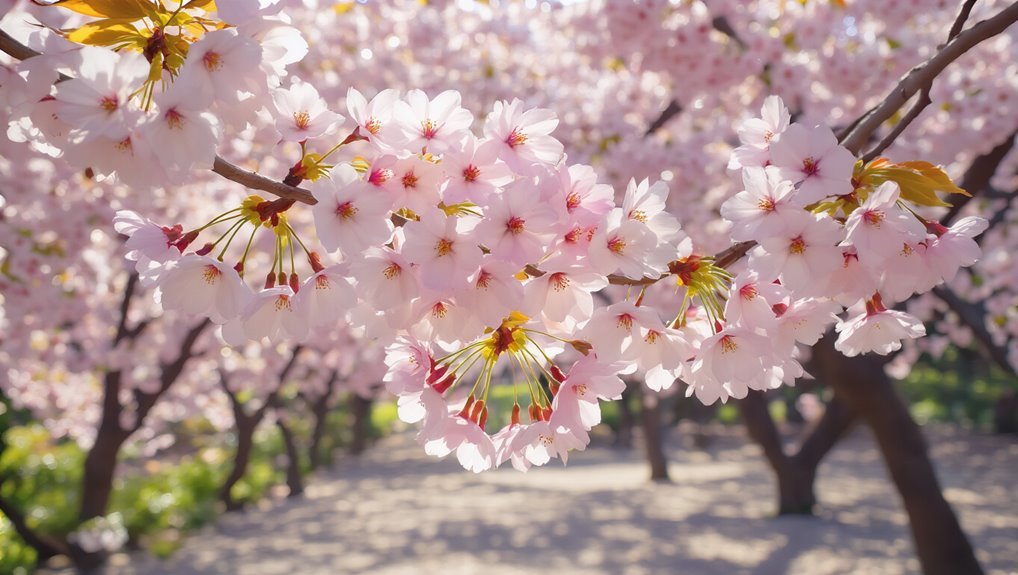
When choosing the right cherry blossom variety, how do you know which one suits your garden best?
Start by considering your space and climate. Some varieties, like the Yoshino cherry, thrive in warmer areas, while others, like the Higan cherry, adapt to cooler climates. For the healthiest start, many gardeners rely on seed starting kits to ensure robust seedlings before planting outdoors.
Think about the tree’s size too; you wouldn’t want a towering tree in a small yard.
Look at the bloom time as well; some varieties, like the Kwanzan, bloom later in spring, extending your garden’s beauty.
Finally, consider the color and shape of the blossoms. Do you prefer soft pinks or vibrant whites?
To give your cherry blossom trees the best start, you might want to plant them in raised garden beds, which can improve drainage and soil quality.
Ideal Growing Conditions
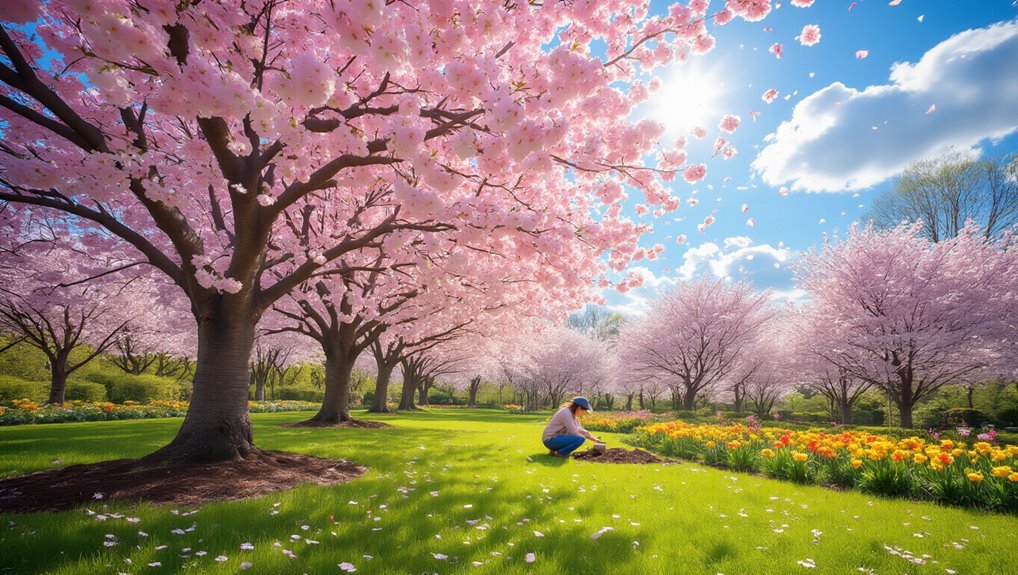
To ensure your cherry blossoms thrive, you need to provide them with the right growing conditions.
Start with well-draining soil; cherry trees prefer sandy loam that retains moisture without becoming soggy. They love full sun, so choose a spot with at least six hours of direct sunlight each day. To help retain soil moisture and suppress weeds, consider adding a layer of mulch around the base of your cherry blossom trees.
When it comes to temperature, cherry blossoms thrive in USDA hardiness zones 5 to 8, where winters are cool and summers are warm. Regular watering is essential, especially during dry spells, but avoid overwatering.
Additionally, good air circulation helps prevent diseases, so space your trees adequately. By creating these ideal conditions, you’ll set the stage for stunning blooms and healthy growth in your cherry blossom trees.
For best results, consider using garden soil formulated specifically for planting, as it provides essential nutrients and promotes strong root development.
Planting Your Cherry Blossom Tree
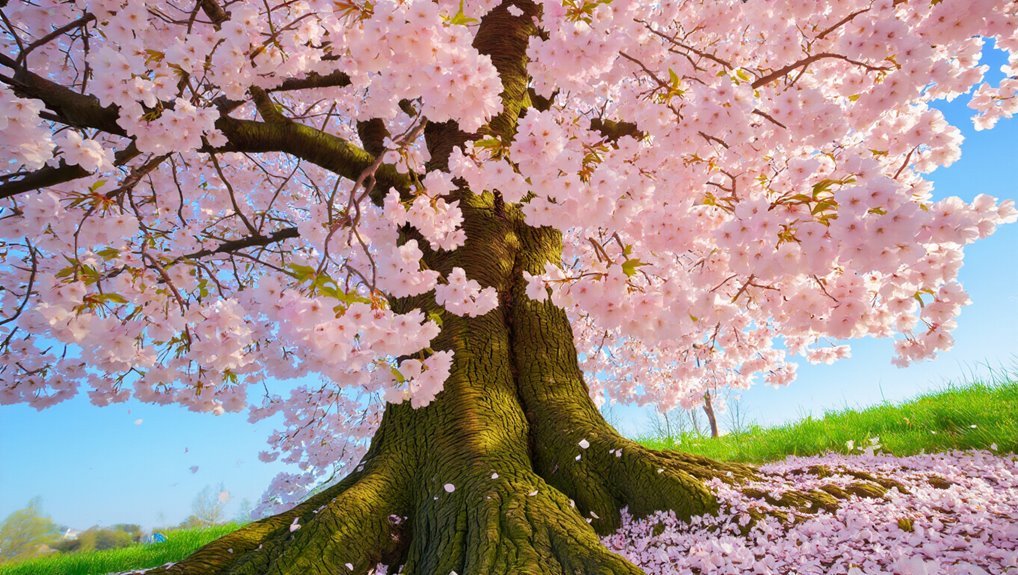
After you’ve ensured the right growing conditions, it’s time to plant your cherry blossom tree. Choose a spot with plenty of sunlight and well-drained soil. Dig a hole twice as wide as the root ball and just as deep. For best results, you may find it helpful to use a garden trowel to make digging and soil placement easier and more precise. Place your tree in the center, ensuring the top of the root ball is level with the surrounding soil. Backfill with soil, gently tamping it down to eliminate air pockets. Water thoroughly after planting to help settle the soil. For ongoing tree health and shaping, consider using pruning shears to remove damaged or unwanted branches as your cherry blossom grows.
Here’s a quick guide for your planting process:
| Step | Description |
|---|---|
| Hole Preparation | Dig a hole twice the root ball width |
| Tree Placement | Center the tree, level with soil |
| Watering | Water thoroughly after planting |
Watering and Fertilizing Tips
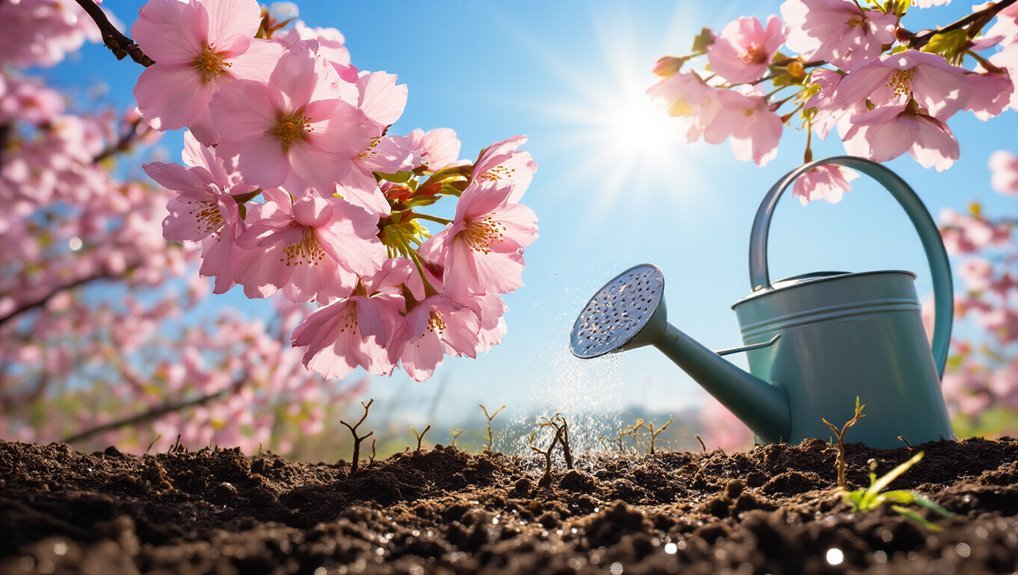
Although cherry blossom trees are relatively low-maintenance, proper watering and fertilizing are essential for their health and vibrant blooms.
When watering, aim for deep, infrequent sessions rather than shallow, frequent ones. This encourages strong root growth. Water your tree once a week during dry spells, ensuring the soil remains moist but not soggy. For optimal results, make sure to use the best plant food to provide balanced nutrition throughout the growing season.
For fertilizing, use a balanced, slow-release fertilizer in early spring, just before new growth appears. Follow the package instructions for application rates.
It’s usually best to avoid fertilizing in late summer or fall, as this can promote new growth that won’t harden off before winter. Keeping an eye on your tree’s needs will reward you with stunning blossoms year after year.
For a convenient and effective way to nourish your cherry blossom trees, consider using plant fertilizer tablets, which provide a steady release of nutrients and are easy to apply.
Pruning for Health and Aesthetics
Maintaining the health and beauty of your cherry blossom tree goes beyond watering and fertilizing; pruning plays a vital role too. Regular pruning encourages strong growth and helps shape the tree, enhancing its overall appearance. To keep your gardening space tidy and tools accessible, consider using garden tool organizers when storing your pruning shears and equipment.
Aim to prune in late winter or early spring, before new growth begins. Remove any dead, damaged, or crossing branches to improve air circulation and light penetration. This not only keeps your tree healthy but also promotes stunning blooms.
Don’t hesitate to shape the tree as desired, but avoid cutting more than 20% of the foliage at once, as it can stress the tree. With careful pruning, you’ll ensure your cherry blossom thrives and showcases its breathtaking beauty for years to come.
For best results, consider using essential weeding tools to keep the area around your cherry blossom tree free from unwanted plants, which can compete for nutrients and water.
Pest and Disease Management
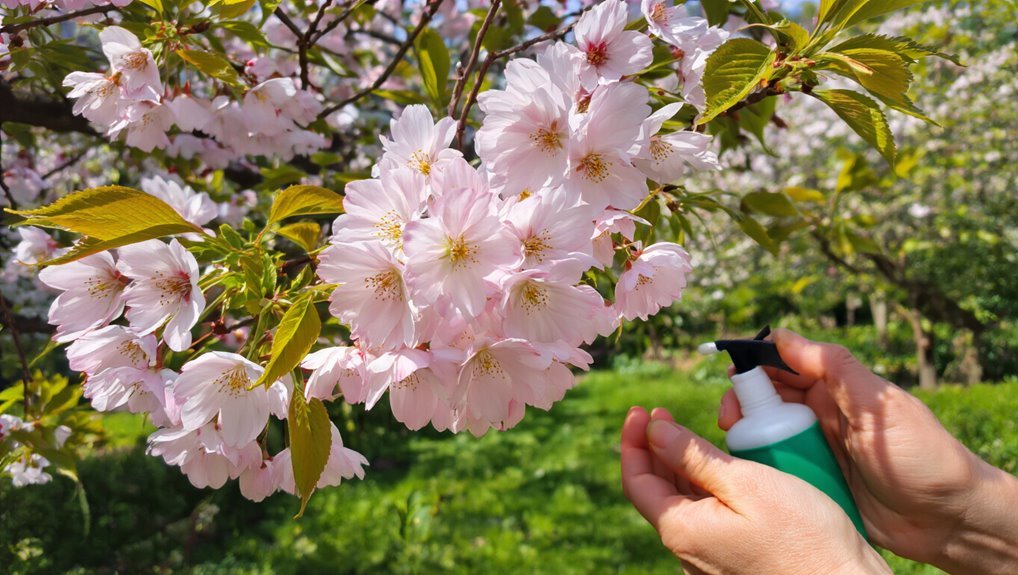
To keep your cherry blossom tree vibrant and thriving, you’ll need to stay vigilant against pests and diseases that can threaten its health. Common pests include aphids, spider mites, and scale insects. Many gardeners find success by choosing organic pest control solutions that are gentle on plants and the environment.
Regularly inspect your tree for signs of infestation, like curled leaves or sticky residue. If you spot any pests, consider using insecticidal soap or neem oil for treatment.
Fungal diseases, such as powdery mildew or leaf spot, can also affect your tree. Ensure proper air circulation by spacing your tree adequately and avoiding overhead watering.
If you notice any symptoms, remove infected leaves immediately and apply a fungicide as needed. By monitoring your tree consistently and taking action when necessary, you can keep it healthy and flourishing throughout the seasons. For additional support, consider using effective pest control products designed to target a wide range of common garden pests.
Seasonal Care and Maintenance
As the seasons change, your cherry blossom tree needs specific care to thrive year-round.
In spring, focus on pruning any dead or damaged branches to encourage healthy growth. Fertilize with a balanced fertilizer to promote blooming. To ensure your tree receives the optimal soil moisture, consider monitoring the moisture levels during the growing season.
During summer, keep the soil consistently moist but not soggy; deep watering helps establish strong roots.
In fall, rake up fallen leaves to prevent pests and diseases. You might want to apply mulch around the base to protect the roots as temperatures drop.
Using organic mulching materials such as straw can further insulate the soil and improve moisture retention while supporting overall garden health.
Regularly check for pests and remove any that you find.
Lastly, always make sure your tree gets plenty of sunlight; cherry blossoms love the sun!
With attentive care, your tree will reward you with stunning blooms year after year.
Preparing for Winter
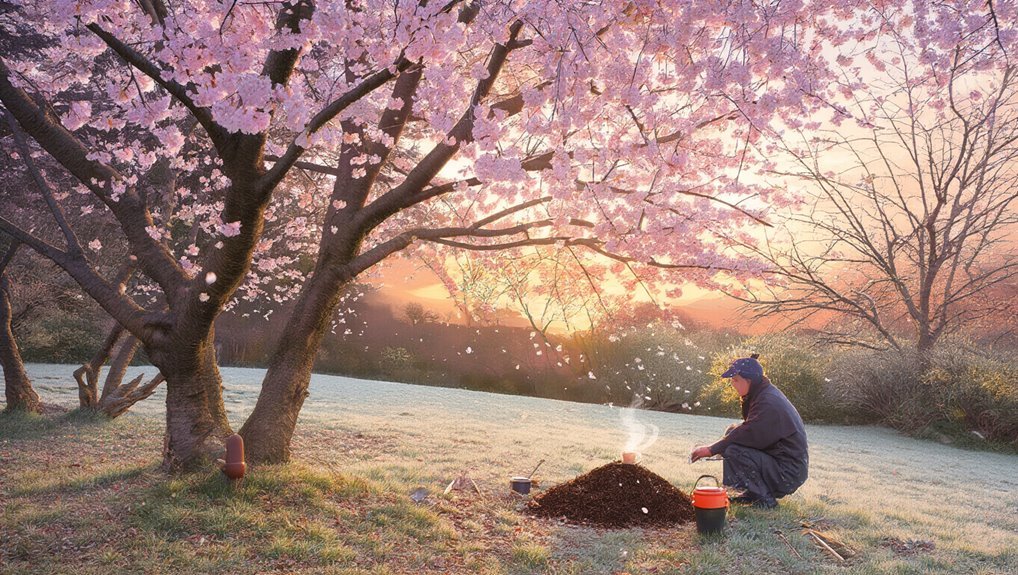
Before the harsh winter weather sets in, you’ll want to take some essential steps to prepare your cherry blossom tree for the cold months ahead. Proper preparation can help your tree thrive and bloom beautifully come spring. Adding an outdoor composting system to your garden setup can further enrich the soil and support your tree’s health through seasonal changes.
Here are a few key tasks to tackle:
- Mulch the base: Apply a layer of organic mulch to insulate roots and retain moisture.
- Prune wisely: Trim any dead or diseased branches to prevent damage from ice and snow.
- Water thoroughly: Ensure your tree is well-hydrated before the ground freezes; this helps it withstand winter stress.
- Wrap vulnerable branches: Use burlap or tree wrap for young trees to protect them from harsh winds and frost.
For the best mulch, consider using compost bins to create nutrient-rich organic matter that will nourish your cherry blossom tree throughout the winter. Taking these steps now will make a big difference in your tree’s health come spring!
Common Mistakes to Avoid
While caring for your cherry blossom tree, it’s easy to make mistakes that can undermine its health and beauty. One common error is overwatering; cherry blossoms prefer well-drained soil, so let the top inch dry out before watering again.
Also, don’t neglect pruning. If you wait too long, you risk removing buds essential for spring blooms.
Watch out for pests and diseases, too; inspect your tree regularly and treat any issues promptly.
Finally, avoid planting in overly shaded areas, as these trees thrive in full sunlight.
By steering clear of these mistakes, you’ll ensure your cherry blossom remains vibrant and healthy, offering stunning blooms for years to come.
Happy gardening!
Enjoying the Blossoms Each Spring
When spring arrives, the sight of your cherry blossom tree in full bloom can take your breath away.
To truly enjoy this stunning display, immerse yourself in the experience. Here are some ways to make the most of the blossoms:
- Host a picnic: Gather friends and family under the blooming branches for a delightful afternoon.
- Capture the moment: Use your camera or smartphone to snap photos of the vibrant flowers and share them on social media.
- Create art: Let the beauty inspire you to paint, draw, or write about your feelings as the blossoms unfold.
- Plan a visit: Explore local parks or gardens that feature cherry blossoms for a change of scenery and inspiration.
Embrace the magic of spring, and savor every moment!
Frequently Asked Questions
How Long Does It Take for Cherry Blossoms to Bloom After Planting?
After planting cherry blossoms, you’ll typically wait three to five years for them to bloom. Patience is key, as they need time to establish roots and mature before showcasing their beautiful flowers. Enjoy the wait!
Can Cherry Blossom Trees Be Grown in Pots?
Like a dream waiting to unfold, you can definitely grow cherry blossom trees in pots. Just choose a large enough container, ensure good drainage, and provide plenty of sunlight for those stunning blooms to flourish.
What Is the Best Time to Plant Cherry Blossom Trees?
The best time to plant cherry blossom trees is in early spring or fall. You’ll want to ensure the soil is workable and temperatures are mild, helping your tree establish strong roots for future growth.
Do Cherry Blossom Trees Attract Bees and Other Pollinators?
Yes, cherry blossom trees attract bees and other pollinators. When you plant them, you’ll notice a flurry of activity around the blossoms, as these creatures seek nectar, helping your garden thrive and promoting biodiversity.
Can Cherry Blossom Trees Survive in Colder Climates?
Yes, cherry blossom trees can survive in colder climates, but you’ll need to choose hardy varieties. They’ll thrive with proper care, so ensure you protect their roots and provide adequate winter shelter to help them flourish.
Conclusion
As you nurture your cherry blossom tree, imagine the breathtaking sight of over 1,000 blooms covering its branches each spring, creating a stunning pink canopy. With the right care and attention, you’ll not only enjoy the beauty of these magical trees but also foster a vibrant habitat for birds and bees. So, embrace the journey of growth and watch as your cherry blossom transforms your garden into a picturesque oasis year after year.