To create a DIY cucumber trellis for your raised beds, start by selecting a sunny spot and gathering materials like wooden stakes and twine. Insert the stakes to form a sturdy frame and attach twine for climbing support. Consider creative designs like an A-frame or vertical grid to maximize space. Regular maintenance, like checking for damage and cleaning, ensures your trellis remains stable. Keep exploring to discover more tips and tricks for your garden setup.
Key Takeaways
- Opt for an A-frame trellis for sturdy support and easy access in raised beds.
- Use vertical grids made from wire or string to maximize air circulation and space.
- Create a lean-to trellis against the raised bed to save gardening space effectively.
- Incorporate decorative elements to enhance aesthetics while supporting cucumber growth.
- Regularly inspect and maintain the trellis for stability and healthy cucumber development.
Step-By-Step Guide to Building a DIY Cucumber Trellis
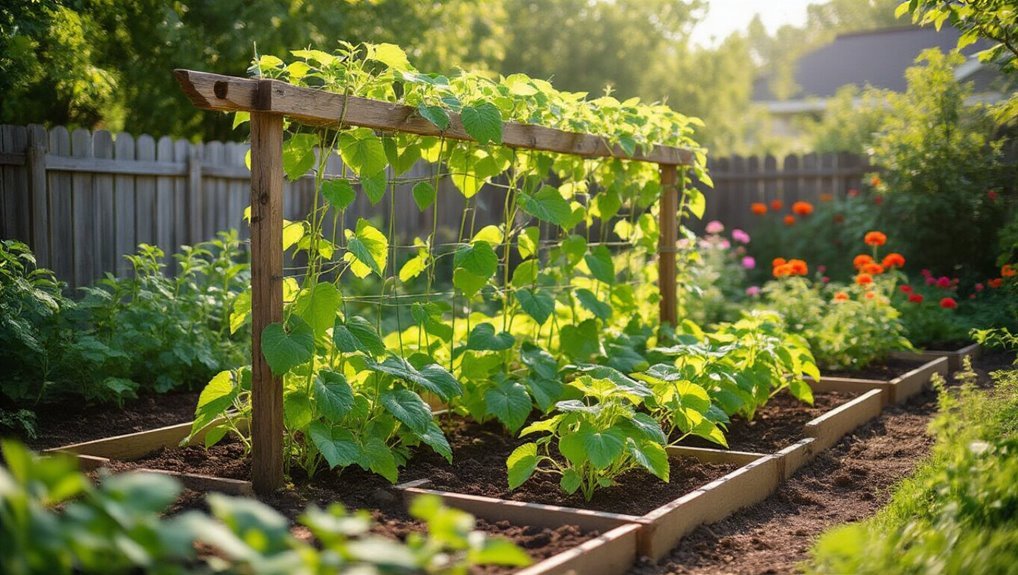
Building a DIY cucumber trellis can be a rewarding project that enhances your gardening experience. Start by choosing the right location; ensure it gets plenty of sunlight and is close to your cucumber plants.
Next, gather your materials, like wooden stakes, wire mesh, or twine.
Begin by inserting the stakes into the ground, creating a sturdy frame. Attach the wire mesh or twine between the stakes to create climbing surfaces for your cucumbers. Make sure it’s taut but not overly tight.
As your cucumbers grow, gently guide the vines toward the trellis, ensuring they climb properly. Regularly check for any loose sections and reinforce as needed.
Soon, you’ll enjoy a flourishing cucumber crop, all thanks to your efforts!
Get Started: How to Choose Materials for Your Trellis

After you’ve set up your cucumber trellis frame, it’s time to think about the materials that will give your plants the best support. Choosing the right materials can make a big difference in your cucumbers’ growth and stability. Here are some options to consider:
| Material | Pros | Cons |
|---|---|---|
| Wooden Lattice | Durable, natural look | Can rot if untreated |
| Wire Fencing | Strong, long-lasting | May not blend aesthetically |
| String or Twine | Flexible, easy to work with | Needs regular replacement |
Evaluate your garden’s needs and pick materials that match your style and budget. A sturdy trellis ensures your cucumbers thrive, making it worth the effort!
Creative Trellis Designs for Raised Garden Beds
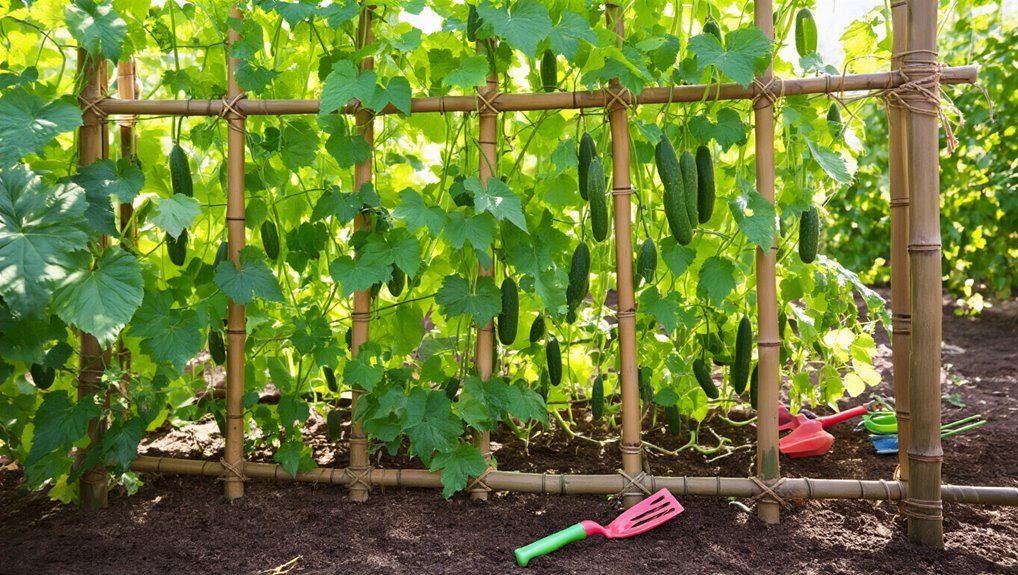
While you’re designing your raised garden beds, incorporating creative trellis designs can maximize space and enhance your cucumber plants’ growth.
Think about using an A-frame trellis made from bamboo or wood, which provides sturdy support while allowing for easy access to your plants. A vertical grid made of wire or string can also work wonders, promoting air circulation and sunlight exposure.
If you’re short on space, try a lean-to trellis against the side of your bed. This design not only saves room but also creates an attractive backdrop for your garden.
Finally, consider adding decorative elements, like colorful paint or hanging planters, to make your trellis a focal point that complements your garden’s overall aesthetic.
Best Ways to Support Your Climbing Cucumbers

Supporting your climbing cucumbers is key to ensuring a healthy harvest. One of the best methods is to use a simple trellis made from wooden stakes and string.
Place the stakes in the ground and run strings vertically between them, allowing your cucumbers to grab onto the support as they grow. You can also opt for a mesh or netting system, which provides ample surface area for your plants to cling to.
Alternatively, consider using a tomato cage; just position it upside down in your raised bed for stability. Whichever method you choose, make sure it’s sturdy enough to handle the weight of your cucumbers as they mature.
This support not only maximizes space but also promotes better air circulation and sunlight exposure.
How to Maintain and Care for Your Trellis
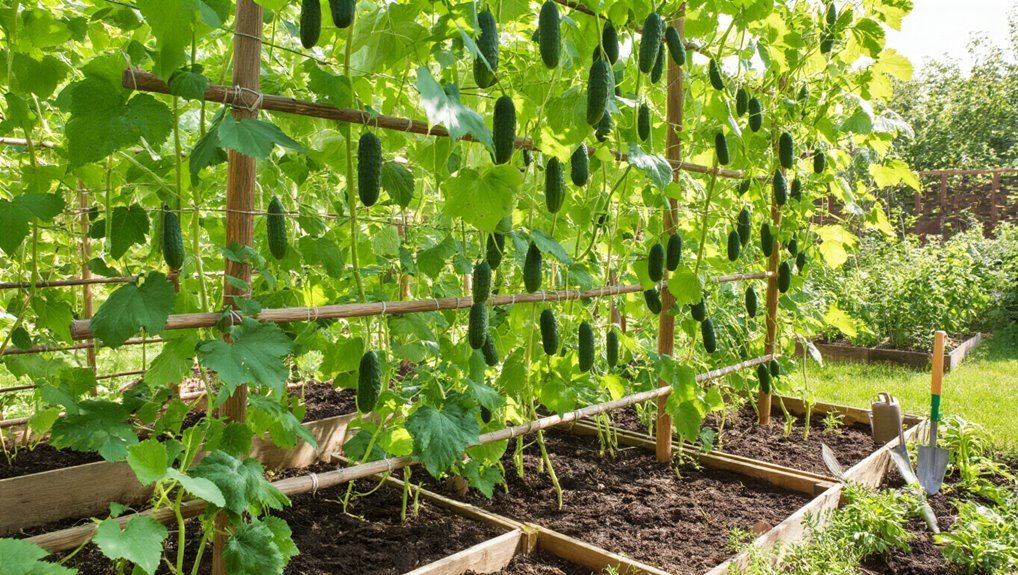
To keep your cucumber trellis in top shape, regular maintenance is essential. Start by checking for any loose components or signs of wear. Tighten screws or replace damaged parts as needed.
Next, ensure your trellis is adequately supported, especially during windy days.
Here’s a quick maintenance schedule:
| Task | Frequency |
|---|---|
| Inspect for damage | Weekly |
| Clean debris | Bi-weekly |
| Check plant ties | Monthly |
Finally, prune any excess foliage to improve air circulation. This not only supports healthy growth but also prevents pests. With consistent care, your trellis will provide a sturdy support system for your thriving cucumbers.
What to Do When Your Cucumbers Face Issues?
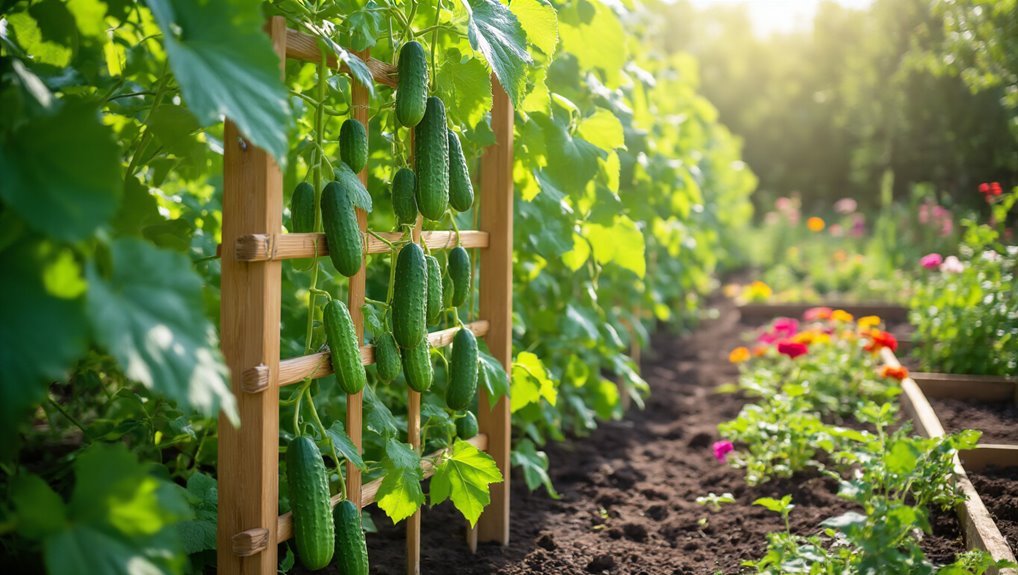
When your cucumbers start showing signs of stress, it’s crucial to act quickly to prevent further issues. Check for signs like yellowing leaves, wilting, or pests.
If you notice yellowing, it may indicate nutrient deficiencies or overwatering. Adjust your watering schedule and consider adding fertilizer to boost nutrients.
Pests like aphids or cucumber beetles can wreak havoc, so inspect your plants regularly and use insecticidal soap if needed.
If your cucumbers are wilting, ensure their roots aren’t waterlogged; aerate the soil if necessary.
Additionally, provide adequate support with your trellis to keep vines upright and healthy.
Enhancing Your Garden’s Aesthetic With Trellis Options
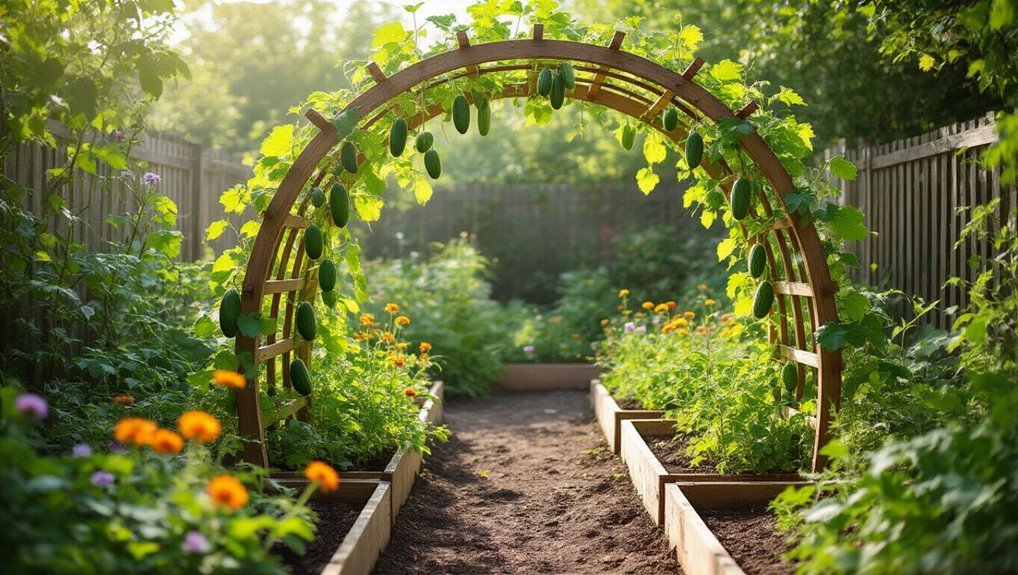
After addressing any issues your cucumbers might face, it’s time to think about how to elevate your garden’s look with trellis options. A well-designed trellis not only supports your plants but also adds visual interest.
Consider using materials like wood, metal, or even bamboo for a rustic or modern touch. Vertical designs save space while allowing for better air circulation and sunlight exposure, which promotes healthy growth.
You can also incorporate decorative elements, like climbing flowers or colorful fabrics, to enhance the aesthetic.
Paint your trellis in bold colors to make it a focal point or choose natural finishes for a more subtle look. With the right trellis, your garden can become a stunning oasis that combines beauty with functionality.
Frequently Asked Questions
What Type of Cucumbers Are Best for Trellising?
The best cucumbers for trellising are climbing varieties like ‘Sweet Success’ or ‘Burpless’ types. They grow vertically, saving space and improving air circulation. You’ll enjoy easier harvesting and healthier plants with these options.
How Much Sunlight Do Cucumber Plants Need?
Cucumber plants need at least six to eight hours of sunlight daily. Make sure you position them in a spot that gets plenty of direct sunlight, as this encourages healthy growth and abundant fruit production.
Can I Reuse My Trellis Materials Each Season?
Yes, you can definitely reuse your trellis materials each season! Just make sure to inspect them for damage, clean them off, and store them properly to ensure they’re ready for your next cucumber crop.
What Pests Should I Watch for With Cucumbers?
You should watch for aphids, cucumber beetles, and spider mites on your cucumbers. Regularly inspect your plants and use insecticidal soap or neem oil to manage any infestations before they become a bigger problem.
How Often Should I Water Cucumbers on a Trellis?
You should water cucumbers on a trellis deeply about once a week, or more often if the soil dries out. Check the top inch of soil; if it’s dry, give them a drink.
Conclusion
With your DIY cucumber trellis complete, you’ve not only optimized your garden space but also given your climbing cucumbers a stylish place to flourish. As you nurture these green beauties, remember that even the best of gardens face challenges. But with a little love and attention, you’ll keep everything thriving. So, sit back and enjoy the fruits of your labor—your vibrant garden is now a testament to your creativity and dedication! Happy gardening!