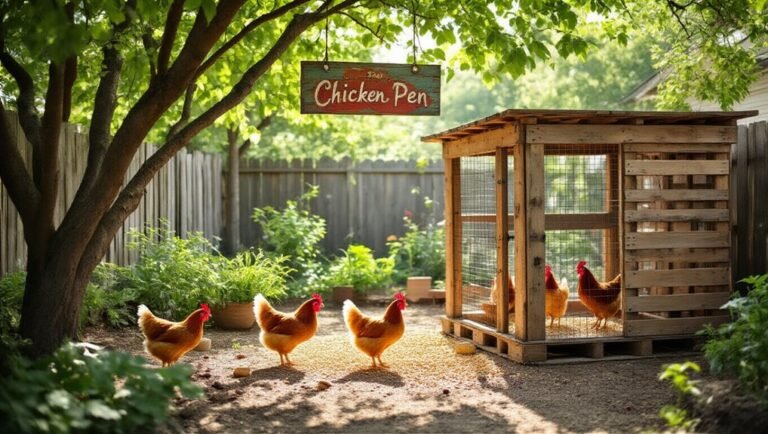
Building a chicken coop doesn’t have to be complicated. You just need to ensure it’s the right size, well-ventilated, and secure from predators. Use sturdy materials like treated lumber or plywood for durability. Start with simple designs, like an A-frame or rectangular coop, which are great for beginners. Don’t forget to include nesting boxes and perches for comfort. Stick around, and you’ll discover essential tips for maintenance and enhancing safety for your flock!
Key Takeaways
- Start with a simple A-frame or rectangular design that is easy to build and customize for beginners.
- Use sturdy materials like cedar or pressure-treated lumber to ensure durability and protection against predators.
- Incorporate good ventilation features to maintain a comfortable environment and prevent moisture buildup.
- Ensure your coop has secure nesting boxes and perches to promote egg-laying and natural roosting behavior.
- Regularly clean the coop and inspect for damage to maintain a safe and healthy space for your chickens.
Understanding Chicken Coop Basics
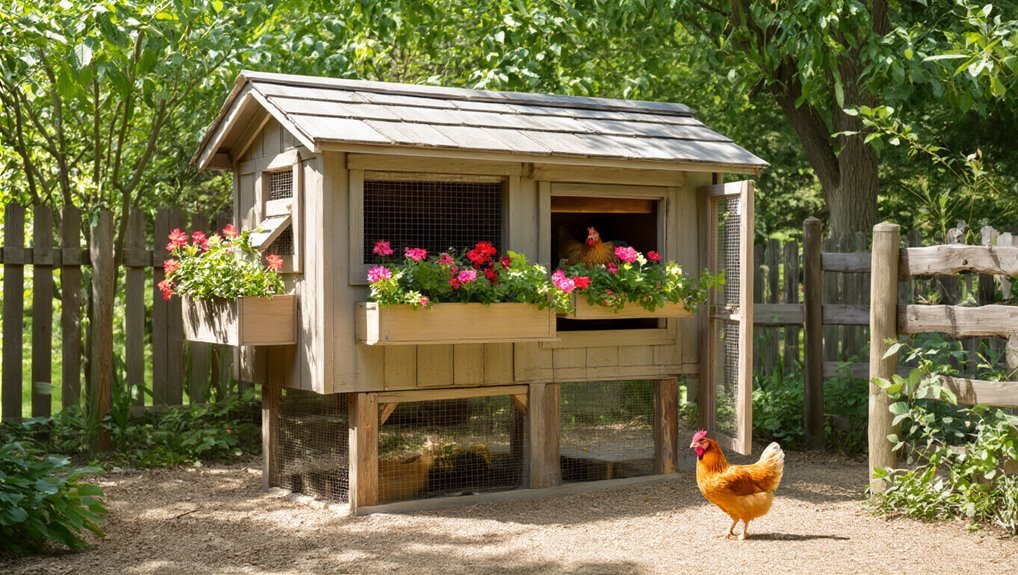
When you’re diving into chicken keeping, understanding the basics of chicken coops is essential. A chicken coop isn’t just a shelter; it’s your flock’s home.
First, consider the size based on how many chickens you plan to raise. Each bird needs at least 4 square feet of space inside the coop. Keeping your supplies neatly stored in garden tool organizers can help keep your workspace clutter-free and make tending to your coop more efficient.
Next, think about ventilation—good airflow prevents moisture buildup, which can harm your chickens.
You’ll also want to ensure safety from predators, so sturdy materials are a must.
Lastly, plan for easy access for cleaning and egg collection; a well-designed coop makes maintenance easier.
To make chicken coop upkeep even simpler, many beginners find it helpful to use garden carts for transporting bedding, feed, and other supplies around the yard.
Essential Features of a Chicken Coop
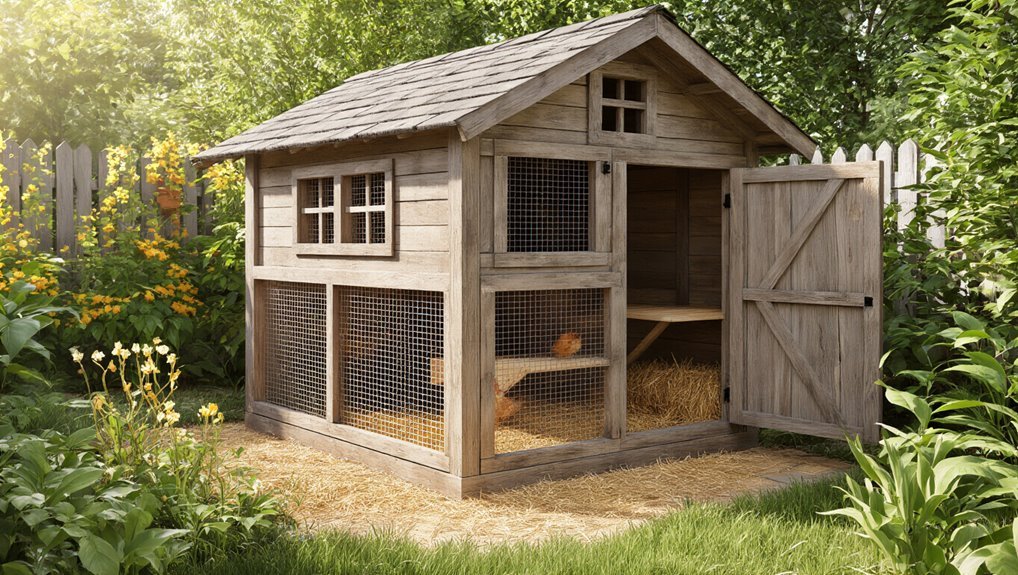
Building a chicken coop involves incorporating key features that ensure your birds thrive.
First, provide adequate ventilation to maintain airflow, reducing humidity and preventing respiratory issues. You can also use Garden Pest Traps around the coop to help control insects and other pests that may be attracted to moist environments.
Next, ensure proper insulation; this keeps your chickens warm in winter and cool in summer.
Include a secure nesting area where hens can lay eggs safely, along with roosting bars for them to sleep comfortably at night.
Make sure there’s enough space for your flock to move around, as cramped conditions can lead to stress and illness.
Additionally, install easy access points for cleaning and collecting eggs.
Lastly, consider a predator-proof design to keep your chickens safe from potential threats.
For added protection, consider using pest control products around the coop to deter unwanted pests and maintain a safe environment for your chickens.
These essential features will create a healthy environment for your feathered friends.
Choosing the Right Materials
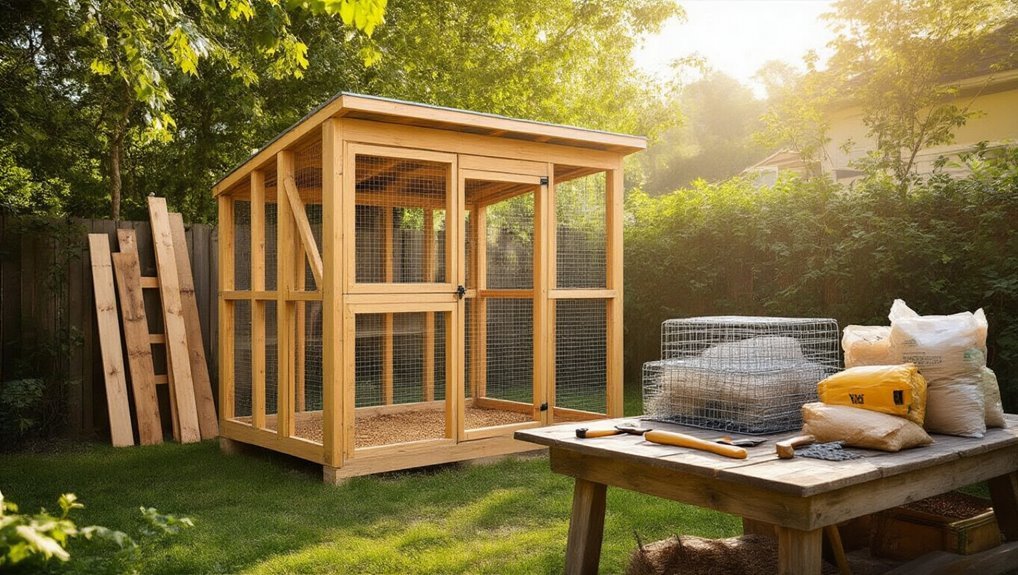
Selecting the right materials for your chicken coop is crucial for durability and the well-being of your flock. Start with sturdy wood, like cedar or pressure-treated lumber, which can withstand the elements and prevent rot. For the walls, consider using plywood or metal siding, as they offer excellent insulation and protection. Don’t forget about roofing materials; metal roofs are durable and can help keep your coop dry. When planning the area around your coop, it’s wise to consider essential garden hoses for efficient cleaning and watering of any nearby plants. For flooring, you might want to use concrete or treated wood to make cleaning easier. Additionally, ensure you choose non-toxic paint or sealants to keep your chickens safe. Finally, use strong hardware cloth for ventilation and predator protection. With the right materials, you’ll create a safe and comfortable environment for your chickens. When building your coop, basic garden tools like garden trowels can be helpful for digging small holes or mixing soil for landscaping around the structure.
Simple Chicken Coop Designs
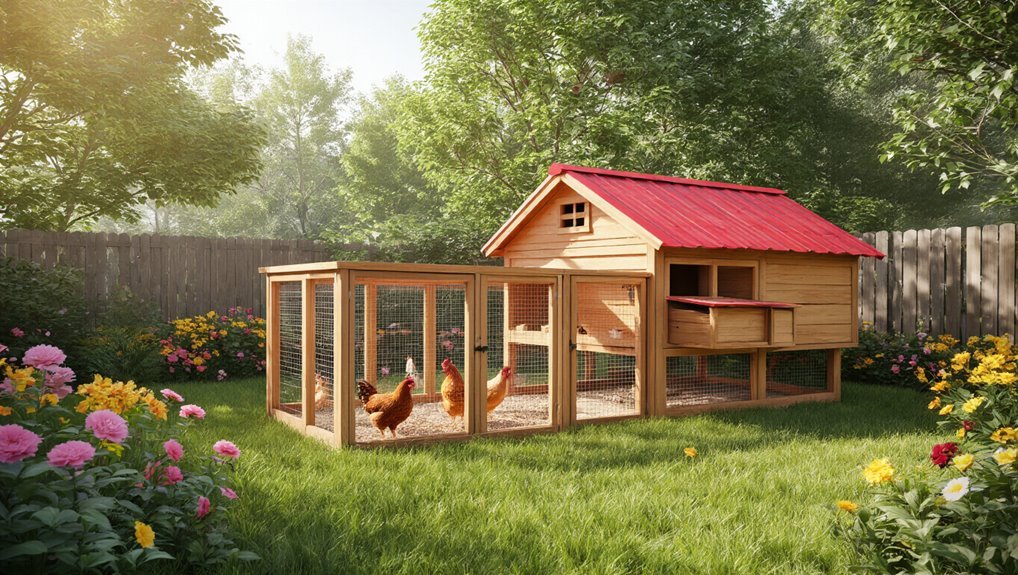
With the right materials in hand, you can explore a variety of simple chicken coop designs that cater to your needs and space.
One popular option is the A-frame coop, which is easy to build and provides excellent ventilation. You can further enhance your coop’s functionality by incorporating outdoor composting systems nearby, making it easy to recycle chicken waste and garden scraps.
If you’ve got limited space, consider a vertical coop that maximizes your area while keeping your chickens safe and comfortable.
Another option is the portable chicken tractor, allowing you to move your coop around your yard, giving your birds fresh grass and reducing wear on the ground.
You might also want to try a simple rectangular coop, which offers ample room and can be customized with nesting boxes and roosting bars.
Each design can be tailored to fit your backyard and flock size.
For those interested in sustainable gardening, compost bins can be a great addition to your setup, helping reduce waste and enrich soil for your backyard.
Step-by-Step Building Guide
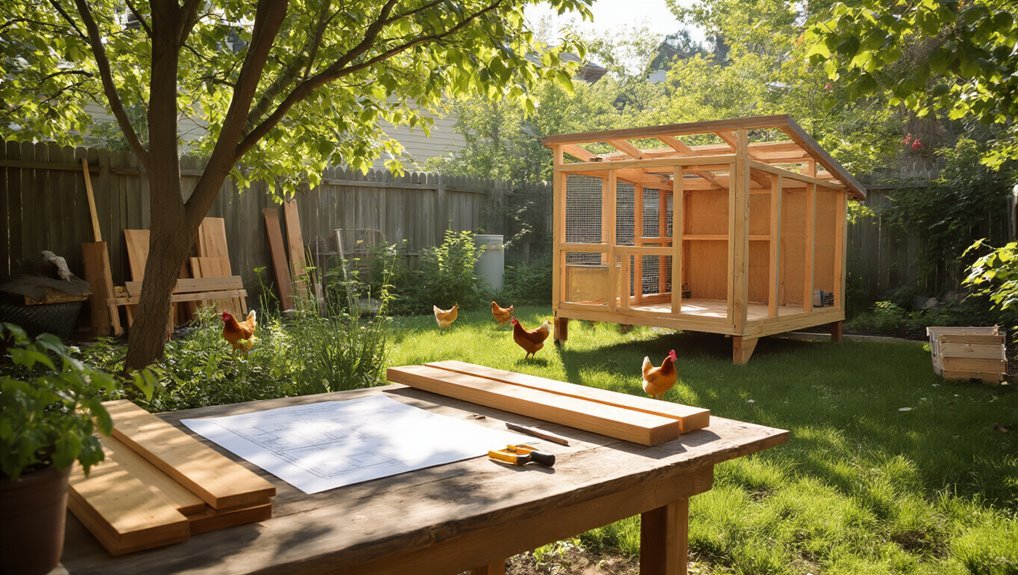
Before you start constructing your chicken coop, it’s essential to gather all the necessary materials and tools to ensure a smooth building process.
Begin by laying out the foundation, using treated wood for durability. Next, erect the frame, ensuring it’s square and level. For best results, consider including a gardening tool set to help with measuring, cutting, and assembling the parts. Attach walls, leaving space for windows and ventilation.
Once the structure is solid, install the roof, opting for a sloped design to shed rain. Add doors for easy access, and don’t forget to include nesting boxes and roosting bars inside.
After securing the coop, paint or seal it to protect against the elements. Finally, check for any gaps to keep your chickens safe from predators. You’re now ready to introduce your feathery friends!
For clean cuts when preparing wood or maintaining your coop, it’s helpful to have pruning shears among your essential gardening tools.
Tips for Maintaining Your Chicken Coop
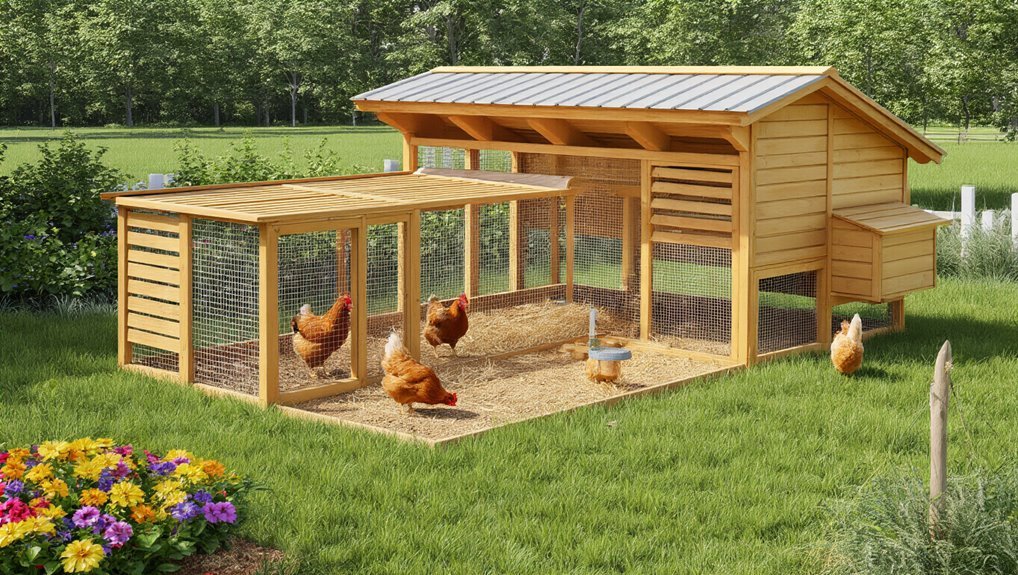
Maintaining your chicken coop is crucial to keeping your birds healthy and happy, so regular cleaning should be part of your routine.
Here are some tips to help you keep everything in top shape:
- Clean the coop regularly: Remove droppings and old bedding at least once a week to prevent odors and pests. Using watering cans can help you easily rinse out surfaces after removing old bedding.
- Check for leaks: Regularly inspect the roof and walls for leaks or damage to keep your coop dry and safe.
- Monitor ventilation: Ensure proper airflow to reduce moisture and maintain a comfortable environment for your chickens.
- Inspect for pests: Routinely check for signs of pests like mites or rodents and take action promptly to protect your birds.
You can also improve your chickens’ safety by using garden netting to keep unwanted predators out of your coop and run.
Staying on top of these tasks will ensure a happy, healthy home for your chickens!
Enhancing Your Coop for Comfort and Safety
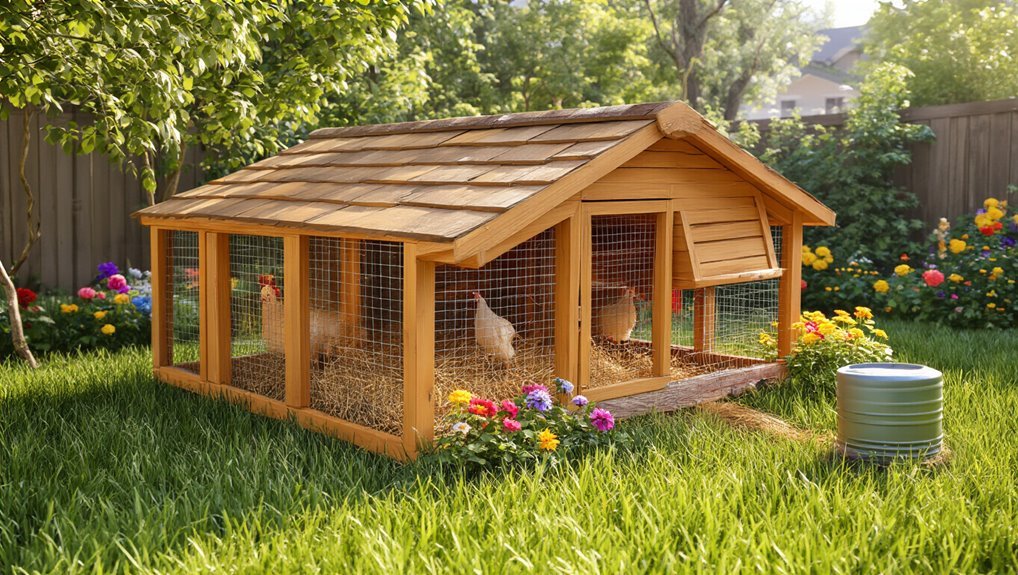
To ensure your chickens thrive, enhancing their coop for comfort and safety is essential.
Start by ensuring proper ventilation; it helps prevent moisture buildup and keeps the air fresh. When tending to your chickens or cleaning the coop, it’s wise to protect your hands with gardening gloves to prevent scrapes and exposure to harmful substances.
Install sturdy nesting boxes with soft bedding, providing a cozy space for laying eggs.
Make sure the coop is predator-proof; use hardware cloth over windows and secure doors with locks.
To keep your chickens comfortable, add perches at varying heights, allowing them to roost naturally.
Don’t forget to provide easy access to food and water, and consider adding a dust bath area to keep them clean.
Regularly check for any signs of wear or damage, ensuring your coop remains a safe haven for your feathered friends.
When working on your coop, using garden kneelers can make tasks like cleaning and repairs much easier and more comfortable.
Frequently Asked Questions
How Many Chickens Can I Keep in a Small Coop?
You can typically keep about 3 to 4 chickens in a small coop, ensuring they have enough space to move around comfortably. Each bird needs at least 4 square feet inside for a healthy environment.
What Predators Should I Be Aware of When Building a Coop?
Did you know nearly 60% of backyard chickens fall prey to predators? When building your coop, be aware of raccoons, foxes, hawks, and snakes. Secure your coop with strong materials to protect your flock effectively.
Can I Use Recycled Materials for My Chicken Coop?
Absolutely, you can use recycled materials for your chicken coop! Just ensure they’re safe and sturdy. Wood pallets, old fencing, or even repurposed windows can create a unique, eco-friendly space for your chickens.
How Much Space Do Chickens Need to Roam Outside?
Chickens need at least 8 to 10 square feet per bird for outdoor roaming. If you can, provide more space to keep them happy and healthy. A larger area encourages natural behaviors and reduces stress.
What Is the Best Bedding Material for a Chicken Coop?
If you think your chickens deserve a luxury spa, think again! Straw, wood shavings, or sand work best for bedding. They absorb moisture, control odors, and keep your feathered friends comfy without any frills.
Conclusion
In conclusion, building your chicken coop doesn’t have to be daunting. With the right plans, the right materials, and a little creativity, you can create a safe haven for your chickens. Embrace the process, enjoy the journey, and watch your feathered friends thrive. Remember, a well-designed coop means happier chickens, healthier eggs, and more joy in your backyard. So gather your tools, follow the steps, and make your chicken-keeping dreams a reality!