To plan your English cottage garden like a pro, start by embracing its vibrant essence. Choose a sunny spot and incorporate winding paths for charm. Layer your plants, mixing perennials, annuals, and herbs to create visual interest. Add focal points with garden statues or water features to attract wildlife. Regular maintenance, organic practices, and thoughtful plant selection will keep your garden flourishing. Discover more tips and tricks to craft your perfect garden oasis as you explore further!
Key Takeaways
- Choose a sunny location with well-drained soil, ensuring at least six hours of direct sunlight daily for optimal plant growth.
- Utilize a natural, informal layout by layering plants: taller varieties at the back and shorter ones in front for visual depth.
- Incorporate winding paths using gravel or stone to enhance flow, connect areas, and invite exploration throughout the garden.
- Select a harmonious color palette by grouping plants with similar colors while contrasting shades for added visual interest and balance.
- Attract wildlife by including native plants, water features, and organic practices to create a thriving ecosystem and promote biodiversity.
Understanding the Essence of an English Cottage Garden
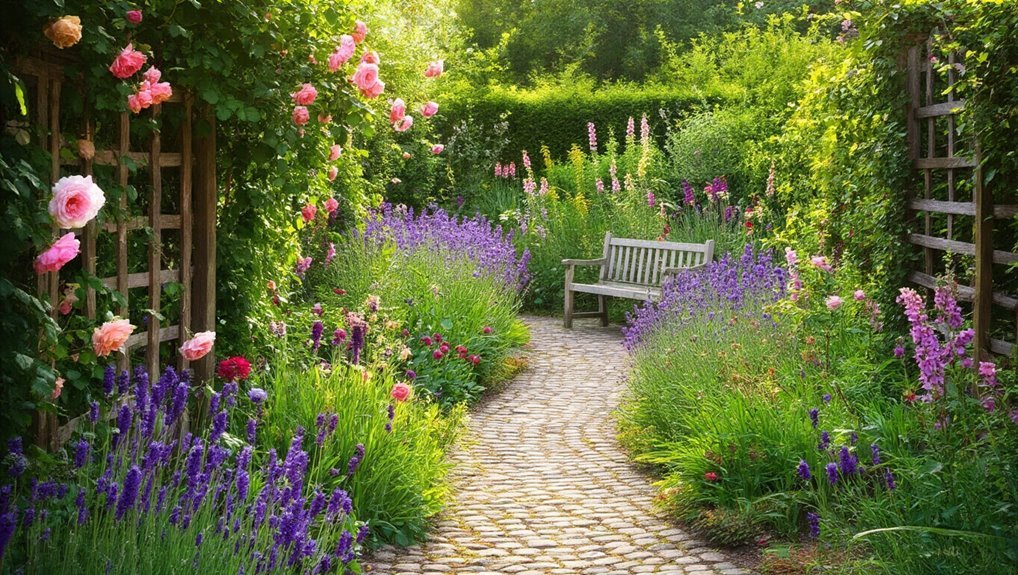
When you step into an English cottage garden, you’re instantly surrounded by a vibrant tapestry of colors, scents, and textures that invite you to explore.
This garden style embraces a natural, informal layout, allowing plants to mingle freely. You’ll notice a mix of perennials, annuals, and herbs that create a lush, overflowing appearance, evoking a sense of nostalgia. For an added touch of whimsy and visual interest, consider placing garden statues among your plants to enhance the garden’s charm.
It’s all about layering—tall plants at the back, shorter ones at the front, and trailing varieties spilling over paths. Embrace a variety of shapes and sizes; each element plays a role in the visual charm.
Use pathways to guide you through the chaos, encouraging discovery. To add both structure and vertical interest to your design, consider incorporating beautiful trellises that can support climbing plants and enhance your garden’s appeal.
Ultimately, the essence lies in creating a space that feels alive, welcoming, and effortlessly beautiful.
Choosing the Right Location for Your Garden
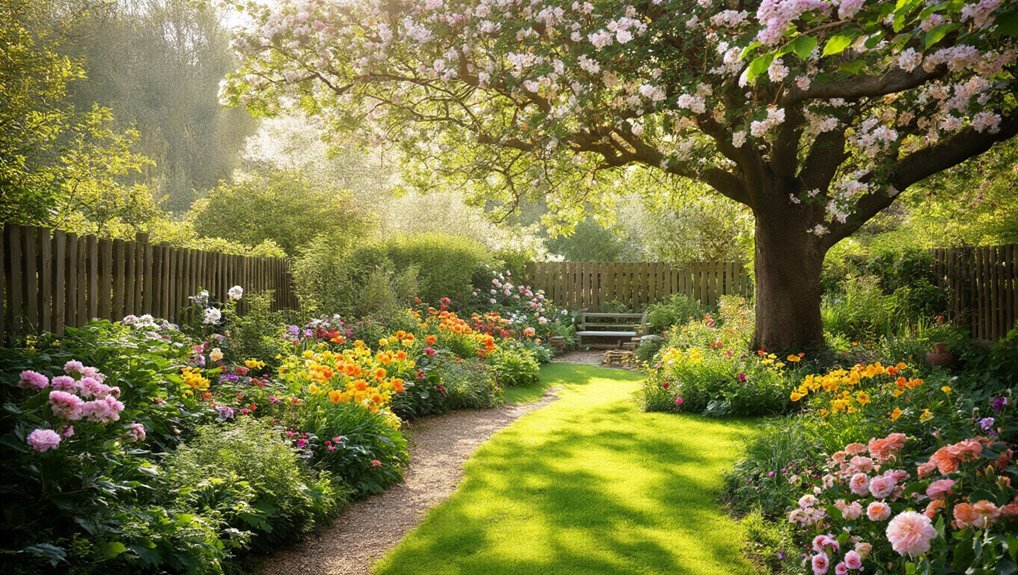
Finding the perfect spot for your cottage garden can make all the difference in its success. Start by assessing your space’s sunlight. Most cottage plants thrive in full sun, so aim for an area that gets at least six hours of sunlight daily. Next, consider accessibility. You’ll want your garden to be easily reachable for maintenance and harvesting. Lastly, think about drainage; poorly drained areas can lead to root rot. Using a soil moisture sensor can help you determine if your chosen site has the right moisture levels to support healthy plant growth. To further support your garden’s vitality, consider adding essential garden hoses to your toolkit, as they make watering large or hard-to-reach areas much easier.
Here’s a quick reference to help you evaluate potential spots:
| Factor | Considerations |
|---|---|
| Sunlight | 6+ hours of direct sunlight needed |
| Accessibility | Easy access for maintenance |
| Drainage | Well-drained soil is essential |
Essential Plants for an Authentic Cottage Look
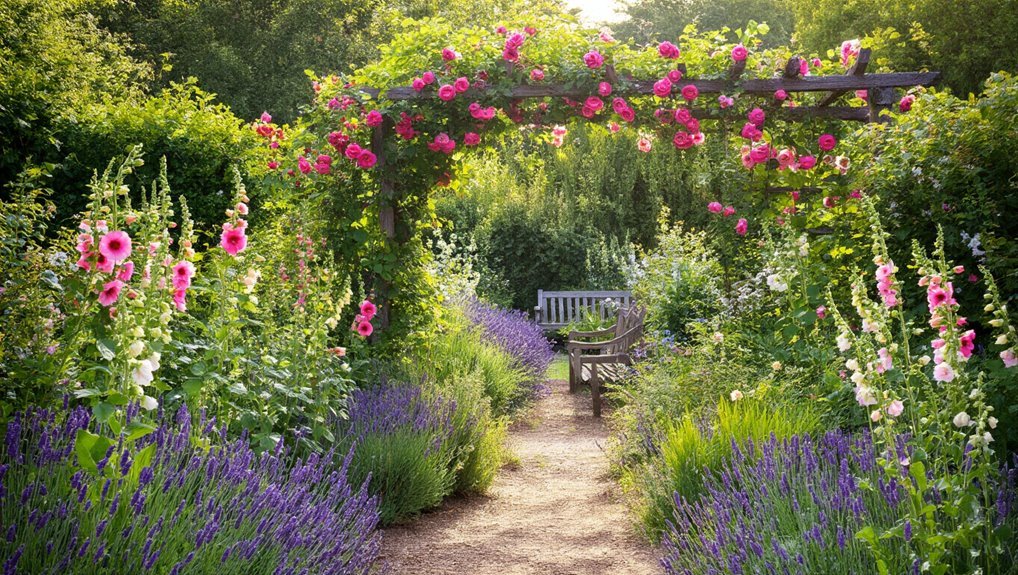
To create an authentic cottage garden, you’ll want to choose a mix of perennial favorites and cheerful annuals that evoke a sense of charm and whimsy.
Selecting the right plants sets the tone and brings your garden to life. Consider these essential options:
- Roses: Choose climbers and ramblers for a romantic touch.
- Lavender: Its fragrance and purple blooms add elegance.
- Foxgloves: These tall spires create vertical interest.
- Delphiniums: Their vibrant colors draw the eye and attract pollinators.
- Sweet Peas: These delicate flowers provide a classic cottage feel.
For a unique twist and extra color, consider adding edible flower seeds to your planting list—they not only look beautiful but can also be used in your kitchen.
Arranging your selections in beautiful plant pots can enhance both the structure and appeal of your cottage garden, making it easier to create inviting focal points.
Mixing these plants will help you achieve that lush, inviting atmosphere typical of traditional English gardens.
Enjoy the process of planting and watch your cottage garden flourish!
Designing With Color: Creating a Harmonious Palette
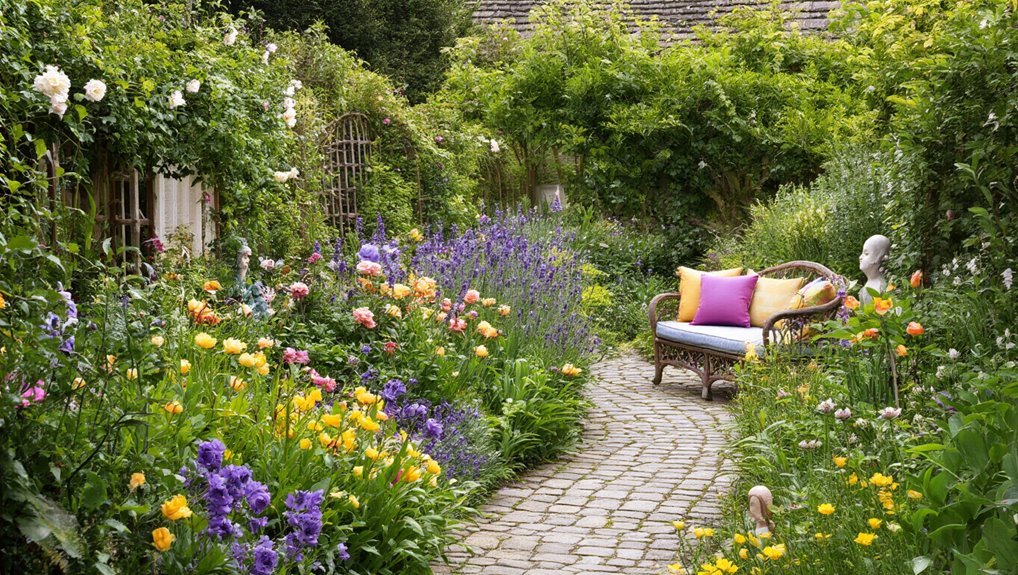
Creating a harmonious color palette in your cottage garden can elevate its charm and character. Start by selecting a few key colors that reflect your personal style.
Consider using a mix of soft pastels, vibrant hues, or rich jewel tones—whatever speaks to you. To create balance, group plants with similar colors together, while also incorporating contrasting shades for visual interest. Adding decorative plant stakes can introduce vertical interest and draw the eye to specific areas of your garden.
Use foliage as a backdrop; greens can unify different blooms and enhance their vibrancy. Remember to think about seasonal changes, too—choose plants that will maintain color throughout the year.
Finally, don’t forget about the impact of garden accessories, like pots and trellises, which can tie everything together beautifully.
For even more visual appeal, consider incorporating decorative garden stones to add texture and define pathways or borders in your garden design.
Happy gardening!
Incorporating Paths and Borders for Structure
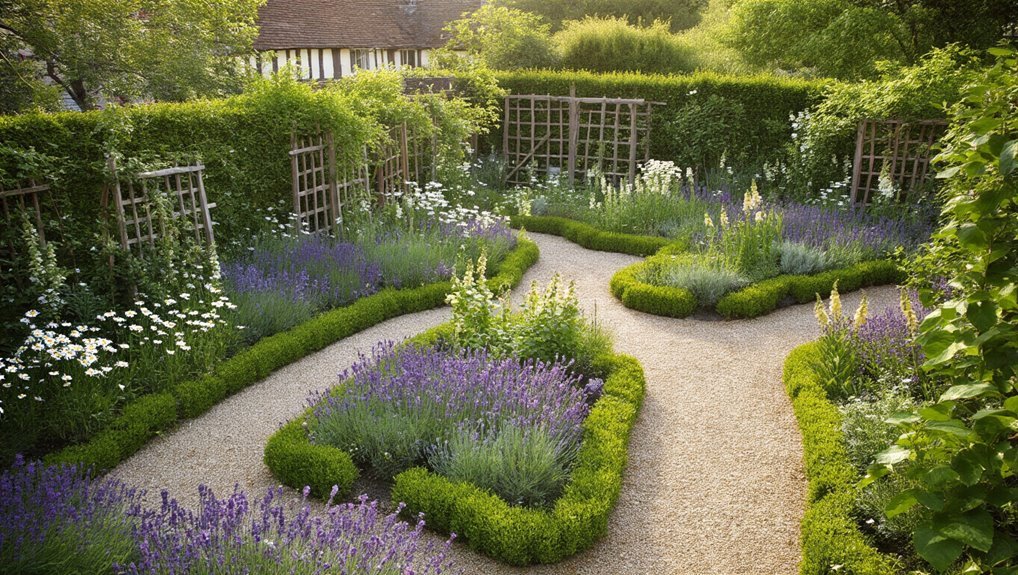
A well-structured cottage garden not only showcases vibrant plants but also benefits from defined paths and borders that guide the eye and enhance the space. Gardeners often rely on essential garden carts to transport soil, plants, and tools efficiently when constructing these pathways and borders.
By incorporating these elements, you create a sense of flow and organization. Here are some tips to consider:
- Choose materials: Use gravel, brick, or stone for a rustic touch.
- Define borders: Opt for low hedges or picket fences to frame your garden beds.
- Create pathways: Design winding paths that invite exploration, connecting different areas.
- Vary widths: Make wider paths for focal points and narrower ones for intimate spaces.
- Incorporate curves: Use gentle curves to soften the garden’s appearance and mimic nature.
With these strategies, you’ll create a structured and inviting cottage garden that feels cohesive. Keeping your garden tools in order also contributes to the overall flow—consider using Garden Tool Organizers to maintain an efficient and tidy workspace.
Adding Focal Points and Garden Features
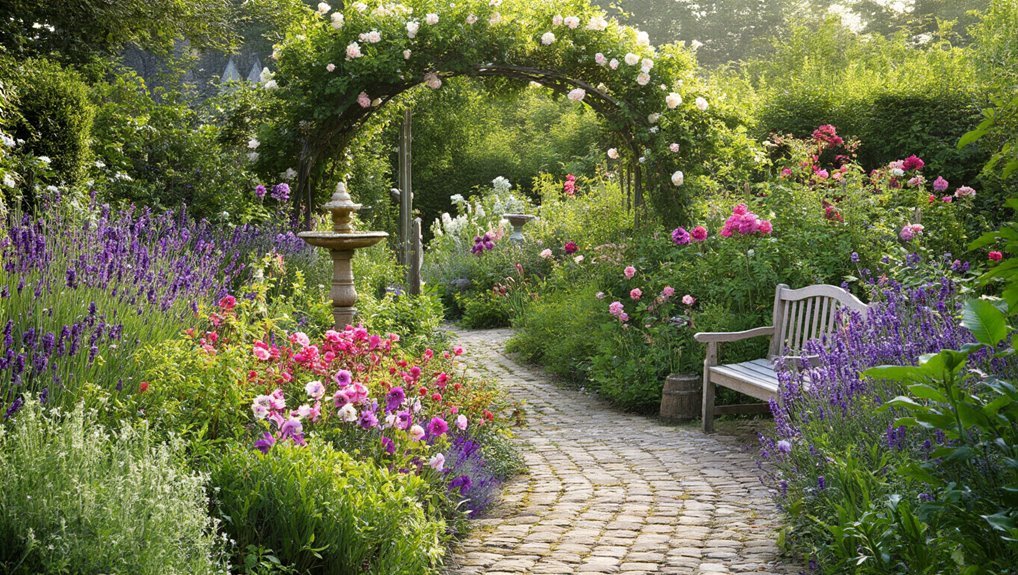
Focal points and garden features can transform your cottage garden from ordinary to extraordinary. Start by selecting eye-catching elements like a rustic bench, a whimsical statue, or a vibrant birdbath. These features draw the eye and create interest throughout the space.
Position them strategically, ensuring they’re visible from various angles within the garden. You might also consider adding trellises with climbing plants or a small fountain for a soothing sound. For a truly enchanting entrance or to define pathways, consider incorporating a garden arch as a dramatic structural feature. Incorporating seasonal decorations, like colorful planters or fairy lights, can enhance the charm as well. For a perfect balance of style and function, consider introducing Outdoor Garden Benches as a focal point that also offers a comfortable spot to relax and enjoy your garden.
Embracing Wildlife and Biodiversity
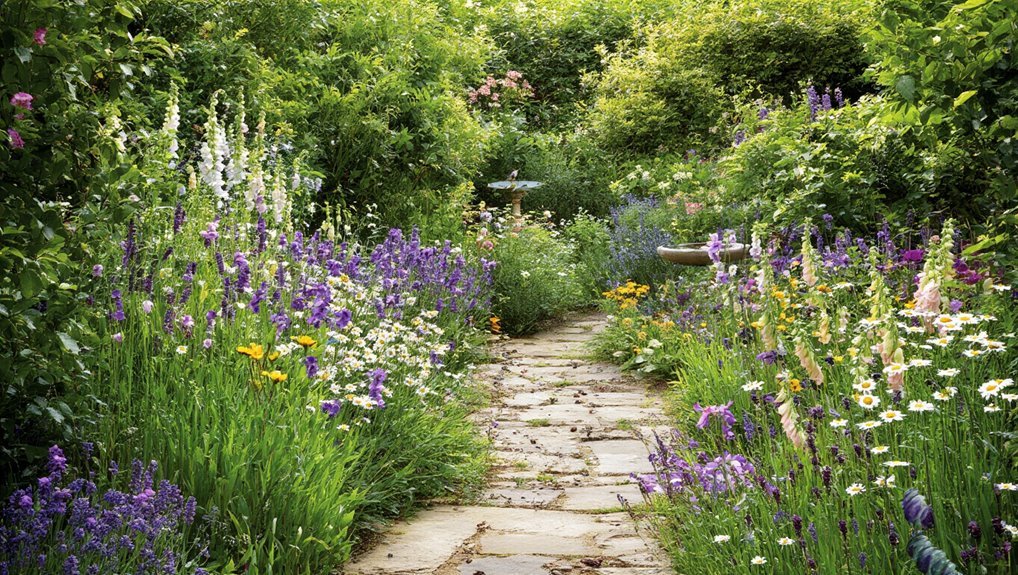
While designing your cottage garden, don’t overlook the importance of embracing wildlife and biodiversity.
Creating a vibrant ecosystem not only enhances your garden’s beauty but also supports local fauna. Here are some ways to attract and nurture wildlife:
- Plant native species: These plants are adapted to your local environment and provide essential food and shelter.
- Include water features: A small pond or birdbath can attract birds and beneficial insects.
- Create shelter: Use logs, stones, or brush piles to offer refuge for small animals and insects.
- Avoid pesticides: Opt for organic pest control methods to protect helpful insects like bees and ladybugs. Consider using Garden Pest Traps as a safe and effective way to manage pests without harming beneficial wildlife.
- Diversify plant heights: Incorporate a range of plants to create layers, providing varied habitats for wildlife.
Planting insect repellent plants such as citronella can also help keep unwanted pests at bay naturally, supporting both your garden’s health and its biodiversity.
Maintenance Tips for a Flourishing Cottage Garden
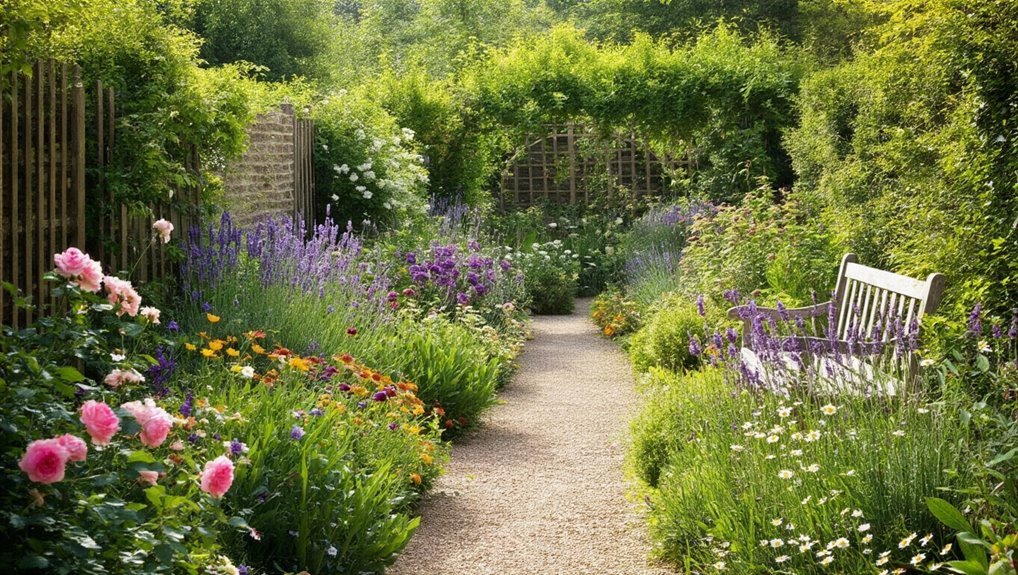
To keep your cottage garden thriving, regular maintenance is essential. Start by deadheading flowers to encourage more blooms and prevent seed formation.
Water your plants deeply but infrequently, ensuring roots grow strong. Mulch around your plants to retain moisture and suppress weeds. Using organic mulching materials such as straw can further improve soil structure and foster healthy plant growth.
Consider the benefits of using mulch for your garden, such as improved moisture retention, reduced weed growth, and healthier soil.
Inspect for pests and diseases regularly; catching issues early saves your plants. Prune overgrown shrubs and perennials to maintain shape and health.
Fertilize your garden a couple of times during the growing season with a balanced organic fertilizer. Embrace companion planting to naturally deter pests and promote growth.
Lastly, keep your garden tidy by removing debris and spent foliage, which can harbor pests. With these tips, you’ll ensure your cottage garden flourishes beautifully all season long.
Frequently Asked Questions
What Tools Are Essential for Maintaining a Cottage Garden?
To maintain a cottage garden, you’ll need essential tools like pruning shears, a hand trowel, a rake, and a watering can. These tools help you nurture your plants and keep your garden looking its best.
How Can I Attract Pollinators to My Garden?
To attract pollinators to your garden, plant a variety of native flowers that bloom at different times. Avoid pesticides, provide water sources, and create habitats with diverse plants to encourage bees, butterflies, and other beneficial insects.
Is It Possible to Have a Cottage Garden in a Small Space?
Absolutely, you can create a charming cottage garden in a small space! Use vertical planters, mix flowers and herbs, and embrace a cozy layout. It’s all about maximizing your area while maintaining that enchanting vibe.
What Are the Best Soil Types for a Cottage Garden?
Imagine your garden’s a plush carpet, inviting you to stroll. For a cottage garden, well-draining loamy soil enriched with organic matter is ideal. It nurtures vibrant blooms and ensures your plants flourish beautifully.
How Do I Deal With Pests Naturally in My Garden?
To deal with pests naturally in your garden, encourage beneficial insects, use companion planting, and apply organic solutions like neem oil or soapy water. Regularly inspect your plants, and remove any affected leaves promptly.
Conclusion
Now that you’ve uncovered the secrets to planning your English cottage garden, it’s time to bring your vision to life. Just like in a classic novel, your garden can tell a story filled with vibrant blooms and charming pathways. Embrace the beauty of nature and let your creativity flourish. With a little patience and care, your garden will blossom into a picturesque retreat, inviting both you and the local wildlife to enjoy the magic of the outdoors.


