Incorporating fruit trees, bird feeders, and greenhouses enhances your garden’s beauty. Fruit trees offer seasonal displays and visual interest while attracting birds and beneficial insects. Choose trees that thrive in your area and design an orchard that fits your space. Bird feeders invite wildlife, adding a lively atmosphere, and different feeder types can appeal to various species. Greenhouses provide a stunning focal point and extend your growing season. Stick around to discover tips on selecting plants and crafting a cohesive aesthetic!
Key Takeaways
- Incorporate a variety of fruit trees for seasonal beauty and visual interest, enhancing garden aesthetics with colors and textures.
- Use bird feeders placed near trees to attract wildlife, creating a vibrant and lively garden atmosphere.
- Design greenhouses as stunning focal points, extending growing seasons while complementing the overall garden design.
- Select fruit trees that thrive in your climate and soil, ensuring a bountiful harvest and a harmonious landscape.
- Regular maintenance, including pruning and seasonal adjustments, keeps the garden healthy and visually appealing year-round.
The Beauty of Fruit Trees in Your Garden
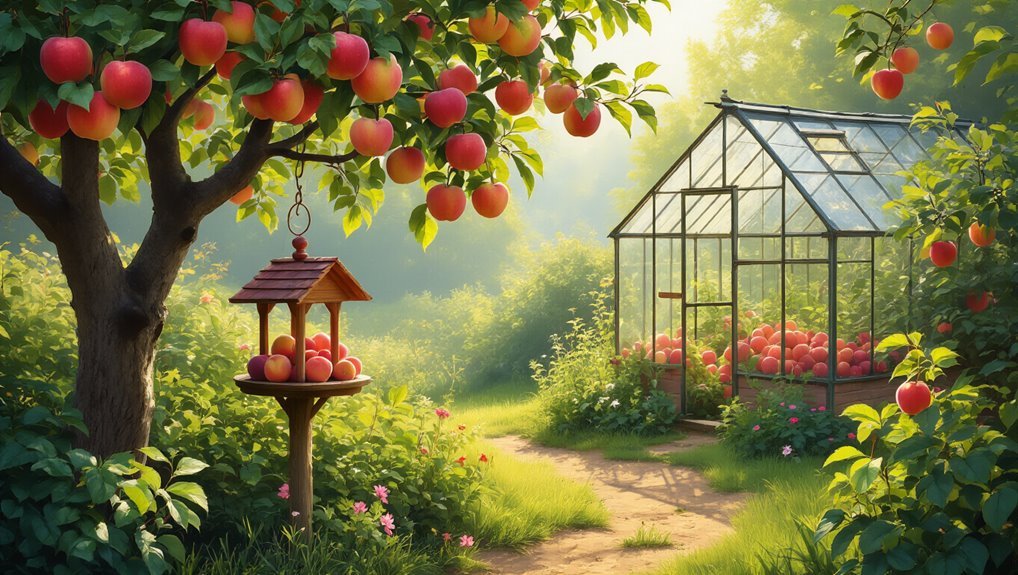
When you plant fruit trees in your garden, not only do you enhance its beauty, but you also create a vibrant space filled with life and color.
Imagine walking through your garden, surrounded by lush greenery and the sweet aroma of blooming flowers. Fruit trees provide stunning seasonal displays, from delicate blossoms in spring to bountiful harvests in fall.
Their varying shapes and sizes add visual interest, making your landscape dynamic and inviting. Plus, the colors of ripe fruits can serve as natural decorations, drawing attention and delighting the senses.
You’ll also attract birds and beneficial insects, further enriching your garden’s ecosystem.
With each fruit tree, you’re not just planting; you’re cultivating an enchanting atmosphere that brings joy to your outdoor space.
Choosing the Right Fruit Trees for Your Space
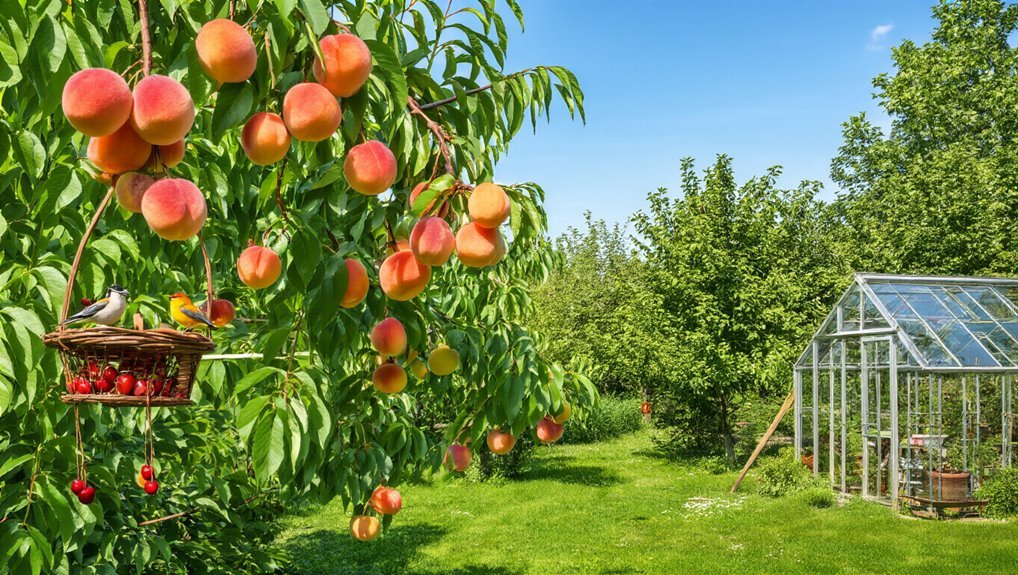
Selecting the right fruit trees for your garden can enhance both its beauty and productivity.
Start by assessing your space; consider factors like sunlight, soil type, and climate. Choose trees that thrive in your area and fit your garden size. Dwarf varieties are perfect for small spaces, while standard trees can provide a more traditional orchard feel.
Think about the fruits you enjoy most—apples, pears, or peaches—and select varieties that bear fruit at different times for a prolonged harvest.
Don’t forget to consider cross-pollination needs, as some trees require a partner for fruit production.
Finally, ensure you have enough room for growth, as well as proper care practices in place to maintain their health over time.
Designing an Aesthetic Fruit Tree Orchard
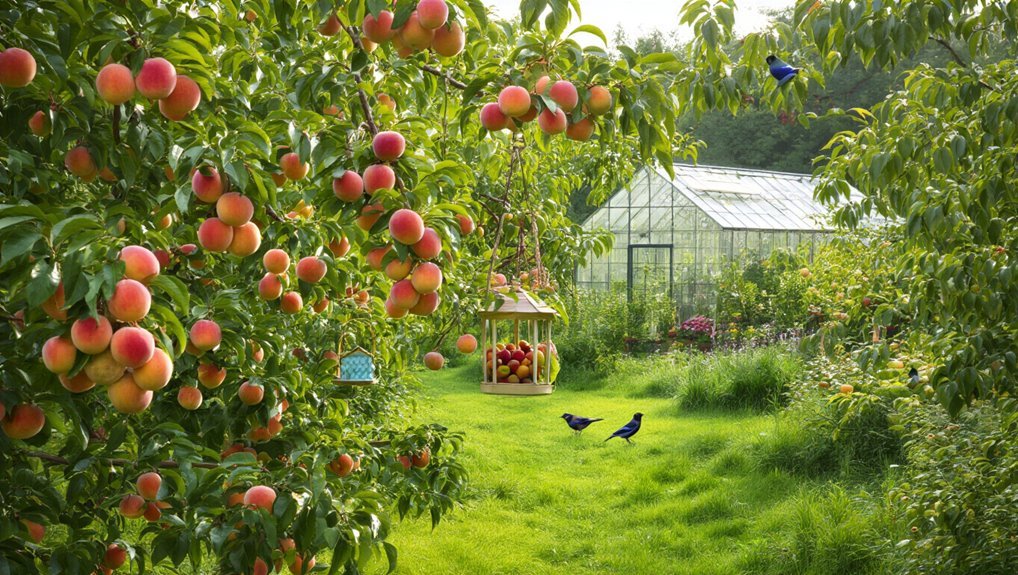
To create an aesthetic fruit tree orchard, start by envisioning the layout that best suits your garden’s character and your personal style.
Consider planting trees in clusters or rows, allowing for easy access and a visually pleasing design. Mix different fruit varieties to create a vibrant tapestry of colors and textures throughout the seasons.
Incorporate pathways or stepping stones that guide you through the orchard, enhancing both functionality and beauty.
Don’t forget to layer your trees by height, placing taller varieties at the back and shorter ones in front.
Add decorative elements like trellises or benches to encourage relaxation.
Finally, keep your orchard tidy by regularly pruning and mulching, ensuring a stunning display that’s both productive and visually appealing.
Attracting Wildlife With Bird Feeders
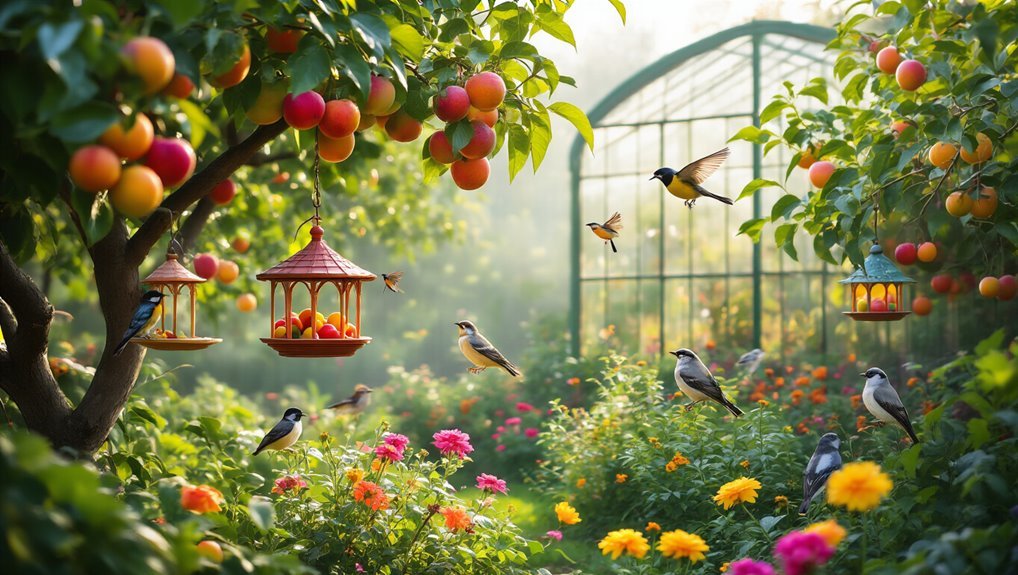
How can you transform your garden into a vibrant haven for birds? Start by adding bird feeders, which are a magnet for various species. Choose locations that provide safety and visibility, such as near trees or shrubs.
Fill your feeders with a mix of seeds to attract different birds; sunflower seeds and millet are popular choices. Make sure to keep your feeders clean and well-stocked to encourage regular visits.
Adding a bird bath nearby can enhance the attraction, offering birds a place to drink and bathe. You might also consider placing some natural elements, like native plants, to create a more inviting environment.
With these simple steps, you’ll notice a delightful increase in feathered friends flocking to your yard.
Types of Bird Feeders and Their Appeal
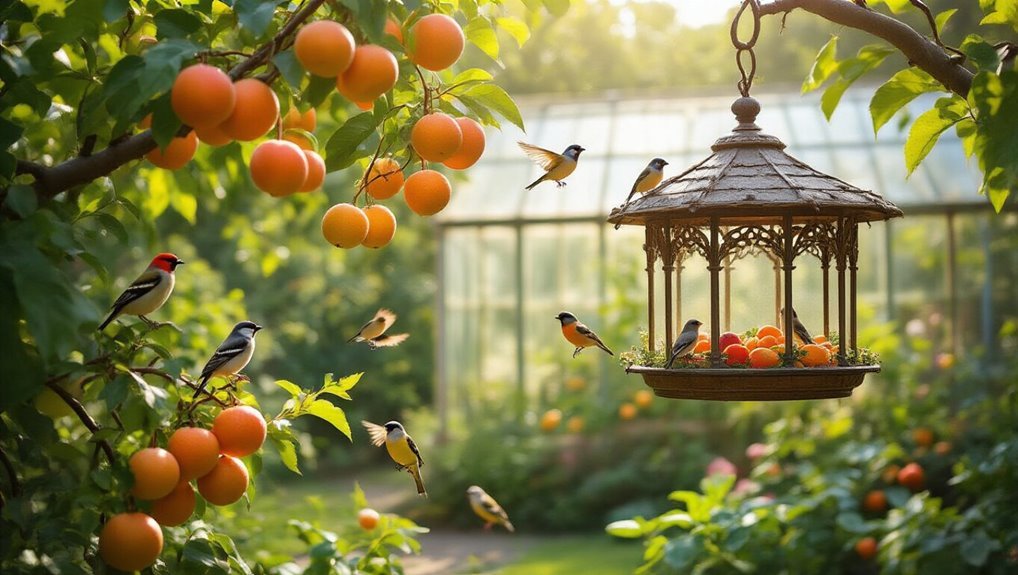
While choosing the right bird feeder can feel overwhelming, understanding the various types available can simplify the process and enhance your garden’s appeal. Each type offers unique benefits, attracting different bird species and adding charm to your space.
Here’s a quick overview:
| Type of Bird Feeder | Appeal |
|---|---|
| Tube Feeders | Ideal for small songbirds |
| Hopper Feeders | Great for mixed seed options |
| Platform Feeders | Attracts ground-feeding birds |
| Suet Feeders | Perfect for woodpeckers and more |
| Window Feeders | Close-up views of visiting birds |
Selecting the right feeder helps create a vibrant birdwatching experience, making your garden a lively sanctuary for wildlife. Enjoy the sights and sounds that come with attracting feathered friends!
Placement and Design Tips for Bird Feeders
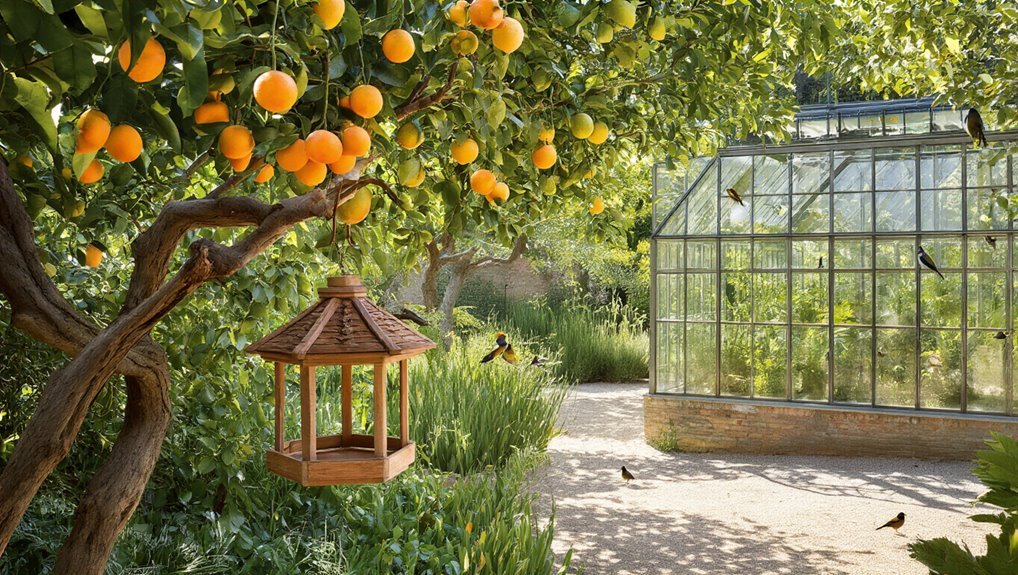
Choosing the right bird feeder is just the start; where you place and design them plays a significant role in attracting birds to your garden.
Position your feeders near trees or shrubs, as they provide shelter and perching spots for the birds. Make sure they’re visible from your windows so you can enjoy the view. Avoid placing feeders too close to predator perches like fences or low rooftops.
Consider using multiple feeders with different designs to attract various species. You can also personalize the look by painting them in colors that complement your garden’s aesthetic.
Lastly, ensure easy accessibility for refilling and cleaning, as maintaining your feeders is crucial for a healthy bird environment.
The Charm of Greenhouses in Gardening
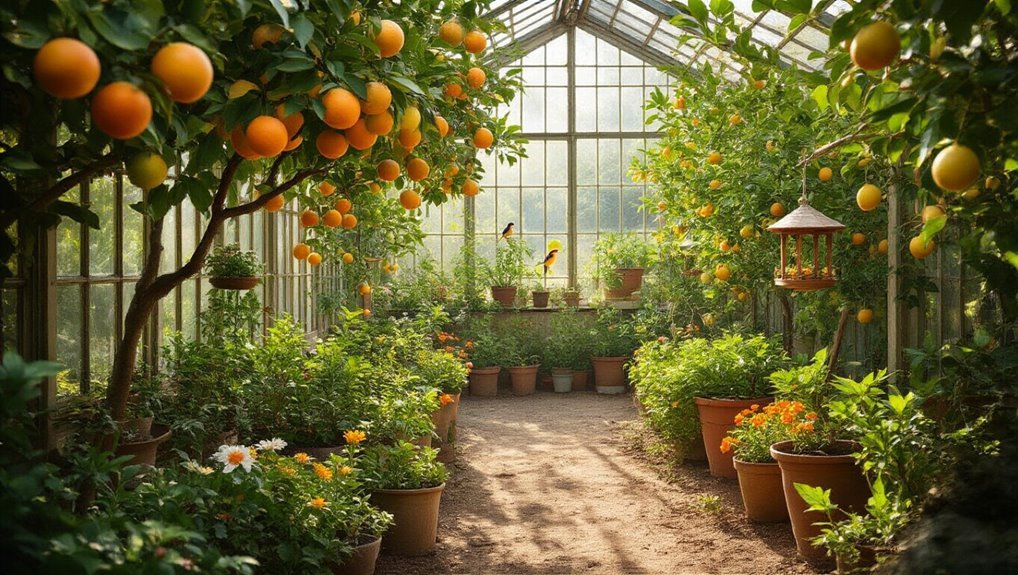
If you’re looking to elevate your gardening game, a greenhouse can be a delightful addition to your outdoor space.
Greenhouses provide a controlled environment, allowing you to extend your growing season and cultivate plants that might otherwise struggle outdoors. Imagine stepping inside, surrounded by lush greenery and the scent of fresh soil, as you nurture your seedlings and watch them thrive.
The charm of a greenhouse lies not just in its functionality but also in its aesthetic appeal. With various styles and materials, a greenhouse can serve as a stunning focal point in your garden.
You’ll find joy in caring for your plants, knowing you’ve created a personal sanctuary where nature flourishes. Embrace the magic that a greenhouse brings to your gardening experience!
Selecting the Perfect Greenhouse for Your Needs
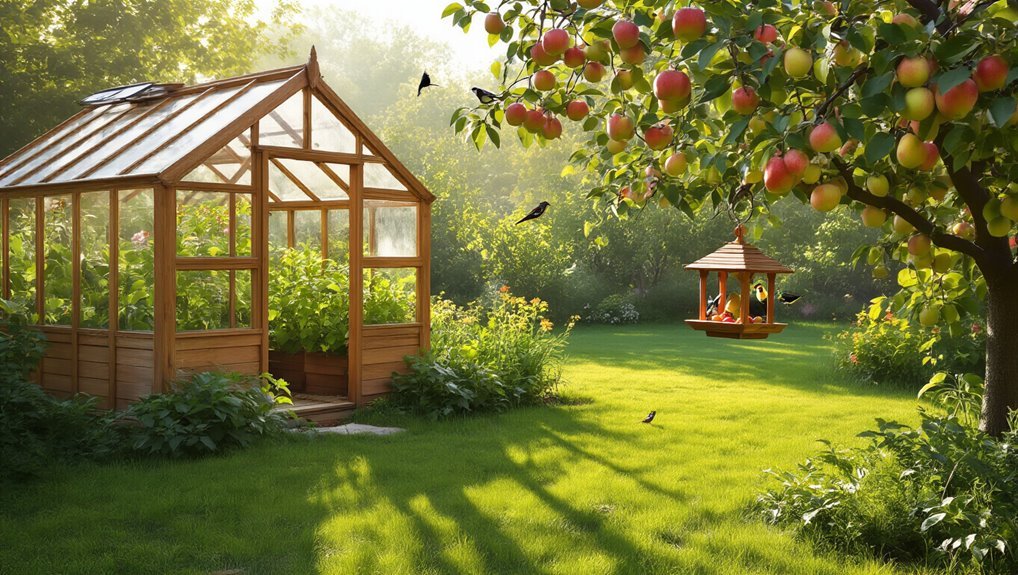
How do you know which greenhouse is right for you? Start by considering your space, budget, and gardening goals. Greenhouses come in various sizes, materials, and styles. Here’s a quick comparison to help you decide:
| Type | Pros | Cons |
|---|---|---|
| Polycarbonate | Lightweight, affordable | Less durable than glass |
| Glass | Excellent light transmission | Heavier, pricier |
| Plastic | Easy to assemble | Less aesthetic appeal |
Think about what you want to grow. If you’re starting seeds, a smaller, more affordable option might suffice. For larger plants or year-round gardening, invest in a sturdier model. Choose wisely, and your greenhouse will flourish alongside your garden!
Integrating Greenhouses Into Your Garden Design
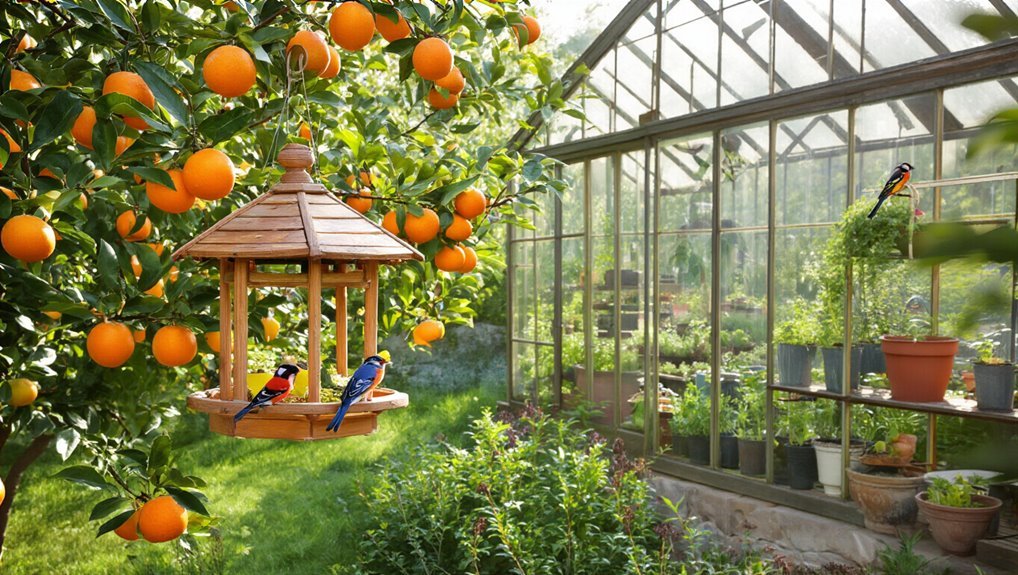
Have you thought about how a greenhouse can enhance your garden’s overall design? It’s more than just a functional space; it can serve as a striking focal point.
Position your greenhouse strategically, maybe near a patio or along a garden path, to draw the eye. Choose materials that complement your existing plants and structures, like wood or glass, for a cohesive look.
Consider incorporating climbing plants around the greenhouse to soften its edges, blending it with nature. Inside, use shelving for herbs and flowers, creating visual interest.
Don’t forget to add outdoor seating nearby, making it a serene spot to enjoy your greenery. With thoughtful placement and design, your greenhouse can elevate your garden’s aesthetic charm.
Creating a Cohesive Garden Aesthetic
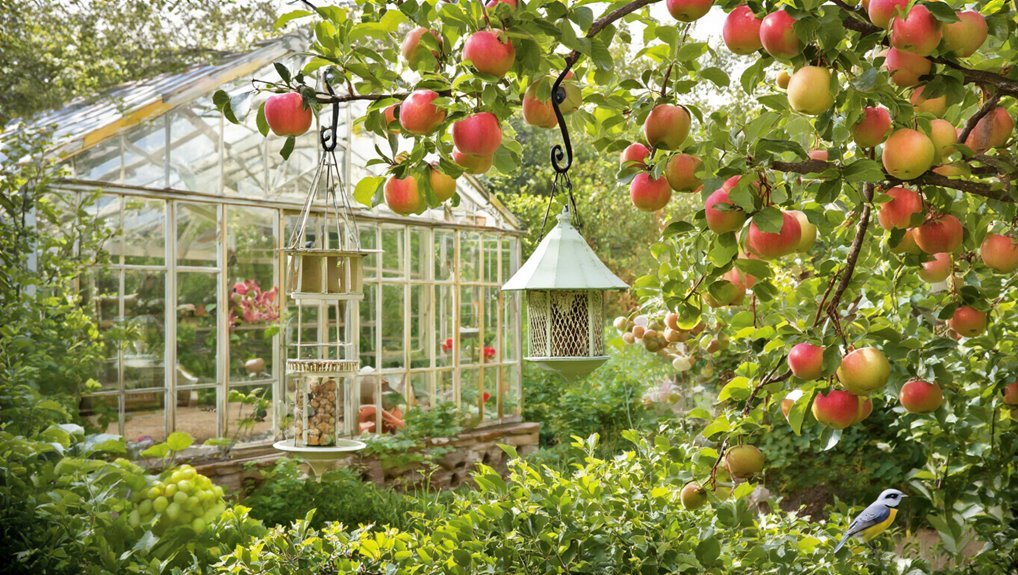
While creating a cohesive garden aesthetic might seem challenging, it can actually be an enjoyable process that transforms your outdoor space. Start by choosing a color palette that reflects your style; this could range from vibrant hues to calming neutrals.
Next, select plants, structures, and décor that complement each other. For instance, if you’ve got a rustic wooden bird feeder, consider pairing it with natural wood furniture or stone paths.
Don’t forget about the layout! Arrange your plants and features in a way that encourages flow and harmony. Incorporate elements like garden art or trellises to tie everything together.
Finally, maintain consistency through regular upkeep, ensuring your garden remains a unified, inviting retreat throughout the seasons.
Frequently Asked Questions
What Maintenance Do Fruit Trees Require Throughout the Year?
To keep your fruit trees healthy, you’ll need to prune them annually, monitor for pests, water regularly, and fertilize during the growing season. In winter, protect them from harsh weather and consider mulching.
Can Bird Feeders Attract Unwanted Pests or Animals?
Bird feeders can attract unwanted pests; studies show 60% of backyard bird enthusiasts report issues with squirrels or raccoons. To minimize this, you’ll want to choose feeders designed to deter these animals while still feeding birds.
How Long Do Greenhouses Typically Last With Proper Care?
Greenhouses can last anywhere from 10 to 30 years with proper care. Regular maintenance, like checking for leaks and cleaning panels, helps extend their lifespan. You’ll enjoy the benefits of your greenhouse for many seasons!
What Are the Best Fruits for Small Urban Gardens?
In the tapestry of urban life, small gardens bloom with potential. You’ll find strawberries, dwarf apple trees, and raspberries thrive in tight spaces, offering sweetness and vibrant life, transforming concrete into a fruitful oasis.
How Can I Winterize My Greenhouse Effectively?
To winterize your greenhouse effectively, you’ll want to insulate the walls, seal any gaps, and ensure proper ventilation. Consider adding a heater and using thermal mass to retain heat during those chilly months.
Conclusion
Incorporating fruit trees, bird feeders, and greenhouses into your garden not only enhances its beauty but also attracts wildlife and offers fresh produce. Remember, “good things come to those who wait.” As you nurture your garden, you’ll create a vibrant space that reflects your style and passion for nature. So, roll up your sleeves, dig in, and watch your garden flourish into an aesthetic haven that you can enjoy for years to come.


