To grow your dream backyard garden, start by assessing your space and setting clear goals. Choose plants suited for your climate and plan your layout based on sunlight exposure. Prepare your soil by testing its quality and amending it with compost. Implement effective watering strategies and maintain your plants by monitoring for pests and diseases. With these easy steps, you’ll soon enjoy a thriving garden, and there’s more to discover about nurturing your plants!
Key Takeaways
- Assess your space, measure the area, and set clear gardening goals to stay organized and focused.
- Choose plants suited to your climate by researching USDA hardiness zones and understanding soil conditions.
- Prepare the soil by testing pH, removing debris, and amending with compost for optimal growth.
- Establish a watering routine, apply mulch, and monitor plant health to ensure a thriving garden.
- Harvest produce at peak ripeness, enjoy fresh ingredients in meals, and share surplus with neighbors for community engagement.
Assess Your Space and Set Goals

Before you dive into planting, take a moment to assess your space and set clear goals for your backyard garden.
Start by measuring the area you have available. Consider the sunlight exposure throughout the day; some plants thrive in full sun while others prefer shade.
Think about your soil quality and whether you need to improve it with compost or other amendments. To keep your seeds organized and protected, it’s helpful to invest in garden seed storage containers before the planting season begins.
Next, define your gardening goals. Do you want a colorful flower bed, a vegetable patch, or both? Maybe you’d like to create a relaxing space for family gatherings.
Whatever it is, writing down your goals will help you stay focused and organized.
Choosing the best garden soil for your specific plants is a crucial step in ensuring your backyard garden will thrive from the start.
With a clear plan in mind, you’re ready to move forward and bring your garden dreams to life!
Choose the Right Plants for Your Climate

With your gardening goals in mind, it’s time to select plants that will thrive in your specific climate.
Choosing the right plants is crucial for a successful garden. Here are three things to keep in mind:
- Research Hardiness Zones: Check your USDA hardiness zone to find plants that can withstand your local temperatures.
- Consider Sunlight: Evaluate how much sunlight your garden gets daily. Some plants need full sun, while others prefer partial shade.
- Understand Soil Types: Different plants thrive in various soil conditions. Test your soil type and choose plants that match its pH and nutrient levels.
For those interested in year-round gardening, indoor herb gardens offer a convenient way to grow fresh herbs regardless of outdoor climate. If you’re looking for an easy way to begin, consider starting with Herb Garden Kits with Seeds and Pots to simplify the process and ensure you have everything you need to grow herbs successfully.
Plan Your Garden Layout
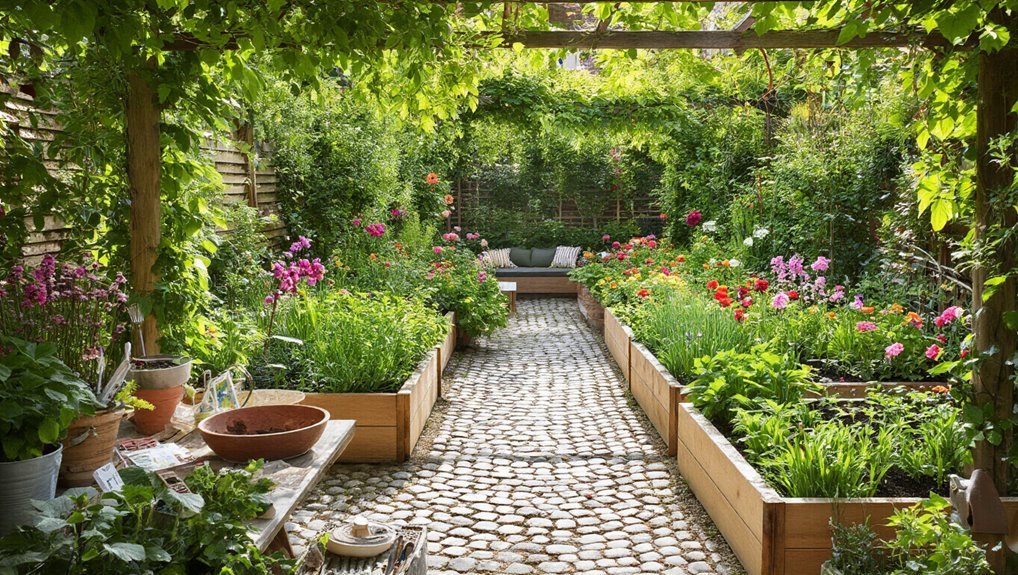
As you envision your dream garden, planning the layout is essential to maximize both beauty and functionality.
Start by sketching a rough design of your space. Consider the sun exposure, wind direction, and any existing structures. Group plants with similar needs together to create a cohesive look. Use pathways to connect different areas and allow for easy access. For gardeners who want to enhance vertical growth, garden trellis netting is a practical solution to support climbing vegetables and flowers.
Don’t forget to incorporate focal points, like a bench or a decorative pot, to draw the eye. Think about vertical elements, such as trellises or raised beds, to add depth.
Adding beautiful trellises can support climbing plants and introduce elegant visual interest to your garden design.
Lastly, leave room for future expansion or changes. With a thoughtful layout, your garden will flourish, offering a tranquil retreat for years to come.
Prepare the Soil for Planting
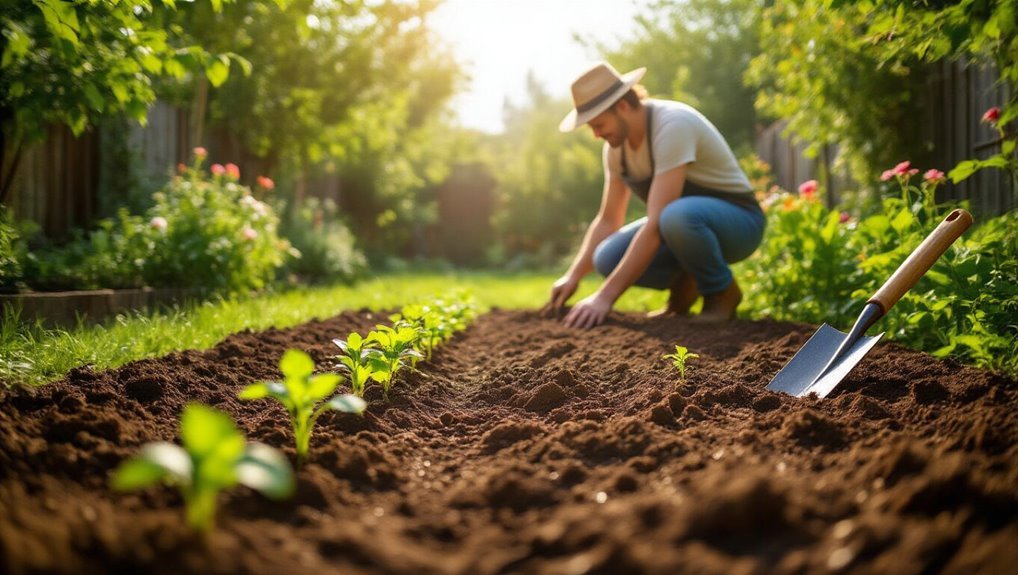
After establishing a solid garden layout, it’s time to focus on preparing the soil for planting. Healthy soil is crucial for strong plants, so let’s get started.
- Test the Soil: Use a soil test kit to check pH and nutrient levels. This helps you understand what amendments your soil might need.
- Remove Debris: Clear away weeds, rocks, and old roots to create a clean workspace. This prevents competition for nutrients. Using outdoor composting systems can help you manage garden waste efficiently while enriching your soil.
- Amend the Soil: Incorporate organic matter like compost or well-rotted manure to enrich the soil. This boosts fertility and improves drainage.
For the best results, consider using compost bins to create your own nutrient-rich compost at home, which is beneficial for improving garden soil.
Taking these steps ensures your soil is primed for planting, setting the stage for a thriving garden.
Happy gardening!
Planting Techniques for Success
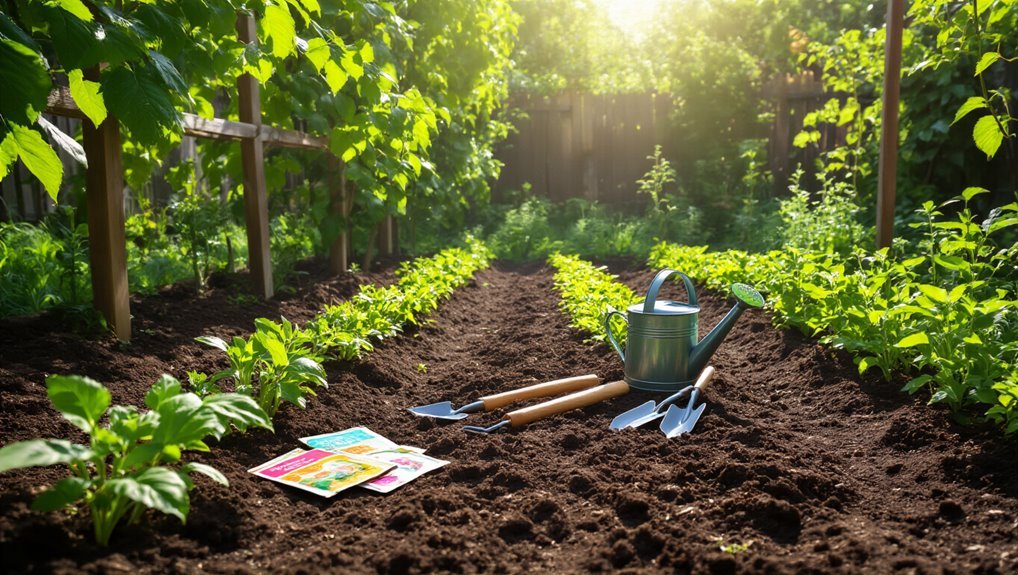
To ensure your plants thrive, mastering effective planting techniques is essential.
Start by choosing the right time for planting, considering your region’s frost dates and seasonal changes. When planting seeds or seedlings, dig holes that are appropriate for their size—generally, twice as wide as the root ball. For optimal germination, gardeners often rely on Seedling Heat Mats to provide consistent warmth to their seed trays, especially in cooler climates.
Space your plants according to their specific requirements; overcrowding can hinder growth. Gently loosen the roots if they’re pot-bound, and then place them in the hole, filling in with soil without compacting it too tightly.
After planting, give your new additions a good soak to settle the soil around the roots. Lastly, mulching can help retain moisture and suppress weeds, creating an ideal environment for your garden to flourish.
For a strong start, consider using seed starting kits designed to support healthy germination and boost your gardening success.
Watering and Maintenance Essentials

While your plants are settling into their new home, consistent watering and maintenance are crucial for their growth and health.
Establish a routine to help you stay on track. Here are three essentials to keep in mind:
- Watering: Aim to water deeply but infrequently. This encourages roots to grow deeper, making plants more resilient.
- Mulching: Apply a layer of mulch around your plants to retain moisture and suppress weeds. Organic mulch can also improve soil quality over time. Using organic mulching materials such as straw offers a natural way to protect your soil and boost plant vitality. Discover the benefits of using mulch to further enhance your garden’s health and productivity.
- Pruning: Regularly check for dead or yellowing leaves, and trim them away. This promotes airflow and directs energy to healthier parts of the plant.
Pest Control and Organic Practices
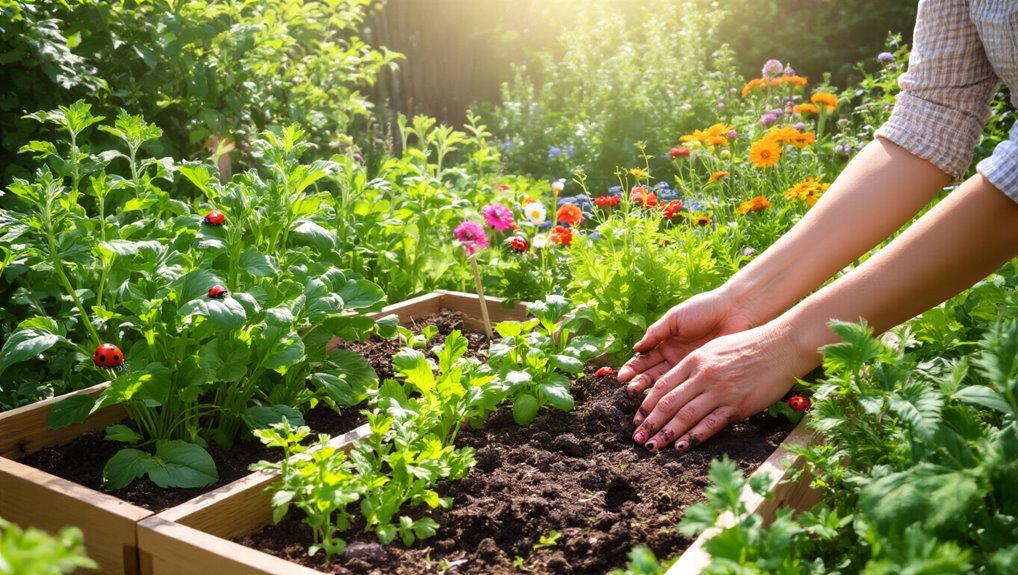
Pest control can feel like a daunting task for gardeners, but embracing organic practices makes it manageable and safe for your plants and the environment.
Start by encouraging beneficial insects, like ladybugs and lacewings, which naturally prey on pests. You can also use neem oil or insecticidal soap as effective treatments against common invaders. When choosing products, consider effective solutions for pest control that are proven to work in a variety of garden settings.
Regularly inspect your plants for signs of trouble, and remove any affected leaves to prevent spread. Companion planting—growing certain plants together—can deter pests and enhance growth.
Additionally, maintaining healthy soil through composting and mulching strengthens your plants, making them less susceptible to infestations. For effective results, consider using Organic Pest Control Solutions specifically designed to target garden pests while remaining safe for your backyard ecosystem.
Harvesting and Enjoying Your Garden’s Bounty
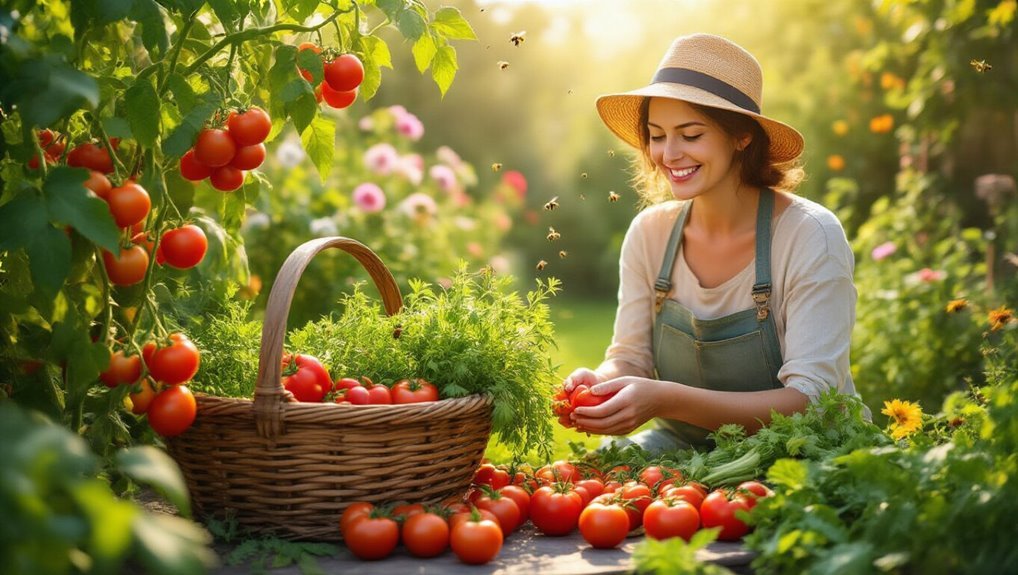
After successfully managing pests with organic practices, it’s time to reap the rewards of your hard work.
Harvesting from your garden is one of the most satisfying moments you’ll experience. Here’s how to enjoy your garden’s bounty:
- Pick at Peak Ripeness: Gather your fruits and veggies when they’re fully ripe for the best flavor and nutrients. For continued healthy growth, using plant fertilizer tablets can help your plants reach their full potential.
- Use Fresh Ingredients: Incorporate your harvest into meals right away. Fresh produce tastes incredible and elevates any dish.
- Share with Friends: Gift some of your surplus to neighbors or friends. It’s a great way to connect and spread joy.
To keep your garden thriving, consider nourishing your plants with the best plant food options available, which support healthy growth and bountiful harvests.
Frequently Asked Questions
How Much Sunlight Does My Garden Need Daily?
Your garden needs about six to eight hours of direct sunlight daily for most plants. Monitor sunlight patterns in your space, and adjust plant placement accordingly to ensure they thrive and flourish.
Can I Grow a Garden in Containers?
Absolutely, you can grow a garden in containers! Think of them as little green worlds you control. Just ensure your containers have drainage, choose the right plants, and watch your garden flourish right on your balcony!
What Tools Do I Need to Start Gardening?
To start gardening, you’ll need essential tools like a trowel, hand pruners, a watering can, gloves, and a garden fork. These items help you cultivate, plant, and maintain your garden effectively, ensuring success.
How Do I Attract Pollinators to My Garden?
You’ll summon a buzzing brigade of pollinators by planting vibrant flowers, avoiding pesticides, and providing water sources. Add diverse plants, and watch your garden transform into a floral fiesta, attracting bees and butterflies galore!
What Should I Do With My Garden in Winter?
In winter, you should protect your garden by applying mulch, covering plants, and removing debris. Consider planting winter crops or planning for spring. Keep your tools clean and organized to prepare for the upcoming gardening season.
Conclusion
Starting your dream backyard garden is like planting seeds of possibility. With careful planning, the right plants, and a bit of nurturing, you’ll cultivate not just a garden, but a sanctuary. Embrace the journey, from preparing your soil to harvesting your bounty, and watch your efforts blossom into something beautiful. So grab your gardening gloves, dig in, and let nature inspire you as you grow not just plants, but memories that will flourish for years to come.