Caring for indoor house plants is easy, even if you sometimes forget to water them. Choose low-maintenance options like snake plants and pothos that thrive on neglect. Master watering by checking soil moisture an inch deep and adjusting for the seasons. Make sure you give them the right light and create humidity by misting or using pebble trays. If your plants start looking sad, there are simple fixes. Discover more tips to keep your greenery flourishing effortlessly!
Key Takeaways
- Choose low-maintenance plants like snake plants or pothos that thrive on neglect and tolerate low light.
- Water thoroughly only when the top inch of soil feels dry, adjusting frequency by season.
- Use well-draining pots to prevent root rot and ensure healthy plant growth.
- Group plants together to create humidity and maintain a favorable environment.
- Monitor for pests and light conditions, making adjustments as needed for optimal health.
Choose Low-Maintenance Indoor Plants for Easy Care
When you’re looking to add greenery to your home without the hassle, choosing low-maintenance indoor plants is a smart move.
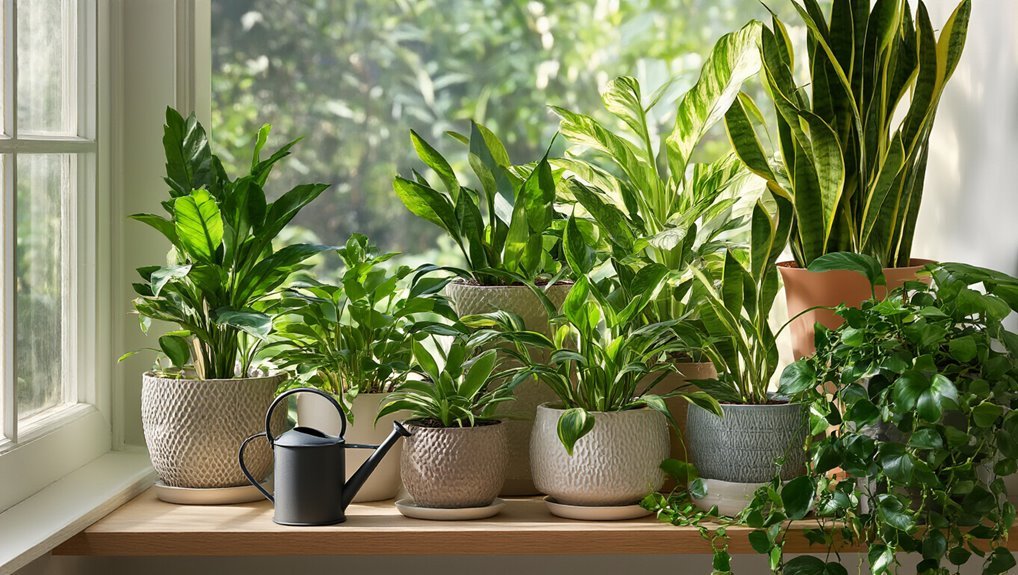
These plants thrive on neglect, making them perfect for busy lifestyles. Consider options like snake plants, pothos, or ZZ plants; they tolerate low light and infrequent watering. You won’t have to worry about constant upkeep or intricate care routines.
Plus, they can improve your indoor air quality, giving your space a refreshing boost. Make sure to place them in well-draining pots to prevent root rot, and you’re set!
With these resilient plants, you can enjoy a vibrant, green atmosphere with minimal effort. They’re not just easy; they’re also forgiving, perfect for any plant parent.
Master Watering Techniques for Healthy Growth
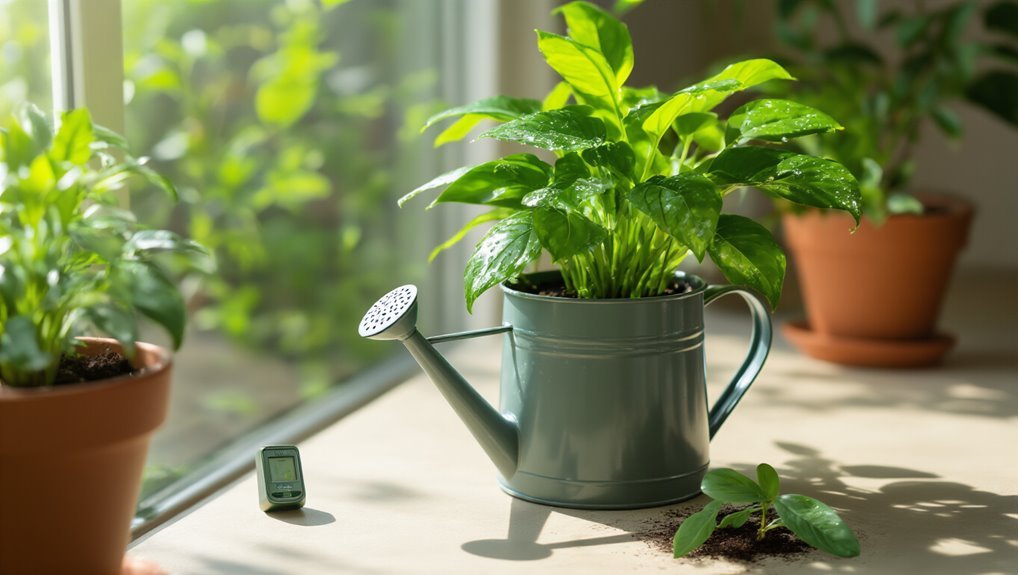
Even with low-maintenance plants, mastering watering techniques is key to ensuring their healthy growth.
You don’t have to be a plant expert to get it right; just follow a few simple guidelines.
- Check the soil: Stick your finger about an inch into the soil. If it’s dry, it’s time to water.
- Water thoroughly: When you do water, make sure to soak the soil until you see excess water draining from the pot’s bottom. This encourages deep root growth.
- Adjust for seasons: Plants need less water in winter when they’re dormant, so scale back to avoid overwatering.
Find the Best Light for Your Plants
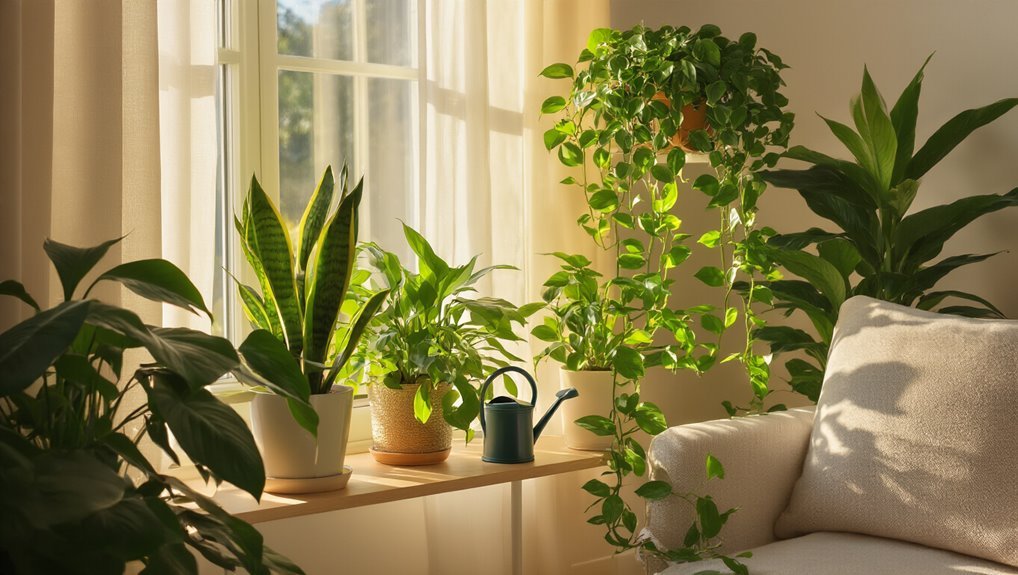
Understanding your plants’ light requirements is crucial for their health and growth. Different plants thrive in varying light conditions.
Start by identifying the light levels in your home—these can range from low to bright and direct. For low-light plants like snake plants or pothos, indirect light works well. If you have succulents or cacti, they’ll need bright, direct sunlight.
Observe your plants regularly; if they lean toward the light or develop pale leaves, they might need more brightness. Conversely, if leaves scorch, they’re likely getting too much sun.
Rotate your plants occasionally to ensure even light exposure. Using sheer curtains can help diffuse harsh sunlight while still providing enough light. Your plants will thank you!
Creating Humidity for Thriving Indoor Plants
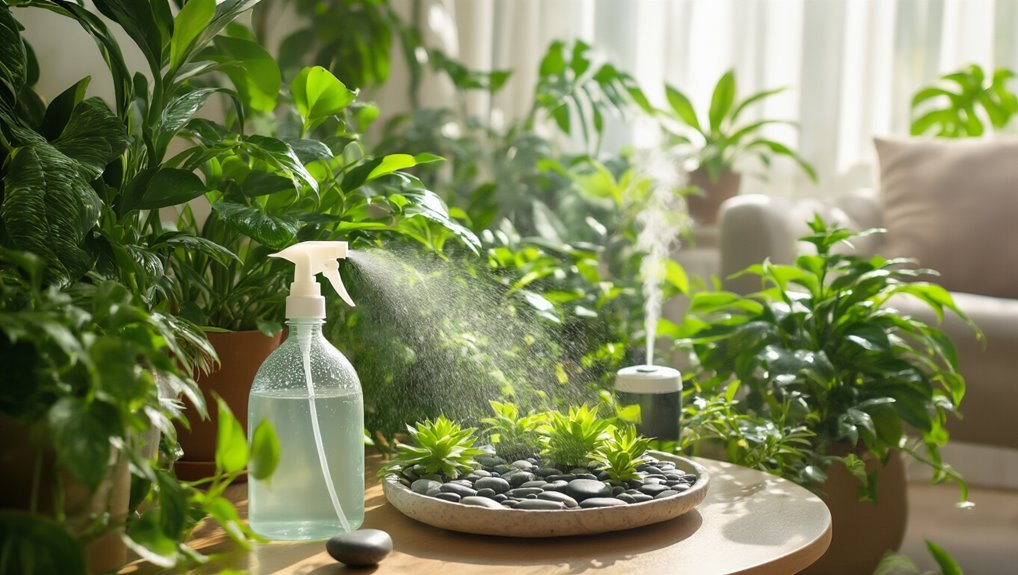
While many indoor plants thrive in bright light, they often crave humidity to flourish. You can easily create a humid environment for your plants, helping them grow strong and healthy.
Here are a few effective methods:
- Misting: Lightly mist your plants with water a few times a week to provide a quick humidity boost.
- Pebble trays: Place a tray filled with pebbles and water under your plants. As the water evaporates, it increases humidity around them.
- Group plants: Cluster your plants together; they’ll create a mini-ecosystem, sharing moisture through transpiration.
Create an Easy Plant Care Schedule
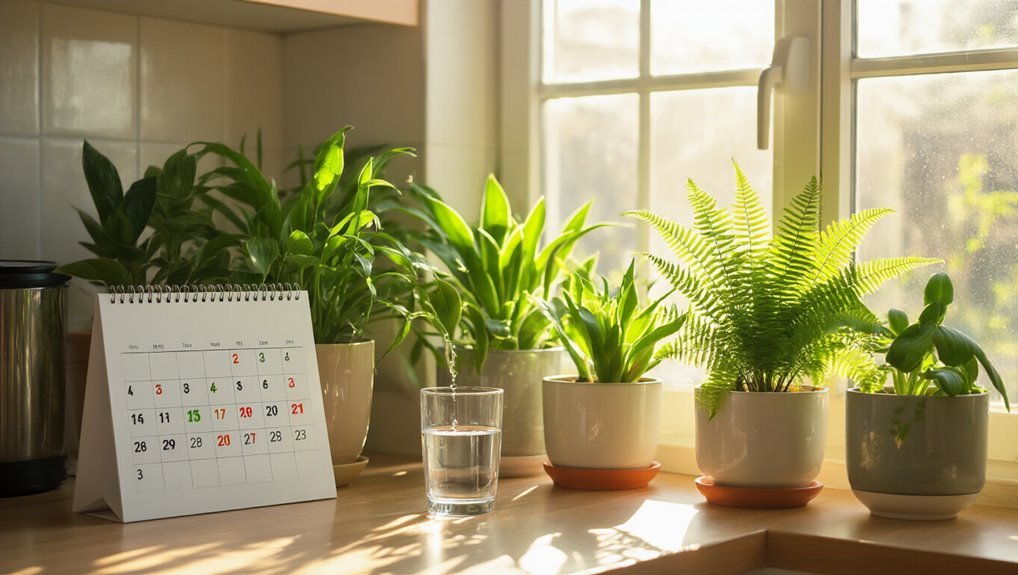
To ensure your indoor plants thrive, creating an easy plant care schedule is essential. Start by choosing specific days for watering, fertilizing, and checking for pests.
For instance, water your plants every Sunday and fertilize them on the first of each month. Use reminders on your phone or a calendar to help you stay consistent.
Also, consider grouping plants with similar care needs together; this makes it easier to remember their requirements.
Keep a journal or use an app to track your plants’ health and any adjustments you make. By sticking to a schedule, you’ll reduce the chances of forgetting important tasks, ensuring your indoor garden flourishes, even if you occasionally miss a watering.
What to Do When Your Plants Aren’t Thriving?
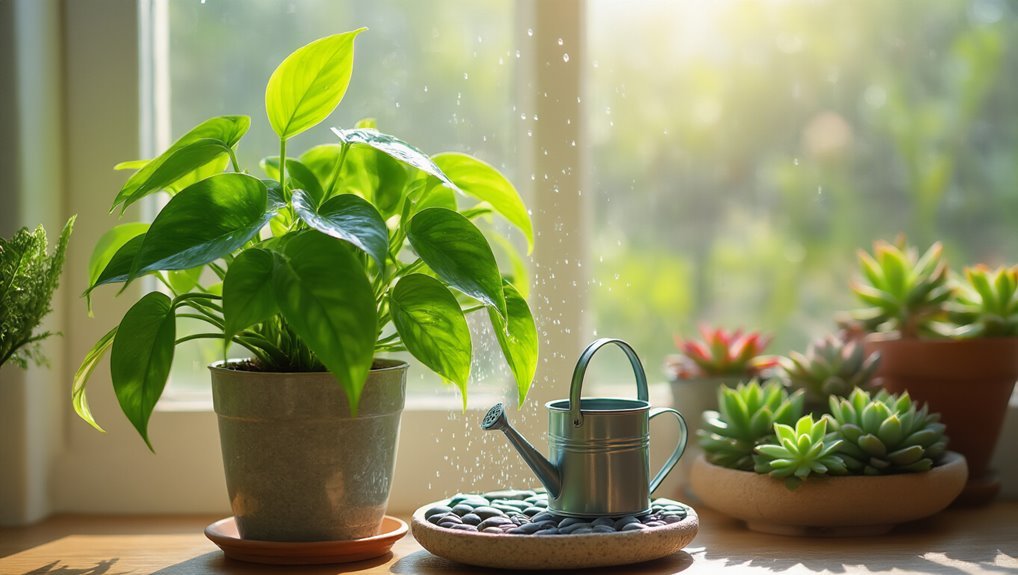
Even with a solid care schedule, plants can sometimes show signs of distress. When you notice wilted leaves or stunted growth, it’s time to take action. Start by assessing their environment.
- Check light levels: Ensure your plants get the right amount of sunlight.
- Examine the soil: Look for signs of overwatering or dryness; adjust your watering routine if necessary.
- Inspect for pests: Small bugs can wreak havoc; treat any infestations promptly.
Once you’ve identified potential issues, make the necessary adjustments. Sometimes, relocating a plant or changing its potting mix can lead to a quick recovery.
Stay observant, and don’t hesitate to experiment until you find what works best for your indoor garden.
How to Propagate and Share Your Plant Collection
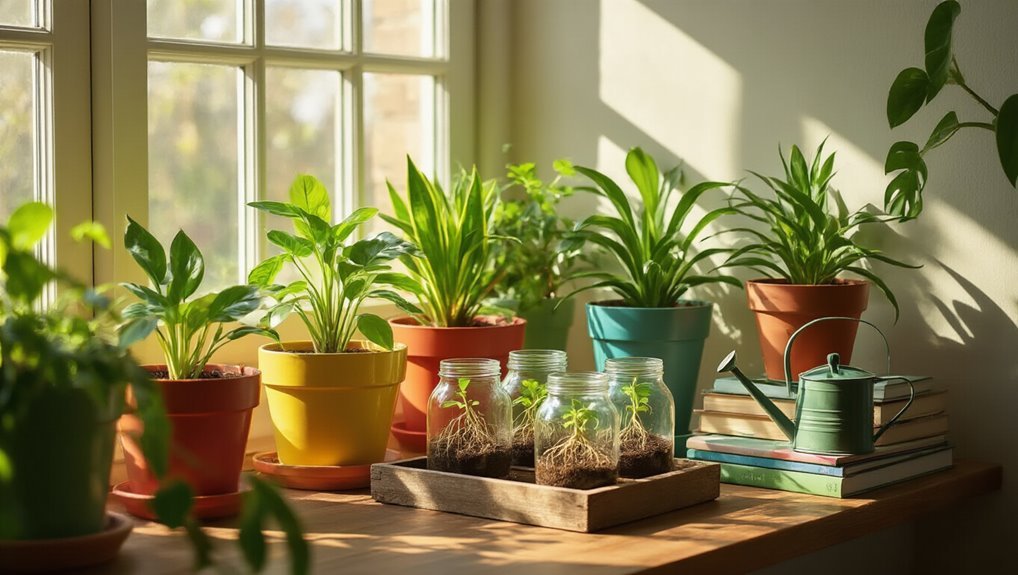
If you’re eager to expand your indoor garden or share your plant passion with friends, propagating your plants is a rewarding and straightforward process.
Start by selecting healthy stems or leaves from your existing plants. For stem cuttings, snip just below a node, then place them in water or soil. If you’re using leaves, let them callous for a day before planting.
Ensure your new plants get indirect sunlight and keep the soil moist but not soggy. After a few weeks, roots will develop, and you can transfer them to pots.
When your cuttings thrive, share them with friends or swap for new varieties. Not only will you expand your collection, but you’ll also create a community of plant lovers!
Frequently Asked Questions
Can I Use Tap Water for All Indoor Plants?
Yes, you can use tap water for most indoor plants, but be cautious. Some plants might be sensitive to chlorine or minerals. Let the water sit for a day to reduce chemicals before watering.
How Do I Know if My Plant Needs Repotting?
When it comes to repotting, you’ll know it’s time if roots are poking through the drainage holes or the plant’s growth has slowed. Don’t wait for the last straw; act before it’s too late!
What Common Pests Should I Watch For?
Watch for common pests like spider mites, aphids, mealybugs, and fungus gnats. Check for webbing, sticky residue, or small bugs on leaves. If you spot them, act quickly to protect your plants from damage.
Are There Plants That Purify Indoor Air Effectively?
Ever wonder if plants can breathe life into your home? Yes, certain plants like spider plants and peace lilies purify indoor air effectively. They absorb toxins and improve air quality, making your space healthier and more refreshing.
How Can I Tell if My Plant Is Getting Too Much Light?
If your plant’s leaves are yellowing, curling, or developing brown spots, it’s likely getting too much light. Move it to a shadier spot, and watch for improvement in the next few days.
Conclusion
In a nutshell, caring for indoor plants doesn’t have to be a chore, even if you sometimes forget to water. By choosing low-maintenance varieties and mastering simple techniques, you can keep your green friends thriving. Remember, it’s all about finding the right light and creating a routine that works for you. So, don’t let your plants wilt away—get your green thumb in gear and enjoy the beauty they bring into your home!