To design a beautiful flower garden, start by assessing sunlight and soil conditions. Choose flower bed shapes like rectangles or curves, and combine seasonal blooms with perennials for year-round color. Use color theory to create harmonious combinations and layer plants for added texture. Incorporate hardscaping elements like pathways and focal points to enhance aesthetics. Don’t forget maintenance tips to keep your garden thriving. Keep exploring for more ideas on personal touches and unique decor to elevate your space!
Key Takeaways
- Choose a layout that suits your style, using rectangular or curved edges for visual appeal and tiered levels for depth.
- Select a mix of seasonal blooms and perennials for year-round color, incorporating different heights and textures for interest.
- Utilize a cohesive color scheme, balancing warm and cool colors to evoke desired emotions throughout the garden.
- Add hardscaping elements like paths, borders, and focal points to define spaces and enhance the overall aesthetic.
- Personalize your garden with decor such as sculptures, birdbaths, and cozy seating areas to create a serene retreat.
Understanding Your Space: Assessing Sunlight and Soil Conditions
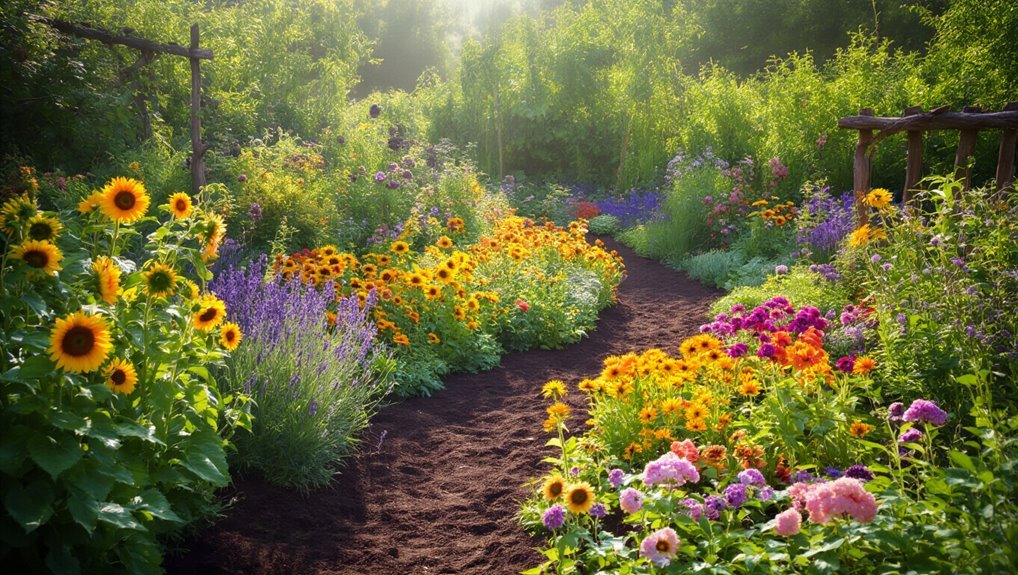
When designing your flower garden, the first step is assessing your space’s sunlight and soil conditions.
Start by observing how many hours of direct sunlight your garden receives each day. Most flowers thrive in full sun, while some prefer partial shade.
Next, check your soil type. Is it sandy, clayey, or loamy? You can conduct a simple test by digging a small hole and feeling the texture. A pH test kit will help you determine if your soil is acidic, neutral, or alkaline.
This knowledge will guide your plant selections. If your soil lacks nutrients, consider amending it with organic matter. Adding mulch can help retain moisture in the soil, suppress weeds, and regulate soil temperature, further boosting your garden’s health.
Using the best garden soil can provide your plants with the balanced nutrients and structure they need to thrive.
Ultimately, understanding these factors ensures a flourishing flower garden that showcases your favorite blooms beautifully.
Designing Your Layout: Flower Bed Shapes and Arrangements
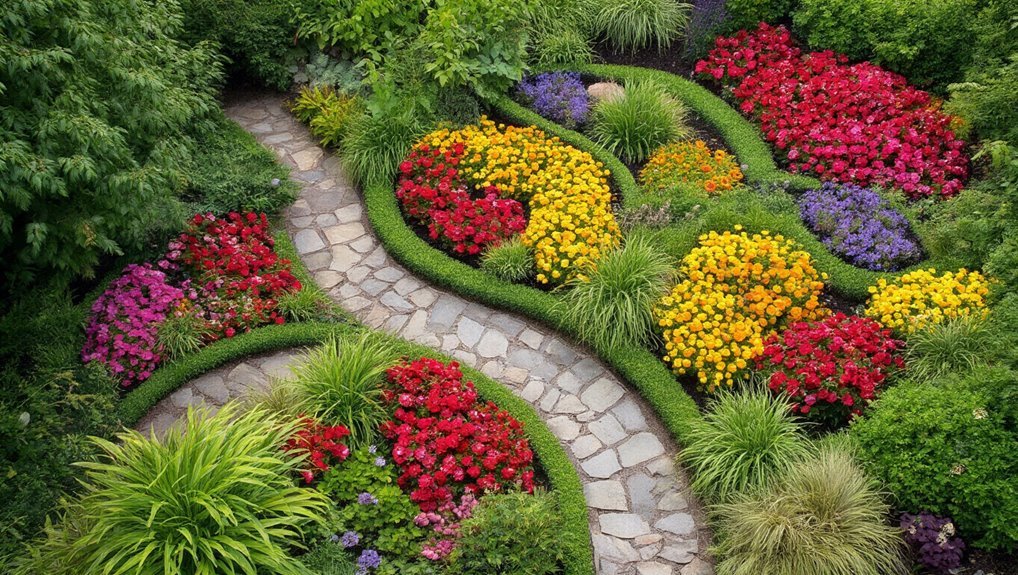
As you start planning your flower garden layout, consider the shapes and arrangements that will best showcase your blooms. Rectangular beds are classic and easy to manage, while curved edges can create a more natural look.
Think about creating tiered levels to add depth; raised beds or slopes can enhance visual interest. You might also want to incorporate circular patterns for a focal point, drawing the eye to a central feature. Using quality trellis netting can provide essential support for vining flowers and vegetables, helping you maximize vertical space and keep plants healthy.
Grouping flowers in clusters rather than scattering them allows for a more vibrant display. Remember to leave space for pathways, ensuring access for maintenance and enjoyment.
With thoughtful arrangements, you’ll create a stunning garden that flourishes in both beauty and functionality. Incorporating garden trellises can add vertical interest and support climbing plants, further enhancing the appeal of your garden design.
Choosing the Right Flowers: Seasonal Blooms and Perennials
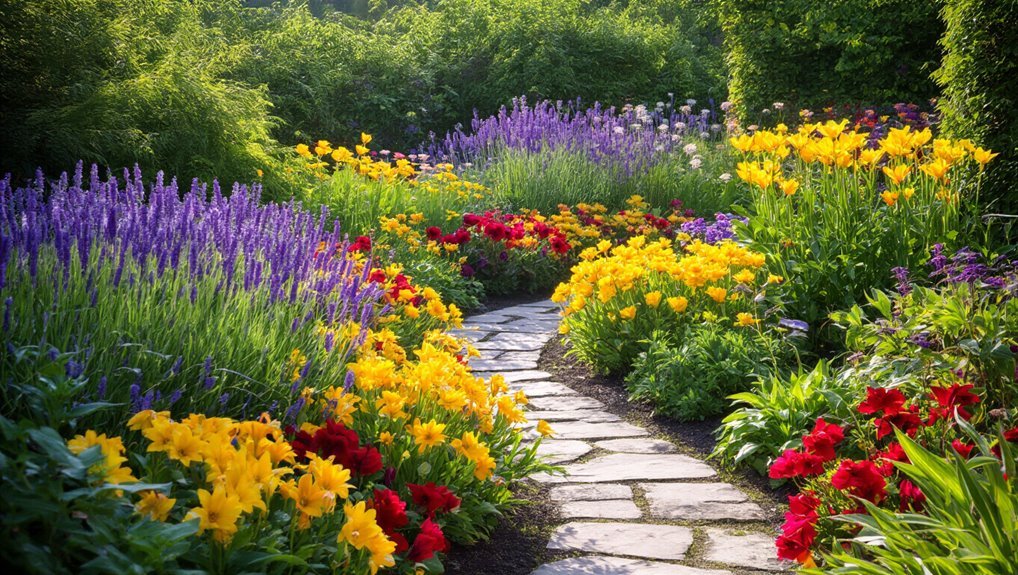
Choosing the right flowers can transform your garden from a simple layout into a vibrant masterpiece. Start by selecting seasonal blooms that capture your interest and thrive in your climate.
Think about planting flowers that bloom at different times to ensure your garden is colorful throughout the year. For a consistent look, incorporate perennials that return each season, providing a reliable foundation for your garden design. You can also complement your flower choices with herb garden kits that include seeds and pots, adding both beauty and practicality to your gardening space.
Consider your garden’s sunlight and soil conditions when choosing flowers. Some love full sun, while others prefer shade.
Mix textures and heights for visual interest, and don’t forget to include fragrant varieties to enhance your outdoor experience. With thoughtful choices, you’ll create a stunning flower garden that delights you and your visitors. You might also want to explore edible flower seeds to add both beauty and utility to your garden, as these varieties can be visually striking while also providing ingredients for your kitchen.
Color Theory: Creating Harmonious Flower Combinations
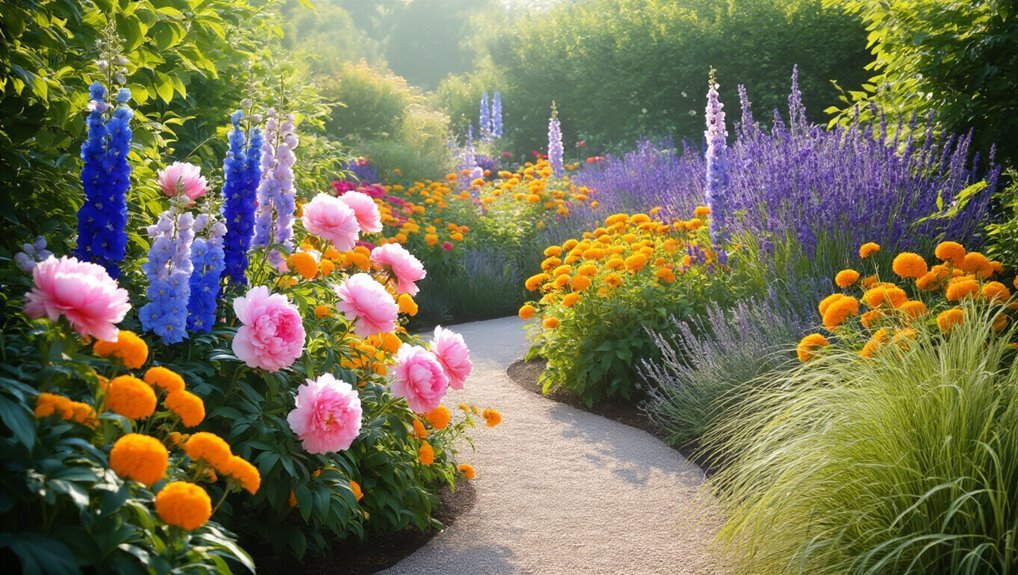
To create a visually striking flower garden, understanding color theory is essential. Start by choosing a color scheme that resonates with you.
Consider complementary colors, like purple and yellow, which create a vibrant contrast, or analogous colors, such as blue and violet, for a more harmonious look. Monochromatic schemes using varying shades of one color can also be stunning.
Don’t forget about the impact of warm and cool tones; warm colors (reds, oranges) energize your space, while cool colors (blues, greens) offer tranquility. Elevating your arrangements on stylish plant stands can add a vertical design element, making your flower groupings even more dynamic and eye-catching.
As you select your flowers, think about how their colors interact under different lighting conditions throughout the day.
Ultimately, aim for balance and cohesion in your combinations to make your garden truly captivating. For added style and functionality, consider displaying your arrangements in beautiful plant pots to elevate the overall look of your space.
Height and Texture: Layering Plants for Visual Interest
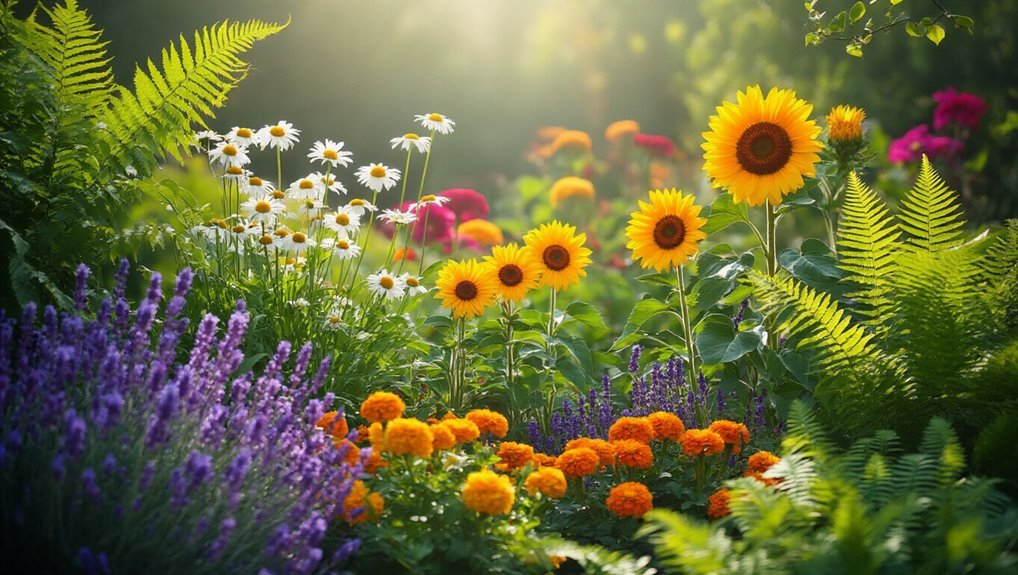
While planning your flower garden, layering plants by height and texture can significantly enhance its visual appeal.
Start by placing taller plants at the back or center, creating a stunning backdrop. Consider using plants like sunflowers or hollyhocks to add vertical interest. For all your gardening tasks, it’s wise to protect your hands with essential gardening gloves to ensure safety and comfort.
In front, mix in mid-height flowers, such as coneflowers or daisies, to bridge the gap.
Finally, use shorter plants, like marigolds or creeping thyme, at the front to create a lush, full look.
Don’t forget to incorporate plants with varying textures—combine spiky foliage, soft blooms, and broad leaves to add depth.
This thoughtful arrangement not only draws the eye but also creates a dynamic, inviting atmosphere in your garden.
Enjoy the beauty that layering brings!
To keep your garden organized and easily identifiable, consider using essential plant markers to label each variety as you design your layout.
Incorporating Hardscaping: Paths, Borders, and Focal Points
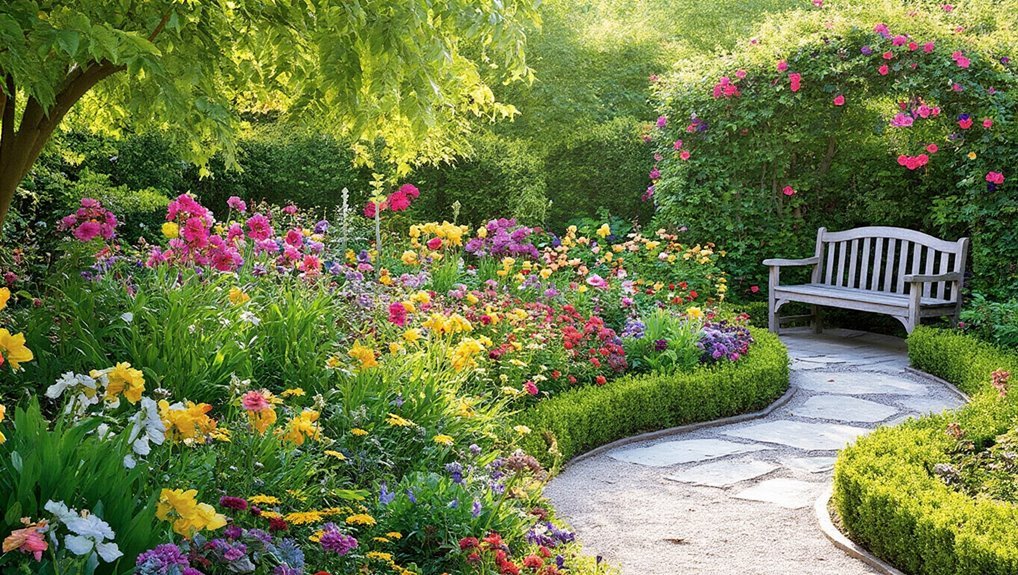
Incorporating hardscaping elements like paths, borders, and focal points can transform your flower garden into a cohesive and inviting space. Paths guide visitors through your garden, inviting exploration, while borders define areas and add structure. Focal points like sculptures or water features draw the eye and create interest. Adding garden arches as a focal point can elevate your garden’s design by creating stunning entrances or framing views.
| Element | Purpose |
|---|---|
| Paths | Guide visitors and create flow |
| Borders | Define spaces and add structure |
| Focal Points | Create visual interest and draw attention |
| Materials | Enhance aesthetics (stone, wood) |
Adding mini and large greenhouses to your garden can also integrate beautifully with hardscaping, providing both functional and aesthetic benefits for your outdoor space.
Maintenance Tips: Caring for Your Flower Garden Year-Round
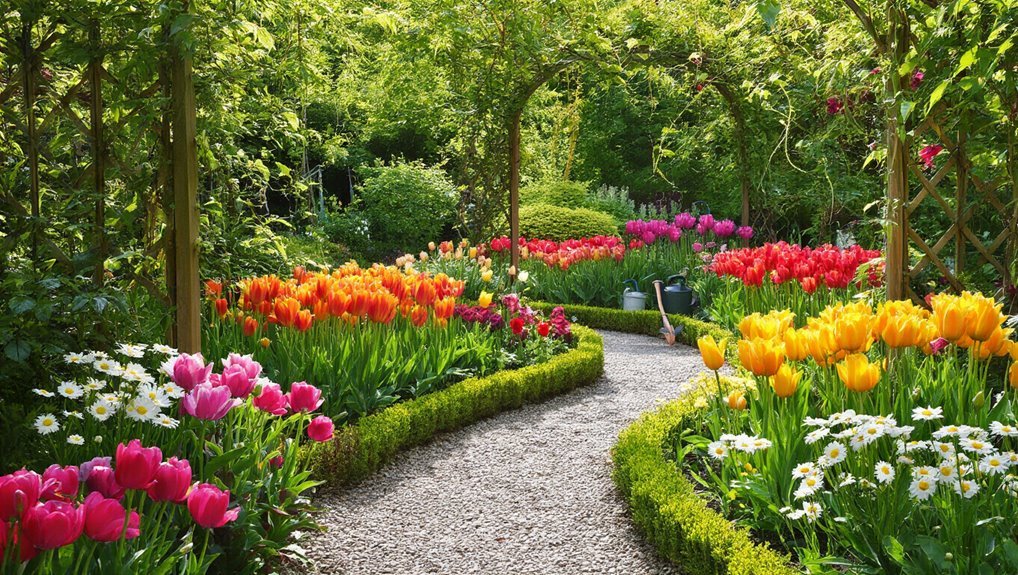
Caring for your flower garden year-round requires consistent attention and a few essential practices to keep it thriving.
Here are three key tips to maintain your garden:
- Water Wisely: Ensure your flowers receive adequate moisture, especially during dry spells. Early mornings are the best time to water, reducing evaporation and fungal diseases.
- Prune Regularly: Trim dead or diseased stems to promote healthy growth and improve airflow. This encourages blooming and helps prevent pests.
- Fertilize Appropriately: Use a balanced fertilizer during the growing season to provide essential nutrients. Follow the instructions on the package to avoid over-fertilizing, which can harm your plants. There are a variety of plant food options available that cater to different types of flowers and soil conditions.
For a simple and effective way to nourish your plants, consider using plant fertilizer tablets that deliver nutrients directly to the roots for optimal garden health.
With these practices, your flower garden will flourish throughout the seasons!
Adding Personal Touches: Garden Decor and Accessories
To truly make your flower garden feel like your own, adding personal touches through decor and accessories can create a unique atmosphere.
Consider incorporating whimsical garden sculptures or decorative stakes that express your personality. A charming birdbath can attract wildlife while enhancing the visual appeal. Decorative touches like birdhouses for gardens not only serve as attractive focal points but also invite birds to your outdoor space, enriching your garden experience.
You might also want to add cozy seating areas with colorful cushions, inviting you to relax and enjoy your surroundings. String lights or lanterns can provide a magical glow during the evenings, transforming your garden into a serene retreat.
Don’t forget to personalize your space with potted plants or hanging baskets that reflect your favorite colors and styles.
Adding beautiful garden statues is another wonderful way to enhance your space, as they bring artistic elegance and a unique focal point to any garden.
Ultimately, these elements will turn your garden into a beautiful extension of yourself.
Frequently Asked Questions
How Do I Attract Pollinators to My Flower Garden?
To attract pollinators to your garden, plant native flowers, avoid pesticides, and create diverse blooms. You’ll want to include various shapes and colors, ensuring there’s something in bloom throughout the growing season.
What Are the Best Flowers for a Low-Maintenance Garden?
For a low-maintenance garden, choose flowers like daylilies, sedums, and coneflowers. They thrive with minimal care, resist pests, and bloom beautifully, ensuring your garden stays vibrant without demanding too much of your time or effort.
How Do I Prevent Pests in My Flower Garden?
To prevent pests in your flower garden, regularly inspect plants, maintain healthy soil, and introduce beneficial insects. You can also use organic sprays and companion planting to keep unwanted visitors at bay. Stay vigilant!
Can I Plant Flowers in Containers?
Planting flowers in containers is like painting on a blank canvas; you can create stunning arrangements. Choose appropriate pots, ensure proper drainage, and select flowers that thrive in your local climate for a vibrant display.
What Flowers Are Safe for Pets?
If you’re looking for pet-safe flowers, consider marigolds, snapdragons, and petunias. They’re non-toxic and add vibrant colors to your garden. Always double-check specific types, as some may still pose risks to curious pets.
Conclusion
Designing a beautiful flower garden is like painting a masterpiece; every element plays a crucial role in creating harmony. By understanding your space, selecting the right flowers, and incorporating thoughtful layouts and hardscaping, you can cultivate a stunning oasis. Remember to layer heights and textures for visual interest, and don’t shy away from adding personal touches that reflect your style. With a little care and creativity, your garden will flourish year-round, bringing joy and beauty to your life.


