To grow and care for hydrangeas like a pro, start by choosing the right variety based on your climate and space. Ensure soil is well-draining and rich in organic matter, with a pH between 5.5 and 6.5. Use proper planting techniques and make sure to water adequately, providing about an inch weekly. Prune according to the variety for optimal blooms. With these tips in hand, you’ll uncover even more essential care techniques to keep your hydrangeas thriving.
Key Takeaways
- Choose the right hydrangea variety based on climate, space, color preference, and blooming season to ensure optimal growth.
- Plant in well-draining soil rich in organic matter with a pH between 5.5 and 6.5 for vibrant blooms.
- Water deeply, providing about an inch per week, and use a balanced fertilizer in spring for healthy growth.
- Prune according to the hydrangea type; smooth and panicle varieties in late winter, bigleaf varieties after flowering for best results.
- Control flower color by adjusting soil pH; use sulfur for blue blooms and lime for pink blooms, if desired.
Choosing the Right Hydrangea Variety
When choosing the right hydrangea variety for your garden, what factors should you consider?
First, think about your climate. Some varieties thrive in cooler regions, while others prefer warmth. Using organic mulching materials in your garden can help regulate soil temperature and moisture, benefiting hydrangeas in a range of climates.
Next, consider the size of your garden space; you’ll want to select a variety that fits well. For small spaces, compact types like ‘Pinky Winky’ or ‘Bobo’ work wonders. If you have a larger area, the classic ‘Endless Summer’ or ‘Annabelle’ can create a stunning focal point.
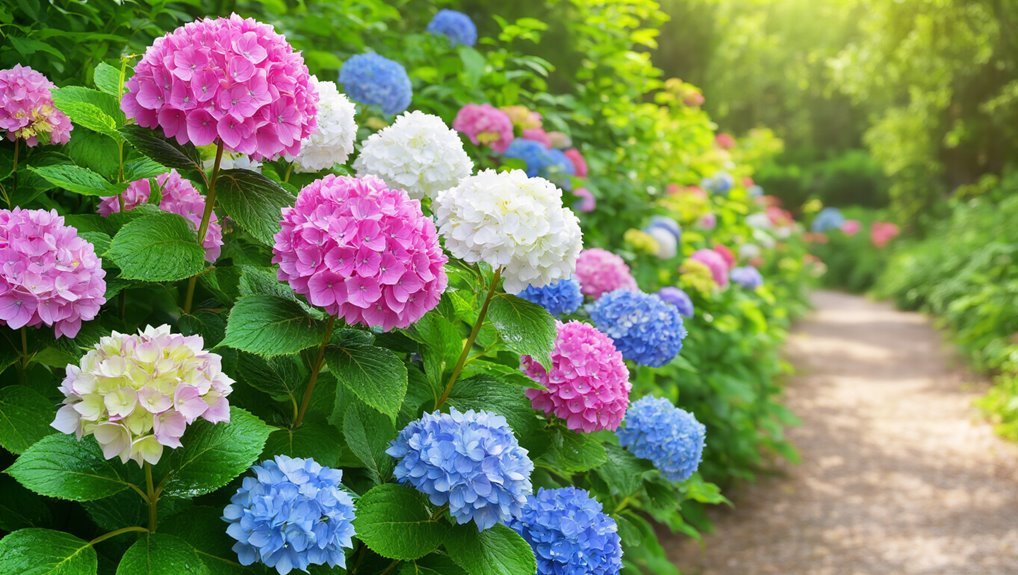
Additionally, reflect on the color you desire, as some varieties produce blue blooms, while others showcase pink or white.
Finally, check the blooming season; certain types bloom in summer, while others bloom in fall, ensuring your garden’s beauty throughout the year.
To help your hydrangeas thrive, be sure to use the best garden soil specifically designed for healthy plant growth.
Ideal Soil Conditions for Hydrangeas
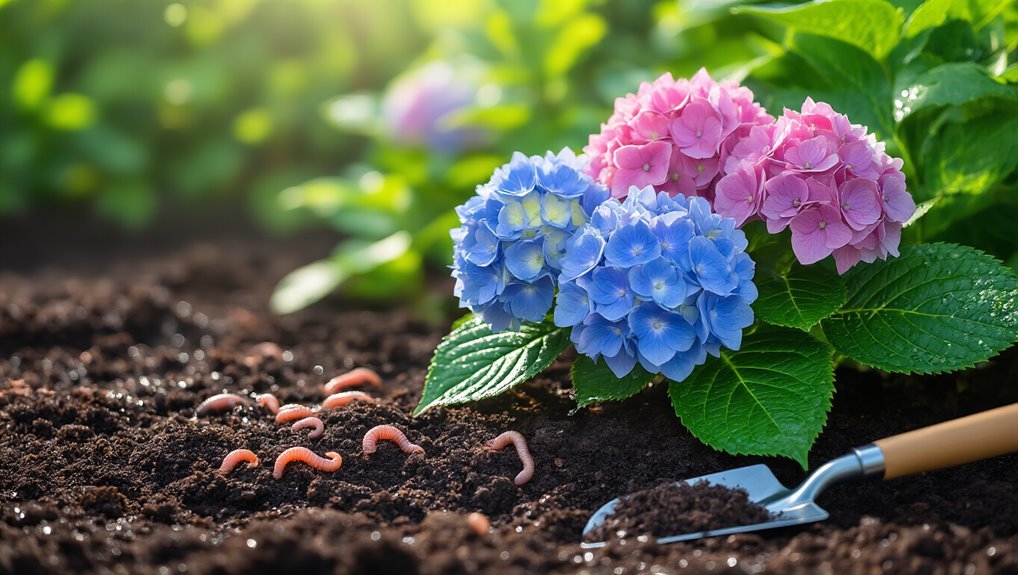
To ensure your hydrangeas thrive, you need to provide them with the right soil conditions.
Hydrangeas prefer well-draining soil rich in organic matter. Aim for a pH between 5.5 and 6.5, as this range supports vibrant blooms. If your soil is too acidic or alkaline, consider amending it with lime or sulfur to adjust the pH. Using a compost bin is an excellent way to produce nutrient-rich compost that benefits hydrangeas and other plants in your garden.
Incorporating compost or aged manure will enhance soil fertility and moisture retention. Make sure the soil drains well; hydrangeas don’t like to sit in waterlogged conditions.
To test drainage, dig a hole and fill it with water; if it drains within a few hours, you’re good to go.
Adding a layer of mulch around your hydrangeas will help retain moisture, regulate soil temperature, and reduce weed growth for healthier plants.
Providing these ideal conditions will set your hydrangeas up for success and stunning blooms.
Best Planting Techniques
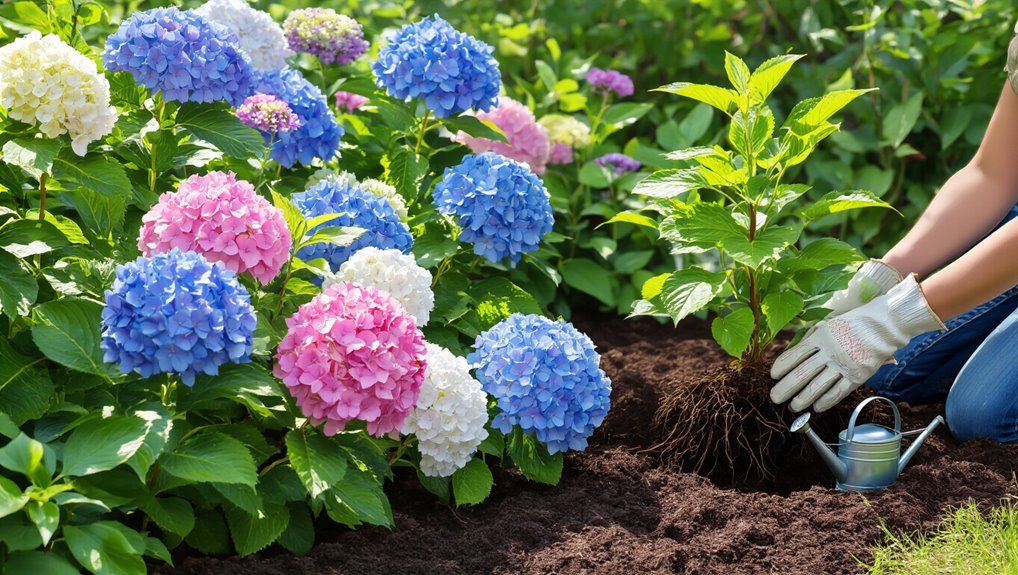
Successful hydrangea planting hinges on a few key techniques.
First, choose the right time—typically spring or fall—to plant your hydrangeas, ensuring the soil temperature is optimal. If you’re looking to grow other culinary plants as well, consider starting with a herb garden kit to add versatility to your home garden.
Dig a hole that’s twice the width of the root ball but no deeper than the root system itself. This encourages healthy growth.
When placing the plant, make sure the top of the root ball is level with the soil surface. You don’t want it buried too deep.
Next, backfill the hole with soil, gently packing it to eliminate air pockets.
Finally, create a small basin around the base to help retain moisture.
For gardeners starting from scratch, using seed starting kits can provide young hydrangeas with a strong foundation before transplanting them outside.
Following these steps will set your hydrangeas up for a thriving future!
Watering and Fertilizing Hydrangeas
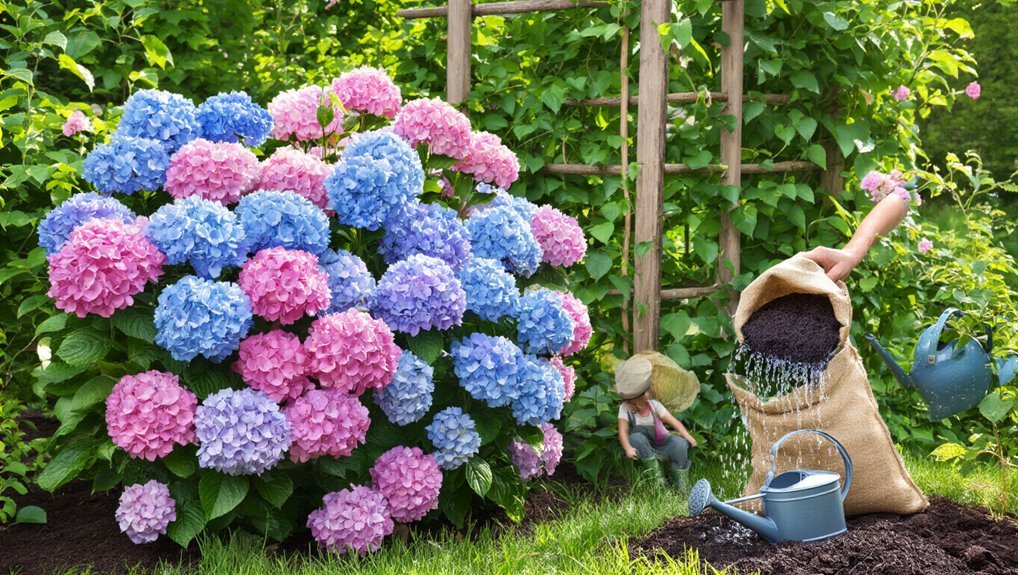
Caring for hydrangeas involves proper watering and fertilizing techniques to keep them healthy and vibrant.
Start by giving your hydrangeas about an inch of water per week, either through rainfall or supplemental watering. It’s crucial to water deeply, encouraging roots to grow strong and deep. During hot spells, check the soil moisture more frequently. To efficiently distribute nutrients and amendments, consider using fertilizer spreaders for even coverage across your garden beds.
When it comes to fertilizing, use a balanced, slow-release fertilizer in early spring to promote growth. Look for a formula that’s high in phosphorus to boost blooming.
You might consider a second application in mid-summer if your plants seem to need it. Always follow the package instructions, as over-fertilizing can harm your hydrangeas.
For best results, choose from the best plant food options to ensure your hydrangeas receive the nutrients they need for vibrant blooms.
Keep these tips in mind, and you’ll have thriving blooms!
Pruning and Maintenance Tips
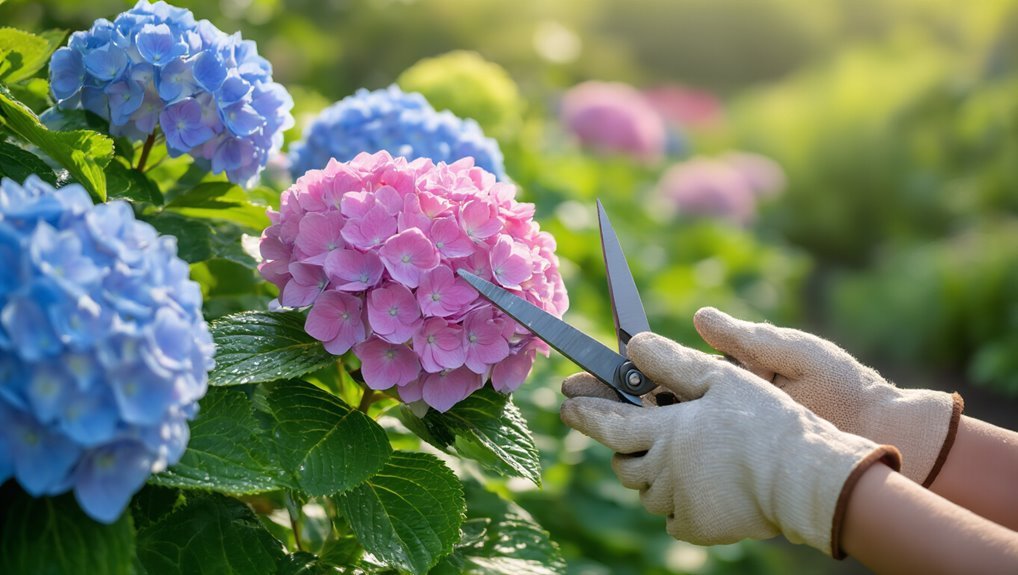
Pruning hydrangeas is essential for maintaining their health and promoting beautiful blooms. Start by identifying the type of hydrangea you have, as pruning methods vary. To achieve the best results, consider investing in a gardening tool set that includes all the essential tools needed for hydrangea care.
For smooth and panicle hydrangeas, prune in late winter or early spring, cutting back about one-third of the stems. For bigleaf varieties, wait until after flowering to trim, removing dead or weak wood.
Regularly deadhead spent blooms to encourage new growth and enhance appearance. Additionally, remove any crossing or overcrowded branches to improve airflow.
Don’t forget to clean your tools before and after pruning to prevent disease spread. Using sharp and reliable pruning shears will make the process easier and more effective. With these maintenance tips, you’ll ensure your hydrangeas flourish and continue to provide stunning displays in your garden.
Managing Pests and Diseases
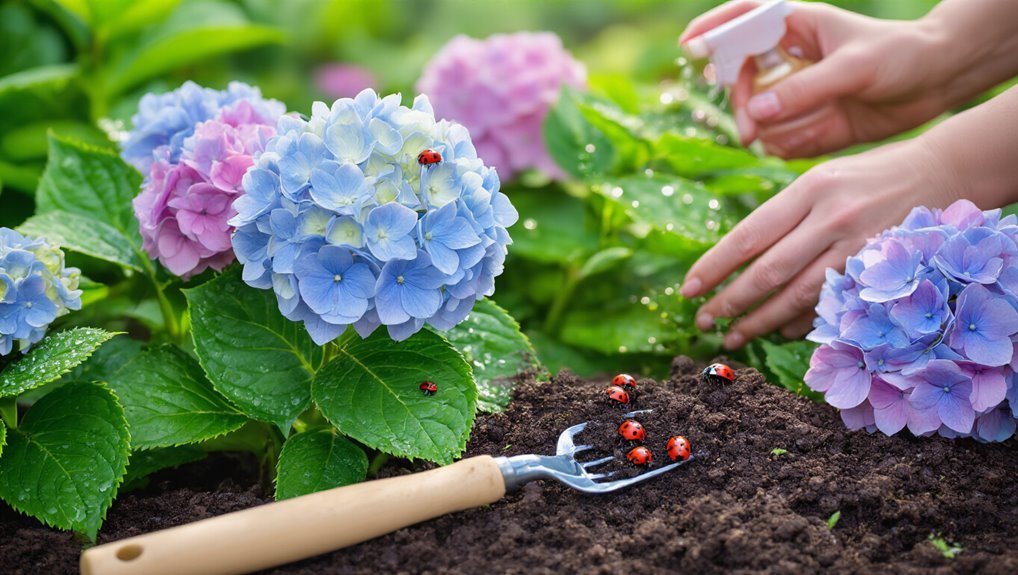
Managing pests and diseases is crucial for keeping your hydrangeas thriving. Start by regularly inspecting your plants for signs of trouble, like discolored leaves or wilting.
Common pests include aphids and spider mites, which you can control with insecticidal soap or neem oil. If you notice fungal issues, like powdery mildew, ensure good air circulation and apply a fungicide if necessary. You can also consider organic pest control solutions that are both effective and environmentally friendly.
It’s also important to maintain healthy soil and avoid overwatering, as these factors can lead to root rot.
Implementing companion planting can help deter pests naturally. Always remove any dead or infected plant material to prevent spreading diseases.
For best results, consider using effective pest control products specifically designed to target common garden pests while being safe for your hydrangeas.
Understanding Color Changes in Hydrangeas
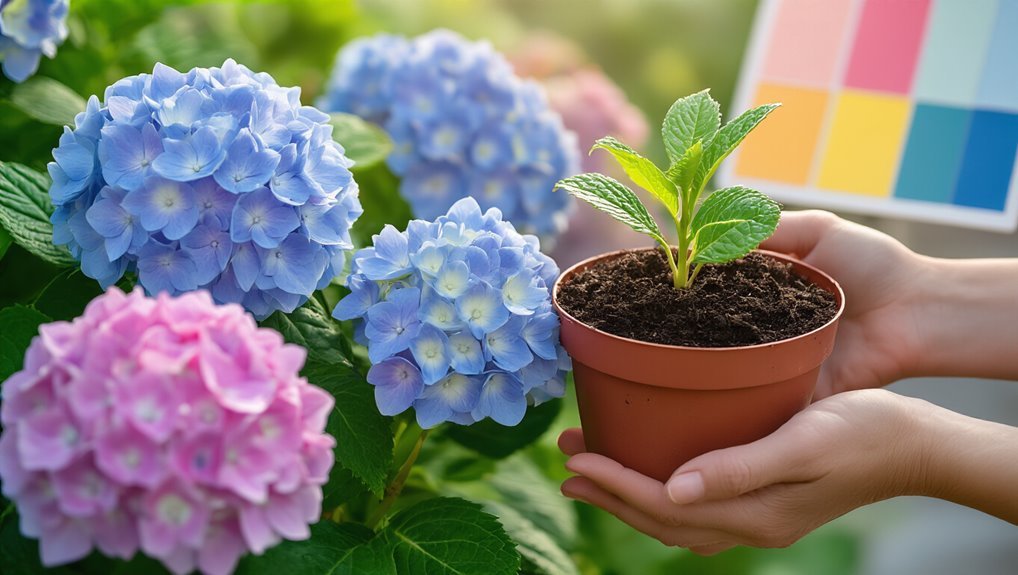
When you grow hydrangeas, you might notice their flower colors changing throughout the season, which can be both fascinating and perplexing.
The color of your blooms mainly depends on the pH of the soil. In acidic soil (pH below 6), you’ll see beautiful blue flowers, while alkaline soil (pH above 7) often results in pink blooms. For gardeners interested in more precise control, using hydroponic nutrient solutions makes it easier to manage soil conditions and pH for optimal flower color.
You can adjust the color by altering the soil’s pH. For blue flowers, add sulfur or aluminum sulfate; for pink, use lime.
Keep in mind that some varieties, like ‘Endless Summer,’ can produce both colors on the same plant!
As you care for your hydrangeas, pay attention to these changes, and enjoy the vibrant display they offer throughout the growing season.
For even more expert advice on cultivating thriving hydrangeas and other plants, you might want to explore some of the gardening books available, which are essential reads for every gardening enthusiast.
Seasonal Care for Hydrangeas
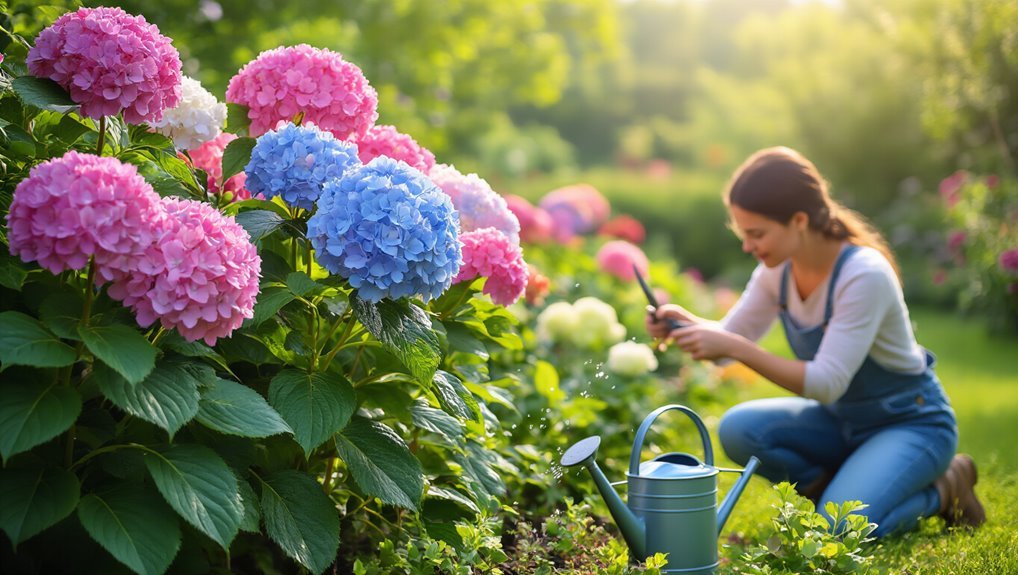
To ensure your hydrangeas thrive throughout the year, you’ll need to adjust your care routine with the changing seasons. In spring, prune and fertilize to encourage healthy growth. During summer, water regularly, especially during dry spells. As fall approaches, reduce watering and prepare for winter by mulching around the base to protect roots from frost. In winter, avoid heavy pruning and remove any dead blooms. Wearing gardening gloves can help protect your hands while pruning or handling soil. For added convenience and protection while tending to your plants, consider wearing a gardening apron to keep your tools and supplies handy.
| Season | Care Tips |
|---|---|
| Spring | Prune and fertilize |
| Summer | Water regularly |
| Fall | Reduce watering |
| Winter | Mulch and protect |
| Annual | Monitor for pests |
Following these guidelines will help you maintain vibrant and healthy hydrangeas year-round.
Frequently Asked Questions
Can Hydrangeas Thrive in Containers or Pots?
Yes, hydrangeas can thrive in containers! Choose a large pot with drainage holes, use quality potting soil, and ensure they get enough sunlight and water. With proper care, you’ll enjoy beautiful blooms in your space.
What Are the Best Companion Plants for Hydrangeas?
When it comes to companion plants for hydrangeas, you can’t go wrong with vibrant astilbes, cheerful daylilies, or lush ferns. They’ll create an eye-popping spectacle together, making your garden the envy of the neighborhood!
How Do I Propagate Hydrangeas Successfully?
To propagate hydrangeas successfully, take softwood cuttings in early summer. Prepare a well-draining mix, moisten it, and plant your cuttings. Keep them in a warm, humid environment until roots develop, usually within a few weeks.
Can Hydrangeas Be Grown Indoors?
Yes, you can grow hydrangeas indoors, but you’ll need bright, indirect sunlight and consistent moisture. Choose a suitable pot and ensure good drainage to keep your plants healthy and thriving throughout their growth period.
What to Do if Hydrangeas Aren’t Blooming?
If your hydrangeas aren’t blooming, check their sunlight, water, and soil conditions. Prune at the right time, and ensure they’re getting enough nutrients. Sometimes, patience is key; they may bloom later in the season.
Conclusion
By now, you’re practically a hydrangea whisperer! With the right variety, soil, and care, your garden will be bursting with vibrant blooms that could make even the most seasoned florists green with envy. Remember, a little pruning and pest management can go a long way in keeping your hydrangeas thriving. So roll up your sleeves and dive into the world of hydrangeas—you’re destined to create a floral masterpiece that’ll leave your neighbors awestruck!