To style your bedroom with indoor plants, start by choosing low-maintenance varieties suited for your light conditions. Place tall plants in corners and arrange smaller ones on shelves for visual interest. Mix different textures and colors for depth, and don’t forget hanging planters for vertical space. Ensure proper humidity by grouping plants and misting them regularly. Keep seasonal care in mind to maintain health. Discover more tips and tricks to elevate your plant game.
Key Takeaways
- Choose low-maintenance plants that fit your lifestyle and match your bedroom’s natural light levels for easy care and optimal growth.
- Use a mix of plant heights and textures to create visual interest; pair tall plants in corners with smaller varieties on shelves or nightstands.
- Select stylish planters that complement your bedroom decor, mixing materials and sizes for a cohesive yet dynamic look.
- Incorporate humidity-boosting techniques, like grouping plants together or using a humidifier, to maintain optimal moisture levels in your bedroom.
- Regularly check for signs of distress, adjust watering as needed, and clean leaves to enhance plant health and overall aesthetics.
Choosing the Right Plants for Your Bedroom
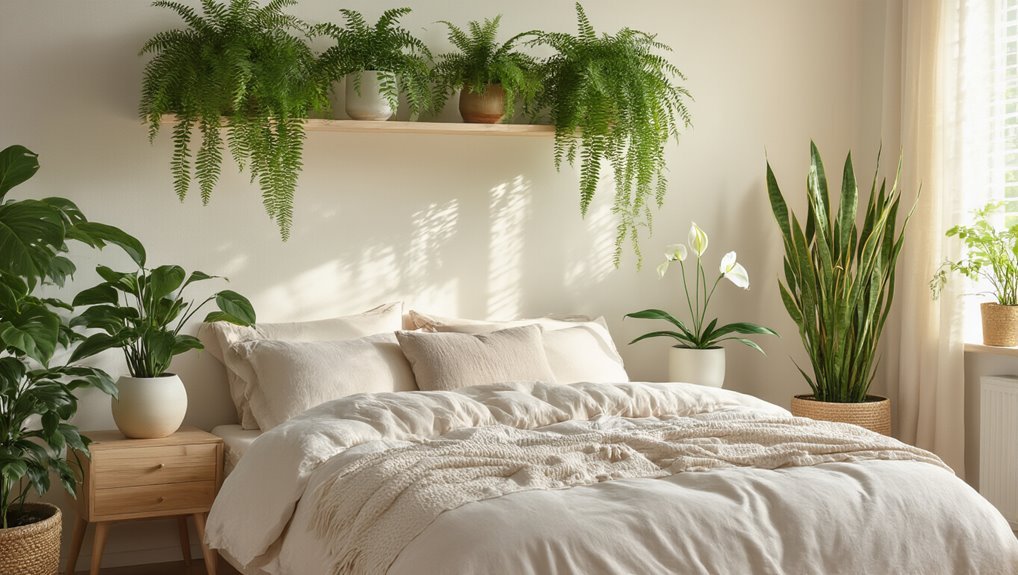
When selecting plants for your bedroom, what should you consider to ensure they thrive in your space? Start by assessing your lifestyle. If you’re often busy, opt for low-maintenance plants like snake plants or pothos.
Next, think about the size of your room; larger plants can make a statement but may crowd smaller spaces. Choose plants that suit your personal style—whether it’s vibrant flowers or lush greenery.
Consider any allergies; some plants can trigger sensitivities. For those interested in growing edible greenery indoors, herb garden kits with seeds and pots are a convenient way to start your own mini garden in the bedroom. Lastly, think about how the plants will fit with your existing decor. The right plant can enhance your bedroom’s aesthetic, providing a calming atmosphere.
To help your plants stay healthy and vibrant, you might want to invest in essential plant care kits specifically designed for thriving indoor plants such as succulents.
Understanding Light Conditions
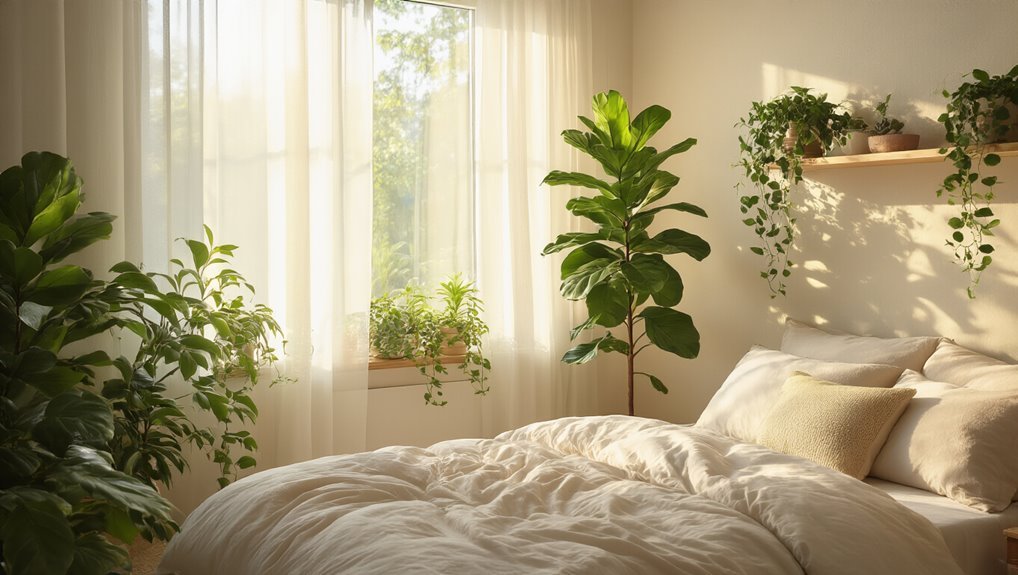
First, assess the natural light your space receives. Different plants thrive under different light levels, so it’s essential to understand your environment.
Here’s what to look for:
- Bright direct light: South-facing windows provide the most sunlight.
- Bright indirect light: East or west-facing windows offer filtered sunlight.
- Low light: North-facing windows or rooms with minimal sunlight require shade-tolerant plants.
- Artificial light: If your bedroom lacks natural light, consider grow lights.
- Seasonal changes: Monitor light variations throughout the year as seasons change. Having the right watering cans can make it much easier to give your plants the consistent moisture they need, regardless of changing light conditions.
To make caring for your plants easier, keep in mind that essential garden hoses can also help with watering routines, especially if you have a large indoor plant collection.
Stylish Plant Placement Ideas
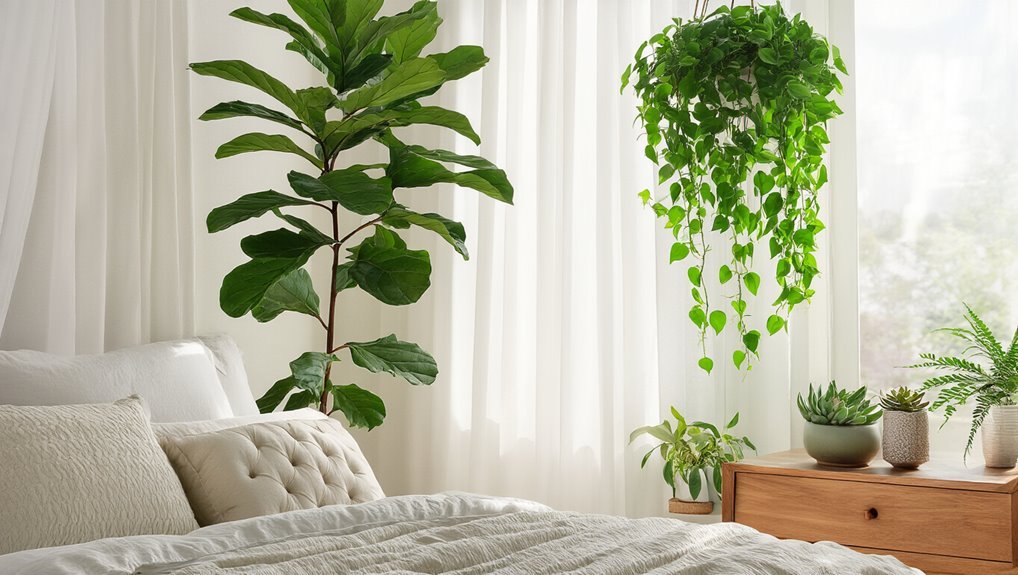
Once you’ve assessed your bedroom’s light conditions, it’s time to think about where to place your plants for maximum style and impact.
Consider using shelves or bookcases to elevate smaller plants, creating a stunning visual interest. Place a tall plant, like a fiddle leaf fig, in a corner to draw the eye upward and add height to the space. For an even more creative display, incorporate hanging planters to showcase trailing or vining plants at different heights.
Windowsills are perfect for sun-loving varieties, while nightstands can accommodate smaller pots for easy access.
Don’t forget about hanging planters; they add a unique touch and save floor space.
Group plants of varying heights and textures for a dynamic look, but be mindful not to overcrowd.
Choosing the right plant pots can further elevate your space, helping your indoor plants seamlessly blend with or accentuate your bedroom decor.
With thoughtful placement, your indoor plants will transform your bedroom into a serene oasis.
Mixing and Matching Plant Varieties
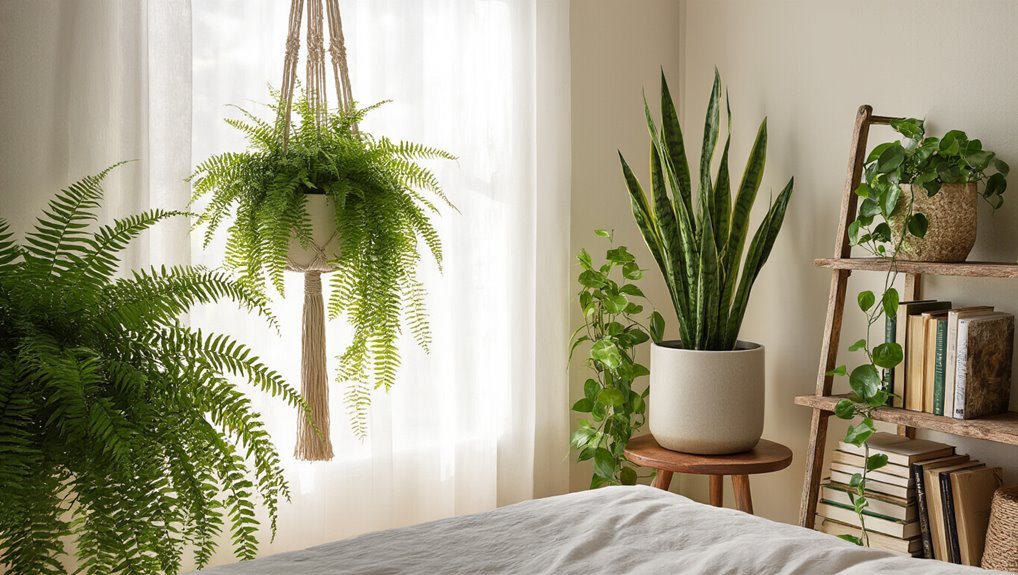
To create a visually captivating bedroom, mix and match different plant varieties that complement each other’s shapes, colors, and textures. This not only adds depth but also brings a natural vibe to your space. For an especially striking effect, consider displaying your cuttings in plant propagation stations as part of your decor.
Consider layering plants of varying heights and foliage types for an engaging display.
Here are some ideas to get you started:
- Pair tall, spiky plants like snake plants with bushy ferns.
- Use trailing plants like pothos alongside upright succulents.
- Combine colorful flowers with lush green leaves for contrast.
- Mix textured plants, such as a rubber tree with smooth-leaved peace lilies.
- Choose monochromatic schemes for a cohesive look, playing with different shades of green.
If you’re looking for an easy way to start, consider incorporating indoor herb gardens which not only enhance your bedroom’s style but also provide fresh herbs year-round.
Experiment and have fun with your selections!
Using Planters and Pots to Enhance Decor
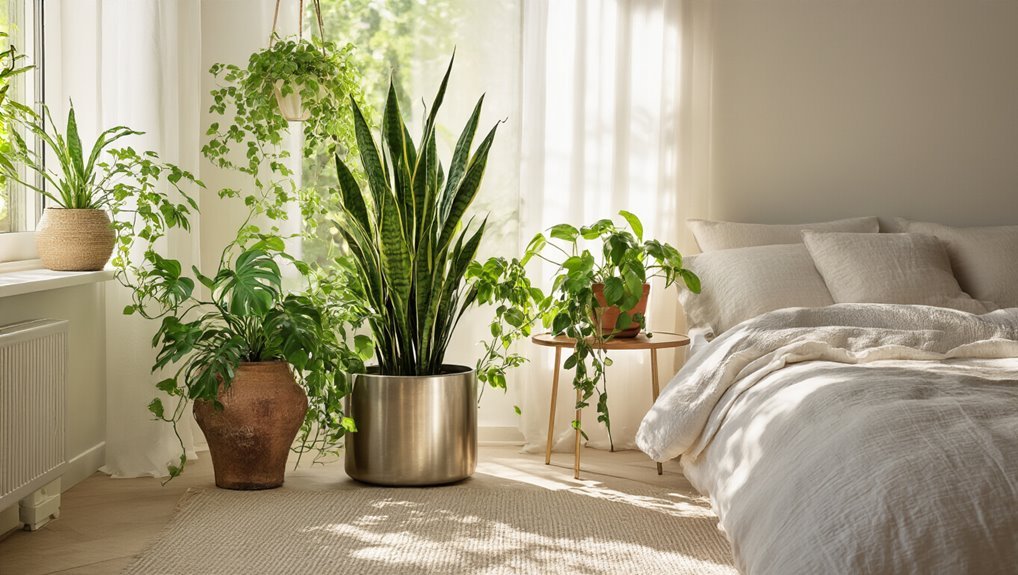
While you focus on selecting the perfect plants for your bedroom, don’t overlook the impact of planters and pots on your overall decor. Choosing the right containers can elevate your space and complement your style.
Opt for materials like ceramic, terracotta, or metal to match your room’s aesthetic. For a modern look, sleek, minimalist pots work wonders, while vintage or textured planters can add warmth and character. If you want to make plant care even simpler, consider using self-watering planters to keep your plants healthy with minimal effort.
Don’t shy away from mixing sizes and shapes to create visual interest. You can even paint or DIY your pots to personalize them further.
Remember to group smaller pots together on a shelf or nightstand for a cohesive look. Thoughtful planter choices can truly transform your bedroom into a serene oasis. For an extra touch of elegance, consider displaying your favorite greenery on stylish plant stands to elevate your bedroom decor.
Creating a Focal Point With Larger Plants
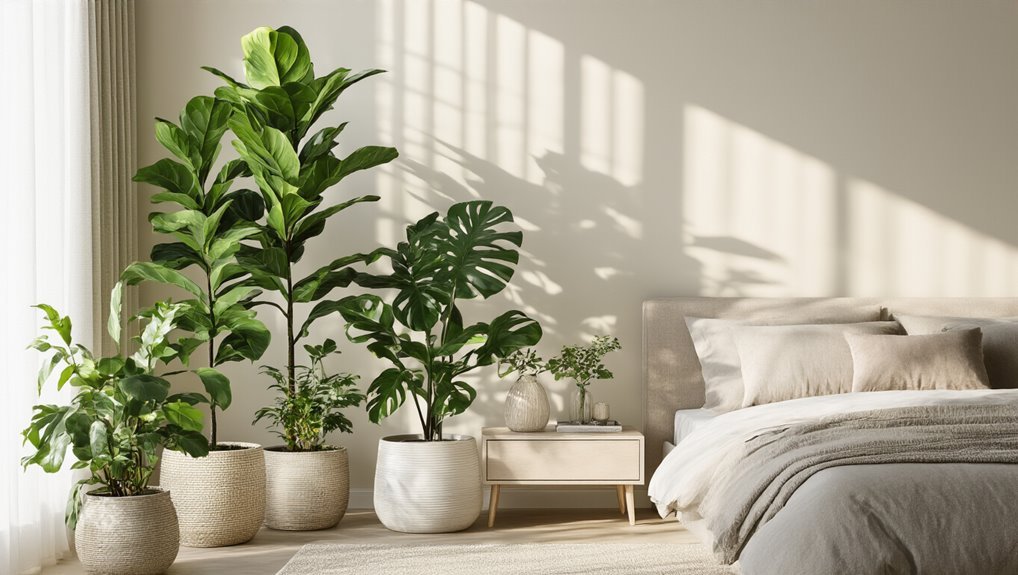
Incorporating larger plants into your bedroom design can instantly draw the eye and create a striking focal point.
These verdant additions not only enhance your space but also bring energy and life to your room. For even greater impact, try pairing your indoor plants with raised garden beds to create a cohesive and elevated look throughout your home.
Here are some tips to effectively style larger plants:
- Position them near natural light for optimal growth.
- Use a bold planter that complements your decor.
- Group multiple plants to create a lush, layered look.
- Consider placing them in corners to fill empty spaces.
- Choose plants with varying heights for added visual interest.
For an easy and flexible way to display your plants, consider using grow bags to promote healthy root development and fit seamlessly into your design.
Incorporating Vertical Space With Hanging Plants
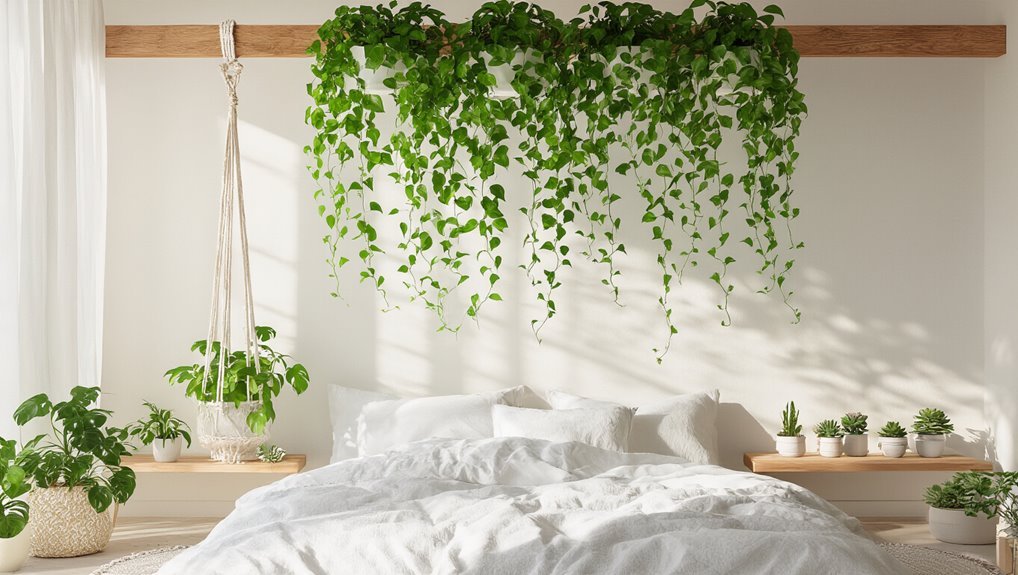
Larger plants can certainly make a statement in your bedroom, but don’t overlook the potential of hanging plants to elevate your decor further.
By utilizing vertical space, you can create a lush, layered look that draws the eye upward, making your room feel more expansive. Choose a variety of trailing plants like pothos or string of hearts; they add movement and interest. If you’re interested in modern indoor gardening, hydroponic gardening systems offer a soil-free way to keep your hanging plants thriving year-round.
Consider using macramé hangers or sleek wall-mounted planters to complement your style. Hang them near windows for optimal light or in corners to soften hard edges.
Don’t forget to mix heights and textures to create visual intrigue. With a little creativity, hanging plants can transform your bedroom into a serene, green oasis. For even more impact, try installing a vertical garden kit to make the most of your available wall space and introduce a fresh, modern focal point.
Maintaining Optimal Humidity for Plant Health
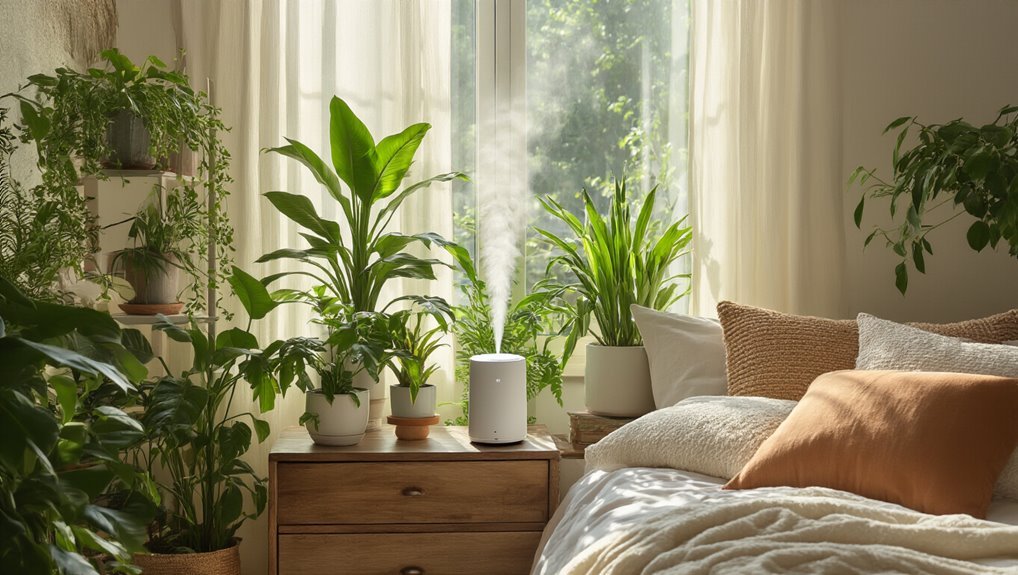
To keep your indoor plants thriving, it’s essential to maintain optimal humidity levels in your bedroom. Many houseplants flourish in humidity between 40-60%.
Here are some simple ways to achieve that:
- Use a humidifier: This can add moisture to the air, especially during dry seasons.
- Group plants together: They create a microenvironment that retains humidity.
- Mist your plants: Lightly spraying them can boost humidity, but don’t overdo it!
- Place water trays: Fill a shallow tray with water and pebbles; this will help increase humidity as the water evaporates. You can also try wicking systems, which provide steady moisture to your plants and help support consistent humidity in the room.
- Monitor humidity levels: Use a hygrometer to keep track and make adjustments as needed.
For even more consistent moisture, you might consider using Plant Watering Globes to help keep your plants hydrated between waterings.
Seasonal Care Tips for Indoor Plants
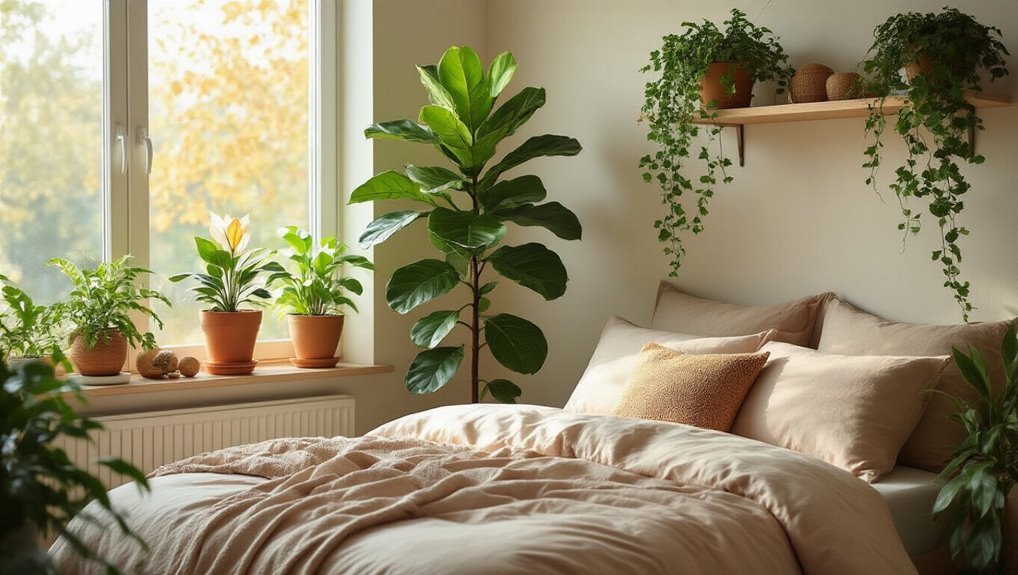
Caring for your indoor plants changes with the seasons, and adjusting your routine can make all the difference in their health and appearance.
In spring, increase watering as plants enter their growth phase. Consider repotting any that have outgrown their containers.
During summer, keep an eye on humidity levels; mist your plants or use a humidifier to keep them thriving.
As fall approaches, reduce watering and give your plants extra light since days are shorter.
In winter, check for drafts and ensure your plants aren’t too close to heating sources. Lower the temperature slightly, and cut back on watering further.
Frequently Asked Questions
Can Indoor Plants Improve Air Quality in My Bedroom?
Yes, indoor plants can significantly improve air quality in your bedroom. They absorb toxins, release oxygen, and increase humidity, creating a healthier environment. Adding greenery not only purifies the air but also boosts your mood.
How Do I Choose Non-Toxic Plants for Pets?
Isn’t it comforting to know your plants won’t harm your pets? To choose non-toxic options, research safe varieties like spider plants and Boston ferns. Always check for pet safety before bringing new greenery home.
What Are the Best Low-Light Plants for Bedrooms?
If you’re looking for low-light plants for your bedroom, consider snake plants, pothos, or ZZ plants. They thrive in dim conditions, add greenery, and require minimal care, making them perfect for your space.
How Often Should I Rotate My Plants for Even Growth?
Like a dancer needs practice to shine, you should rotate your plants every few weeks for even growth. This way, they’ll soak up light from all angles, ensuring their vibrant beauty flourishes throughout your space.
When Is the Best Time to Repot My Indoor Plants?
You should repot your indoor plants when they outgrow their current containers, typically every 1-2 years. Look for signs like roots growing from the drainage holes or slowed growth, and then make the move.
Conclusion
Incorporating indoor plants into your bedroom is like adding a splash of color to a blank canvas; it transforms the space into a vibrant sanctuary. With the right plant choices and stylish arrangements, you’ll create a calming atmosphere that breathes life into your room. Just remember, like any good relationship, your plants need love and attention to thrive. Embrace the journey of caring for them, and watch your bedroom bloom into a personal oasis.