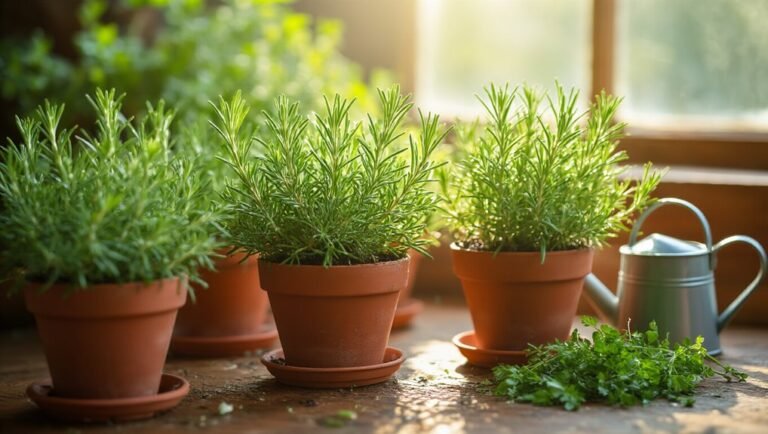
If you’re looking to grow lavender, choose the right variety based on your needs—English for cooking, French for crafting, or Spanish for beauty. Plant it somewhere sunny with well-drained soil. Water it sparingly and prune in spring for best results. You can use lavender in culinary dishes, make infused oils, or craft sachets for soothing scents. There’s so much more to explore about this delightful herb and how you can incorporate it into your life.
Key Takeaways
- Choose the right variety of lavender based on its intended use, such as culinary or ornamental.
- Plant lavender in a sunny spot with well-drained soil and water sparingly.
- Prune lavender in early spring to encourage healthy growth and more blooms.
- Harvest lavender in the morning when half the buds are open for the best aroma.
- Use dried lavender for creative crafts, such as sachets, infused oils, and candles.
Choosing the Right Lavender Variety
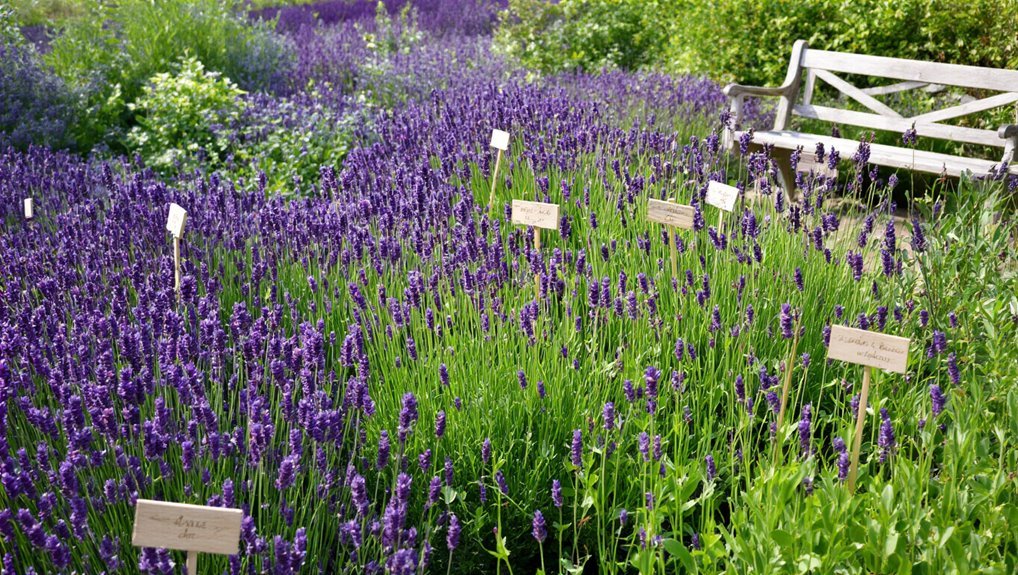
When choosing the right lavender variety, have you considered what purpose you want it to serve?
If you’re looking for culinary uses, opt for English lavender (Lavandula angustifolia), as its sweet flavor complements dishes beautifully.
For crafting and sachets, French lavender (Lavandula dentata) provides a strong fragrance that many love.
If you’re after a more ornamental option, Spanish lavender (Lavandula stoechas) boasts unique blooms that stand out in gardens.
Each variety has different growth habits and hardiness zones, so think about your local climate too. You might also explore indoor herb gardens as a convenient way to grow lavender year-round, especially if you live in a cooler climate.
You might also want to consider how much space you have, as some varieties grow taller and wider than others.
Choosing wisely can enhance both your garden and your intended uses.
If you’re planning to start small or indoors, Herb Garden Kits with Seeds and Pots offer a simple way to try growing lavender and other herbs at home.
Ideal Growing Conditions for Lavender
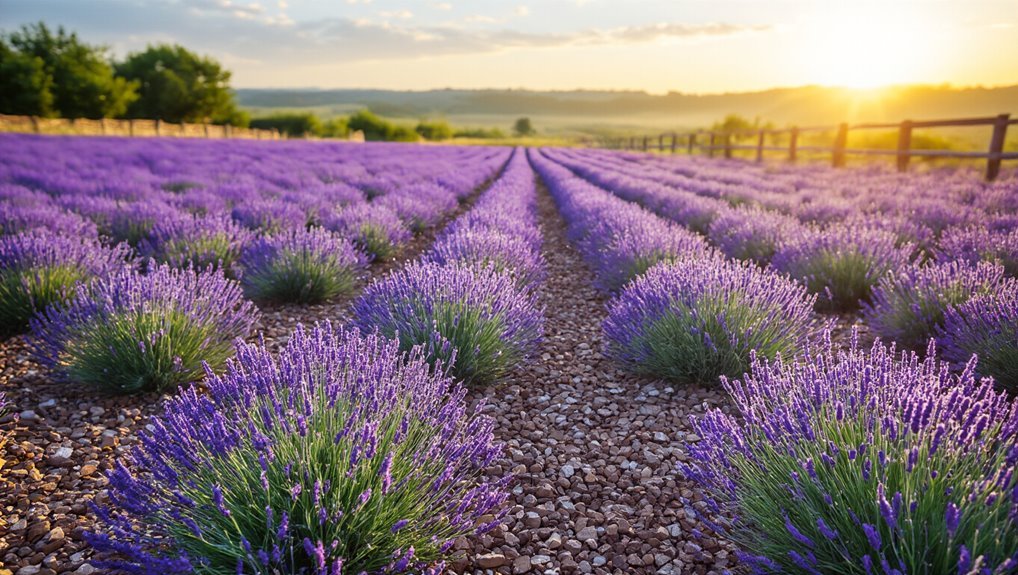
To successfully grow lavender, you need to create ideal conditions that mimic its native Mediterranean environment.
Start by choosing a sunny spot that receives at least 6 to 8 hours of direct sunlight daily. Lavender thrives in well-drained soil with a pH level between 6.5 and 7.5, so consider amending your soil with sand or gravel to improve drainage. Using organic mulching materials like straw can also enhance soil quality and help suppress weeds naturally.
Water your plants sparingly, allowing the soil to dry out between waterings; lavender prefers a drought-tolerant lifestyle.
Make sure to space your plants adequately, as good air circulation helps prevent diseases.
Lastly, protect your lavender from harsh winter conditions by mulching and avoiding overly moist areas. Using mulch in your garden can also help conserve soil moisture and regulate temperature, benefiting your lavender plants throughout the year.
With these conditions, you’ll enjoy a thriving lavender garden!
Planting Lavender: Step-by-Step Guide
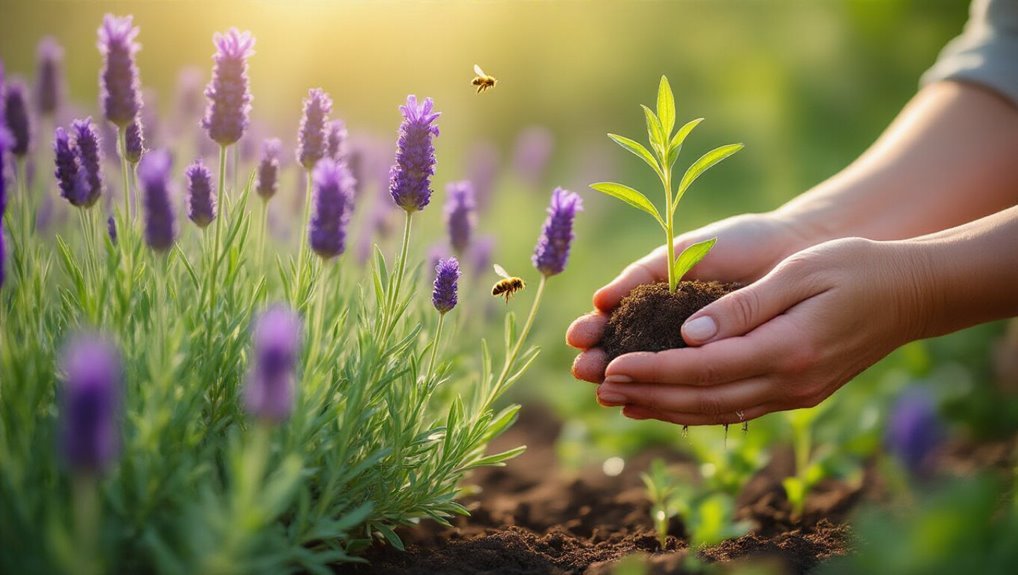
Planting lavender can be a rewarding experience, and following a simple step-by-step guide will help you establish a healthy garden.
First, choose a sunny spot with well-draining soil; lavender thrives in full sun. For even better results, consider growing lavender in raised garden beds to provide optimal drainage and soil conditions.
Next, prepare the soil by loosening it and mixing in sand or gravel to improve drainage.
If you’re planting seeds, sow them in seed trays, lightly covering them with soil.
For transplants, dig a hole twice the width of the root ball. Place the plant in the hole, ensuring the top of the root ball is level with the soil. Fill in around the roots and water gently.
Finally, space your plants about 12 to 18 inches apart to allow for growth.
When starting from seeds, using a seed starting kit can make the process easier and increase your chances of success.
Enjoy watching your lavender flourish!
Caring for Your Lavender Plants
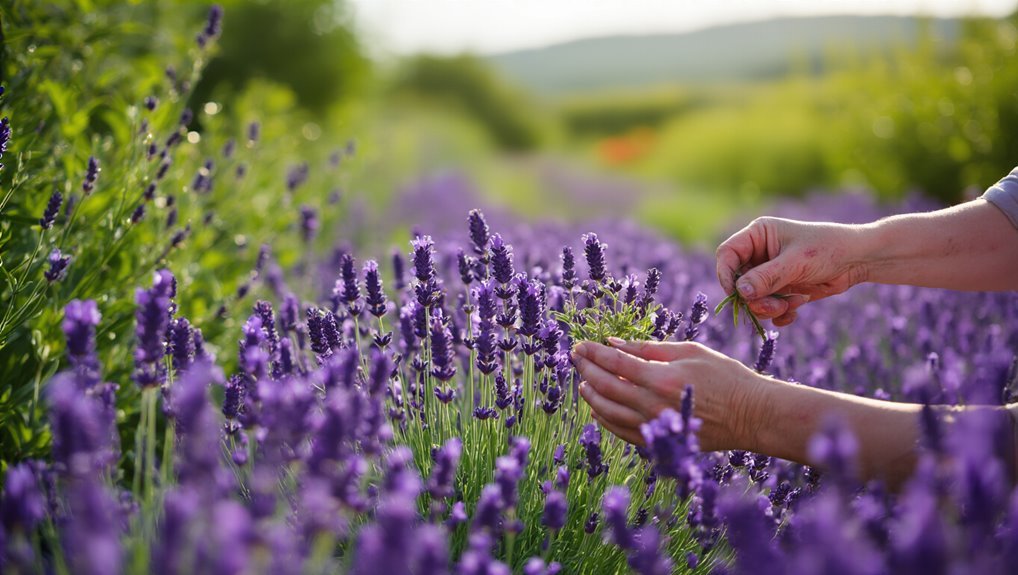
Caring for your lavender plants is essential to ensure they thrive and produce beautiful blooms.
Start by planting them in well-draining soil, as lavender hates soggy roots. Water them deeply but infrequently, allowing the soil to dry out between waterings. For gardeners looking to maximize plant health, consider using a compost bin to create your own organic matter for amending the soil.
Prune your plants in early spring to promote healthy growth and shape. Fertilizing isn’t necessary, but a light application of compost can be beneficial.
Keep an eye out for pests like aphids and spider mites; if you spot them, treat your plants with insecticidal soap.
Additionally, ensure they receive plenty of sunlight—at least six hours a day.
Using compost tumblers is an efficient way to produce nutrient-rich compost for your lavender, supporting healthy plant growth and improving soil quality.
Harvesting Lavender: When and How
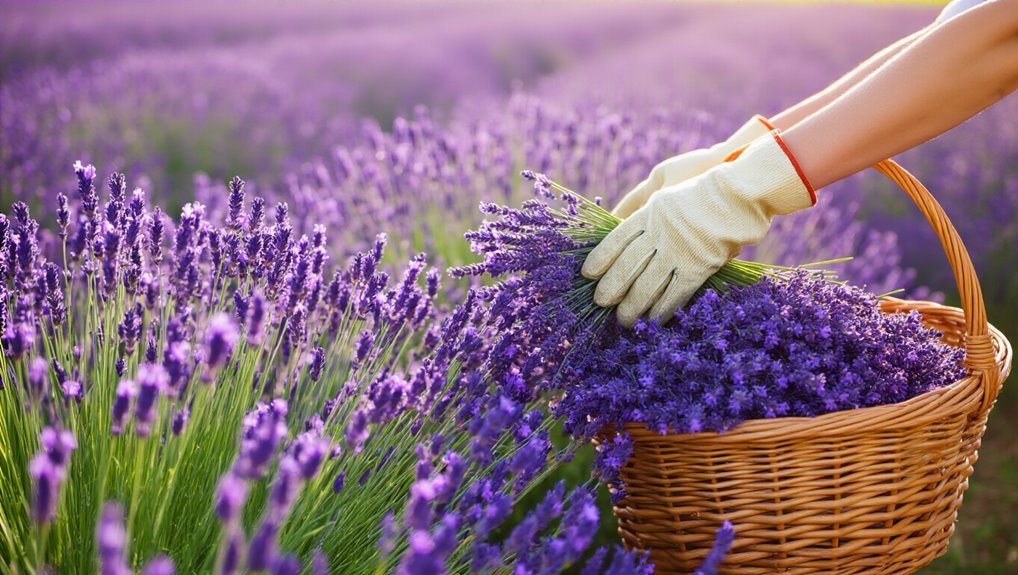
When the lavender blooms reach their peak, it’s time to harvest for the best flavor and fragrance.
You’ll want to pick lavender in the morning after the dew has dried but before the sun is too hot. This preserves the essential oils. Use sharp shears or scissors to cut the stems just above the leaves, taking care not to damage the plant. For best results, you can use a garden trowel to gently loosen the soil around the base if you need to transplant young lavender plants or prepare the ground for new cuttings.
Aim to harvest when about half of the buds have opened, as this provides the richest scent. Gather your cuttings into small bundles and tie them together with string or rubber bands.
Hang them upside down in a cool, dark, and dry place to dry. This method retains the vibrant color and aroma of your lavender for later use! For best results, consider using pruning shears designed specifically for gardening to make clean cuts and ensure healthy regrowth.
Making Your Own Lavender Essential Oil
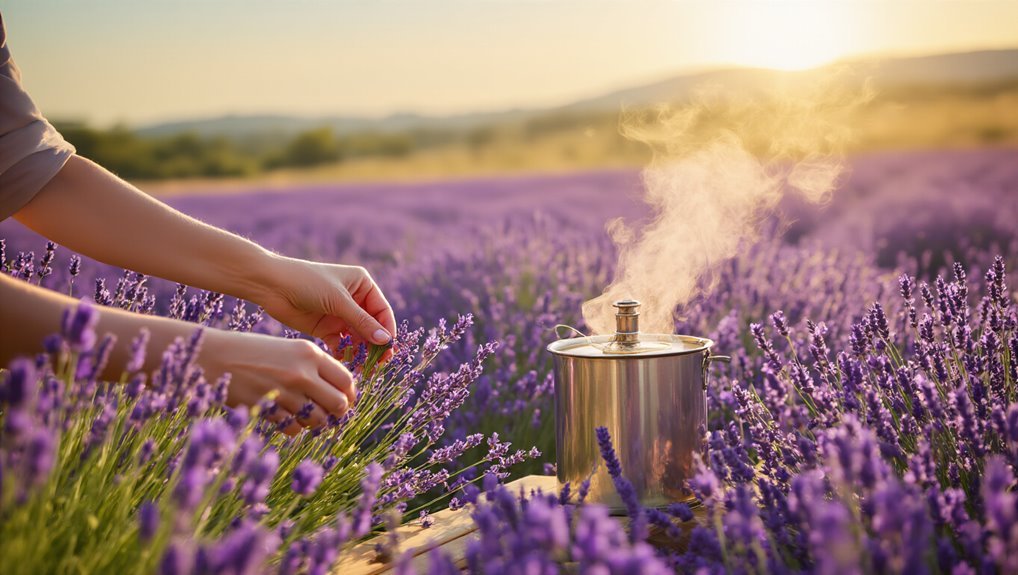
Although making your own lavender essential oil may seem daunting, it’s a rewarding process that allows you to capture the plant’s delightful fragrance and benefits.
Start by gathering fresh lavender flowers, ideally harvested in the morning when their oils are most concentrated. Next, gently bruise the flowers to release their oils. Using Garden Gloves with Claws can make harvesting lavender easier and protect your hands from scratches.
You can use a simple method called the cold infusion technique—place the bruised flowers in a jar and cover them with a carrier oil, like jojoba or olive. Seal the jar and let it sit in a warm, dark place for about two weeks, shaking it gently every few days.
Finally, strain the mixture through a cheesecloth, and you’ll have your own lovely lavender essential oil ready for use!
For best results and to protect your hands while harvesting and preparing lavender, consider using gardening gloves designed for comfort and durability.
Culinary Uses for Lavender
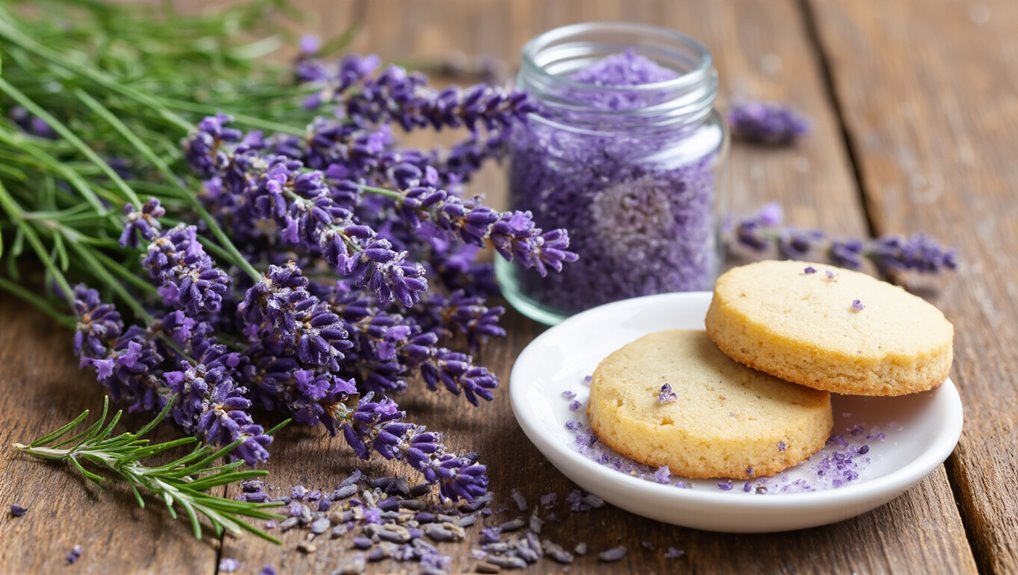
After creating your own lavender essential oil, you might be curious about how to incorporate this fragrant herb into your cooking.
Lavender adds a unique flavor and aroma to various dishes, enhancing both sweet and savory recipes. Here are three delicious ways to use lavender in your culinary adventures: If you’re growing lavender at home, using plant fertilizer tablets can help ensure your plants are healthy and robust, resulting in more flavorful buds for your recipes.
- Lavender-Infused Sugar: Blend dried lavender buds with granulated sugar to create a floral sugar perfect for baking or sweetening beverages.
- Lavender Lemonade: Steep lavender in hot water, then mix with lemon juice and sweetener for a refreshing drink.
- Savory Dishes: Use lavender in marinades or as a seasoning for meats like chicken or lamb, balancing its floral notes with robust flavors.
If you want your lavender plants to thrive and produce the best flavor, consider nourishing them with the right plant food for optimal growth and health.
Give these ideas a try, and enjoy the lovely taste of lavender in your meals!
Creative Lavender Crafts and Projects
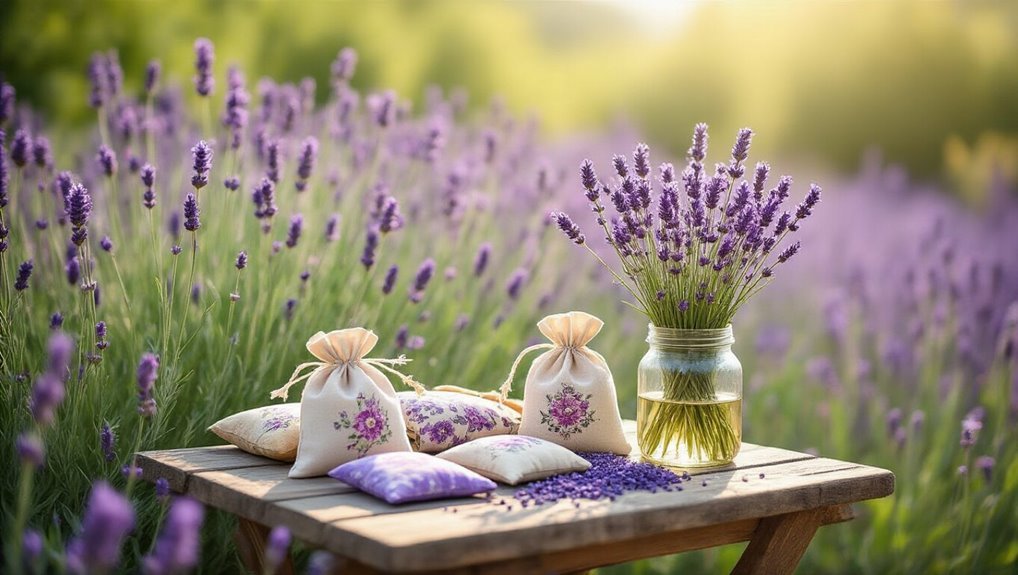
Whether you’re looking to add a personal touch to your home or create thoughtful gifts, crafting with lavender opens up a world of creative possibilities. You can make lavender sachets, infused oils, or even homemade soaps. Quality gardening hand tools are essential for harvesting and preparing your lavender for these unique projects. Get your friends involved for a fun crafting session!
Here’s a quick table to inspire your lavender projects:
| Project | Materials Needed |
|---|---|
| Lavender Sachets | Dried lavender, fabric, ribbon |
| Infused Lavender Oil | Olive oil, dried lavender |
| Lavender Soap | Soap base, essential oils |
| Lavender Candles | Wax, wicks, dried lavender |
| Lavender Bath Salts | Epsom salt, dried lavender |
If you’re interested in gardening tools to help with your lavender beds, consider exploring fertilizer spreaders to ensure even and efficient nutrient distribution.
Embrace your creativity, and let the soothing scent of lavender guide your projects!
Tips for Creating a Lavender-Themed Space
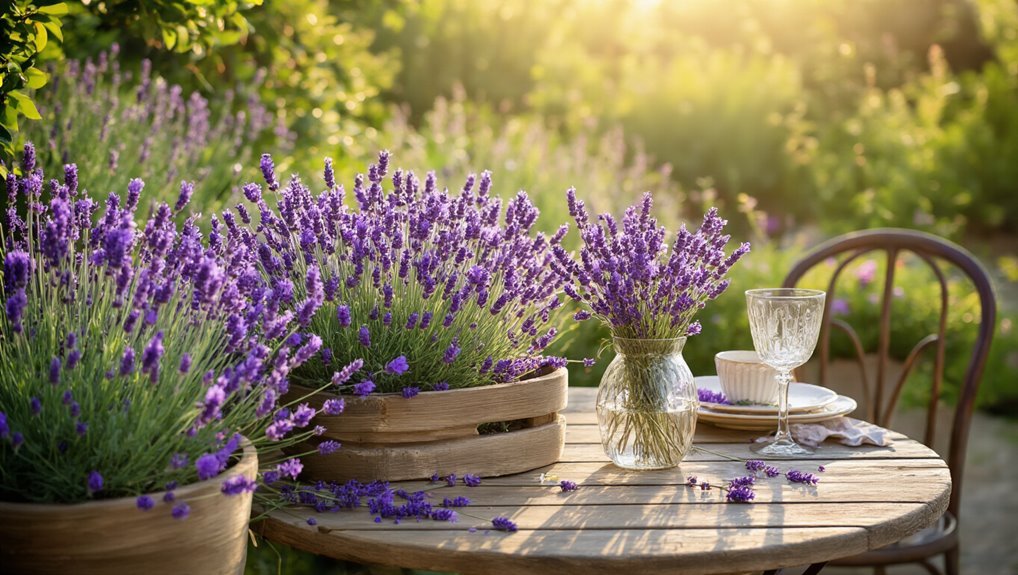
If you’ve enjoyed crafting with lavender, consider bringing that calming essence into your living space.
Creating a lavender-themed space can enhance your home’s tranquility and beauty. Here are three simple tips to get you started:
- Decorate with Lavender Colors: Use soft purples and greens in your decor, such as throw pillows, curtains, or wall art, to evoke the soothing feel of a lavender field.
- Incorporate Dried Lavender: Place dried lavender bundles in vases or hang them in your kitchen to infuse your home with a delightful fragrance.
- Scented Candles: Choose lavender-scented candles to create a relaxing atmosphere. Light them during evenings to unwind after a busy day.
Embrace the serenity of lavender, and transform your space into a peaceful retreat!
Frequently Asked Questions
How Long Does It Take for Lavender to Bloom?
Lavender typically takes about 2 to 3 years to bloom after planting. During this time, you’ll need to provide proper care, like ensuring well-drained soil and adequate sunlight for the best results.
Can Lavender Grow Indoors Successfully?
Imagine a sunlit windowsill, soft lavender scents wafting through the air. Yes, you can grow lavender indoors successfully! Just ensure it gets plenty of light, well-drained soil, and you’ll enjoy its beauty and fragrance year-round.
What Pests Are Commonly Attracted to Lavender Plants?
Lavender plants often attract pests like aphids, spider mites, and whiteflies. You’ll want to regularly inspect your plants for these pests and take action, like using insecticidal soap, to keep your lavender healthy and thriving.
Is Lavender Safe for Pets and Children?
When you stroll through a fragrant garden, you might wonder: Is lavender safe for pets and kids? Thankfully, it’s generally non-toxic, but always keep an eye on them to prevent any potential allergic reactions.
Can I Propagate Lavender From Cuttings?
Yes, you can propagate lavender from cuttings! Just take healthy stems, remove the lower leaves, and place them in soil or water. Keep them moist, and you’ll see roots developing in a few weeks.
Conclusion
By incorporating lavender into your garden and daily life, you can enjoy its beauty and benefits. Imagine stepping into your backyard, where vibrant lavender blooms surround you, filling the air with their calming scent. You can sip lavender-infused tea while relaxing in your lavender-themed space, feeling the stress melt away. Whether you’re crafting homemade lavender sachets or creating your own essential oil, these simple steps make it easy to embrace lavender love every day.