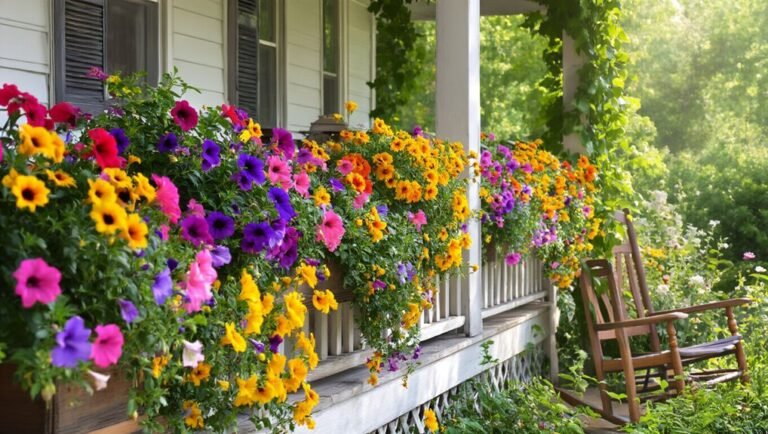
If you’re dreaming of a low-maintenance cottage garden, consider plants like lavender, sedum, daylily, coneflower, black-eyed Susan, Russian sage, and ornamental grasses. These beautiful choices thrive on neglect, needing little water or care once established. They’ll bring vibrant colors, attract pollinators, and add texture to your space. You can easily create a charming garden that fits your busy lifestyle. Stick around to discover how to design and plant these beauties for the best results.
Key Takeaways
- Choose low-maintenance plants like lavender, sedum, and daylilies that require minimal care and thrive in various conditions.
- Opt for drought-resistant varieties such as coneflowers and black-eyed Susans to reduce watering needs and enhance resilience.
- Incorporate ornamental grasses for texture and movement, requiring little maintenance while adding visual interest to your garden.
- Group plants together based on their light and soil preferences for easier care and a cohesive look.
- Use quality gardening tools for efficient planting and maintenance, ensuring a beautiful garden with minimal effort.
Lavender
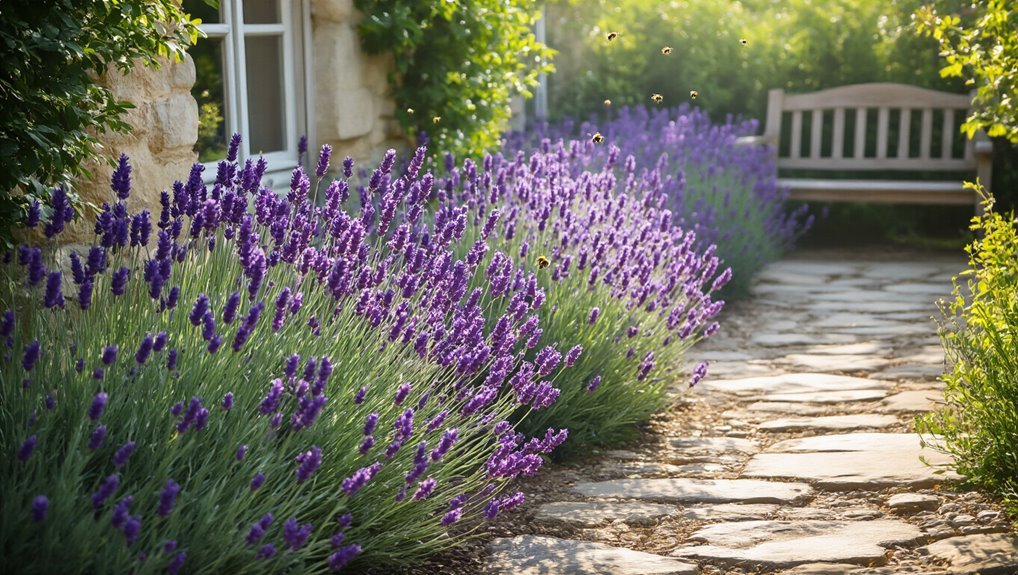
Lavender is a stunning addition to any cottage garden, known for its fragrant blooms and silvery-green foliage. When you plant lavender, you’re choosing a low-maintenance beauty that thrives in well-drained soil and full sun.
It doesn’t require frequent watering, making it perfect for busy gardeners like you. Once established, lavender can tolerate drought, allowing you to focus on other areas of your garden. Plus, its vibrant purple flowers attract pollinators, creating a lively atmosphere. To make your gardening experience even more enjoyable, consider wearing gardening shoes for comfort and protection while tending to your plants.
To keep your plants healthy, prune them annually after flowering; this encourages bushy growth and prolongs their life. With lavender, you’ll enjoy a delightful fragrance and aesthetic without the hassle of constant care, making it a smart choice for your cottage garden. For even less work, consider pairing lavender with self-watering planters to maintain optimal soil moisture without frequent attention.
Sedum
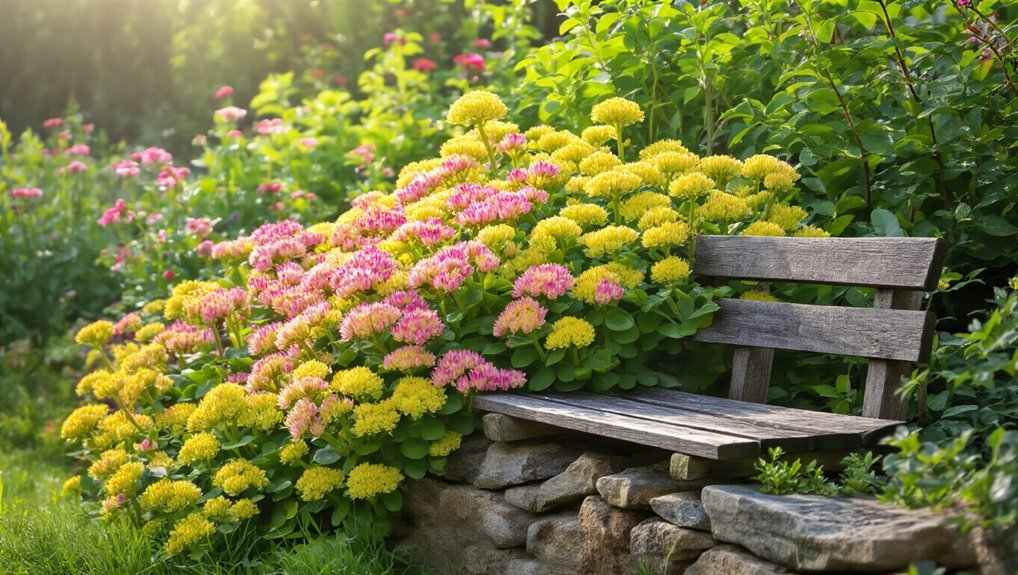
Sedum, often referred to as stonecrop, is a resilient and versatile plant that thrives in a cottage garden setting.
With its succulent leaves and colorful flowers, it adds charm without demanding much from you. Sedum loves well-drained soil and can handle drought, making it perfect for busy gardeners. For even better results, you can support sedum growth using the best plant food to keep them healthy and blooming.
You can choose from various species, from ground covers to taller varieties, ensuring there’s a perfect fit for your space. Just plant them in sun-soaked spots, and they’ll reward you with vibrant blooms throughout the summer.
Plus, they attract pollinators, enhancing your garden’s ecosystem. Once established, you won’t need to fuss over them, allowing you to enjoy the beauty of your garden without the hassle of constant maintenance.
For the healthiest and most vibrant plants, consider starting your sedum in the best garden soil to ensure strong root development and thriving growth.
Daylily
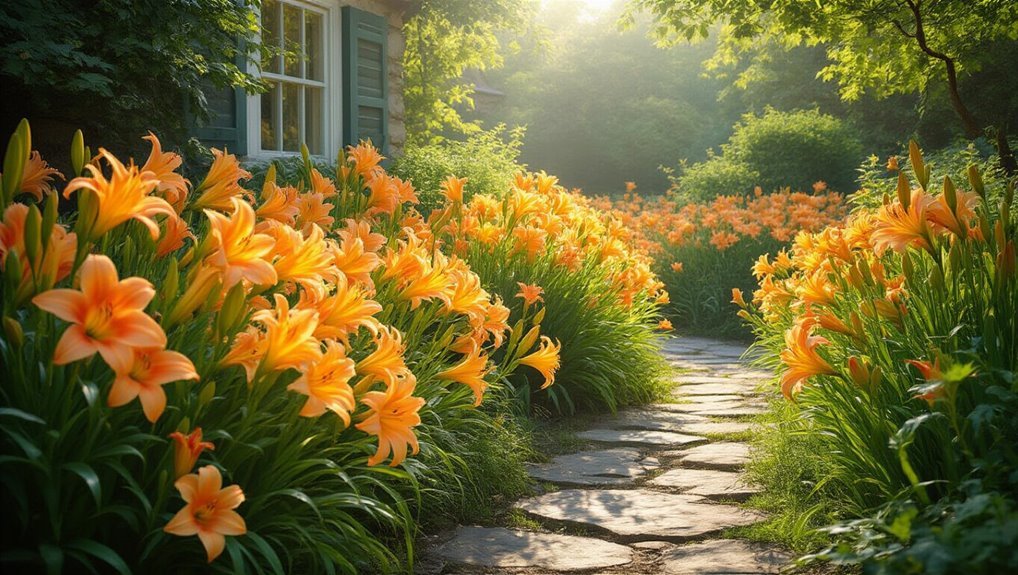
If you’re looking to add more color and texture to your cottage garden, consider the daylily. These hardy perennials bloom in various shades, from vibrant yellows to deep reds, bringing life to any corner.
They thrive in well-drained soil and adapt easily to different light conditions, making them perfect for busy gardeners. Once established, daylilies require minimal care—just an occasional watering during dry spells and a little deadheading to promote more blooms. For even healthier plants, you can supplement their growth by using plant fertilizer tablets to provide essential nutrients with minimal effort.
They’re also resistant to pests and diseases, allowing you to enjoy their beauty without constant attention. Plus, their foliage remains attractive even after the flowers fade.
With daylilies, you can effortlessly create a stunning display that brightens your garden all summer long. For those interested in natural pest control, you might also consider adding insect repellent plants like citronella to your garden for extra protection.
Coneflower
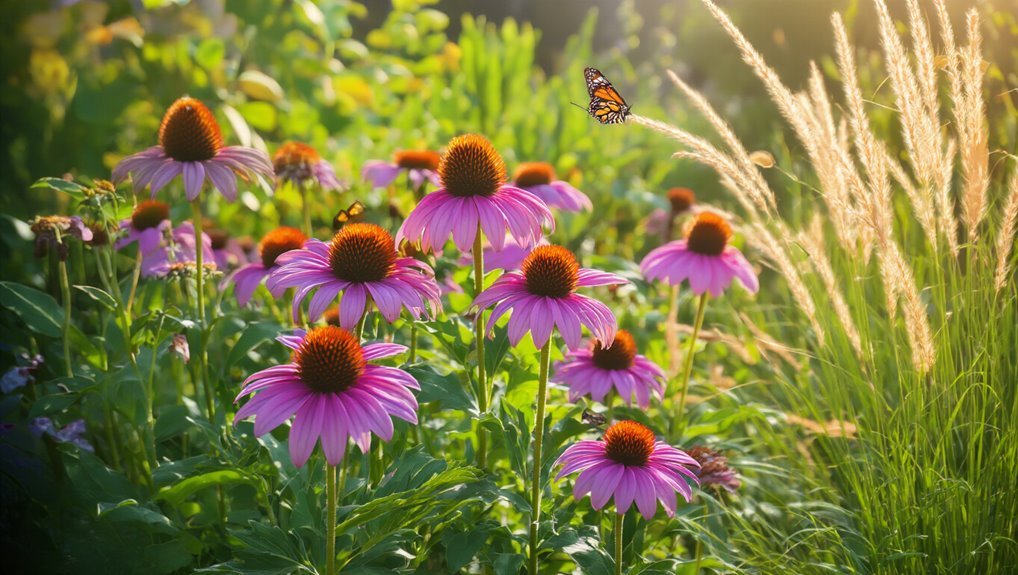
Coneflowers, with their vibrant, daisy-like blooms, are a fantastic addition to any low-maintenance cottage garden.
These hardy perennials not only add color but also attract pollinators, making your garden come alive. You’ll love how they thrive in various conditions, needing little care once established. If you’re interested in unique gardening options, you might explore adding Edible Flower Seeds to your cottage garden mix for both beauty and culinary possibilities.
Here are a few reasons to choose coneflowers for your garden:
- Drought-resistant: They withstand dry spells, so you won’t have to worry about frequent watering.
- Long-blooming: Their flowers last from summer to fall, providing ongoing beauty.
- Self-seeding: They’ll spread naturally, creating more blooms without any extra effort from you.
If you’re starting your garden from scratch, consider using a seed starting kit to give your coneflowers—and other cottage favorites—a reliable head start. With coneflowers, you can enjoy a beautiful garden without the stress of constant maintenance!
Black-eyed Susan
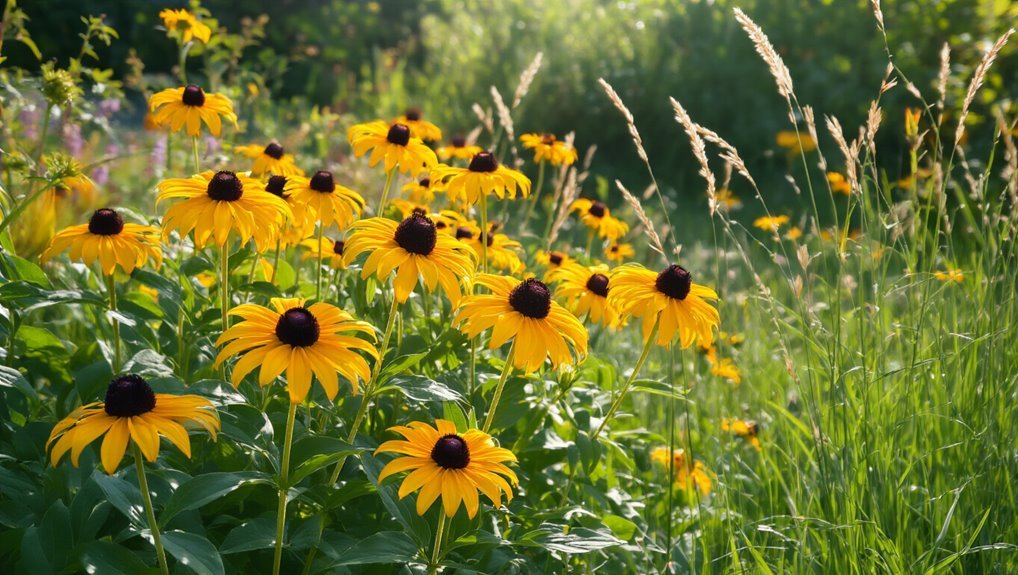
Another vibrant option for your low-maintenance cottage garden is the Black-eyed Susan. These cheerful, yellow flowers with their dark centers will brighten any space.
They thrive in full sun and can handle poor soil, making them perfect for busy gardeners. Just plant them once, and they’ll return year after year, often spreading to create beautiful patches. By improving soil quality and conserving moisture, mulch can further support the health and growth of your Black-eyed Susans.
They require minimal watering and can tolerate drought, so you won’t have to stress about constant upkeep. Plus, Black-eyed Susans attract butterflies and bees, adding life to your garden.
When summer rolls around, you’ll enjoy their stunning blooms with little effort. Just sit back, relax, and let these hardy beauties do their thing!
For even healthier and more resilient Black-eyed Susans, consider using organic mulching materials like straw to help retain moisture and suppress weeds around your plants.
Russian Sage

While you might be looking for plants that require little care, Russian Sage stands out as a stunning choice for your cottage garden.
This hardy perennial not only adds a beautiful touch with its silvery foliage and graceful spikes of lavender-blue flowers, but it also thrives in neglect. You won’t have to worry about constant watering or heavy maintenance. For added protection while working with Russian Sage, many gardeners recommend wearing gardening gloves to keep your hands safe from rough stems and dirt.
Here are a few reasons to love Russian Sage:
- Drought-tolerant: Once established, it needs minimal watering.
- Pollinator-friendly: Its flowers attract bees and butterflies, enhancing your garden’s ecosystem.
- Long blooming season: Enjoy vibrant blooms from summer into fall, brightening up your garden for months.
With Russian Sage, you’ll have a low-maintenance, eye-catching addition to your outdoor space. If you want to keep your clothes clean while tending to these hardy plants, consider browsing gardening aprons that are designed for every green thumb.
Ornamental Grasses
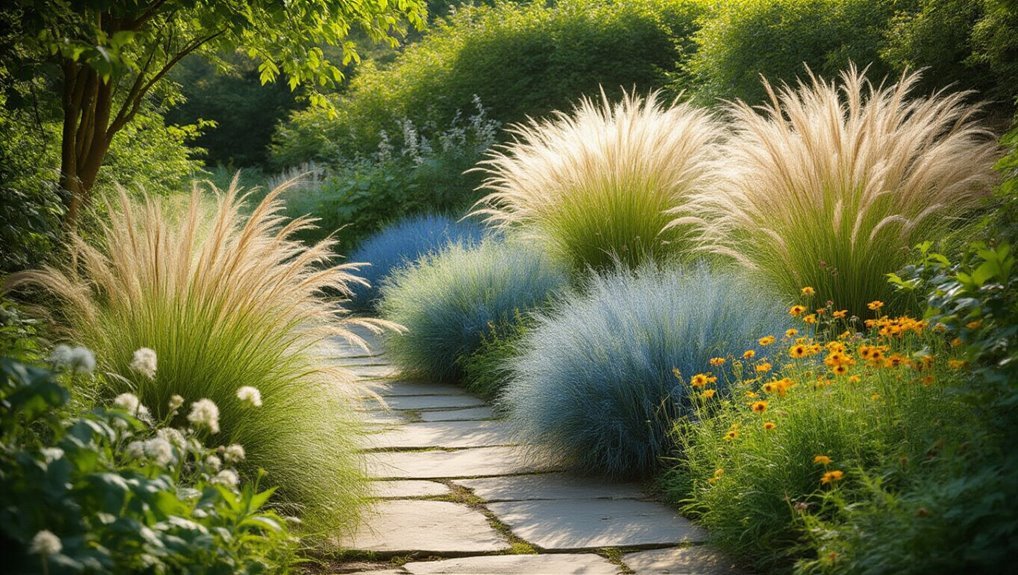
Ornamental grasses can transform your cottage garden into a dynamic landscape, adding texture and movement that few other plants can match. They’re low maintenance and thrive in various conditions, making them perfect for busy gardeners. Choosing essential gardening tool sets can help you plant, divide, and care for these grasses with ease, ensuring your garden stays beautiful with minimal effort.
Here are some popular ornamental grasses to consider:
| Grass Type | Height |
|---|---|
| Blue Fescue | 12-18 inches |
| Miscanthus | 4-6 feet |
| Switchgrass | 3-5 feet |
| Feather Reed Grass | 3-5 feet |
| Japanese Blood Grass | 2-3 feet |
These grasses can create stunning focal points or act as background fillers. With their ability to sway in the breeze, they’ll bring life to your garden while requiring little care from you. For the best results when planting and maintaining these grasses, consider using Gardening Hand Tools Sets to make your work efficient and enjoyable.
Frequently Asked Questions
How Much Sunlight Do These Plants Need Daily?
Most plants thrive with 6 to 8 hours of sunlight daily. However, some can adapt to partial shade. You’ll want to check individual plant needs to ensure they flourish in your garden’s conditions.
Can These Plants Tolerate Drought Conditions?
Ever thought about how resilient nature can be? These plants can indeed tolerate drought conditions, thriving even when water’s scarce. By choosing wisely, you’ll enjoy a beautiful garden that requires minimal care and attention.
When Is the Best Time to Plant Them?
The best time to plant these drought-tolerant plants is in early spring or fall. This timing ensures they establish roots before extreme temperatures hit, making it easier for you to maintain a lush, thriving garden.
Do These Plants Attract Pollinators?
As bees buzz and butterflies flit around vibrant blooms, you’ll find these plants do attract pollinators. Their colorful petals and sweet scents create a lively haven, inviting nature’s helpers to your garden effortlessly.
Are These Plants Deer-Resistant?
Yes, many of these plants are deer-resistant. You’ll find that varieties like lavender and sage tend to deter deer, making them great choices for your garden if you want to keep those pesky animals away.
Conclusion
So, if you’re tired of tending to high-maintenance divas in your garden, why not embrace the beauty of neglect? With these seven plants, you can finally achieve that “I totally have my life together” vibe without lifting a finger. Who needs a green thumb when you can have a garden full of resilient low-maintenance wonders? Grab your coffee, kick back, and let nature do the heavy lifting—you deserve it! After all, who said gardening had to be a full-time job?