When planting trees, start by choosing the right species for your yard’s size and conditions. Check the soil type and ensure adequate sunlight for your selected trees. Use proper techniques like digging wide holes and enriching the soil for healthy growth. Water deeply and mulch to retain moisture. Regular pruning keeps your trees healthy and can prevent disease. Stick around to discover more essential tips for creating your greener yard!
Key Takeaways
- Choose trees suited to your yard’s size and shape, balancing height for shade and smaller varieties for privacy.
- Assess soil type and conditions to ensure trees thrive, using soil tests for pH and nutrient levels.
- Plant in early spring or fall, digging a wide hole and ensuring the tree is positioned straight and properly backfilled.
- Water deeply once a week and apply mulch to retain moisture and regulate soil temperature around the base.
- Regularly prune dead branches and maintain mulch to promote healthy growth and suppress weeds.
Choosing the Right Trees for Your Yard

Choosing the right trees for your yard can transform your outdoor space into a vibrant oasis.
Start by considering the size and shape of your yard. Do you want towering trees for shade or smaller ones for privacy? Think about the tree’s growth rate, too—some trees take years to mature while others grow quickly. For the healthiest start, consider using organic mulching materials around the base of newly planted trees to conserve moisture and suppress weeds.
It’s also important to choose trees that complement your home’s architecture and your personal style. Consider the seasons: flowering trees can bring bursts of color in spring, while evergreens provide year-round greenery.
Don’t forget about maintenance; some trees require more care than others.
Lastly, think about the wildlife you want to attract. Selecting the right trees can create a lively and inviting environment for both you and nature.
For best results, make sure you plant your trees in the best garden soil to help them thrive from the very beginning.
Understanding Soil and Site Conditions
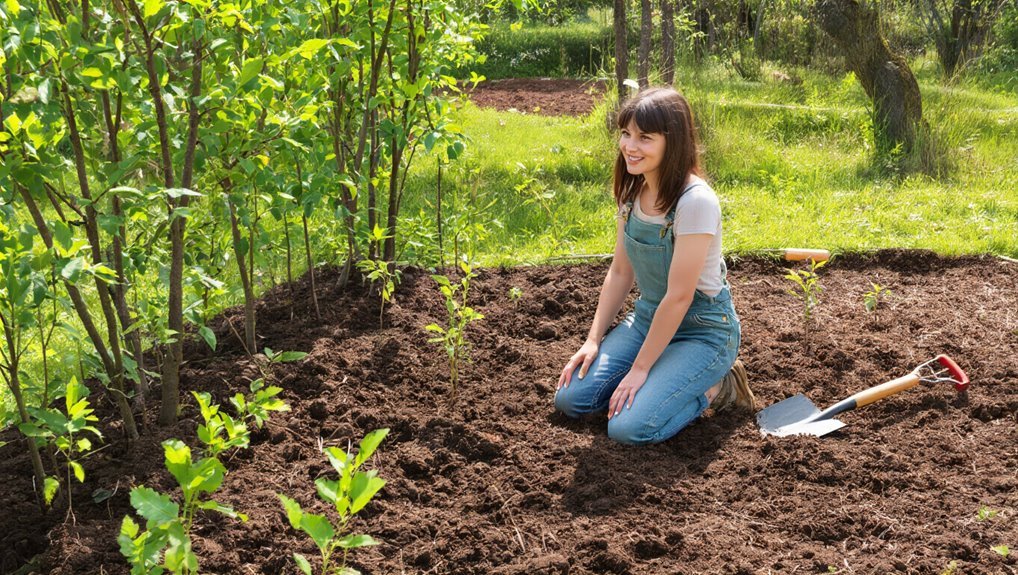
Soil quality plays a crucial role in the health and growth of your trees. Start by assessing your soil type—whether it’s sandy, clay, or loamy—since each type affects drainage and nutrient availability. Conduct a simple soil test to check pH levels and nutrient content; this helps you understand what amendments might be necessary. For gardeners looking to give their trees the best start, seed starting kits can be an excellent way to ensure young plants develop strong roots before transplanting outdoors.
Next, consider your site conditions. Is your area shaded or sunny? How much space do you have for root expansion? Trees need adequate room to grow, so think about their mature size when planting.
Lastly, observe any existing vegetation. Native plants often thrive in your soil and can guide you in selecting compatible tree species. Understanding these factors sets you up for success in planting. Using a soil moisture sensor can provide real-time information about your garden’s moisture levels, ensuring optimal conditions for new tree plantings.
Essential Planting Techniques
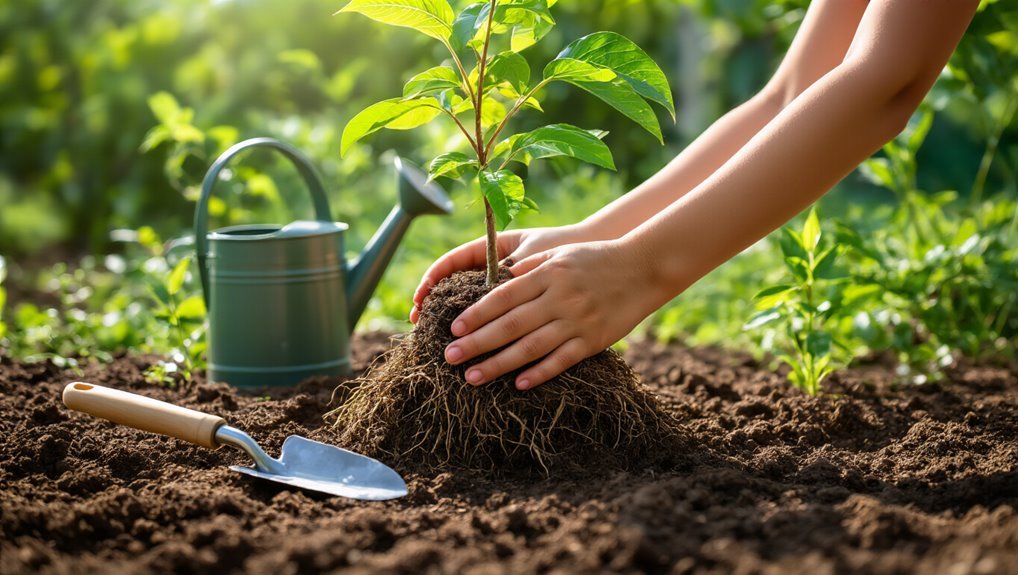
When planting trees, it’s vital to follow a few essential techniques to ensure their successful establishment.
Start by choosing the right time for planting—ideally in the early spring or fall when temperatures are mild.
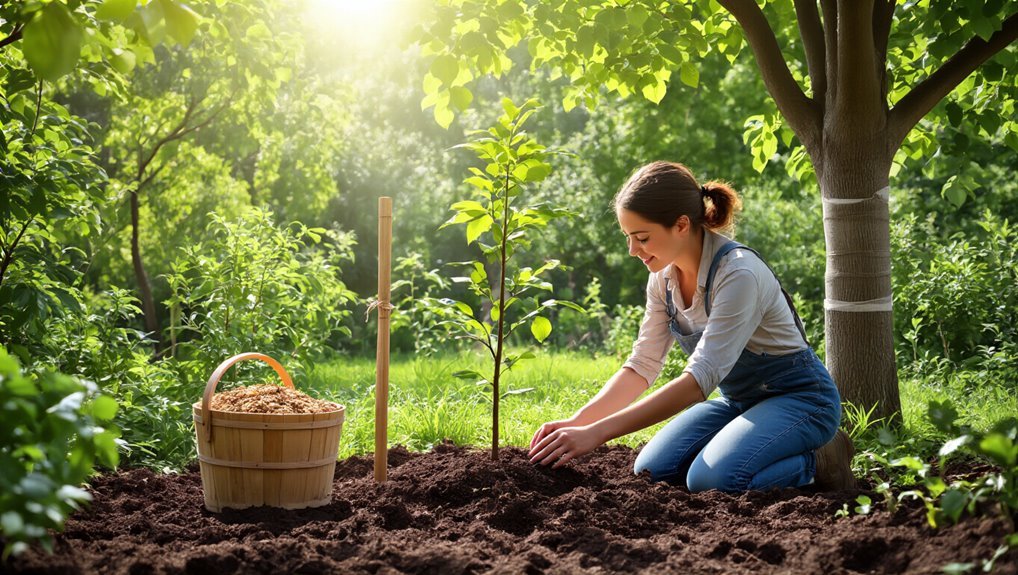
Dig a hole that’s about twice as wide as the root ball but no deeper than the root system itself. This helps the roots spread out easily.
Remove any burlap or wire from the root ball, and place the tree in the center of the hole, ensuring it sits straight. For an added boost to your tree’s health, consider enriching the soil with compost bins to provide natural nutrients and improve soil structure.
Backfill with native soil, gently packing it down to eliminate air pockets.
Finally, create a small berm around the base to hold water and mulch to retain moisture, but avoid piling it against the trunk.
For even better results, consider incorporating raised garden beds into your landscape design, as they can elevate your gardening and promote healthier plant growth.
Watering and Nutrient Needs
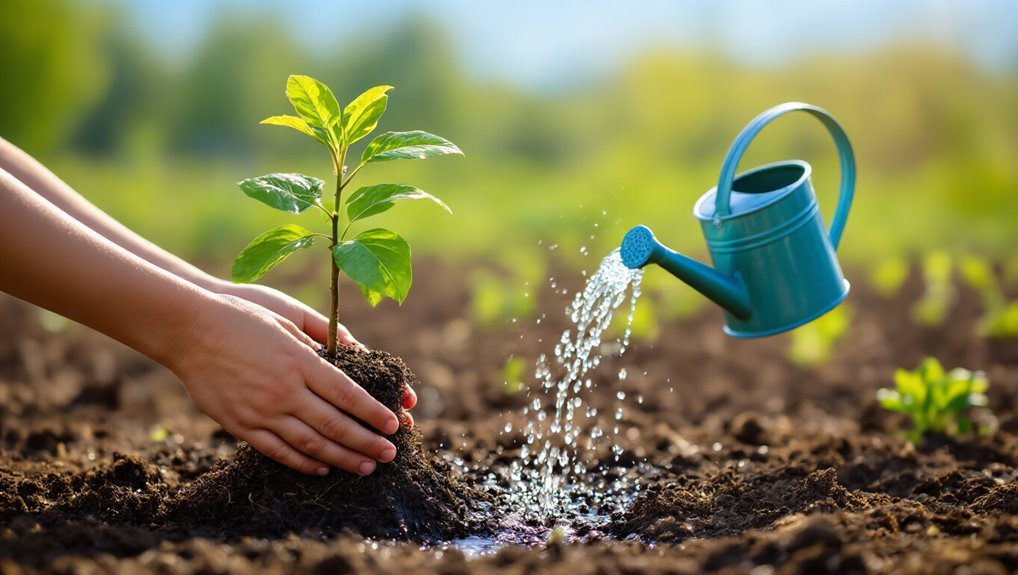
Proper watering and nutrient management are crucial for your tree’s health, especially during its first few years in the ground.
Make sure to water your tree deeply, about once a week, to encourage strong root development. If it’s particularly hot or dry, you might need to increase that frequency. Always check the soil moisture first—if it’s still damp, hold off on watering.
As for nutrients, consider using a slow-release fertilizer during the growing season. This provides essential nutrients without overwhelming your tree. For optimal results, look for the best plant food options for your specific tree species.
Be cautious not to over-fertilize, as this can harm your tree. A mulch layer around the base can help retain moisture and regulate soil temperature.
For an easy and effective way to provide nutrients, try using plant fertilizer tablets which deliver a steady supply of essential elements directly to the root zone.
Pruning and Maintenance Tips

Pruning your trees is essential for their health and growth. Regularly removing dead or damaged branches encourages new growth and improves air circulation. Aim to prune in late winter or early spring before new growth starts, as this minimizes stress on the tree.
Use clean, sharp tools to make clean cuts and avoid damaging the bark. Focus on shaping your tree by removing any branches that cross or rub against each other. This helps prevent injury and disease. If you want to keep your yard tidy and protect your trees, using weeding tools can help you efficiently remove weeds that might compete for nutrients around the base.
For best results, consider using pruning shears designed specifically for gardening tasks, as they make precise cuts and are easy to handle. Remember to step back and assess your work; it’s easier to make adjustments as you go. Finally, don’t forget to mulch around the base to retain moisture and suppress weeds. Keeping up with maintenance ensures your trees thrive for years to come!
Protecting Your Trees From Pests and Diseases
After ensuring your trees are well-maintained through regular pruning, it’s important to protect them from pests and diseases that can threaten their health.
Start by monitoring your trees regularly for any signs of trouble, like discolored leaves or unusual growths. If you spot something suspicious, identify the pest or disease as soon as possible. Using garden pest traps can provide an effective way to monitor and reduce pest populations before they cause serious damage.
Consider using organic pesticides or insecticidal soap to manage minor infestations. Planting companion plants can also help deter pests naturally.
Additionally, maintaining healthy soil will boost your trees’ immunity. Don’t forget to remove any fallen debris around the base, as it can harbor pests.
For more persistent issues, consider using pest control products designed specifically to target common tree pests while being safe for your yard’s ecosystem.
Frequently Asked Questions
When Is the Best Time of Year to Plant Trees?
The best time to plant trees is typically in early spring or fall. During these seasons, temperatures are milder, and soil moisture is usually higher, which helps young trees establish strong roots before summer heat arrives.
How Long Does It Take for a Newly Planted Tree to Grow?
As you watch your newly planted tree, envision its roots digging into the earth. Typically, you’ll see noticeable growth within a year, but full maturity may take several years, depending on the species and conditions.
Can I Plant Trees in Containers Instead of the Ground?
Yes, you can plant trees in containers instead of the ground. Just ensure the container’s large enough for root growth, use quality soil, and provide adequate water and sunlight to keep your trees healthy.
What Are the Benefits of Planting Trees in My Yard?
Planting trees in your yard is like inviting nature’s friends over for a party. They provide shade, improve air quality, and boost your property’s value. Plus, they create a beautiful habitat for wildlife. Enjoy the benefits!
How Do I Choose Between Deciduous and Evergreen Trees?
When choosing between deciduous and evergreen trees, consider your yard’s aesthetics and seasonal changes. Deciduous trees provide vibrant fall colors, while evergreens offer year-round greenery. Think about maintenance and space before making your decision.
Conclusion
By following these beginner-friendly tips, you’ll transform your yard into a lush oasis that could rival the most magnificent forests. Remember to choose the right trees, understand your soil, and practice proper planting techniques. Regular watering, maintenance, and pest protection will ensure your trees thrive for years to come. So, roll up your sleeves, dig in, and watch your green sanctuary flourish—each tree you plant is a step toward a more vibrant, sustainable future!