Creating a low-maintenance rock garden can transform your outdoor space into a beautiful, resilient landscape with minimal effort. Choose a sunny location with good drainage and select drought-tolerant plants like succulents and ornamental grasses. Use varied stone sizes for visual interest and integrate flat stones as pathways. With seasonal maintenance, like removing debris in spring and monitoring for erosion, your garden can thrive effortlessly. Stick around to discover more tips on enhancing your rock garden’s beauty.
Key Takeaways
- Choose drought-resistant plants like sedums and succulents for minimal upkeep and vibrant aesthetics.
- Select locations with excellent drainage and at least six hours of sunlight daily.
- Arrange a variety of stone sizes and shapes to create visual interest and natural flow.
- Incorporate ground covers like creeping thyme for lush greenery without extensive maintenance.
- Regularly clear debris and monitor soil erosion to keep the garden thriving year-round.
Why Choose a Low-Maintenance Rock Garden?
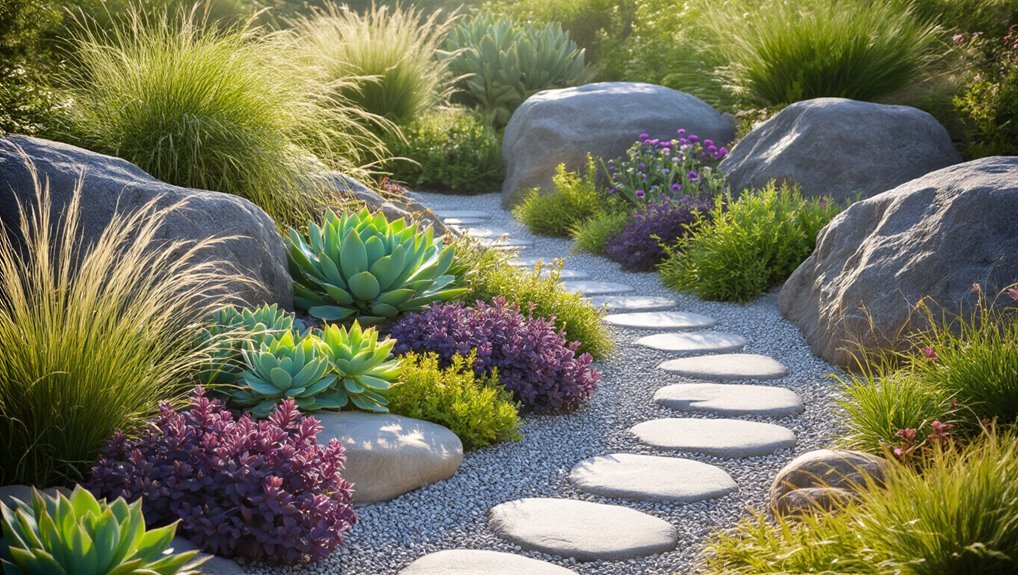
If you’re looking for a way to enjoy a beautiful outdoor space without the hassle of constant upkeep, a low-maintenance rock garden is an excellent choice.
These gardens allow you to create a stunning landscape using minimal resources. You won’t have to spend hours weeding or mowing; instead, you can focus on relaxation and enjoyment.
The natural stones and drought-resistant plants thrive without much attention, making it easier for you to maintain a vibrant garden year-round.
Plus, rock gardens can adapt to various climates and soil types, giving you flexibility in design.
With the right plants and rocks, you’ll have a unique and eye-catching space that requires little effort, allowing you more time to appreciate nature.
Choosing the Right Location for Your Rock Garden
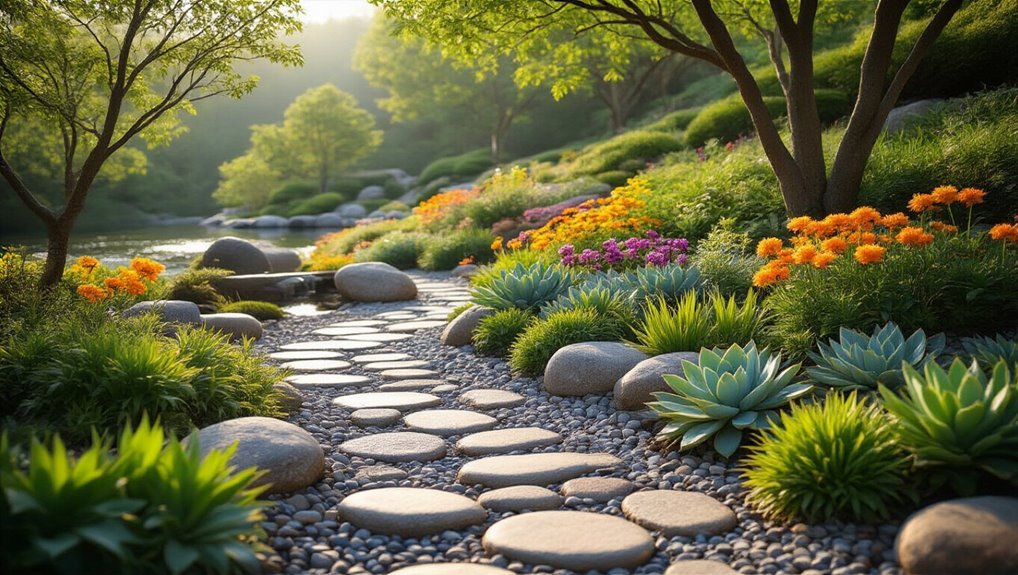
Choosing the right location for your rock garden can make all the difference in its success and beauty. Start by finding an area with good drainage, as rocks and plants thrive in well-drained soil. Consider sunlight; most rock gardens prefer a sunny spot, so look for at least six hours of direct sunlight daily. Additionally, think about visibility; placing your garden where you can easily admire it will enhance its enjoyment.
Here’s a quick reference table to help you decide:
| Factor | Ideal Condition | Notes |
|---|---|---|
| Drainage | Excellent | Avoid low-lying areas |
| Sunlight | Full sun (6+ hours) | Consider nearby trees |
| Visibility | Easily viewable | Near pathways or windows |
Selecting Low-Maintenance Plants for Your Rock Garden
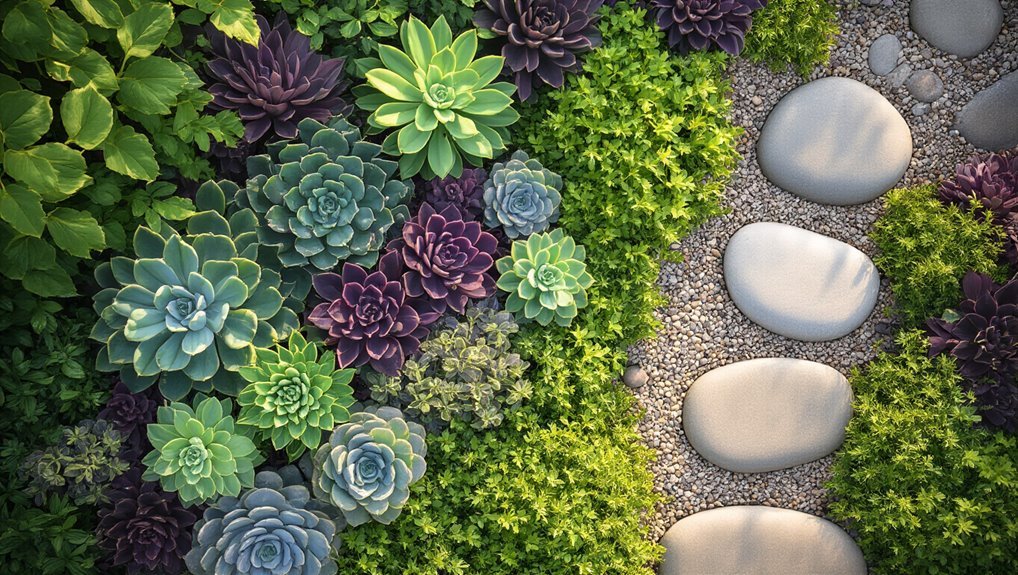
With the right location secured, it’s time to focus on selecting low-maintenance plants that thrive in rock gardens.
Opt for drought-tolerant varieties like sedums, succulents, and alpine plants. These plants not only withstand dry conditions but also add unique textures and colors to your garden.
Look for ground covers such as creeping thyme or moss phlox, which spread easily and require minimal care. Additionally, consider ornamental grasses for height and movement, as they complement the rocky elements beautifully.
Always choose native plants when possible; they’re adapted to your climate and need less attention.
Creative Stone Arrangements for Enhancing Your Rock Garden’s Aesthetic
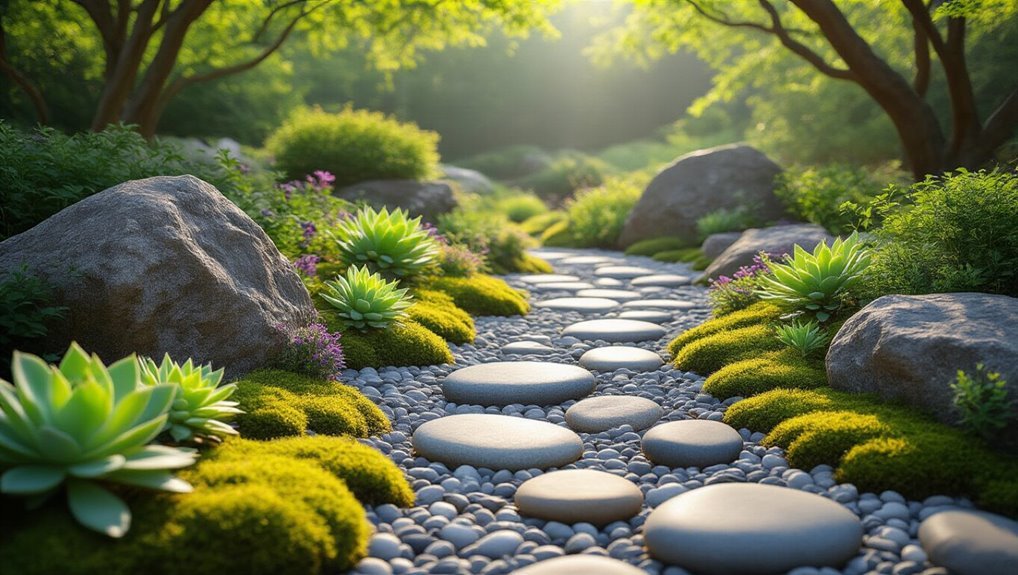
While creating a visually appealing rock garden, consider how stone arrangements can enhance its overall aesthetic.
Start by mixing different stone sizes and shapes; larger boulders can serve as focal points, while smaller pebbles fill gaps and create texture.
Arrange stones in a natural, flowing pattern, mimicking the way they’d be found in nature. You might also stack stones to create height and interesting layers, inviting the eye to explore.
Incorporate pathways using flat stones, guiding visitors through your garden.
Don’t forget to leave some spaces for ground cover or decorative gravel; these elements can tie the whole design together.
Adding Drought-Resistant Plants to Your Rock Garden
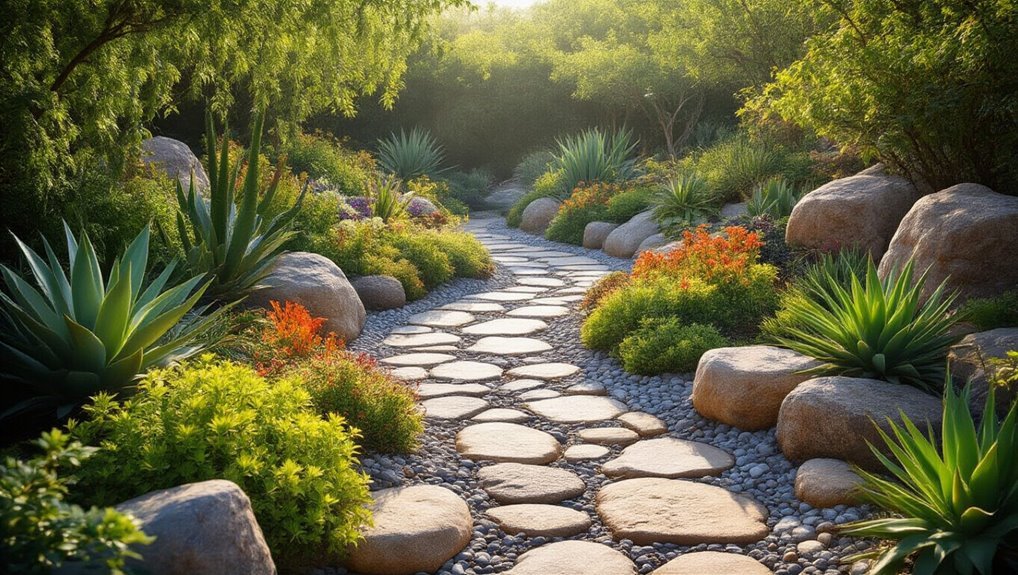
To create a sustainable rock garden, incorporating drought-resistant plants is essential for both beauty and practicality. These hardy plants thrive in dry conditions and require minimal maintenance, making them perfect for your garden.
Consider options like succulents, lavender, or sedum, which not only add vibrant colors but also attract pollinators. Grouping these plants together in clusters creates a visually appealing design while allowing for efficient water use.
Be mindful of the soil type and drainage; well-draining soil is crucial for drought-tolerant species.
Don’t forget to complement your plants with stones that match their colors and textures, enhancing the overall aesthetic. With these choices, your rock garden will flourish with minimal effort, showcasing nature’s beauty effortlessly.
Natural Pathways and Borders With Gravel
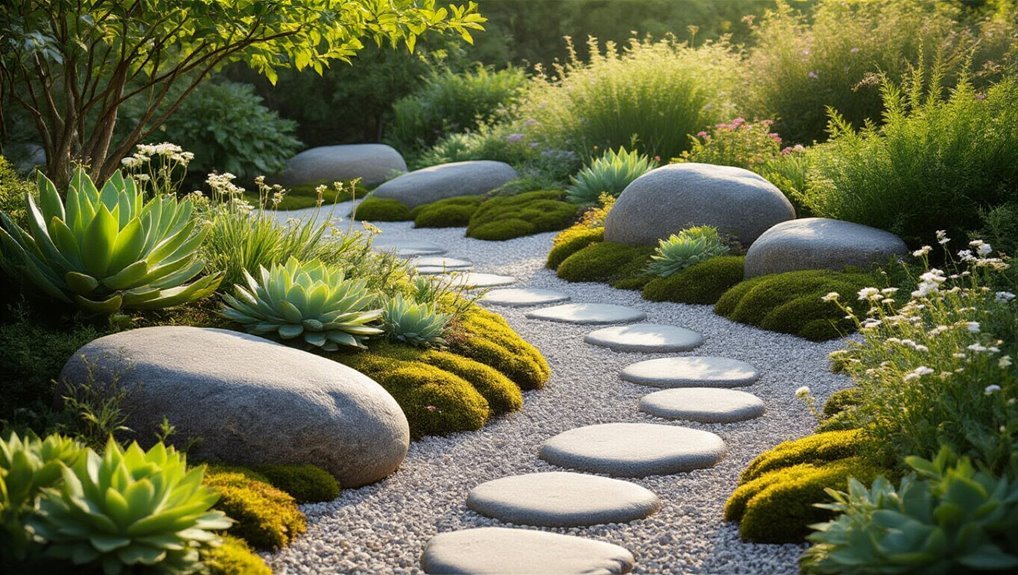
Creating natural pathways and borders with gravel not only enhances the structure of your rock garden but also adds a practical element to its design. You can easily define spaces and guide visitors through your garden by laying down gravel in strategic areas. Choose a color and size that complements your plants and rocks, creating a cohesive look.
Consider using larger stones or boulders along the edges to create borders that help contain the gravel and add visual interest. This setup allows for easy maintenance, as gravel drains well and reduces weed growth.
Plus, the crunch of gravel underfoot provides an enjoyable sensory experience. Overall, gravel pathways enrich your garden’s beauty while keeping it functional and low-maintenance.
Seasonal Tips for Maintaining Your Rock Garden’s Beauty
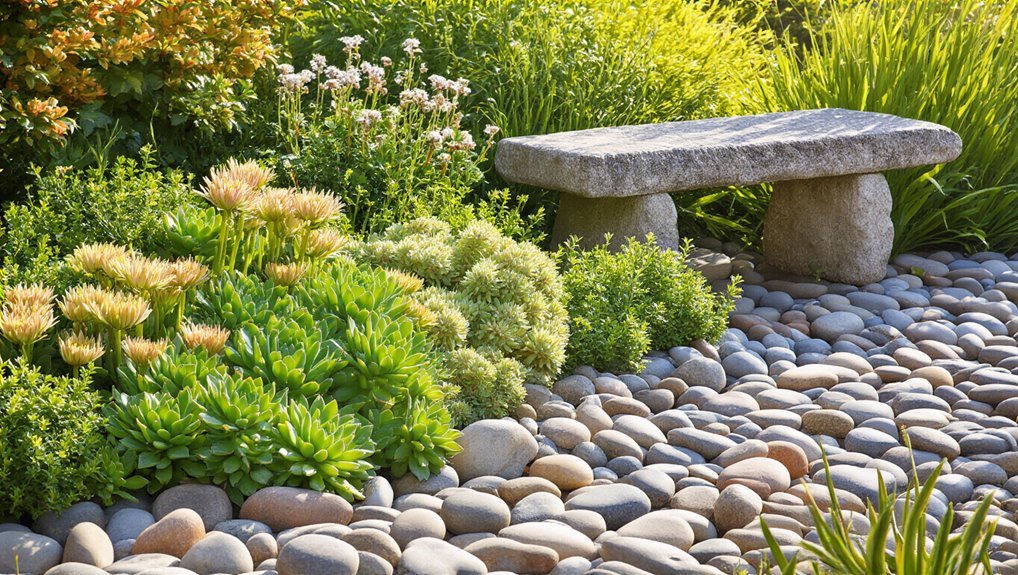
As the seasons change, maintaining your rock garden’s beauty requires a bit of attention and care.
In spring, clear away debris and dead plants to make way for new growth. Check for any soil erosion and add gravel if needed to keep your stones in place.
During summer, ensure your plants get enough water but avoid overwatering, which can lead to root rot.
In fall, prune any spent blooms and consider adding mulch to protect roots during winter.
Lastly, in winter, keep an eye on snow accumulation to prevent damage to delicate plants.
Frequently Asked Questions
How Much Does It Cost to Create a Rock Garden?
Creating a rock garden can cost anywhere from $300 to $1,500, depending on size, materials, and plants. You’ll want to budget for rocks, soil, and any additional features you’d like to include.
Can I Build a Rock Garden in Shaded Areas?
Yes, you can build a rock garden in shaded areas. Choose shade-tolerant plants and arrange rocks creatively to enhance the aesthetics. Just ensure proper drainage to keep the garden healthy and vibrant.
What Types of Stones Are Best for Rock Gardens?
Think of stones as the stars of your garden. For rock gardens, consider using smooth river stones, rugged granite, or colorful slate. Each adds unique texture and charm, enhancing your garden’s beauty and character effortlessly.
Are Rock Gardens Suitable for All Climates?
Rock gardens can thrive in many climates, but you’ll need to choose plants and stones suited for specific conditions. Consider your area’s temperature, rainfall, and soil type to make your garden successful and beautiful.
How Do I Prevent Weeds in My Rock Garden?
To prevent weeds in your rock garden, lay landscape fabric under the rocks, apply a thick layer of gravel, and regularly check for any emerging weeds. A little maintenance now saves you time later!
Conclusion
By choosing a low-maintenance rock garden, you’re embracing beauty and simplicity. You’re creating a space that thrives with minimal effort, showcasing stunning plants and creative stone arrangements. You’re enjoying the tranquility of natural pathways and drought-resistant flora, all while reducing upkeep. So, whether you’re a seasoned gardener or just starting, remember: your rock garden can be a vibrant escape, a haven of peace, and a stunning focal point—effortlessly beautiful and endlessly enjoyable.