To grow healthy, fragrant roses, start by choosing the right varieties for your climate and soil. Ensure they get at least six hours of sunlight daily and water deeply but infrequently. Prepare your soil with compost and maintain good drainage. Regularly prune dead wood, manage pests organically, and use balanced fertilizer during the growing season. With proper care and attention, your roses will flourish. Stick around to discover more tips and secrets for a thriving rose garden!
Key Takeaways
- Choose the right rose varieties suited for your climate and soil conditions to ensure optimal growth and health.
- Ensure at least six hours of direct sunlight daily and maintain consistent moisture for robust rose development.
- Enrich soil with organic matter, compost, and maintain a pH of 6.0 to 6.8 for vibrant roses.
- Regularly inspect for pests and diseases, using preventive measures and treatments to maintain plant health.
- Apply balanced fertilizer every 4-6 weeks during the growing season to support nutrient availability for strong blooms.
Choosing the Right Rose Varieties
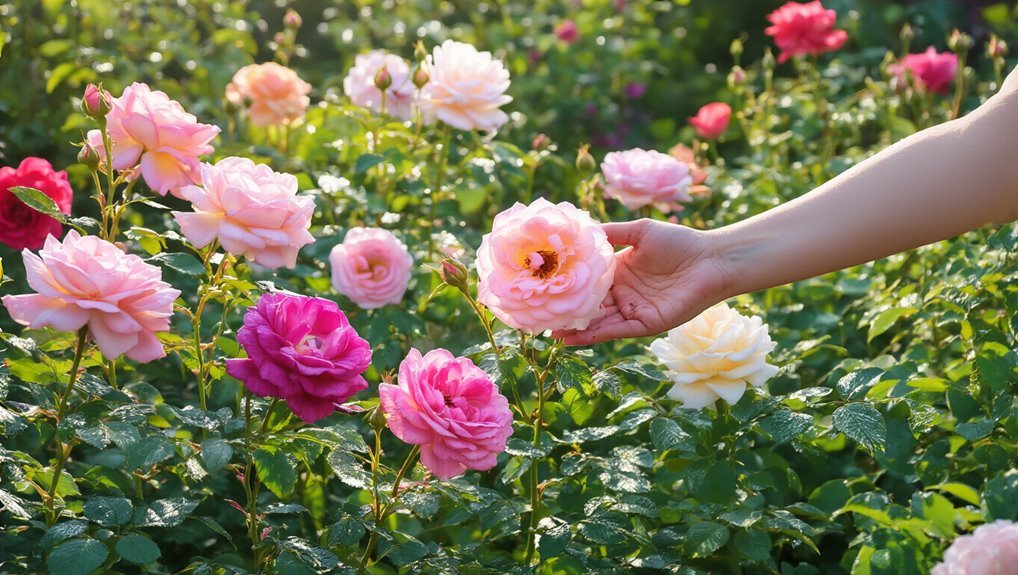
When you’re selecting rose varieties, it’s essential to consider your garden’s climate and soil conditions. Different roses thrive in varying environments, so knowing your USDA hardiness zone can help you choose wisely. If you live in a warmer area, you might opt for heat-tolerant varieties, while cooler climates may benefit from cold-hardy options. Also, consider your soil type—roses prefer well-drained, fertile soil. If yours is sandy or clay-heavy, select varieties that can adapt. Pay attention to disease resistance, too. Some roses are more susceptible to pests and diseases, so look for varieties known for their resilience. You can also enhance your roses’ health and growth by using plant fertilizer tablets, which provide essential nutrients in a convenient form for gardeners. Providing your roses with the best plant food options can make a significant difference in their vitality and blooms. Ultimately, picking the right roses sets the foundation for a thriving, beautiful garden. Enjoy the process and watch your roses flourish!
Understanding Rose Growing Conditions
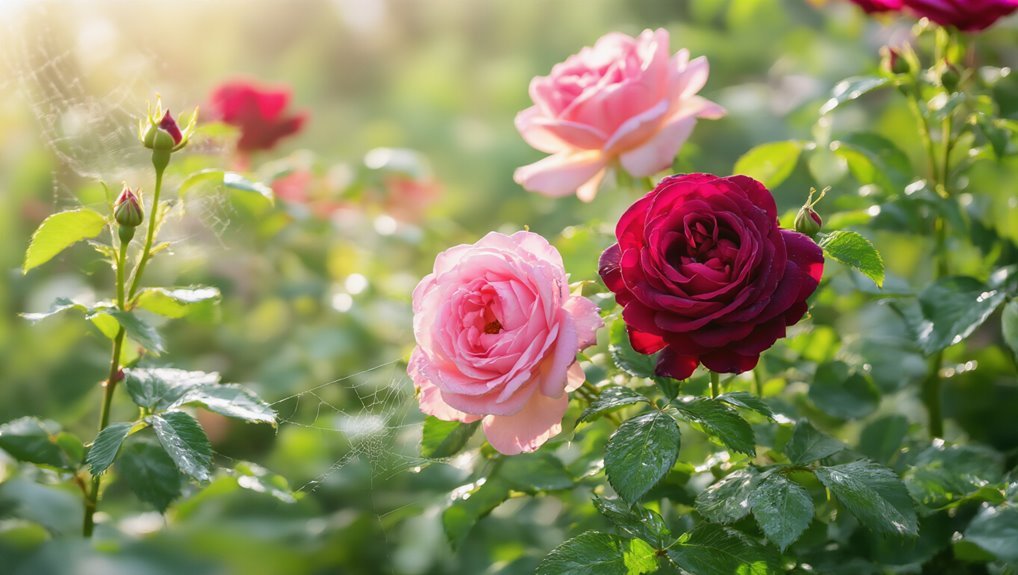
To ensure your roses thrive, you must understand their specific growing conditions, which include sunlight, water, and temperature requirements.
Roses love sunlight, so aim for at least six hours of direct sun each day. Too little light can lead to weak growth and fewer blooms. When tending your roses, using a garden hose with an adjustable nozzle makes it easier to direct water exactly where it’s needed without damaging the foliage.
When it comes to watering, roses need consistent moisture, especially during dry spells. Water them deeply but infrequently to encourage strong root systems.
Lastly, roses prefer moderate temperatures, ideally between 60°F and 75°F. Extreme heat or cold can stress your plants, affecting their health and blooming potential.
For efficient and consistent watering, consider using a drip irrigation system to help maintain optimal soil moisture for your roses.
Soil Preparation and Enrichment
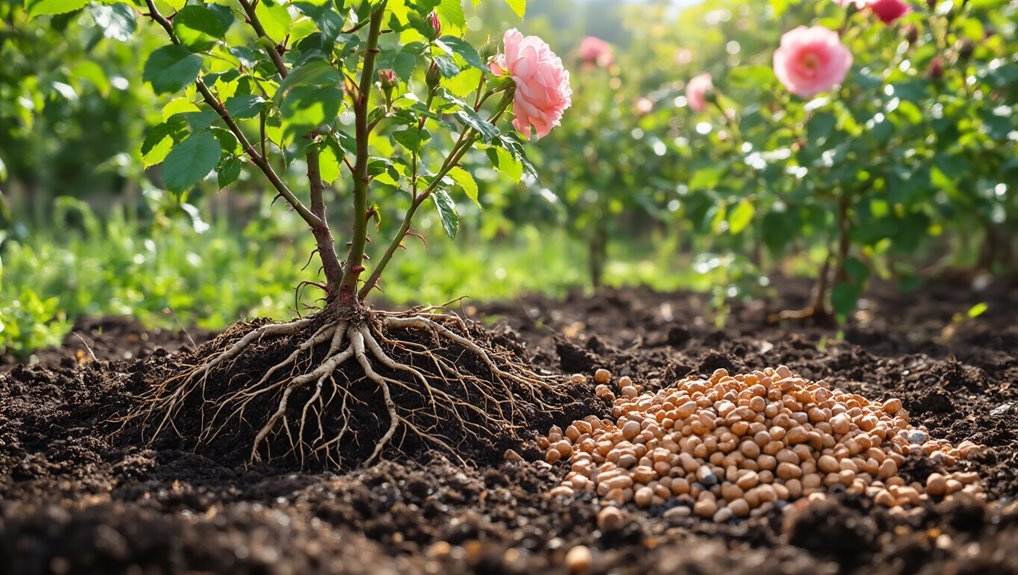
Although soil might seem like just dirt, its quality plays a crucial role in the health of your roses. Start by testing your soil’s pH; roses thrive in slightly acidic conditions around 6.0 to 6.8. Enrich your soil with organic matter like compost or well-rotted manure to improve drainage and nutrient content. If you’re looking to start your own compost at home, consider exploring compost bins designed for efficient garden recycling. Incorporating outdoor composting systems into your gardening routine can further enhance soil fertility and sustainability.
| Component | Function | Recommended Amount |
|---|---|---|
| Compost | Nutrient-rich organic matter | 2-3 inches |
| Peat Moss | Retains moisture | 1-2 inches |
| Perlite | Improves drainage | 1 part per 3 parts |
Mix these components well into your soil before planting. Proper soil preparation sets the foundation for vibrant, fragrant blooms.
Planting Techniques for Success
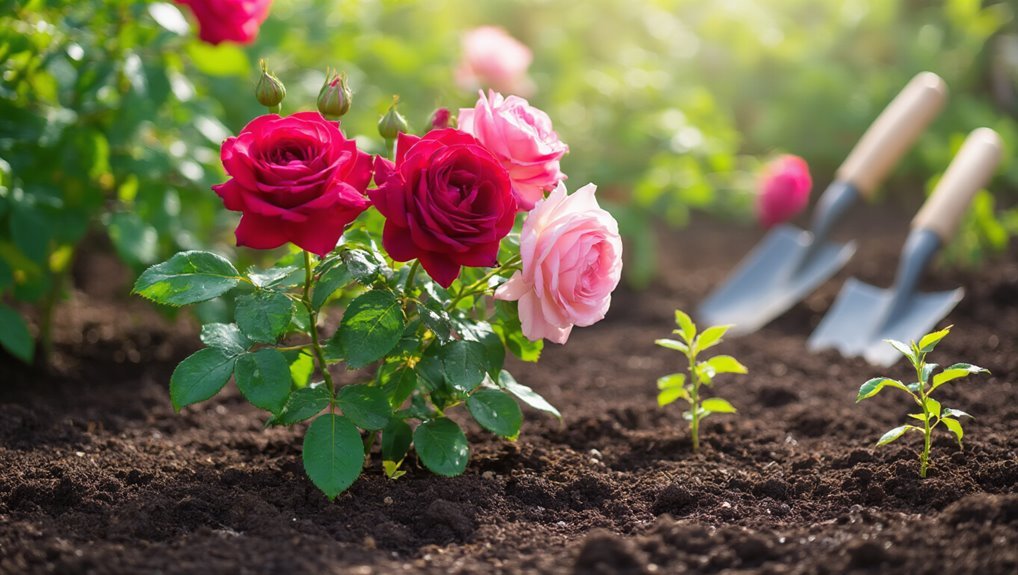
Once you’ve prepared your soil, it’s time to focus on planting techniques that ensure your roses thrive.
Start by choosing the right time for planting—early spring or fall are ideal.
Dig a hole that’s about twice the width of the root ball and just deep enough to cover the roots without burying the graft union. For even more efficiency, investing in essential gardening tool sets can help you dig and prepare your rose beds with ease.
Place your rose in the hole, spreading the roots gently.
Backfill with soil, making sure there are no air pockets.
Firm the soil around the base to provide stability.
Finally, add a layer of mulch to retain moisture and suppress weeds.
Ensure your roses are spaced adequately to allow for air circulation, which promotes healthy growth and minimizes disease risks.
For the best results when digging and planting, consider using a garden trowel to make the process easier and more precise.
Happy planting!
Watering Essentials for Healthy Roses
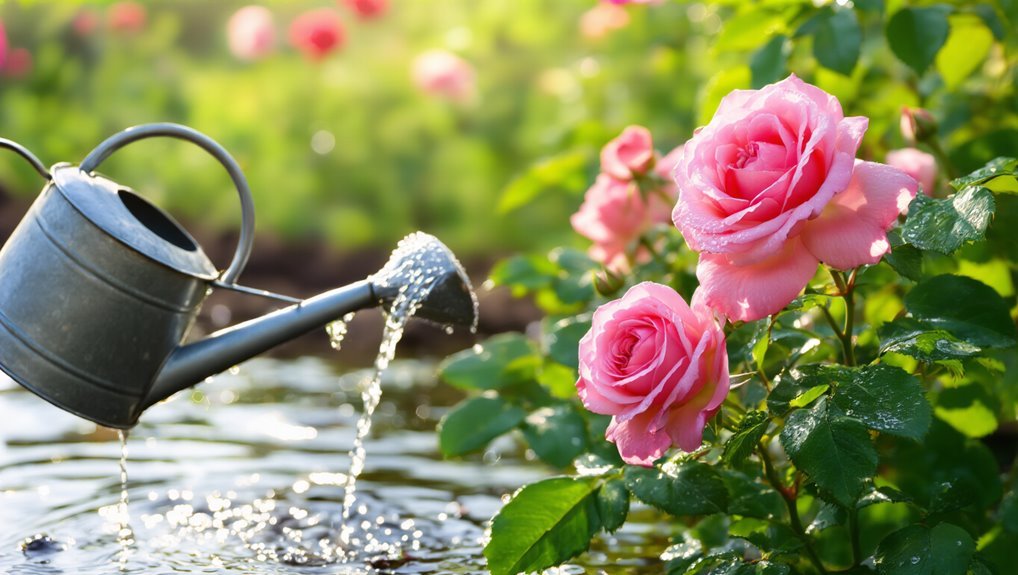
Proper watering is crucial for keeping your roses healthy and vibrant, especially during their formative growth stages. You should water deeply but infrequently, encouraging roots to grow strong and deep. Aim for about an inch of water per week, adjusting based on rainfall and temperature. For gardeners seeking a more hands-off approach, Plant Watering Globes can provide a steady supply of moisture to your rose bushes, ensuring they receive consistent hydration even when you’re away.
Early mornings are the best time to water, as it allows plants to absorb moisture before the heat of the day. Avoid wetting the leaves to reduce the risk of disease; instead, direct the water at the base of the plant.
Pay attention to your roses—if the leaves begin to droop or turn yellow, they may need more water. Consistent attention to their hydration will reward you with stunning blooms and lush foliage.
For the most efficient and gentle watering, consider using watering cans designed for gardeners, which offer control and precision to avoid splashing the foliage.
Pruning for Optimal Growth and Blooms
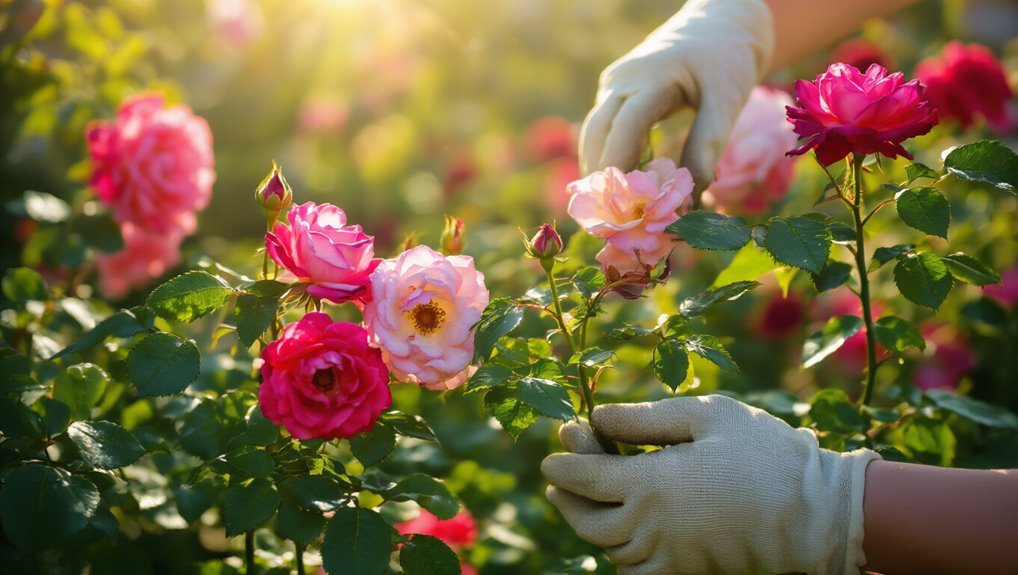
To ensure your roses thrive and produce abundant blooms, regular pruning is essential. Start by removing dead or damaged stems to encourage new growth. Aim to prune in early spring, just before new growth begins.
Use sharp, clean shears to make clean cuts at a 45-degree angle, about a quarter-inch above a healthy bud. Focus on shaping the plant; remove any inward-growing branches to improve air circulation. This’ll help prevent disease and promote healthy blooms. For many gardeners, having the right garden shovels close at hand can make clearing away pruned material and maintaining clean beds much easier.
Don’t forget to cut back hybrid teas and floribundas to about one-third of their height. Lastly, always step back and assess your work—this’ll help you maintain a balanced shape.
With proper pruning, your roses will flourish beautifully all season long. Using essential pruning shears will make your gardening tasks easier and help you achieve precise, healthy cuts every time.
Pest and Disease Management
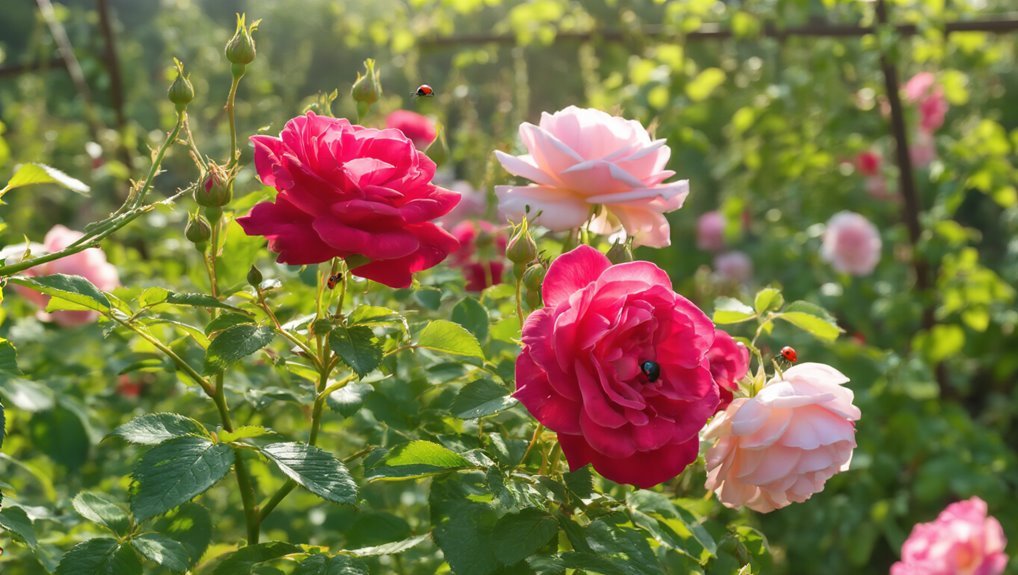
While roses can be stunning additions to your garden, they’re also susceptible to various pests and diseases that can threaten their health. To keep your roses thriving, start by regularly inspecting them for signs of trouble, like discolored leaves or holes.
Common pests include aphids, spider mites, and Japanese beetles. You can manage these nuisances by introducing beneficial insects, like ladybugs, or using insecticidal soap. If infestations persist, consider using effective pest control products specifically designed for garden use to target these common rose pests.
For diseases, watch out for black spot, powdery mildew, and rust. Ensure proper air circulation by spacing your plants correctly and avoid overhead watering.
If you notice any issues, promptly remove affected leaves and consider applying a fungicide. Staying vigilant and proactive will help you enjoy vibrant, healthy roses all season long! For a safer garden, consider using organic pest control solutions which are effective and environmentally friendly alternatives to chemical pesticides.
Fertilization Tips for Lush Flowers
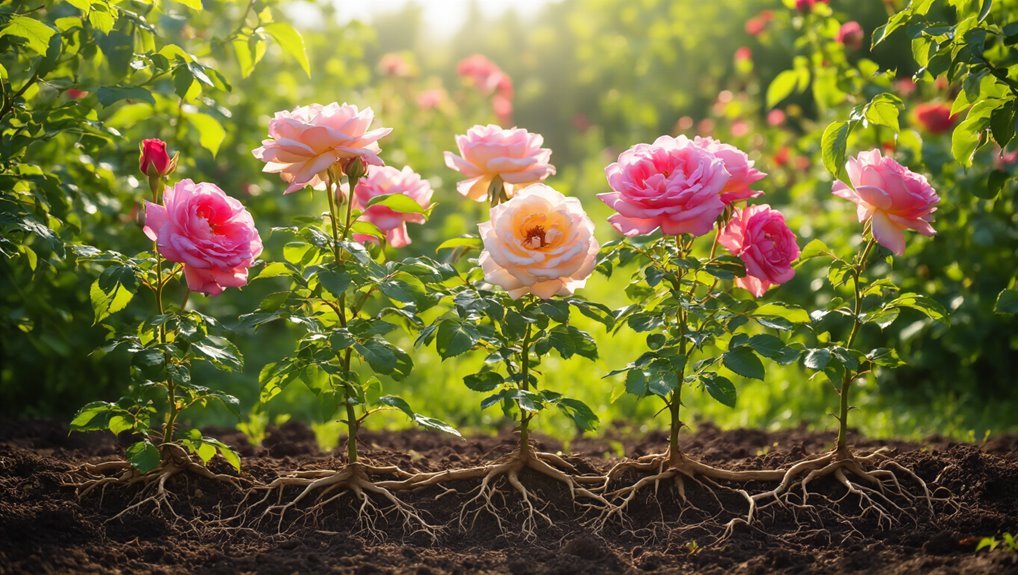
After ensuring your roses are free from pests and diseases, it’s time to focus on fertilization for lush, vibrant blooms.
Start by choosing a balanced fertilizer, preferably one with equal parts nitrogen, phosphorus, and potassium. Apply it in early spring when new growth begins. You’ll want to feed your roses every 4-6 weeks during the growing season. Be sure to follow the manufacturer’s instructions to avoid over-fertilizing, which can damage your plants. For added soil health, consider incorporating organic mulching materials such as straw, which can help retain nutrients and moisture.
Consider using organic options like compost or well-rotted manure for a slow-release effect.
Water thoroughly after fertilizing to help nutrients reach the roots. Remember, healthy soil is key; add mulch to retain moisture and improve soil quality. Using mulch in your garden also suppresses weeds and helps moderate soil temperature, giving your roses the best environment to flourish.
Happy growing!
Seasonal Care and Maintenance
As seasons change, keeping up with the unique care and maintenance needs of your roses becomes essential for their health and beauty.
In spring, focus on pruning and removing dead wood to encourage new growth.
As summer arrives, make sure you water deeply and regularly, especially during heatwaves. Consider adding mulch to retain moisture and suppress weeds.
When autumn rolls around, deadhead spent blooms to promote a final flush of flowers, and apply a layer of mulch to protect the roots from frost.
In winter, protect your roses by covering the base with mulch or burlap to insulate against cold temperatures.
Frequently Asked Questions
How Do I Propagate Roses From Cuttings?
To propagate roses from cuttings, select healthy stems, cut them just below a node, and remove lower leaves. Plant them in moist soil, cover with plastic, and keep them warm until roots develop.
Can Roses Grow in Containers Successfully?
Yes, roses can thrive in containers! Choose a large pot with drainage, use quality soil, and ensure they get plenty of sunlight. Regular watering and feeding will help keep your container roses healthy and vibrant.
What Are the Best Companion Plants for Roses?
Imagine a vibrant garden, where roses dance alongside lavender and marigolds. These companions not only enhance beauty but also deter pests. Plant them together, and you’ll create a flourishing oasis that beckons butterflies and bees.
How Do I Extend the Blooming Season of My Roses?
To extend your roses’ blooming season, regularly deadhead spent flowers, ensure consistent watering, and apply a balanced fertilizer. Additionally, choose varieties that bloom at different times for a continuous display throughout the growing season.
What Common Myths About Roses Should I Ignore?
You might think all roses need constant sun, but they thrive in partial shade too. Don’t believe that all blooms are overly fragrant; some varieties are subtle. Ignore these myths and embrace diverse rose care techniques.
Conclusion
So there you have it! With these secrets in your gardening arsenal, your roses will bloom like they’re auditioning for a Hollywood movie—vibrant, fragrant, and utterly irresistible! You’ll be the envy of every neighbor and the local garden club will be begging for your tips. Remember, a little care goes a long way, so dive in and unleash your inner rose whisperer. Transform your garden into a breathtaking paradise that’ll leave everyone speechless! Happy gardening!