To grow and care for flowers at home, start by choosing varieties suited to your space and sunlight conditions. Equip yourself with essential gardening tools like trowels and pruning shears. Proper watering and a balanced fertilizer every few weeks will keep your blooms healthy. Don’t forget to prune regularly to promote growth and prevent disease. If you encounter issues like yellowing leaves or pests, effective solutions are just a step away. Explore more to enhance your gardening skills.
Key Takeaways
- Assess sunlight availability to choose appropriate flowers that thrive in your specific lighting conditions, whether full sun or shade.
- Invest in essential gardening tools, including a hand trowel, pruning shears, and gloves for efficient planting and maintenance.
- Implement deep watering techniques and apply balanced fertilizer every 4-6 weeks for optimal flower growth and health.
- Regularly prune dead or wilted flowers to enhance appearance and encourage more blooms throughout the growing season.
- Monitor for common issues like yellow leaves or pests, and address them promptly to maintain healthy plants.
Choosing the Right Flowers for Your Space
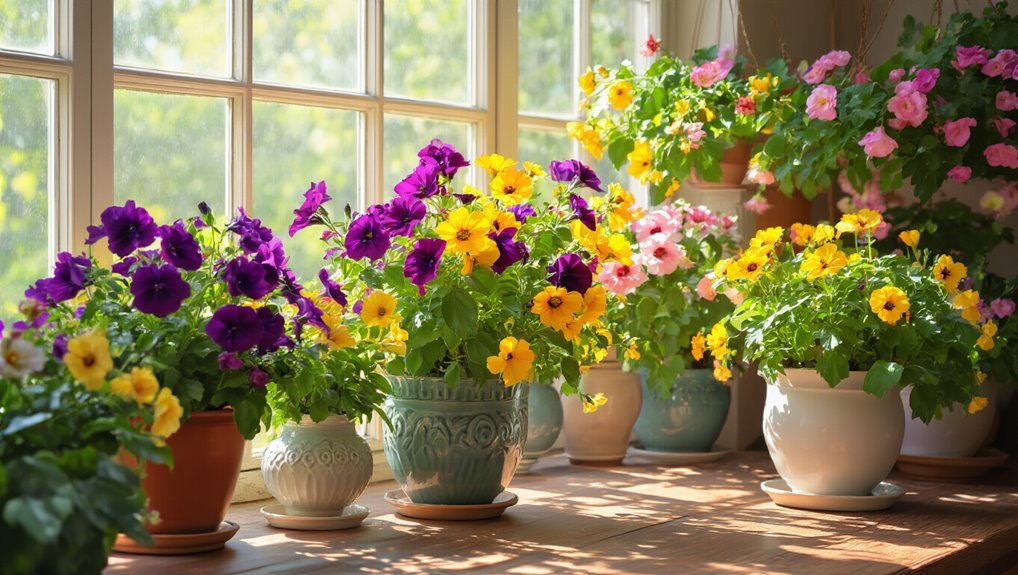
When you’re selecting flowers for your space, consider both the environment and your personal style.
Think about the amount of sunlight your area receives; some flowers thrive in full sun while others prefer shade. If your space is small, opt for compact varieties that won’t overwhelm the area. You might love vibrant colors, but remember to choose flowers that complement your current decor. For a natural way to deter pests, you might also explore insect repellent plants such as citronella, which can help protect your garden while adding beauty.
Pay attention to the growing season, too; some flowers bloom in spring, while others flourish in summer. Consider maintenance needs as well—if you’re short on time, low-maintenance flowers might suit you best.
Finally, don’t forget to factor in your local climate; selecting flowers that thrive in your region ensures a more successful and rewarding gardening experience. For a unique and functional addition to your garden, consider planting edible flower seeds, which not only add beauty but also offer delightful flavors for culinary use.
Essential Tools and Supplies for Flower Gardening
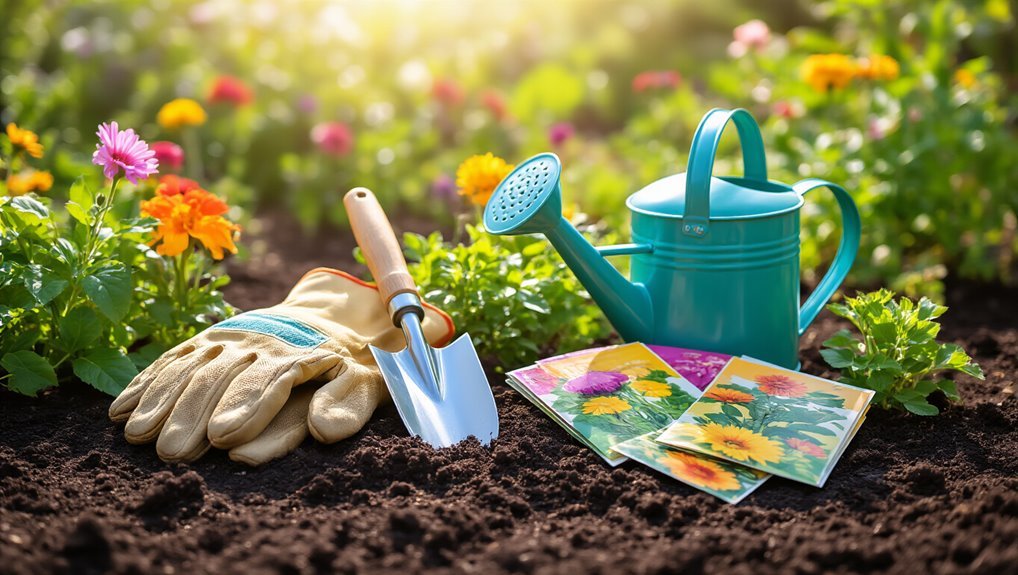
Having the right tools and supplies is crucial for successful flower gardening. By equipping yourself with essential items, you’ll make the process smoother and more enjoyable. Investing in a gardening tool set ensures you have all the basic tools needed for planting, weeding, and maintaining your garden in one convenient package.
Here are three must-have tools you shouldn’t overlook:
- Hand trowel: Perfect for digging small holes and transplanting flowers without damaging roots.
- Pruning shears: Essential for trimming dead or overgrown stems, promoting healthy growth.
- Gardening gloves: Protect your hands from thorns and dirt while providing grip and comfort.
In addition to these tools, consider investing in quality potting soil and fertilizer to give your flowers the best start.
For precise and healthy cuts, choosing essential pruning shears designed for gardening can make all the difference in maintaining your plants.
With these essentials, you’ll be well on your way to creating a vibrant and flourishing garden at home!
Watering and Fertilizing Techniques
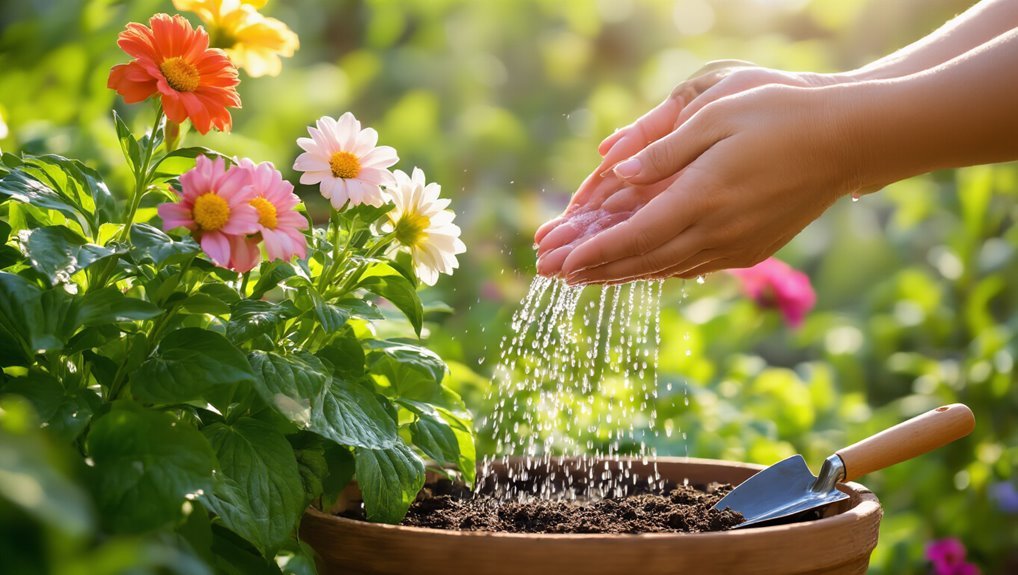
To keep your flowers thriving, mastering the right watering and fertilizing techniques is essential. Start by watering deeply; this encourages root growth. Check the soil moisture before watering—if it’s dry an inch down, it’s time to hydrate. Use a watering can or hose with a gentle spray to avoid disturbing the soil.
When it comes to fertilizing, choose a balanced fertilizer and apply it during the growing season, usually every 4-6 weeks. For an easy and efficient way to provide nutrients, consider using plant fertilizer tablets, which offer a convenient solution for feeding your plants. Follow the package instructions for the right dosage.
For optimal results, consider nourishing your flowers with the best plant food options to ensure they receive all the essential nutrients they need throughout their growth cycle.
| Technique | Description |
|---|---|
| Deep Watering | Water until the soil is moist at least 1 inch down. |
| Balanced Fertilizer | Apply every 4-6 weeks during the growing season. |
| Soil Testing | Check soil moisture and nutrient levels regularly. |
Pruning and Maintenance for Healthy Blooms
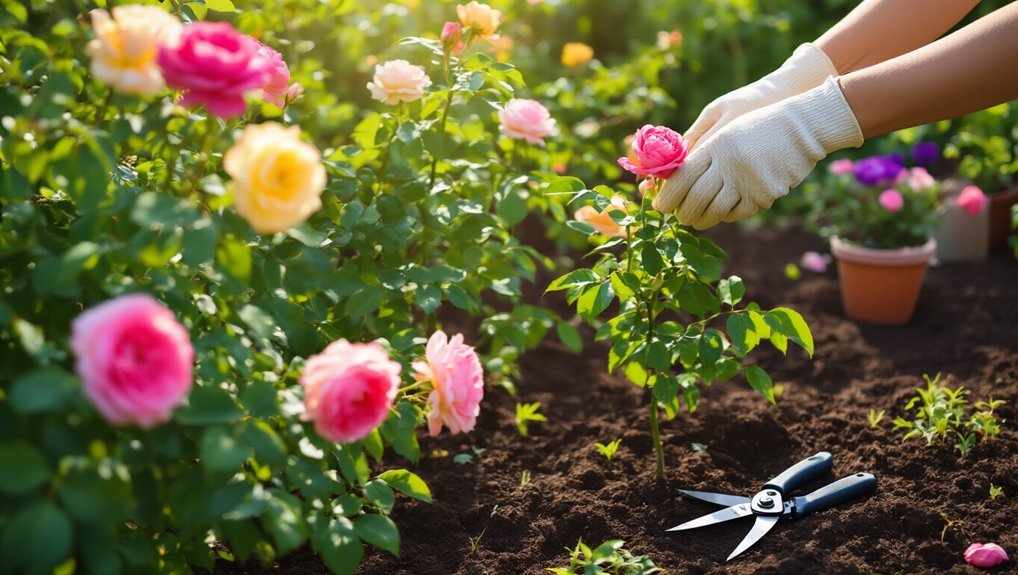
Pruning and maintaining your flowers is crucial for promoting healthy blooms and encouraging new growth.
Regularly trimming dead or wilted flowers not only enhances your plants’ appearance but also redirects energy toward new blossoms. Consider using plant markers to easily identify different species in your garden, ensuring each receives the specific care it needs.
Here’s how to keep your flowers thriving:
- Remove dead heads: Snip off spent flowers to encourage further blooming.
- Trim back leggy growth: Cut back stems that have grown too tall or weak to promote even growth.
- Clean up: Regularly remove leaves and debris around the base to prevent disease and pests.
For best results, use the right weeding tools to efficiently clear away unwanted plants and maintain a tidy garden bed.
Troubleshooting Common Flower Growing Issues
While flowers can bring beauty and joy to your home, they sometimes face challenges that can hinder their growth and blooming potential.
Yellow leaves often indicate overwatering; check your soil’s moisture before watering again. Using the proper watering cans can help you control the amount of water your plants receive and prevent overwatering issues.
If your blooms seem sparse, ensure they’re getting enough sunlight—most flowers thrive with at least six hours of direct light daily.
Pests like aphids can sap your plants’ strength; inspect for any signs and treat them with insecticidal soap or neem oil.
Lastly, if flowers aren’t blooming, consider fertilizing with a balanced fertilizer to provide necessary nutrients.
Using the right garden trowel can make planting and caring for your flowers more efficient and enjoyable.
Frequently Asked Questions
Can I Grow Flowers Indoors Without Natural Light?
Yes, you can grow flowers indoors without natural light! Using grow lights tailored for plants, you can provide the necessary spectrum for photosynthesis. Just ensure you choose the right flowers that thrive in low light conditions.
How Do I Attract Pollinators to My Flower Garden?
To attract pollinators to your flower garden, plant a variety of colorful blooms, avoid pesticides, and create a welcoming habitat with water sources and shelter. You’ll see bees and butterflies flocking to your vibrant space!
What Are the Best Flowers for Low-Maintenance Gardening?
For low-maintenance gardening, you’ll love choosing flowers like daylilies, black-eyed Susans, and lavender. These varieties thrive with minimal care, providing beautiful blooms that attract pollinators and enhance your garden effortlessly. Enjoy your easy gardening journey!
How Can I Prevent Pests Without Using Chemicals?
To prevent pests without chemicals, you can introduce beneficial insects, like ladybugs, and use natural deterrents, such as neem oil or garlic spray. Regularly inspecting your plants helps catch issues early and maintain plant health.
When Is the Best Time to Plant Flowers in My Area?
The best time to plant flowers depends on your local climate. Generally, wait until after the last frost in spring. Check your area’s planting zone to ensure optimal growth and blooming for your chosen flowers.
Conclusion
In the end, growing flowers at home is like nurturing a friendship; it takes time, attention, and a little patience. Just as a good friend flourishes with care, your blooms will reward you with vibrant colors and sweet scents when you provide the right environment and support. So, dig in, get your hands dirty, and enjoy the journey of watching your garden thrive. With a little effort, you’ll create a beautiful space that brings joy to your life.