To grow a thriving snake plant, place it in indirect sunlight and avoid direct light to prevent leaf scorching. Water every 2-6 weeks, checking the soil moisture first. Use a well-draining soil mix with drainage holes in the pot. Regularly inspect for pests like spider mites and mealybugs, and manage them promptly. For propagation, consider leaf cuttings or division. There’s so much more to discover about nurturing this indestructible houseplant.
Key Takeaways
- Place your snake plant in bright, indirect sunlight or low-light conditions to promote healthy growth without leaf scorching.
- Water your snake plant every 2-6 weeks, allowing the top inch of soil to dry out before watering again.
- Use a well-draining soil mix, such as cactus or succulent mix, with pots that have drainage holes to prevent overwatering.
- Regularly inspect for pests like spider mites and mealybugs, using a damp cloth or insecticidal soap for treatment.
- Propagate snake plants through leaf cuttings, division, or rhizome cuttings for easy growth and expansion of your plant collection.
Choosing the Right Spot: Optimal Lighting for Your Snake Plant
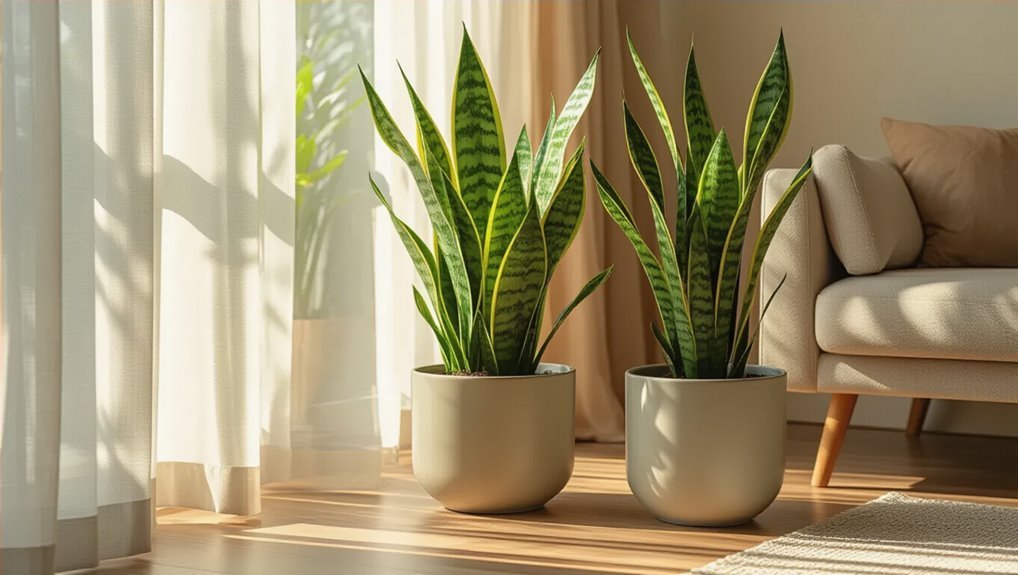
When it comes to placing your snake plant, aim for a spot with indirect sunlight. These hardy plants thrive in bright, indirect light but can also adapt to low-light conditions. For extra comfort while tending to your indoor jungle, consider wearing gardening shoes to keep your feet protected and supported.
If you put your snake plant in direct sunlight, the leaves might scorch, leading to unsightly brown tips. A north or east-facing window is often ideal, providing the right amount of light without overwhelming your plant.
If you notice your snake plant leaning toward the light, it’s a sign it needs more brightness. Don’t be afraid to experiment with different locations until you find the perfect spot.
When moving or caring for your plant, consider using gardening gloves to protect your hands from soil and sharp edges.
Watering Wisely: How to Keep Your Snake Plant Hydrated
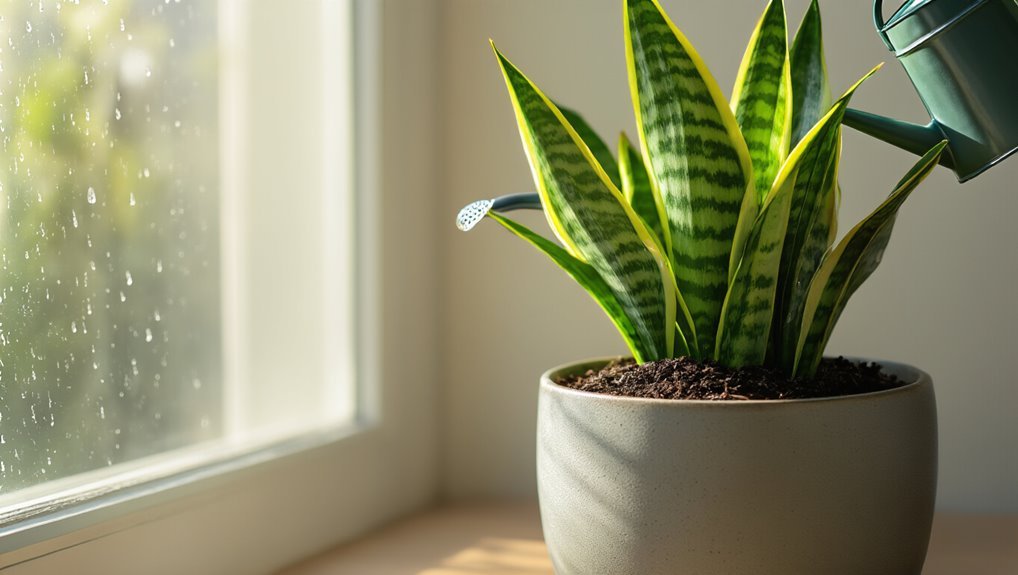
Although snake plants are drought-tolerant, it’s essential to water them wisely to keep them healthy. To ensure your plant thrives, follow these simple guidelines:
| Watering Frequency | Signs of Overwatering | Signs of Underwatering |
|---|---|---|
| Every 2-6 weeks | Yellowing leaves | Leaf curling |
| Water less in winter | Soft, mushy leaves | Dry, crispy tips |
| Check soil moisture | Root rot risk | Soil pulling away |
Always check the soil moisture before watering. If the top inch of soil feels dry, it’s time for a drink. When you water, do so thoroughly, allowing excess to drain. This practice prevents root rot and keeps your snake plant flourishing. For even more convenience, you might want to try self-watering planters, which can help regulate moisture and reduce the risk of both overwatering and underwatering. To make watering even easier and more precise, consider using soil moisture sensors to monitor exactly when your plant needs hydration.
Soil and Potting: The Best Medium for Growth
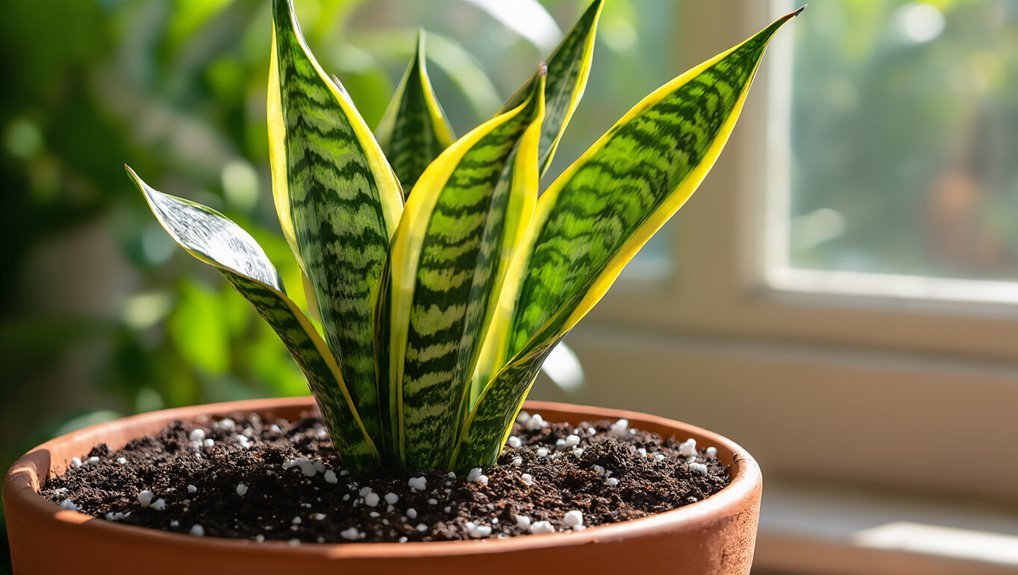
To ensure your snake plant thrives, choosing the right soil and potting setup is crucial. A well-draining soil mix will prevent root rot and promote healthy growth. For gardeners seeking sustainable practices, consider enriching your soil mix with compost tumblers, which provide nutrient-rich compost that can boost plant vitality.
Here’s what you need to consider:
- Soil Type: Use a cactus or succulent mix, which provides excellent drainage.
- Additives: Incorporate perlite or sand to enhance aeration and drainage in the soil.
- Pot Selection: Choose pots with drainage holes to prevent water accumulation.
- Repotting: Repot every couple of years to refresh the soil and give your plant more room to grow.
For even better results, consider using a garden soil specifically designed for thriving plants, as it offers essential nutrients and optimal structure for healthy root development.
Pest Management: Keeping Your Snake Plant Healthy
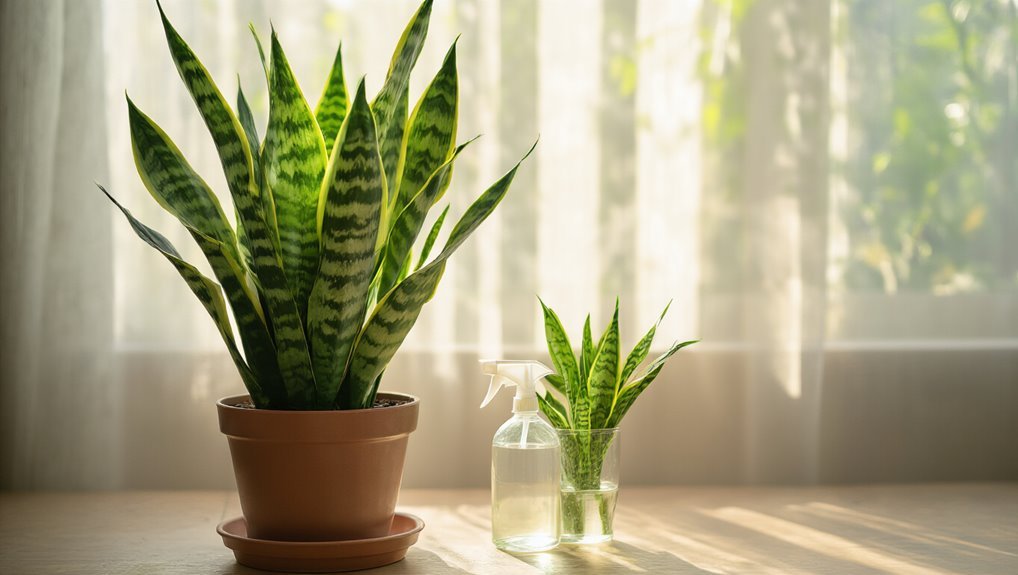
While snake plants are generally resilient, they can still fall victim to pests if not monitored closely. Common culprits include spider mites, mealybugs, and aphids.
To keep your plant healthy, regularly inspect the leaves and soil for any signs of infestation. If you spot pests, act quickly! You can wipe the leaves with a damp cloth or use a gentle insecticidal soap to eliminate them. Using effective pest control products can provide an additional layer of protection for your plants.
Ensure good air circulation around your plant, as this can deter pests. Keeping your snake plant in a well-lit area also helps, as many pests prefer shady environments.
Lastly, maintain a consistent watering schedule; overwatering can weaken your plant and make it more susceptible to pests. Stay vigilant, and your snake plant will thrive! For persistent infestations, consider using Garden Pest Traps such as sticky traps to help control unwanted insects and keep your snake plant healthy.
Propagation Techniques: Expanding Your Snake Plant Collection
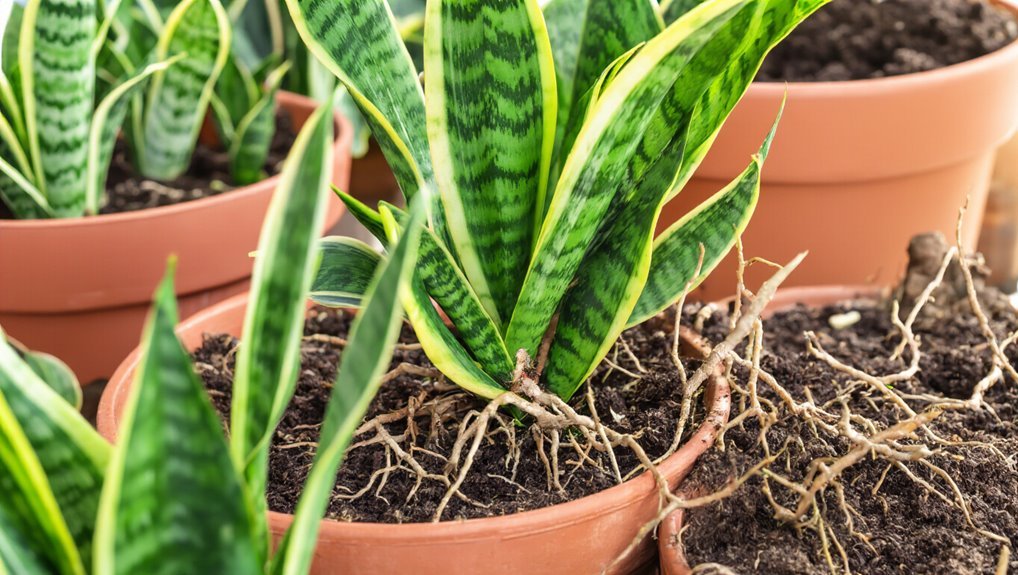
If you’re looking to expand your snake plant collection, propagation is an easy and rewarding process. You can try several techniques to create new plants from your existing ones:
- Leaf Cuttings: Cut a healthy leaf into sections, let them dry for a day, then place them in soil.
- Division: Carefully separate the offsets from the main plant and replant them in their own pots.
- Water Propagation: Place leaf cuttings in water until roots develop, then transfer to soil.
- Rhizome Cuttings: Cut sections of rhizomes and plant them directly in soil.
If you’re interested in growing other easy plants, consider starting your own herb garden kits with seeds and pots for a fresh and rewarding indoor gardening experience. Similar to snake plants, indoor herb gardens are popular for their ease of care and ability to thrive in various home environments.
Choose your preferred method and watch your collection flourish!
With a little patience, you’ll have a thriving snake plant family in no time.
Frequently Asked Questions
How Often Should I Fertilize My Snake Plant?
You should fertilize your snake plant every 4-6 weeks during the growing season, typically spring and summer. In fall and winter, cut back on fertilizing, as the plant’s growth slows down significantly.
Can Snake Plants Survive in Low Humidity?
Yes, snake plants can thrive in low humidity. They’re quite resilient and adapt well to various environments. Just make sure you provide adequate light and avoid overwatering to keep them healthy and growing strong.
What Temperature Range Is Ideal for Snake Plants?
Snake plants thrive best in temperatures between 60°F and 80°F (15°C to 27°C). They can tolerate cooler conditions but aren’t fond of frost, so keep them indoors during chilly months for optimal growth.
Are Snake Plants Toxic to Pets?
Yes, snake plants are toxic to pets. If your dog or cat ingests any part of the plant, it can cause nausea, vomiting, or diarrhea. Keep it out of reach to ensure their safety.
How Do I Know if My Snake Plant Is Stressed?
To know if your snake plant’s stressed, watch for yellowing leaves, drooping, or browning tips. Check for root rot by inspecting the roots and ensure it’s not exposed to extreme temperatures or direct sunlight.
Conclusion
In conclusion, caring for your snake plant is easier than you might think. Did you know these resilient plants can survive in low light and only need watering every 2-6 weeks? By choosing the right spot, watering wisely, using the right soil, managing pests, and exploring propagation, you can enjoy a thriving collection of these indestructible houseplants. With just a little effort, you’ll reap the rewards of their beauty and air-purifying benefits in your home!