To grow and maintain spider lilies, choose varieties like Lycoris radiata or Lycoris squamigera. Plant them in well-drained soil with a pH between 6.0 and 7.0, spacing bulbs 12-18 inches apart. Water deeply but infrequently, and use a balanced fertilizer during the growing season. Keep an eye out for pests like aphids and ensure good air circulation to prevent diseases. With proper care, you’ll enjoy stunning blooms in your garden, and there’s more to discover about their seasonal needs.
Key Takeaways
- Choose well-draining soil rich in organic matter, with a pH of 6.0 to 7.0 for optimal growth.
- Plant bulbs in spring or fall, 4-6 inches deep and 12-18 inches apart, with the pointed end facing up.
- Water deeply but infrequently, allowing soil to dry out between waterings, and reduce frequency during dormancy.
- Fertilize with a balanced, slow-release fertilizer during the growing season to promote healthy blooms and monitor plant response.
- Regularly inspect for pests like aphids and spider mites, treating with insecticidal soap or neem oil as needed.
Understanding Spider Lily Varieties
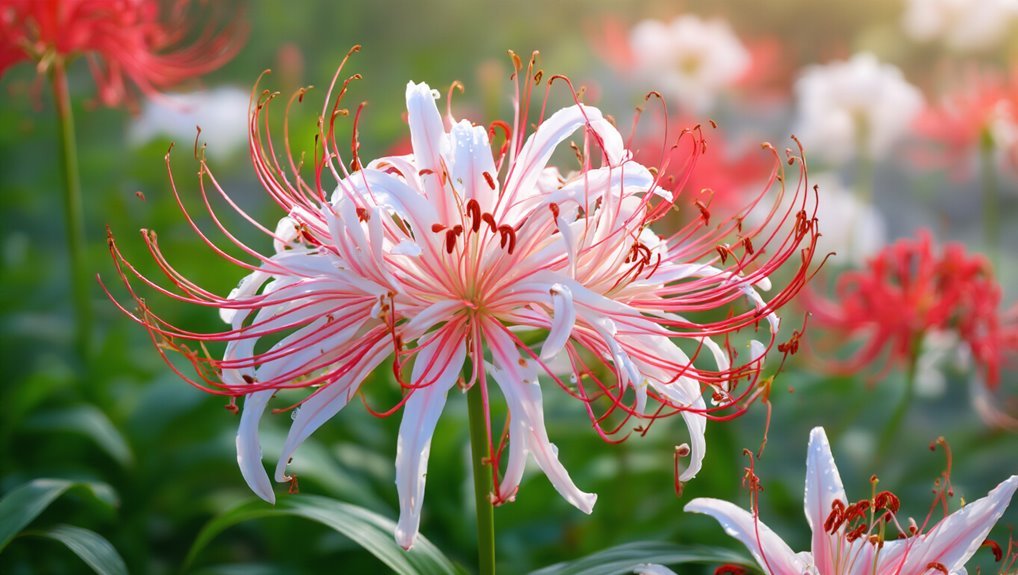
When you dive into the world of spider lilies, you’ll discover a stunning variety that captivates gardeners and flower enthusiasts alike.
These striking blooms come in several types, each with unique colors and characteristics. The most popular is the Lycoris radiata, known for its vibrant red petals and graceful, arching stems. Many gardeners find that plant food can enhance the vibrancy and health of their spider lilies, ensuring more robust growth and dazzling blooms.
Another favorite is the Lycoris squamigera, or surprise lily, which features soft pink blooms that emerge after the foliage dies back.
You might also encounter the Lycoris aurea, with its golden-yellow flowers that add a touch of warmth to any garden.
Each variety has its own charm, so exploring them can inspire your gardening creativity and help you choose the perfect spider lily for your landscape.
If you’re eager to deepen your knowledge on these and other unique flowers, consider exploring gardening books that provide essential reads for every gardening enthusiast.
Ideal Growing Conditions
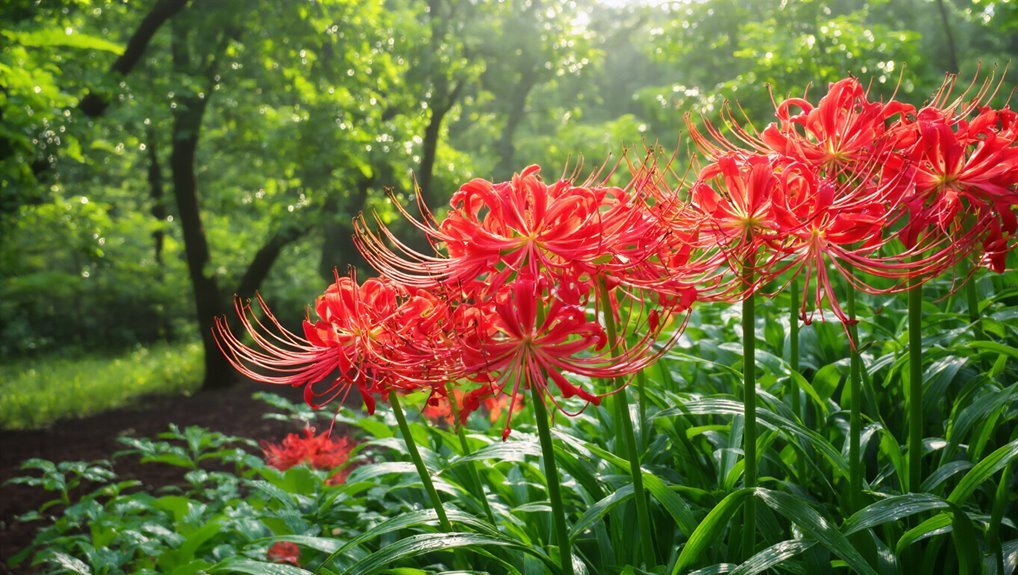
Choosing the right spider lily variety is just the first step; understanding their ideal growing conditions is key to thriving plants.
Spider lilies prefer well-draining soil rich in organic matter. Aim for a pH between 6.0 and 7.0 to keep them happy. They love bright, indirect sunlight but can tolerate partial shade. Avoid placing them in full sun, as this may scorch the leaves. Using mulch can help retain moisture and regulate soil temperature, creating a more stable environment for your spider lilies.
Water them consistently, allowing the soil to dry slightly between waterings. These plants thrive in warm temperatures, ideally between 65°F and 75°F. During dormancy, reduce watering, but don’t let the soil completely dry out.
For the healthiest spider lilies, start with high-quality garden soil to ensure your plants receive the nutrients and drainage they need to flourish.
Planting Spider Lilies
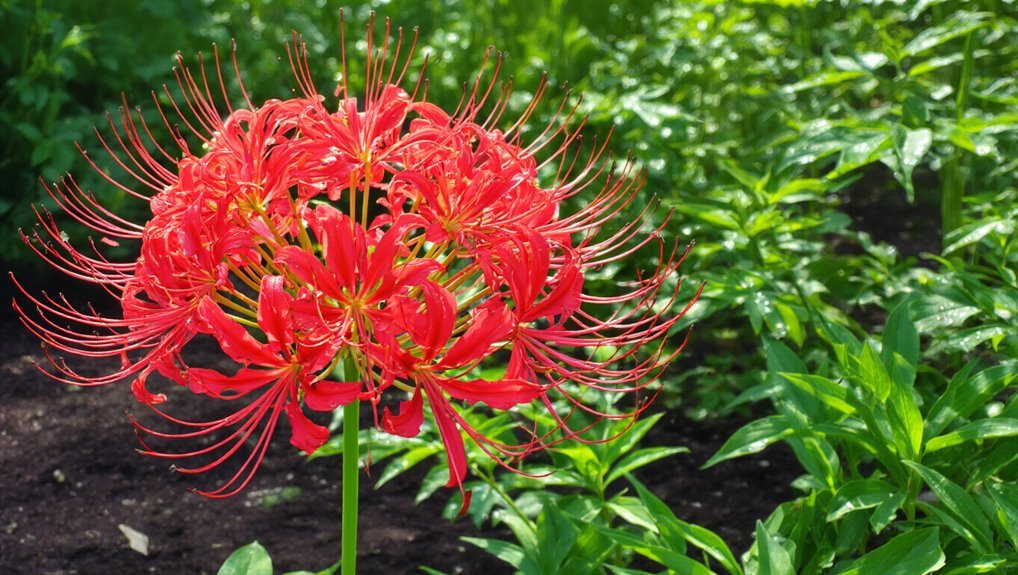
To ensure your spider lilies thrive, plant them in the spring or fall when temperatures are mild.
Choose a location with well-drained soil and partial to full sunlight.
Dig holes about 4-6 inches deep, spacing them 12-18 inches apart to allow for their spreading growth. For cleaner cuts when trimming or dividing bulbs, consider using pruning shears designed for gardening tasks.
Carefully place the bulbs with the pointed end facing up, then cover them with soil, gently tamping it down.
Water them lightly after planting to settle the soil.
Mulching around the base can help retain moisture and suppress weeds.
Monitor the area for any pests that may harm your lilies.
For best results, use a garden trowel when digging holes and planting bulbs, as it ensures precision and reduces root disturbance.
Watering and Fertilization
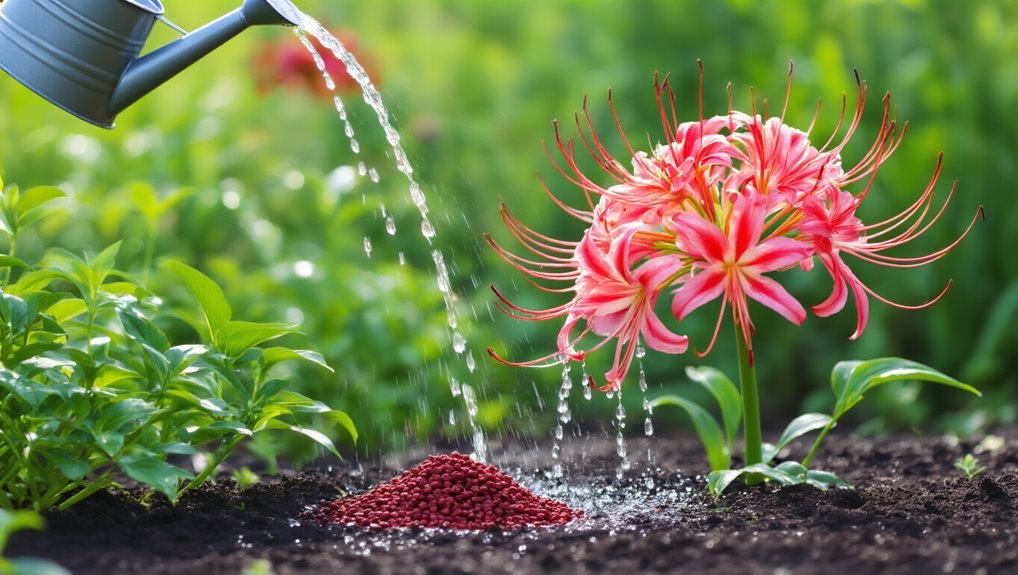
Although spider lilies are relatively low-maintenance, understanding their watering and fertilization needs is crucial for optimal growth.
These striking plants thrive with the right balance of moisture and nutrients. For best results, consider supplementing your soil with plant fertilizer tablets, which provide a convenient and effective source of nutrition for your garden.
- Water your spider lilies deeply but infrequently, allowing the soil to dry out between waterings.
- Fertilize them with a balanced, slow-release fertilizer during the growing season to promote vibrant blooms.
- Reduce watering in the dormant phase, as too much moisture can lead to root rot.
For gardeners looking to apply nutrients efficiently, using fertilizer spreaders can help distribute fertilizer evenly and support healthy spider lily growth.
Pest and Disease Management
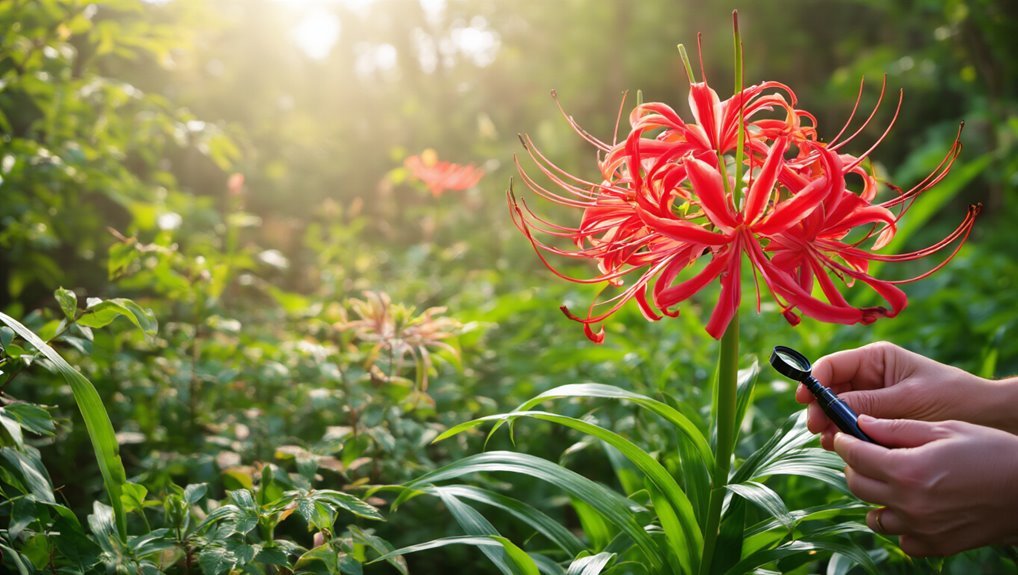
While spider lilies are generally resilient, keeping an eye out for pests and diseases can help you maintain their beauty and health.
Common pests like aphids and spider mites may appear, so inspect your plants regularly. If you spot these intruders, treat them promptly with insecticidal soap or neem oil. Using pest control products specifically formulated for garden use can further enhance your ability to manage unwanted insects effectively.
Fungal diseases can also pose a threat, especially in humid conditions. Ensure your plants have good air circulation and avoid overhead watering to reduce moisture around the leaves.
If you notice yellowing or wilting leaves, remove affected parts immediately to prevent the spread of disease.
For an extra layer of protection against pests, consider using garden pest traps such as sticky traps to monitor and reduce insect populations around your spider lilies.
Pruning and Deadheading
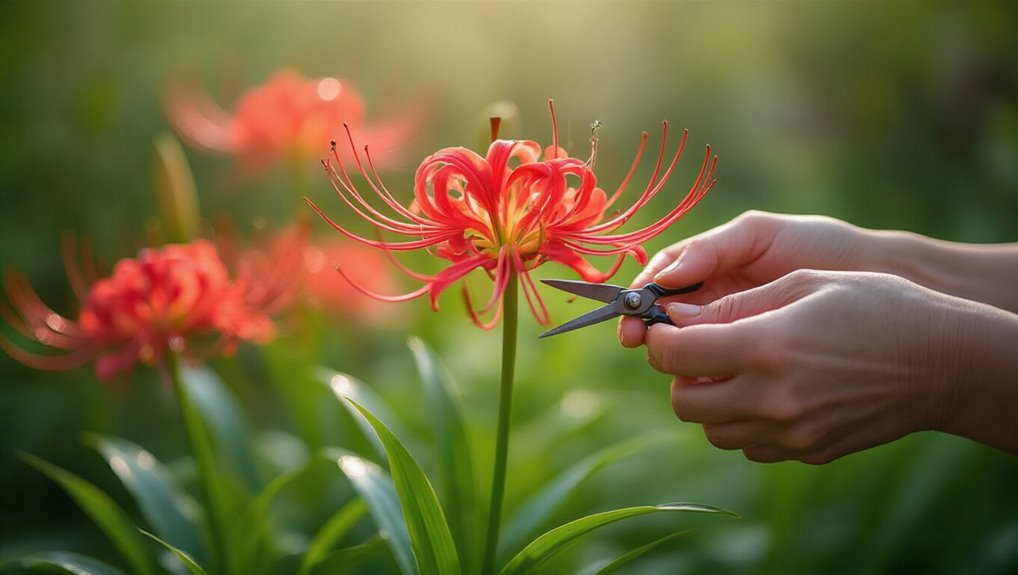
After ensuring your spider lilies are free from pests and diseases, it’s time to focus on pruning and deadheading. This process not only keeps your plants looking tidy but also encourages healthy growth and blooming. For best results, consider using a gardening tool set designed specifically for pruning and maintenance.
Here’s how to do it effectively:
- Remove spent blooms: Cut off faded flowers to redirect energy into new growth.
- Trim yellowing leaves: Snip away any leaves that have turned yellow or brown to maintain plant vigor.
- Shape the plant: Lightly trim back overly long stems to promote a balanced appearance.
Make sure to use clean, sharp tools to prevent any damage. Keeping your tools organized with Garden Tool Organizers can help ensure you always have the right equipment on hand for pruning and maintenance.
Propagation Techniques
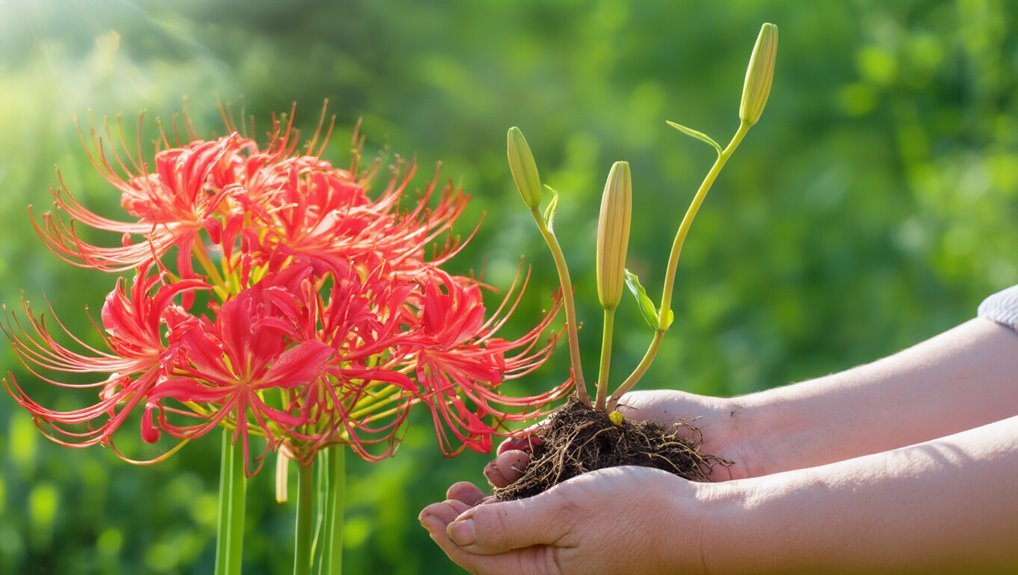
If you want to expand your collection of spider lilies, mastering propagation techniques is essential. One effective method is division.
In early spring or fall, carefully dig up mature bulbs and separate them, ensuring each piece has roots. Replant these sections in well-draining soil about 6 inches apart. For gardeners interested in edible landscapes, spider lilies can complement other edible flower seeds in your garden design.
Another option is seed propagation. After flowering, collect and dry the seeds before planting them in a seed tray or directly in the garden.
Keep the soil moist but not soggy, and provide indirect sunlight. It might take a while for seedlings to emerge, but with patience, you’ll see new growth.
For the best results when starting from seed, consider using seed starting kits to give your spider lily seeds an optimal environment for germination.
Whatever method you choose, ensure you give your spider lilies the attention they need to thrive in their new spots.
Seasonal Care for Spider Lilies
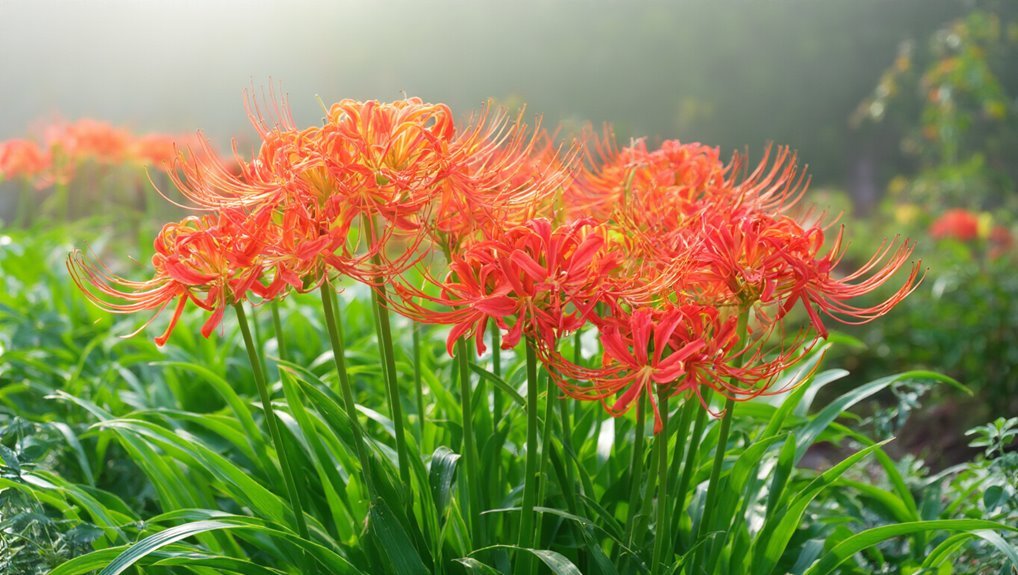
Once you’ve successfully propagated your spider lilies, it’s important to focus on their seasonal care to ensure they thrive.
During spring and summer, provide them with plenty of sunlight and regular watering. As temperatures drop in fall and winter, you’ll need to adjust your care routine. For gardeners interested in compost bins, using compost can further enrich the soil and support healthy spider lily growth.
Here are three key seasonal care tips:
- Watering: Cut back on watering in the colder months to prevent root rot.
- Fertilizing: Use a balanced fertilizer during the growing season to promote healthy blooms.
- Mulching: Apply mulch in winter to protect the bulbs from frost and maintain soil moisture.
You can improve your garden’s health and appearance by using organic mulching materials such as straw, which help retain moisture and regulate soil temperature around your spider lilies.
Frequently Asked Questions
Are Spider Lilies Toxic to Pets or Humans?
Yes, spider lilies are toxic to both pets and humans. If ingested, they can cause symptoms like vomiting and diarrhea. It’s best to keep them out of reach to ensure everyone’s safety.
How Long Does It Take for Spider Lilies to Bloom?
Waiting for spider lilies to bloom feels like anticipating a sunrise. Generally, you’ll see those stunning flowers emerge within three to five weeks after planting, bringing vibrant color and excitement to your garden.
Can Spider Lilies Be Grown Indoors?
Yes, you can grow spider lilies indoors, but they need bright light and well-draining soil. Make sure to water them regularly, and they’ll reward you with stunning blooms when conditions are just right.
Do Spider Lilies Attract Pollinators?
Ever wondered if your garden can buzz with life? Yes, spider lilies do attract pollinators! Their vibrant blooms draw in bees and butterflies, creating a lively, colorful atmosphere that enhances your outdoor space beautifully.
What Is the Best Time to Plant Spider Lilies?
The best time to plant spider lilies is in the spring or fall. You’ll ensure healthier growth by choosing these seasons, letting the bulbs establish before extreme weather conditions challenge their development. Happy planting!
Conclusion
In the world of gardening, nurturing spider lilies can feel like a delightful dance with nature. By providing the right conditions and a little TLC, you’ll witness these exotic blooms flourish beautifully. Remember, even the most passionate gardener faces a few hiccups along the way. Embrace the journey, and don’t shy away from learning through the occasional slip-up. With patience and care, your spider lilies will undoubtedly reward you with a stunning display that brightens your garden.