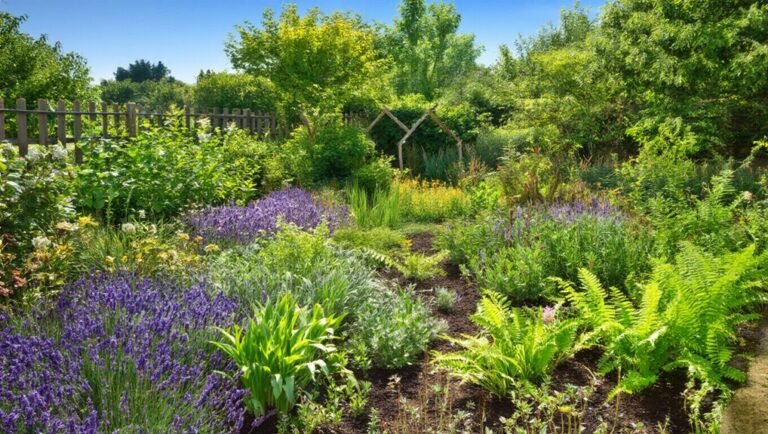
To edge your flower bed like a pro, start by deciding on a natural shape. Use a sharp spade to outline it, digging 3 to 4 inches deep to create clear boundaries. Remove any grass and weeds, then add mulch for aesthetics and weed control. Choose edging material that fits your style—metal, wood, or stone. Regular maintenance is key, so keep an eye on overgrowth. You’ll find even more tips to achieve stunning results ahead.
Key Takeaways
- Choose a natural, flowing shape for your flower bed to enhance its visual appeal and maintain a professional look.
- Use a sharp spade or edging tool to outline and dig 3 to 4 inches deep for a clean separation between flower beds and grass.
- Remove all grass and weeds from the area to prevent encroachment and ensure a tidy appearance.
- Add mulch or decorative stones for aesthetics, moisture retention, and to suppress future weed growth.
- Regularly maintain the edges by trimming overgrowth and refreshing mulch to keep the bed looking professional and well-kept.
Why Edging Your Flower Bed Matters
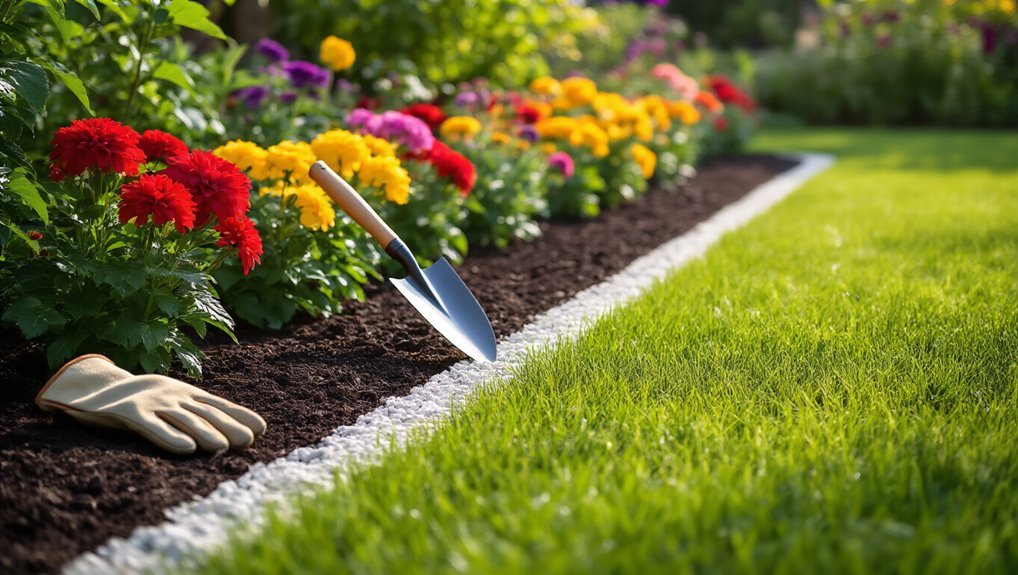
Edging your flower bed matters because it creates a clear boundary that enhances both the beauty and health of your garden.
By defining the space, you not only give your garden a polished look but also prevent grass and weeds from encroaching on your flowers. This separation helps maintain soil moisture, allowing your plants to thrive without competition for nutrients.
An edged flower bed also facilitates easier maintenance, making it simpler to mow around and tidy up. Plus, it can add structure and visual interest, drawing the eye to your blooms.
Ultimately, proper edging is crucial for an attractive, healthy garden that showcases your hard work and dedication. You’ll appreciate the difference in both aesthetics and plant health.
How to Edge Your Flower Bed: A Step-by-Step Guide
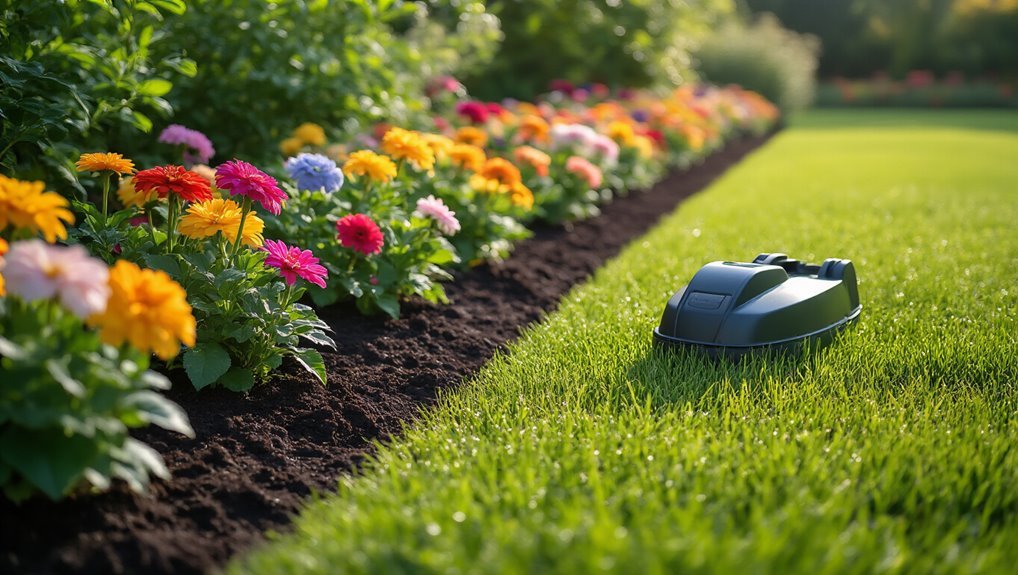
Creating a beautifully edged flower bed can transform your garden in just a few simple steps.
First, decide on the shape of your flower bed; curved edges often look more natural. Next, use a garden spade or edger to outline your desired shape. Dig about 3 to 4 inches deep to create a clear separation between your flowers and the lawn.
Remove any grass or weeds from the area. After that, you can add mulch or decorative stones to enhance the look and suppress weeds.
Finally, maintain your edges regularly by trimming back any encroaching grass or plants. With consistent care, your flower bed will remain tidy and visually appealing, showcasing your hard work beautifully.
Essential Tools for Flower Bed Edging
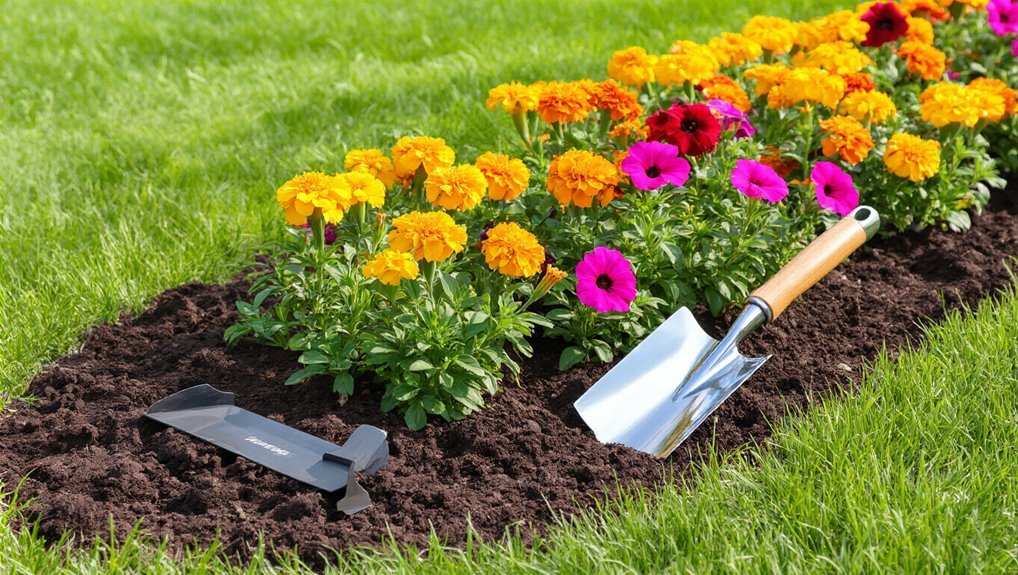
To achieve a neat flower bed edge, you’ll need a few essential tools that make the task easier and more efficient. First, grab a sharp spade or edging tool; these will help you create a clean line.
A garden rake is also handy for leveling soil and removing debris. Don’t forget gloves to protect your hands while working.
A garden hose can be useful for marking your desired edge, allowing you to visualize the curve or straight line before you dig.
Finally, a wheelbarrow will help you transport soil and mulch as you shape your flower bed.
With these tools in hand, you’ll be well-equipped to edge your flower bed like a pro!
Choosing the Right Edging Technique for Your Garden
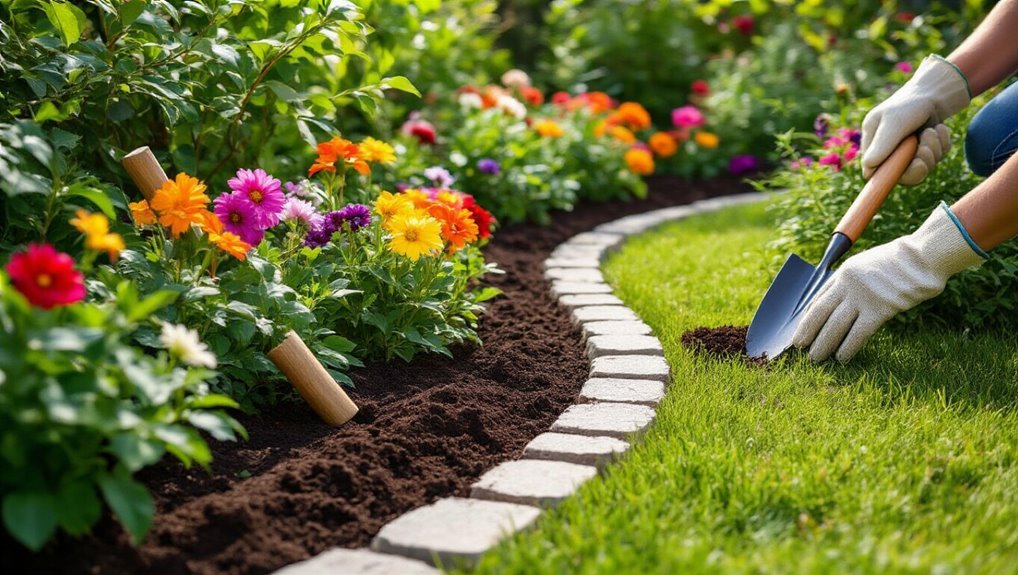
When it comes to choosing the right edging technique for your garden, consider the overall style and purpose of your flower bed. If you want a clean, modern look, metal or plastic edging might be your best bet.
For a more natural appearance, stone or wood can blend beautifully with your plants.
Think about functionality too—if you need to contain aggressive roots or prevent soil erosion, sturdy materials are essential. If your garden gets a lot of foot traffic, consider deeper, more durable options.
Ultimately, your choice should reflect your aesthetic preferences while also serving practical needs. Take your time, visualize your space, and select an edging technique that enhances both the beauty and functionality of your garden.
Tips for Maintaining Your Edged Flower Bed
Once you’ve chosen the right edging technique for your flower bed, maintaining it becomes key to keeping your garden looking sharp.
Regularly check your edges for any overgrowth or shifting. Trim back any grass or weeds that encroach on your flower bed to keep a clean line.
If you notice any erosion or settling, add soil or mulch to maintain the height of your edgings. Watering your plants can also help keep the soil intact and reduce weed growth.
Additionally, consider refreshing your mulch every few months to enhance both appearance and weed control.
Lastly, if you notice any damage to your edging material, address it promptly to prevent further issues.
These steps will ensure your flower bed remains vibrant and well-defined.
Top 5 Mistakes to Avoid When Edging Your Flower Bed
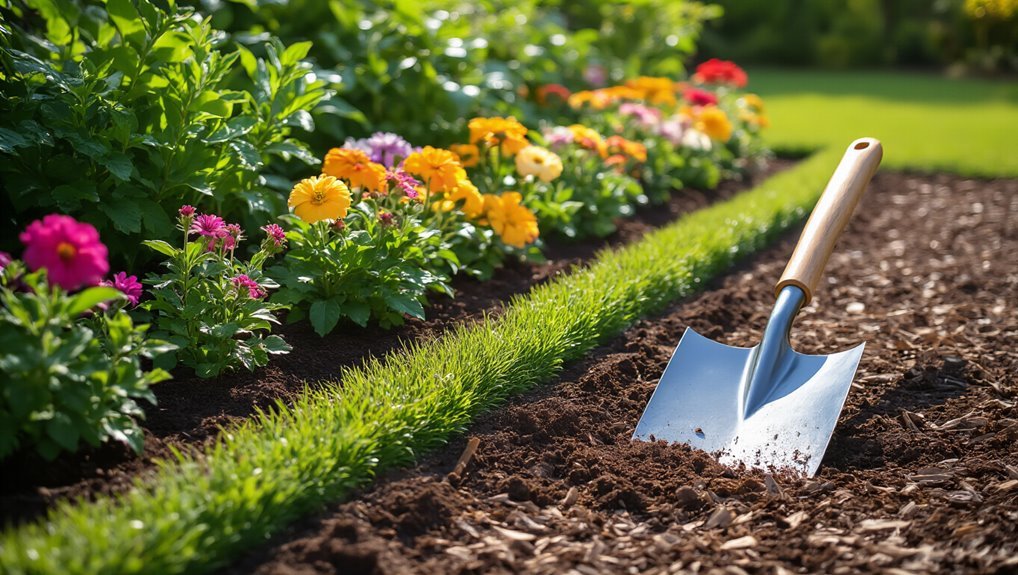
Edging your flower bed can elevate your garden’s appearance, but several common mistakes can undermine your efforts.
First, avoid uneven lines; they can make your garden look sloppy. Use a garden hose to create smooth curves.
Second, don’t neglect depth; shallow edges won’t prevent weeds from encroaching.
Third, skip the wrong tools; using a spade instead of an edger can lead to jagged edges.
Fourth, ignore drainage issues; poor drainage can damage your plants.
Finally, don’t forget maintenance; overgrown grass or weeds can quickly ruin your hard work.
Creative Features to Enhance Your Edged Flower Bed
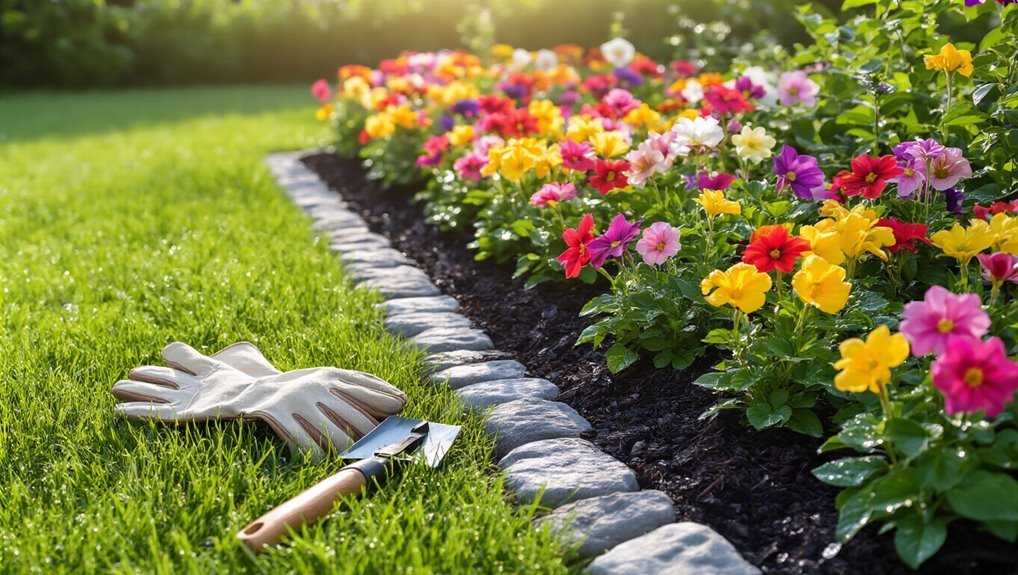
Creating a beautifully edged flower bed is just the beginning of enhancing your garden’s charm. To elevate your space, consider adding decorative stones or bricks along the edge. This not only defines the area but also adds texture.
Incorporating solar-powered lights can illuminate your flowers at night, creating a magical atmosphere. You might also think about planting low-growing herbs or colorful annuals at the border for added visual interest.
A small garden statue or birdbath can serve as a focal point, drawing the eye. Finally, using mulch or pine needles within the bed keeps weeds at bay while providing a polished look.
These creative features will make your flower bed truly stand out and reflect your personal style.
Troubleshooting Common Edging Problems?
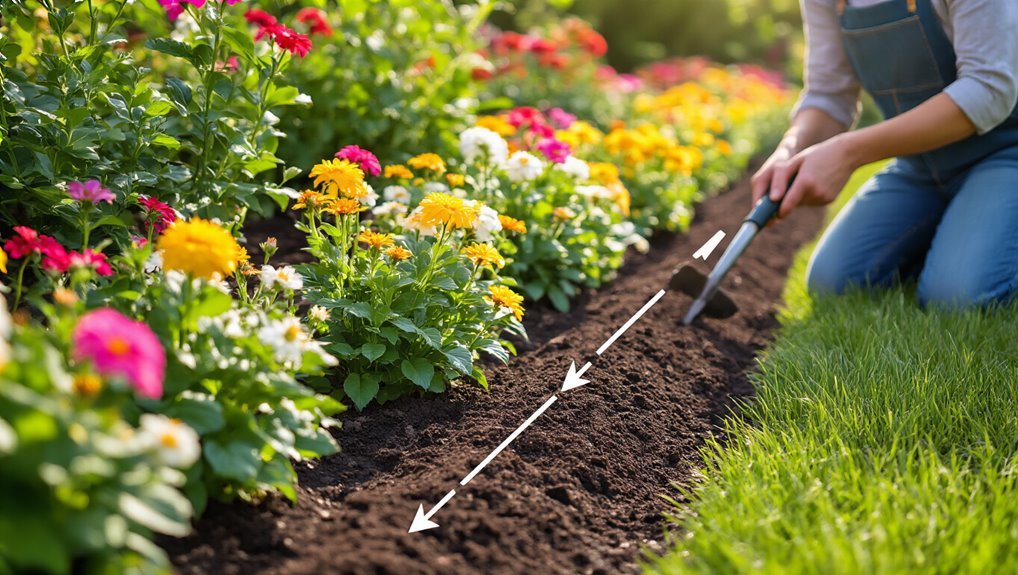
When you’re working on your flower bed, you might encounter a few common edging problems that can disrupt your garden’s aesthetic.
If your edges seem uneven, try using a spade to redefine them. Just make sure to cut straight down for a clean line.
For grass encroaching into your flower bed, a sharp garden knife can help you maintain that crisp separation.
If weeds pop up, consider applying mulch; it’ll not only suppress them but also enhance the look.
If your edging material shifts, re-secure it by adding stakes or a small border of soil.
Finally, if your flower bed looks cluttered, remove any overcrowded plants to create a balanced, inviting space.
Happy gardening!
Frequently Asked Questions
How Often Should I Edge My Flower Bed?
You should edge your flower bed every few weeks during the growing season. This keeps the edges neat and prevents grass and weeds from encroaching. Regular maintenance helps your flowers thrive and enhances your garden’s appearance.
Can I Edge Flower Beds During Winter?
You might think winter’s too harsh for edging, but you can absolutely edge flower beds during this season. Just ensure the ground isn’t frozen, and you’ll keep your garden looking neat and well-defined.
What Plants Work Best Near Edged Flower Beds?
You’ll want to choose sturdy perennials like lavender, daylilies, or sedum near edged flower beds. They thrive in various conditions, add beauty, and create a vibrant contrast against the defined edges you’ve established.
How Deep Should I Edge My Flower Bed?
“Good fences make good neighbors.” Aim for a depth of 3 to 4 inches when edging your flower bed. This keeps weeds at bay and helps define your space, giving your garden a polished look.
Is Edging Necessary for All Flower Beds?
Edging isn’t strictly necessary for all flower beds, but it helps define boundaries, prevents grass encroachment, and enhances aesthetics. If you desire a clean look, it’s definitely worth considering for your garden.
Conclusion
In conclusion, edging your flower bed can truly elevate your garden’s appeal, making it a standout feature. With the right tools and techniques, you’ll find that “a stitch in time saves nine”—taking the time to edge properly now will save you effort later on. Stay consistent with maintenance, and your garden will flourish beautifully. So grab those tools and get started—you’ve got this!