If your tomato plants are flowering, it means they’re signaling readiness for fruit production. This happens when they receive enough sunlight, warmth, and optimal moisture. However, stress from uneven watering or nutrient imbalances can also trigger flowers without fruit. To support healthy growth, keep the soil consistently moist, provide balanced nutrients, and ensure plenty of sunlight. If you’re noticing any stress signs or want tips on encouraging fruit growth, there’s more you can learn about the best practices for your plants.
Key Takeaways
- Tomato plants flower due to optimal conditions like warm temperatures, sunlight, and consistent watering, signaling potential fruit development.
- Stress factors, such as inconsistent watering or nutrient imbalances, can trigger flowering without producing fruit.
- Maintain at least six hours of sunlight daily and ensure consistent soil moisture for healthy flowering.
- Use a balanced fertilizer high in phosphorus to support flower development while avoiding over-fertilization.
- After flowering, gently shake plants to aid pollination and monitor for pests or diseases to promote fruit growth.
The Importance of Flowering in Tomato Plants
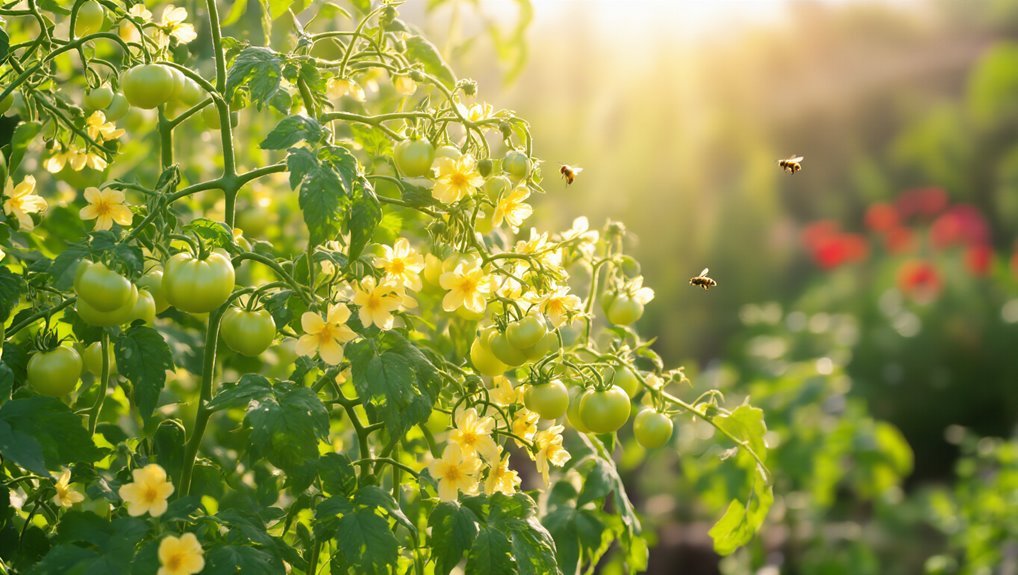
Flowering in tomato plants is crucial because it directly impacts your harvest. When your plants produce flowers, they’re setting the stage for fruit development. Each flower represents the potential for a juicy tomato, so it’s vital to encourage this process.
Healthy flowers attract pollinators, ensuring successful fertilization and fruit set. Additionally, the timing of flowering affects your overall yield; if flowers appear too early or late, it can lead to reduced harvests.
By understanding the importance of flowering, you can make informed decisions about care, such as watering and fertilization, to maximize your plants’ potential.
Why Are Your Tomato Plants Flowering? Common Causes and Solutions?
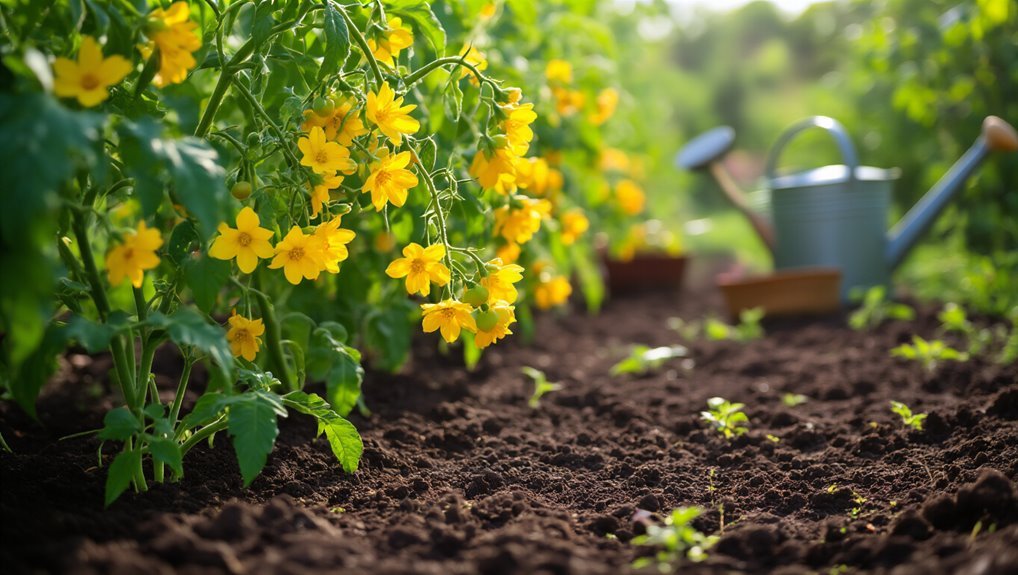
Seeing your tomato plants flower can be exciting, but it also raises questions about why they’re doing so. Several factors contribute to this flowering stage.
First, it’s often a response to optimal conditions such as warm temperatures and adequate sunlight. If your plants are getting at least six hours of direct sunlight daily, they’re more likely to produce flowers.
However, stress factors like inconsistent watering or nutrient imbalances can also trigger flowering. If you notice flowers but no fruit, it might be time to check your watering routine and soil nutrients.
Ensure you’re providing consistent moisture and a balanced fertilizer to support healthy growth. Addressing these issues can help your tomato plants flourish and set fruit successfully.
Supporting Healthy Growth During Flowering
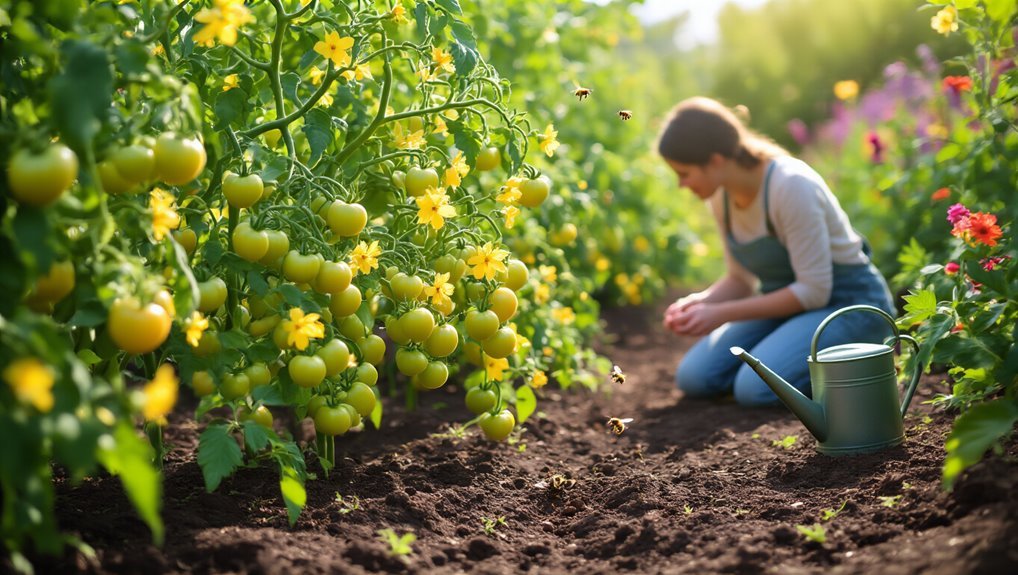
To ensure your tomato plants thrive during their flowering stage, you’ll want to focus on providing the right care.
Start by maintaining consistent moisture in the soil; water them deeply but avoid waterlogging. A balanced fertilizer will support flower development—look for one high in phosphorus.
Additionally, ensure your plants receive at least six hours of sunlight each day, as this boosts photosynthesis and energy for blooming.
Pruning excess foliage can improve air circulation and direct more energy to flowers.
Also, consider staking or caging your plants to keep them upright, preventing breakage from wind or fruit weight.
With these steps, you’ll encourage healthy growth and a bountiful harvest of tomatoes.
Signs of Stress and Nutrient Deficiencies in Tomato Plants
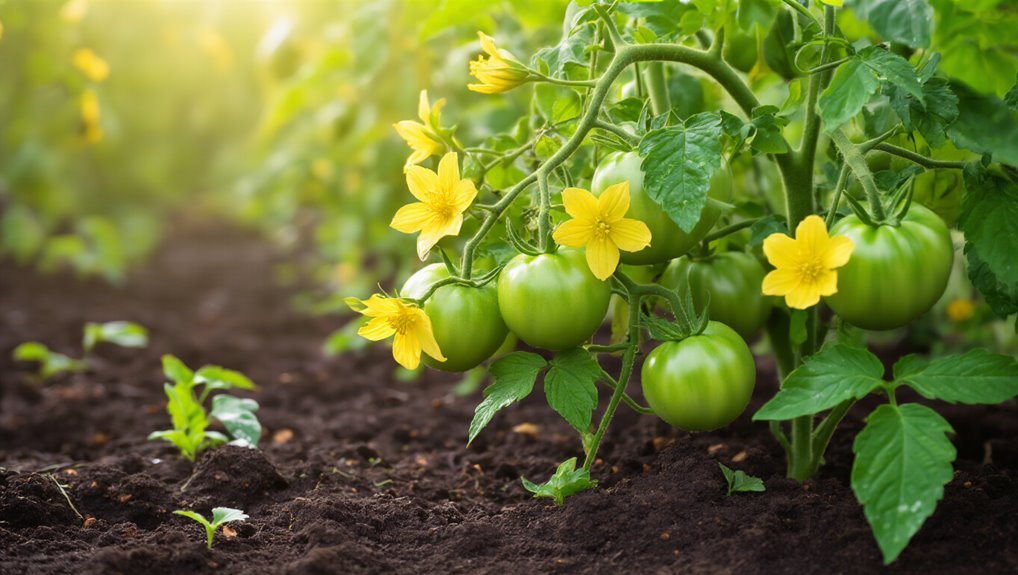
While nurturing your tomato plants, it’s crucial to recognize signs of stress and nutrient deficiencies that could hinder their growth.
Yellowing leaves often signal nitrogen deficiency, while purple tinges may indicate phosphorus issues. If the lower leaves start wilting or dropping, that could mean your plants are stressed, possibly from underwatering or overwatering.
Check for brown spots or edges on leaves, as these can suggest potassium deficiency or fungal infections. Stunted growth or poor fruit development can also point to an imbalance in nutrients.
Top Practices for Ensuring Healthy Tomato Growth
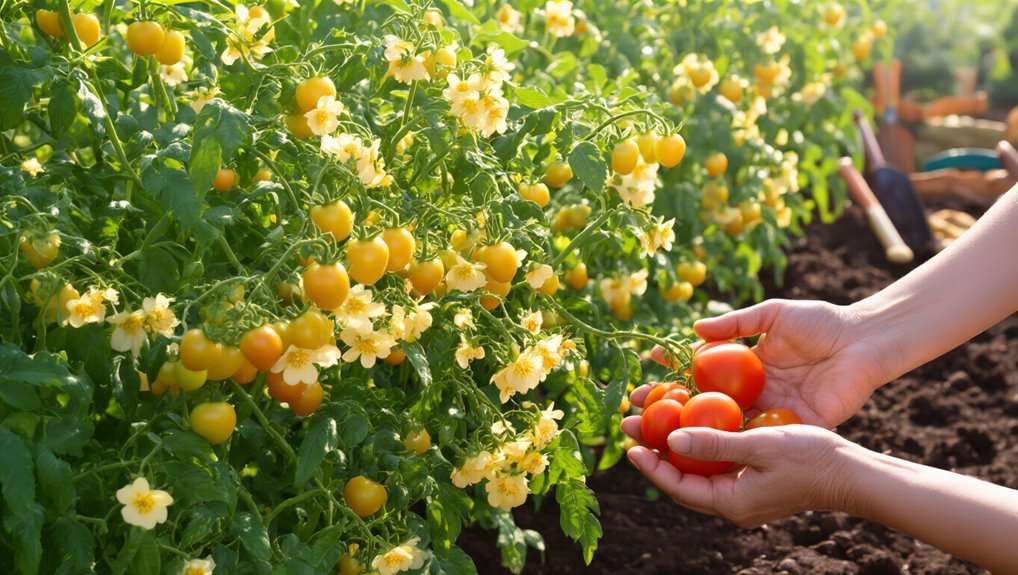
Ensuring your tomato plants thrive requires a combination of proper care and attention to their specific needs.
Start by selecting a well-draining soil rich in organic matter. Water your plants consistently, keeping the soil evenly moist but not soggy.
Fertilize with a balanced tomato-specific fertilizer every few weeks to provide essential nutrients. Prune any excess foliage to improve airflow and reduce disease risk.
Make sure your plants receive plenty of sunlight—at least six to eight hours a day. Support your tomato plants with stakes or cages to promote upright growth.
Regularly inspect for pests and diseases, addressing any issues promptly. With these practices, you’ll create a healthy environment for your tomatoes to flourish.
Encouraging Fruit Growth After Flowering
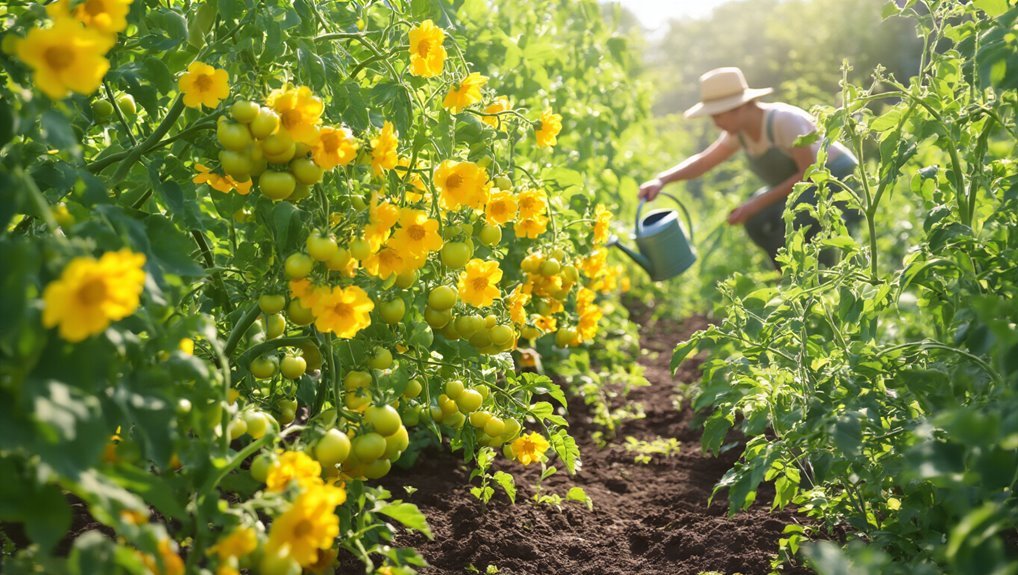
After your tomato plants have flowered, the next step is to encourage those blooms to set fruit. Start by ensuring your plants receive adequate sunlight—at least six to eight hours daily. This energy helps the flowers transition into fruit.
Regular watering is crucial, too; keep the soil consistently moist but not waterlogged. Consider using a balanced fertilizer to provide essential nutrients, but avoid over-fertilizing, as it can lead to excessive leaf growth at the expense of fruit.
Additionally, gently shaking or tapping the plant can help with pollination, especially in a garden without many pollinators. Monitor for pests and diseases, as they can hinder fruit development.
With these steps, you’ll increase your chances of a fruitful harvest!
Handling Common Issues With Flowering Tomatoes
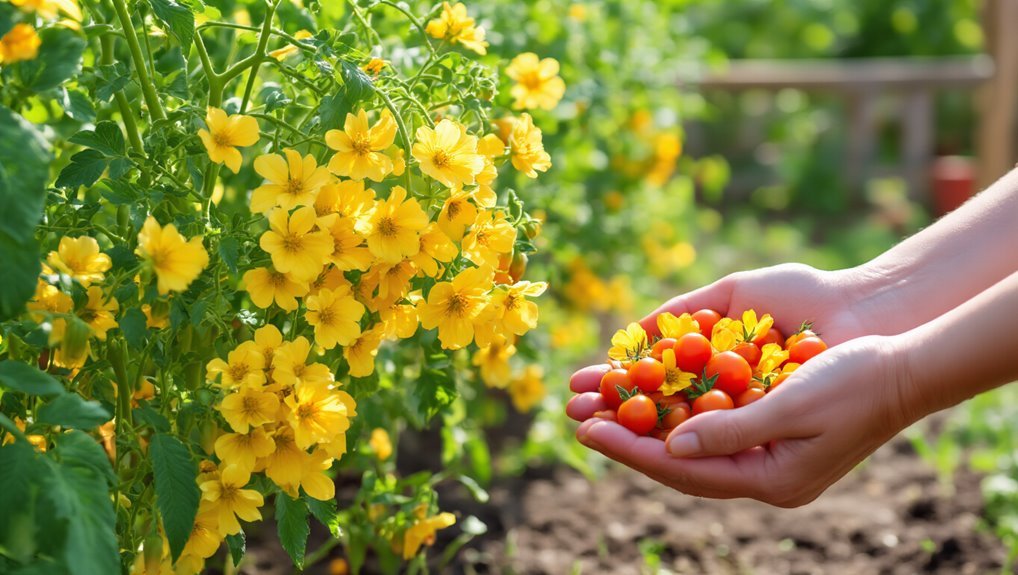
When you notice your tomato plants struggling to flower, it’s essential to identify and address common issues promptly.
One major factor could be inadequate sunlight; ensure your plants receive at least six to eight hours of direct light daily.
Temperature fluctuations can also hinder flowering—ideally, day temperatures should be between 70°F and 85°F, with nights around 55°F to 70°F.
Over-fertilizing, particularly with nitrogen, can lead to lush foliage but few flowers, so balance your nutrients wisely.
Watering inconsistently can stress plants, so aim for even moisture levels.
Lastly, check for pests or diseases that could be affecting your plants.
When to Get Help for Your Tomato Plants
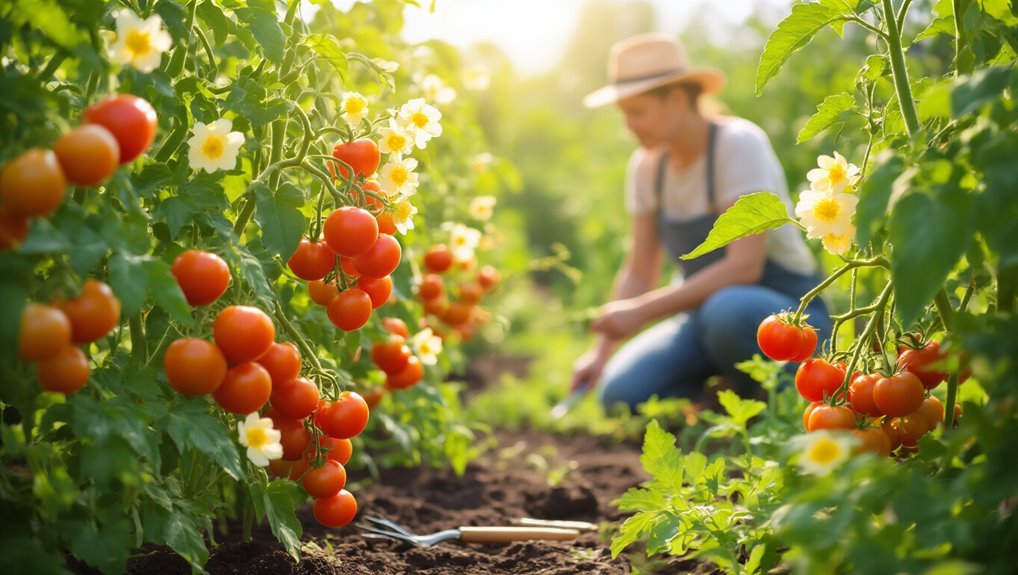
If you notice your tomato plants showing signs of distress despite your best efforts, it might be time to seek help.
Here are three indicators that you should consider reaching out for assistance:
1. Persistent Pests: If you see repeated pest issues that you can’t control, like aphids or spider mites, it’s time to consult an expert.
2. Nutrient Deficiencies: Yellowing leaves or stunted growth can signal Nutrient Deficiencies.
A professional can provide tailored advice on soil health.
3. Fungal Infections: If you notice unusual spots or wilting that doesn’t improve, it may indicate a fungal infection needing specialized treatment.
Don’t hesitate to ask for help—it can save your plants and lead to a bountiful harvest!
Frequently Asked Questions
Can I Grow Tomatoes Indoors Successfully?
Yes, you can grow tomatoes indoors successfully! Just ensure they get plenty of light, maintain proper temperatures, and use well-draining soil. With the right care, you’ll enjoy fresh tomatoes right from your home.
What Varieties of Tomatoes Are Best for Beginners?
For beginners, cherry tomatoes like ‘Sweet 100’ or ‘Sun Gold’ are great choices. They’re easy to grow, productive, and delicious. Also, consider ‘Roma’ for sauces. You’ll love the results with minimal effort!
How Often Should I Water My Tomato Plants?
You should water your tomato plants deeply once a week, ensuring the soil stays consistently moist. During hot spells, check daily and adjust as needed. Avoid overwatering to prevent root rot and other issues.
Can Tomatoes Be Grown in Containers?
Yes, you can grow tomatoes in containers! Just choose a large enough pot, use quality potting soil, and ensure they get plenty of sunlight. Regular watering and feeding will keep your plants thriving.
What Are the Signs of Overwatering in Tomato Plants?
If your tomato plants seem to be drowning in attention, look for yellowing leaves, wilting stems, or a mushy texture. These signs whisper that they’re overwhelmed; it’s time to ease up on the watering.
Conclusion
In conclusion, thriving tomato plants can produce up to 900 tomatoes in a single season! By understanding the flowering process and addressing any issues, you’ll set the stage for a bountiful harvest. Remember, supporting your plants during this critical phase is key. Keep an eye out for stress signs and follow best practices to encourage fruit growth. If you encounter persistent problems, don’t hesitate to seek help—your delicious tomatoes depend on it!