To grow jasmine flowers easily, choose the right variety for your climate and space. Prepare well-draining soil and plant seeds or cuttings after ensuring proper pH. Give your jasmine enough sunlight and water regularly, keeping the soil moist but not soggy. Fertilize with a balanced formula during growth and prune to promote blooms. Keep an eye out for pests and diseases. With these steps, you’ll enjoy a beautiful jasmine display—just wait till you discover more tips!
Key Takeaways
- Select the right jasmine variety based on your climate, space, and desired fragrance for optimal growth.
- Prepare well-draining soil with organic matter, ensuring a pH between 6.0 and 7.0 for healthy roots.
- Water regularly, keeping the soil moist but not soggy, and apply a balanced fertilizer every 4 to 6 weeks during the growing season.
- Monitor for pests and diseases, addressing issues promptly to maintain plant health and vitality.
- Prune regularly to promote blooming and consider positioning jasmine near entryways for fragrance enjoyment.
Choosing the Right Jasmine Variety
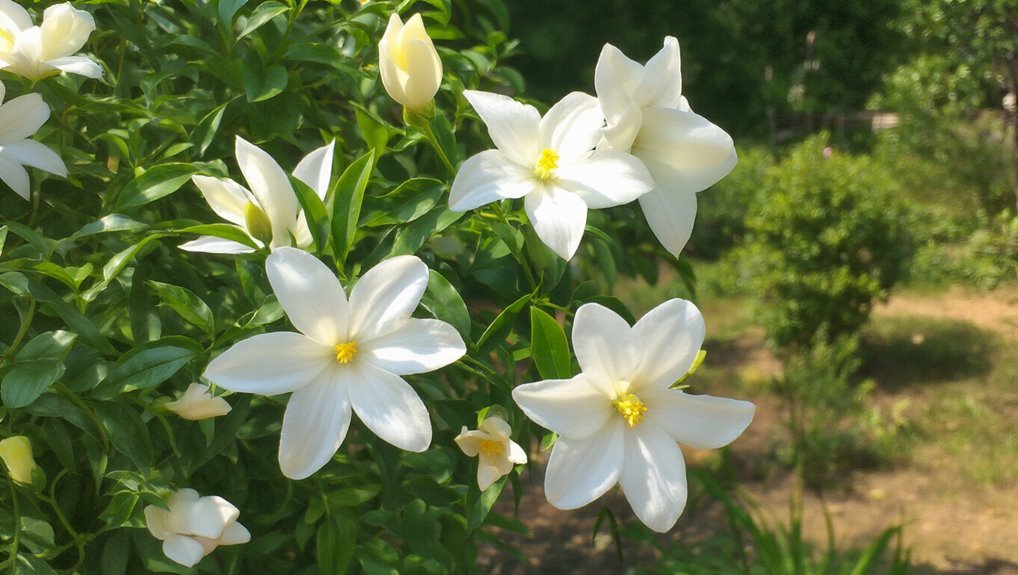
When choosing the right jasmine variety, how do you decide which one suits your garden best? Start by considering your climate and space. Some varieties thrive in tropical areas, while others prefer temperate conditions.
Think about the growth habit, too—do you want a climbing variety like Arabian jasmine or a bushy one like Jasminum polyanthum? Many gardeners find that jasmine performs especially well in self-watering planters, which help maintain consistent soil moisture and reduce maintenance.
Next, consider the fragrance. Some jasmines emit a strong scent, perfect for a fragrant garden, while others have a more subtle aroma.
If you’re looking for blooms throughout the year, choose varieties that flower in multiple seasons.
Finally, check the care requirements of each variety. Knowing how much sunlight and water they need will help you make an informed decision that aligns with your gardening style.
For the healthiest jasmine plants, make sure to plant them in the best garden soil to give their roots the nutrients and drainage they require.
Understanding Jasmine’s Growing Conditions
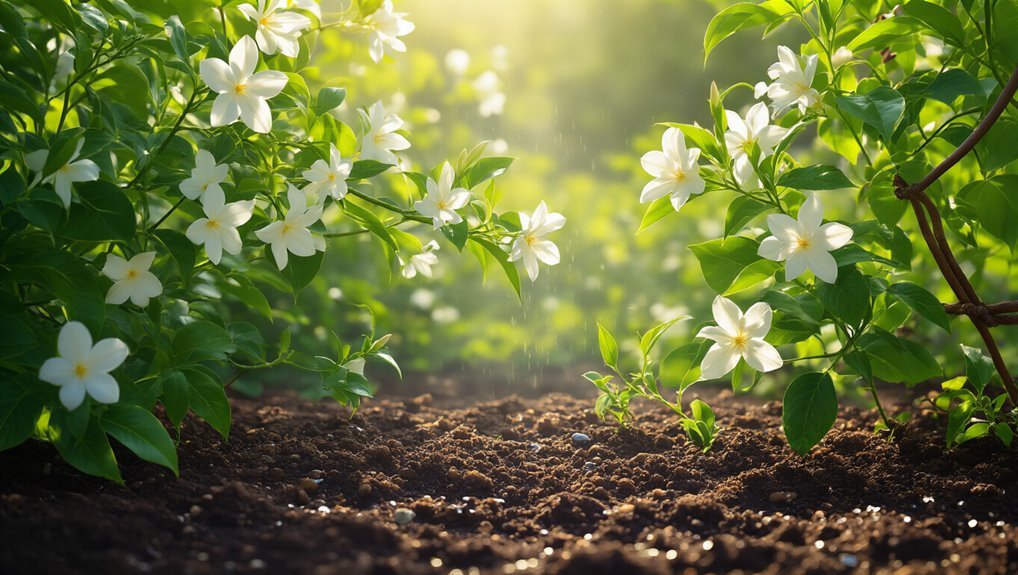
To successfully grow jasmine flowers, you need to grasp their specific growing conditions, as these plants thrive in well-drained soil and plenty of sunlight.
Ideally, jasmine loves to bask in full sun for at least six hours each day. If you’re in a hotter climate, some afternoon shade can help prevent stress. Many gardeners recommend adding a layer of organic mulching materials to the soil surface to further improve water retention and soil health.
Temperature is another crucial factor; jasmine prefers warmth, thriving in temperatures between 60°F and 75°F. While they’re relatively tolerant, extreme cold or frost can damage them.
Humidity also plays a role—jasmine enjoys a humid environment, so consider misting the leaves or placing a humidifier nearby.
In addition, using mulch can help retain soil moisture, regulate temperature, and suppress weeds, all of which contribute to healthier jasmine growth.
Preparing the Soil for Planting
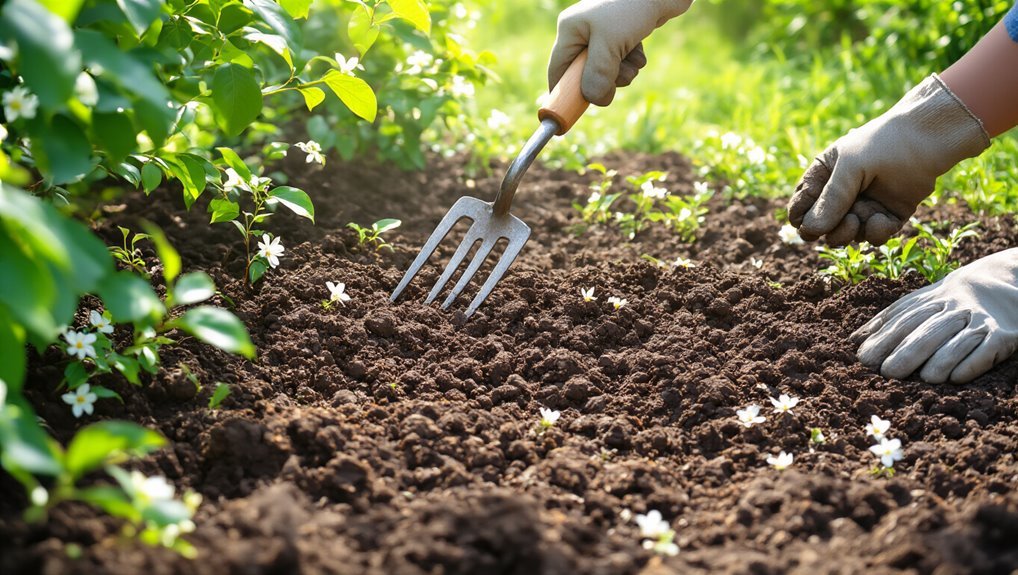
Before planting jasmine, it’s essential to prepare the soil properly to ensure healthy growth.
Start by choosing a location with well-draining soil, as jasmine thrives in light, loamy conditions. Test the soil pH; ideally, it should be between 6.0 and 7.0. If your soil is too acidic or alkaline, you can amend it with lime or sulfur, respectively. For gardeners interested in Compost Tumblers, these tools can make producing rich compost for your soil much easier.
Next, clear the area of weeds, rocks, and debris. Loosen the soil to a depth of about 12 inches using a garden fork or tiller, which helps root penetration.
Incorporate organic matter, like compost or well-rotted manure, to enrich the soil and improve drainage. Using compost bins can provide a steady supply of nutrient-rich compost for your garden.
Once you’ve prepared the soil, you’re ready for the next steps in planting your jasmine.
Planting Jasmine Seeds or Cuttings
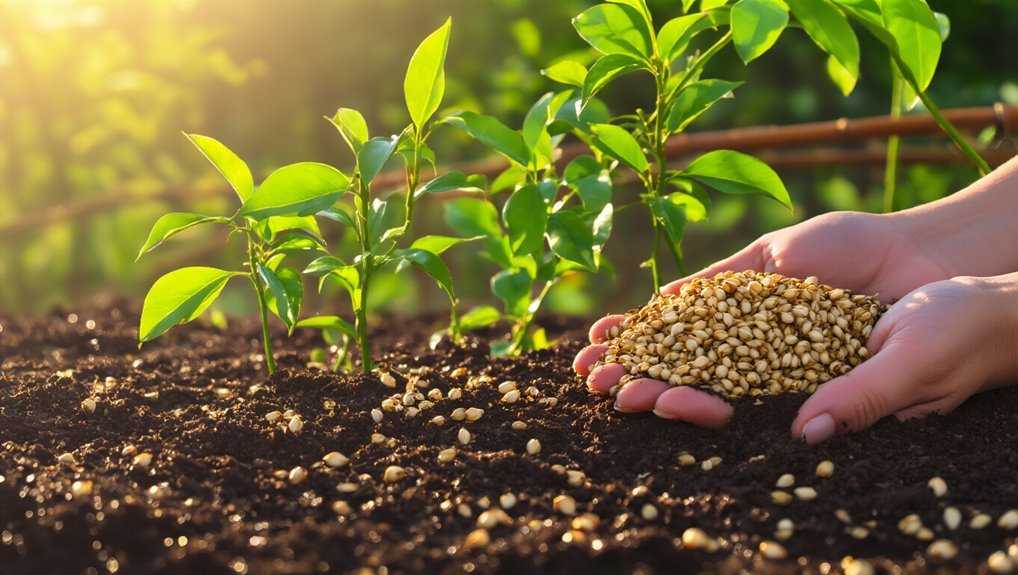
Having prepared the soil, you can now plant jasmine seeds or cuttings to kickstart your garden.
If you’re using seeds, scatter them evenly across the soil surface, then cover them lightly with a thin layer of soil. Gently press down to ensure good contact. For those starting out, you might benefit from herb garden kits that include seeds and pots, making the process more convenient and organized.
If you prefer cuttings, choose healthy, green stems about 4-6 inches long. Remove the lower leaves and dip the cut end in rooting hormone to boost growth.
Make small holes in the soil, place the cuttings in, and firm the soil around them. Water lightly to settle the soil.
Whether seeds or cuttings, ensure they’re spaced adequately to allow for growth. With proper care, you’ll soon see your jasmine thriving!
To make the process even easier, consider starting your seeds indoors with an essential seed starting kit, which provides optimal conditions for germination and early growth.
Watering and Fertilizing Jasmine Plants
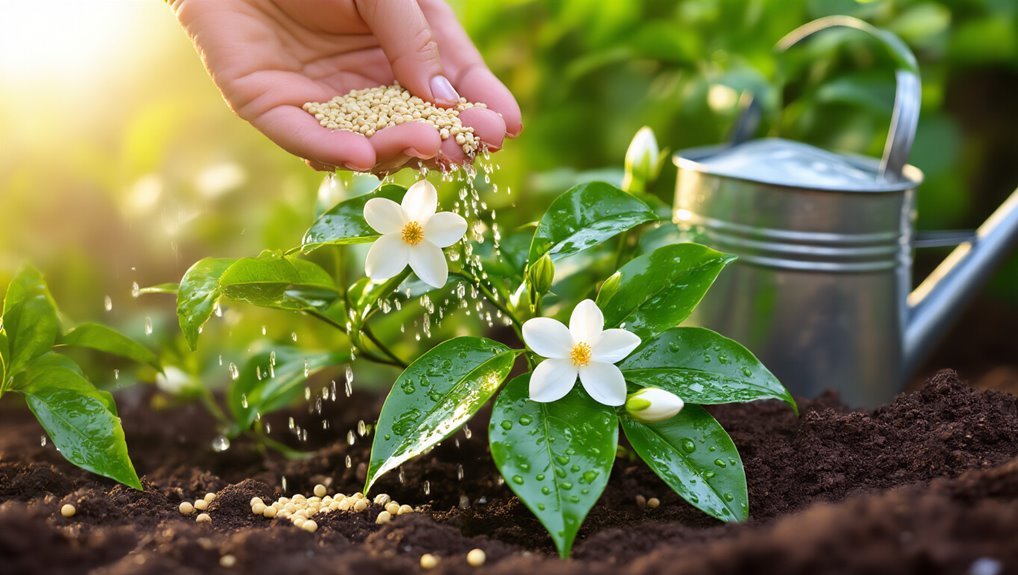
Once your jasmine seeds or cuttings are planted, proper watering and fertilizing are vital for their growth.
Water your jasmine plants regularly, but avoid overwatering; the soil should be moist but not soggy. Check the top inch of the soil—if it’s dry, it’s time to water. For added convenience and consistent nourishment, consider using Plant Fertilizer Tablets as a slow-release option that supports steady growth.
During the growing season, feed your jasmine with a balanced fertilizer every 4 to 6 weeks to promote healthy growth and abundant blooms. Dilute the fertilizer to half strength to prevent root burn.
As the flowers begin to form, consider switching to a phosphorus-rich fertilizer to enhance flowering.
During the dormant season, reduce watering and stop fertilizing, allowing your plants to rest and prepare for the next growing season.
For best results, consider nourishing your jasmine with plant food options that are specifically formulated to support robust plant health and flowering.
Pruning and Training Jasmine Vines
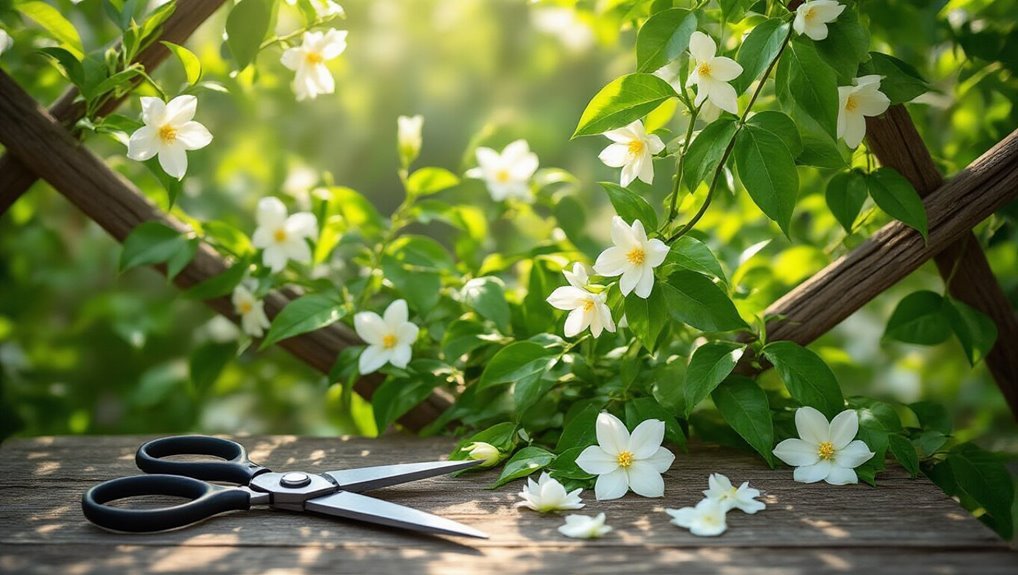
While your jasmine vines grow, regular pruning and training are essential to encourage healthy development and flowering. Start by trimming back any dead or damaged stems to promote new growth.
Aim to prune after the blooms fade, typically in late summer or early fall. Remove about one-third of the plant to maintain its shape and encourage bushiness. For vines growing in open areas, using garden netting can provide additional support and help train the stems in the desired direction.
Training your jasmine vines on a trellis or support system helps them thrive. As they grow, gently guide the stems along the structure, securing them with soft ties.
This not only enhances airflow but also maximizes sunlight exposure. Keep an eye on their growth, and don’t hesitate to adjust ties as needed.
With consistent care, you’ll enjoy abundant jasmine blooms. For best results, consider supporting your jasmine with beautiful trellises to add both structure and aesthetic appeal to your garden.
Protecting Jasmine From Pests and Diseases
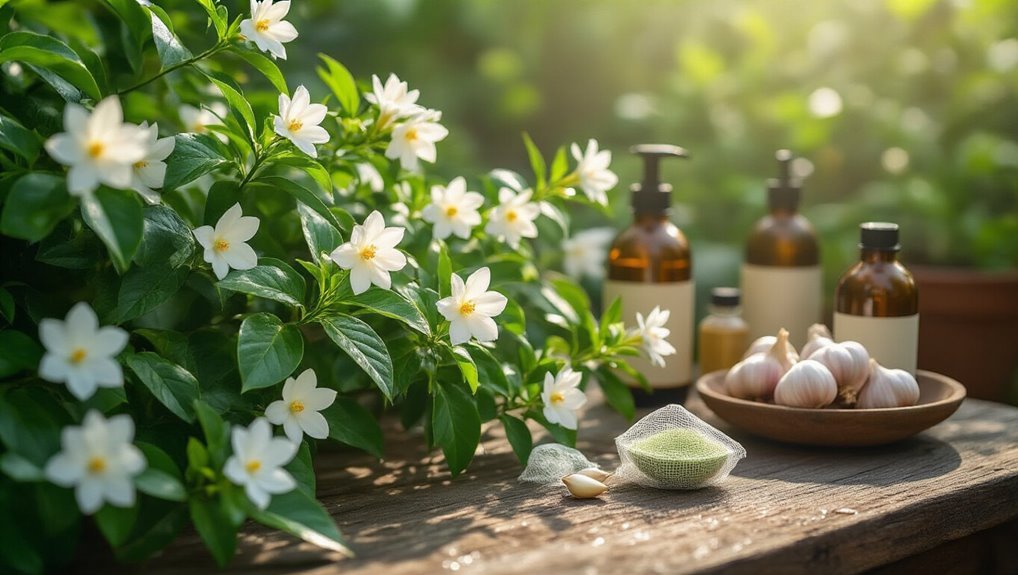
After you’ve pruned and trained your jasmine vines, it’s important to keep an eye out for pests and diseases that can hinder their growth.
Common pests like aphids, spider mites, and whiteflies can attack your plants, so regularly inspect the leaves for any signs of damage. If you spot them, you can wash them off with a strong spray of water or use insecticidal soap. For best results, consider using pest control products specifically formulated to target these common garden pests.
Additionally, watch for diseases such as powdery mildew and root rot. Ensure proper air circulation and avoid overcrowding your plants to minimize moisture buildup.
If you notice any discoloration or wilting, address it promptly. By staying vigilant and taking action early, you can protect your jasmine and enjoy its beauty for years to come. You may also want to consider using garden pest traps like sticky traps to effectively control and monitor pest populations around your jasmine plants.
Enjoying the Fragrance and Blooms of Jasmine
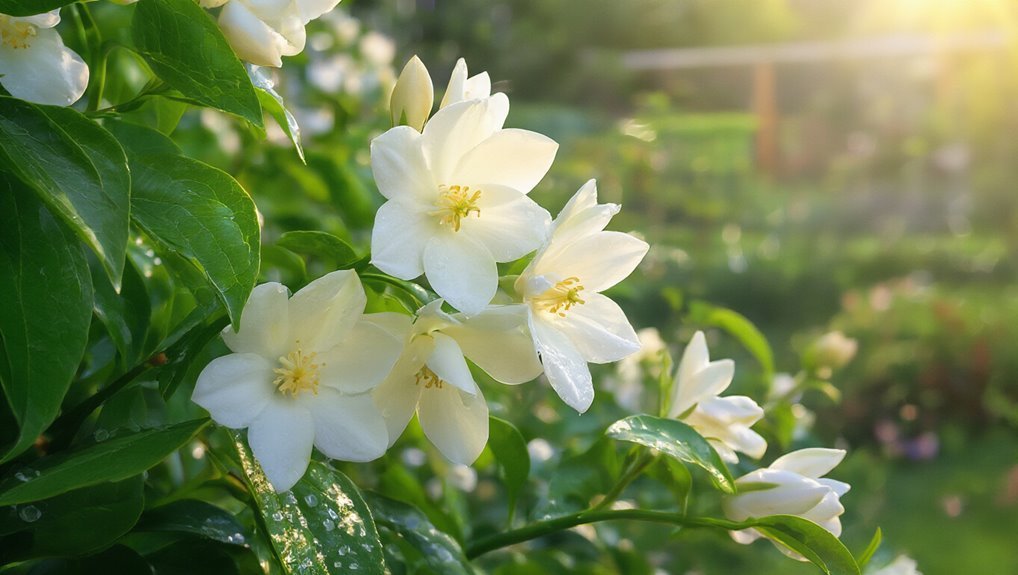
As you cultivate your jasmine plants, you’ll quickly find that their enchanting fragrance and delicate blooms can transform any space into a fragrant paradise.
To fully enjoy this sensory experience, position your jasmine near windows, patios, or entryways where the scent can waft through your home. Morning and evening are the best times to appreciate their aroma, as the flowers release their sweetest fragrance during these hours. For a whimsical touch, consider adding garden gnomes among your jasmine plants to bring playful charm and character to your outdoor space.
Consider incorporating jasmine into your garden or container displays for a stunning visual effect. You might also create a relaxing nook where you can sit and enjoy both the sight and scent of your jasmine.
Regularly pruning your plants will encourage more blooms, ensuring your experience remains delightful throughout the season. For an added touch of charm in your outdoor space, you might also explore Decorative Birdhouses for Gardens to complement the beauty and fragrance of your jasmine.
Frequently Asked Questions
How Long Does It Take for Jasmine to Bloom After Planting?
You might be surprised to learn jasmine typically blooms within a few months after planting. With the right care, you’ll see those fragrant flowers emerge in about 3 to 6 months, depending on the variety.
Can Jasmine Be Grown Indoors Successfully?
Yes, you can grow jasmine indoors successfully. Just ensure it gets plenty of sunlight, proper humidity, and a well-draining potting mix. With the right care, you’ll enjoy fragrant blooms right inside your home.
What Are the Best Companion Plants for Jasmine?
Did you know that jasmine can attract up to 200 species of beneficial insects? Pairing jasmine with marigolds, lavender, or rosemary enhances growth, repels pests, and creates a vibrant, fragrant garden that thrives together beautifully.
How Do I Propagate Jasmine From Cuttings?
To propagate jasmine from cuttings, you’ll need healthy stems. Cut about six inches, remove lower leaves, and dip the ends in rooting hormone. Plant them in moist soil, keep warm, and water them regularly.
When Is the Best Time to Plant Jasmine?
So you think planting jasmine’s like a game? Well, you’ll want to do it in spring or fall. That’s when the weather’s just right, and your jasmine’s got the best shot at thriving.
Conclusion
By choosing the right jasmine variety and providing the ideal growing conditions, you can watch your garden blossom like a starry night filled with fragrant blooms. With proper care—like watering, fertilizing, and pruning—you’ll cultivate a lush paradise that enchants the senses. Keep an eye out for pests, and soon enough, you’ll be surrounded by the sweet aroma of jasmine, filling your space with beauty and tranquility. Embrace the journey and enjoy every fragrant moment!