To grow carnation flowers easily, pick the right variety suited to your climate. Prepare well-drained soil and make sure it’s slightly acidic. Water deeply but infrequently, and use balanced fertilizer regularly to boost growth. Don’t forget to prune your plants by deadheading spent blooms and removing any damaged leaves. Keep an eye out for pests like aphids, and take action quickly if you see them. There’s plenty more to discover to ensure your carnations thrive!
Key Takeaways
- Choose the right carnation variety based on your climate and desired height for optimal growth and display.
- Prepare well-drained, sunny soil; loosen to 12 inches and add organic matter for fertility.
- Water deeply but infrequently, allowing the top inch of soil to dry out between waterings.
- Regularly deadhead spent flowers and trim overgrown stems to encourage bushier growth and continuous blooming.
- Monitor for pests and diseases, using insecticidal soap and maintaining good airflow to prevent issues.
Choosing the Right Variety of Carnations
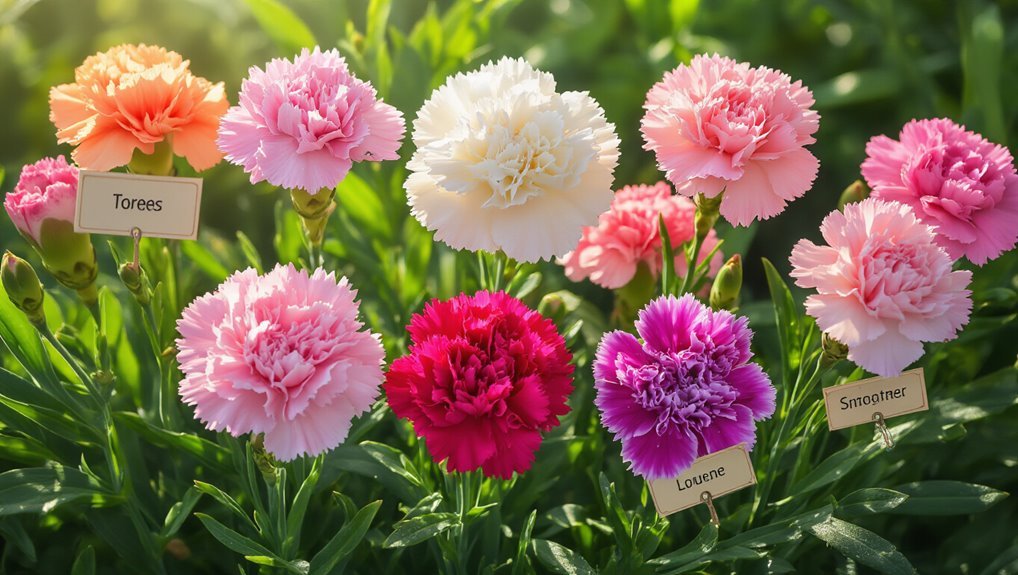
When choosing the right variety of carnations, how do you know which one will thrive in your garden? First, consider the climate in your area. Some varieties prefer cooler temperatures, while others can handle heat.
Next, think about the height and form you want. Miniature carnations work well in containers, while taller varieties make a statement in borders. To help you plan, consult planting calendars that outline the best times and methods for starting carnations in your region.
Also, pay attention to bloom times; early, mid, and late-season options can extend your garden’s color. You might want to choose fragrant types if scent is a priority.
Lastly, check for disease resistance, as some varieties are more robust than others. By carefully selecting the right type, you’ll ensure a vibrant, healthy display of carnations that brings joy to your garden.
For the best start, consider using seed starting kits to give your carnation seeds the optimal conditions for healthy germination and growth.
Preparing the Soil for Planting
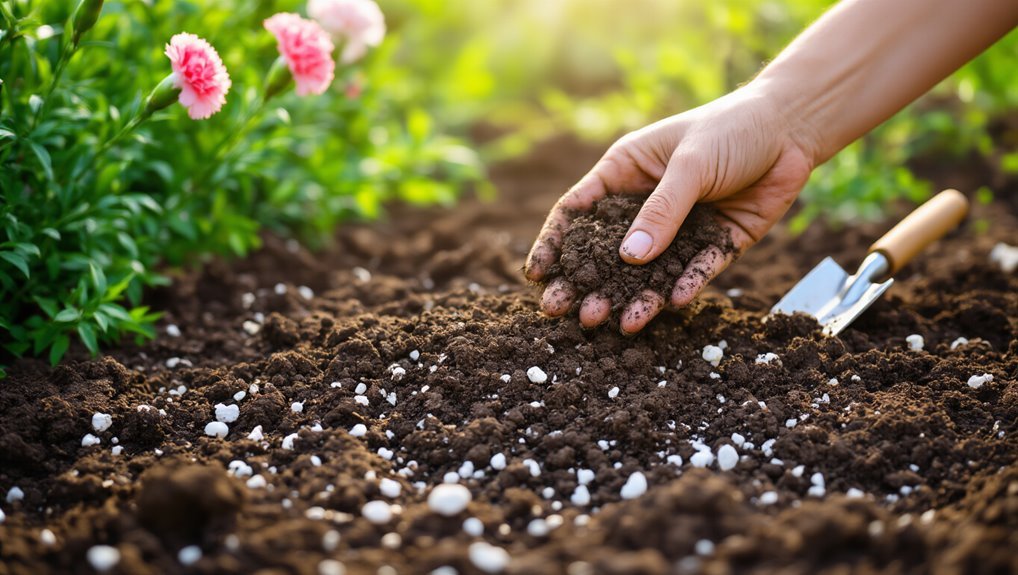
After selecting the right variety of carnations for your garden, the next step is preparing the soil for planting.
Start by choosing a sunny spot with well-drained soil. You’ll want to remove any weeds, rocks, or debris to ensure a clean planting area. Adding a compost bin to your garden setup can help you continuously enrich your soil with valuable organic material.
Loosen the soil to a depth of about 12 inches using a garden fork or tiller. This promotes better root growth and drainage.
Incorporate organic matter, like compost, to improve soil fertility and structure. Aim for a slightly acidic to neutral pH, ideally between 6.0 and 7.0. You can test your soil with a kit from a garden center.
For an even more effective way to create rich organic matter, consider using a compost tumbler to produce high-quality compost for your garden beds.
Once you’ve prepared the soil, you’re ready to plant your carnations for a vibrant display.
Watering and Fertilizing Techniques
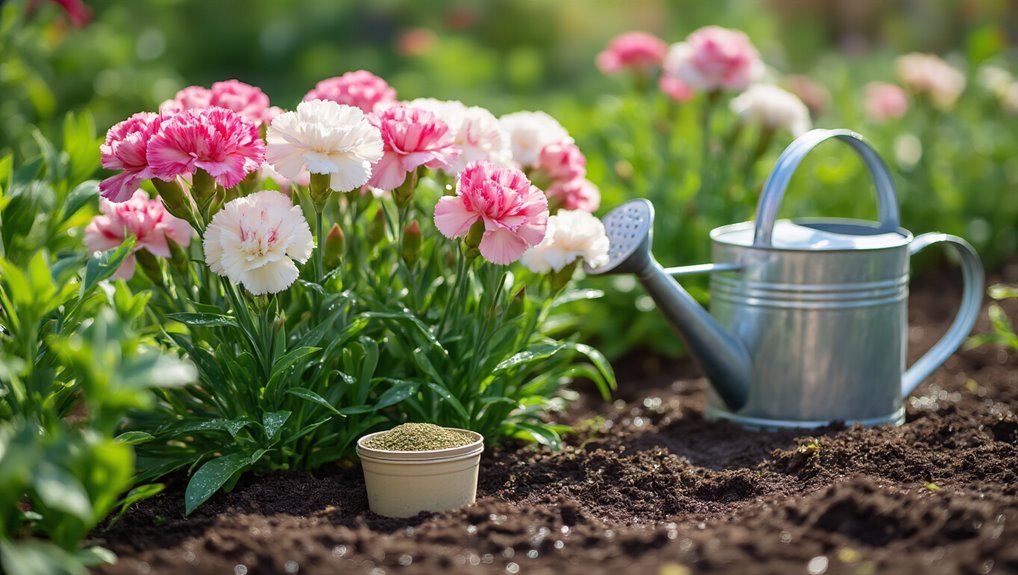
Proper watering and fertilizing are crucial for healthy carnation growth. Start by watering your carnations deeply but infrequently, allowing the top inch of soil to dry out between waterings. This encourages strong root development.
During the growing season, feed your carnations with a balanced, water-soluble fertilizer every four to six weeks. Dilute the fertilizer to half-strength to avoid over-fertilizing, which can harm your plants. Pay attention to your plants’ needs; if they look pale or stunted, they might need more nutrients. For best results, choose a plant food option that provides a complete blend of nutrients suited for flowering plants.
Additionally, ensure your pots or garden beds have good drainage to prevent waterlogging. With these techniques, your carnations will thrive, producing vibrant blooms that brighten up your garden.
For a convenient and effective option, consider using Plant Fertilizer Tablets to provide essential nutrients and boost your garden’s overall health.
Happy gardening!
Pruning and Maintenance Tips
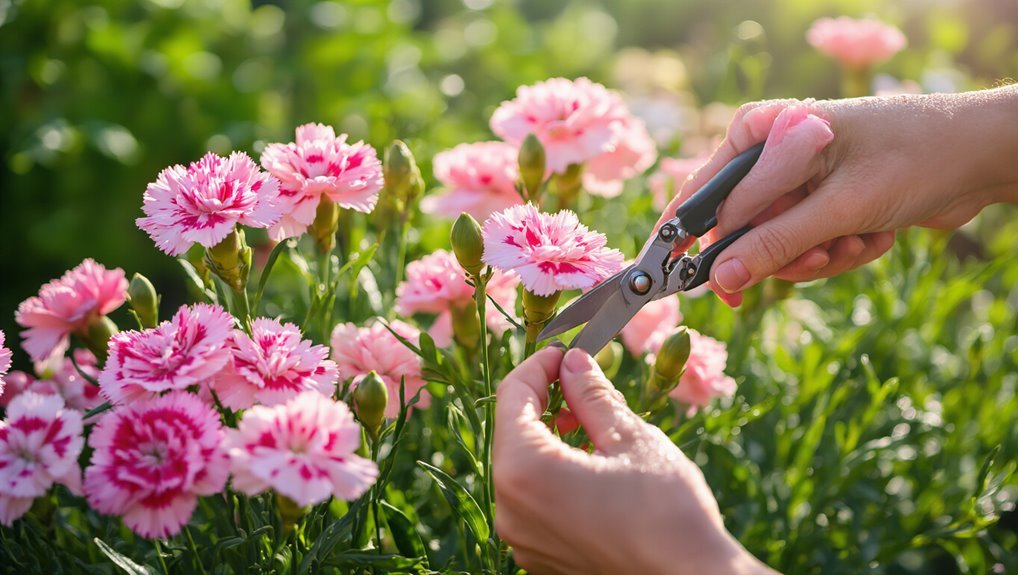
To keep your carnations healthy and encourage continual blooming, regular pruning and maintenance are essential.
Start by deadheading spent flowers to promote new growth; just snip off wilted blooms right above the leaves. This helps your plants focus their energy on producing fresh flowers. Investing in essential gardening tool sets can make this task easier and more efficient.
Trim back any leggy or overgrown stems to maintain a tidy appearance and encourage bushier growth. Aim to do this in early spring or after the blooming period.
Additionally, remove any yellow or diseased leaves to keep your plants vigorous.
Regularly check the soil moisture and maintain a suitable level to avoid stress.
Lastly, consider applying a balanced fertilizer every few weeks during the growing season to provide essential nutrients for robust blooms.
For best results, use pruning shears designed specifically for gardening, as these tools ensure clean cuts and minimize damage to your carnation plants.
Dealing With Pests and Diseases
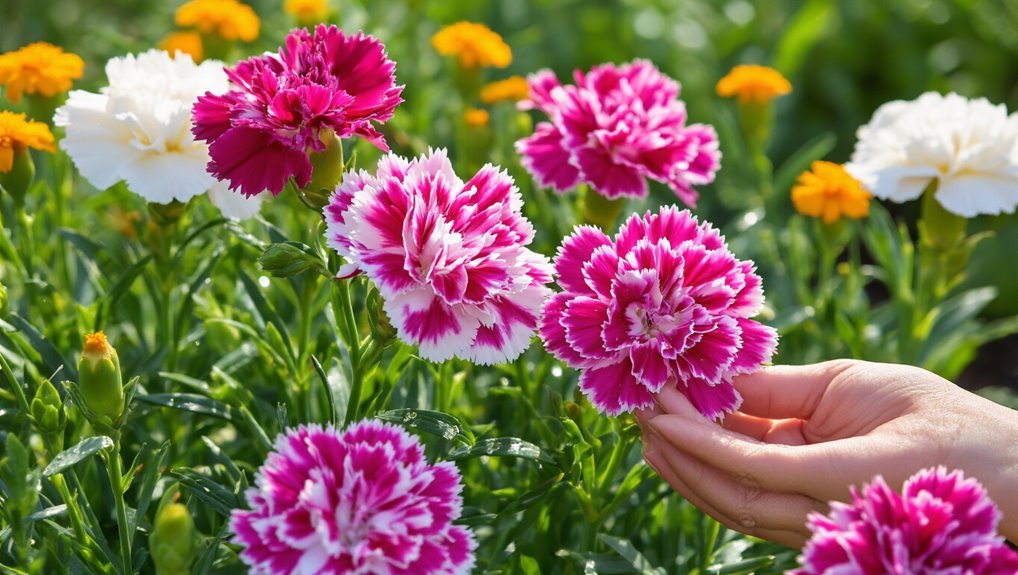
While caring for your carnations, you’ll likely encounter pests and diseases that can threaten their health. Common pests like aphids and spider mites can sap your plants’ vitality.
Regularly inspect your plants and remove any visible pests by hand. If infestations occur, consider using insecticidal soap or neem oil as a natural remedy. For an added layer of defense, you might also utilize garden pest traps to capture flying or crawling insects before they become a major problem.
Diseases like powdery mildew and root rot can also be problematic. Ensure adequate airflow and avoid overhead watering to minimize humidity, which encourages mildew.
If you notice signs of root rot, repot your plant in fresh, well-draining soil. Keep your garden clean, removing any debris that can harbor diseases.
For persistent problems, you might consider using pest control products specifically designed to target common garden pests safely and effectively.
Frequently Asked Questions
What Is the Ideal Climate for Growing Carnations?
To grow carnations successfully, you need a temperate climate with well-drained soil, plenty of sunlight, and moderate humidity. They thrive best in temperatures between 60°F and 70°F, so keep those conditions in mind!
Can I Grow Carnations in Containers?
Absolutely, you can grow carnations in containers! Just choose a pot with drainage holes, use quality potting soil, and ensure they get plenty of sunlight. With some care, they’ll thrive and beautify your space.
How Long Do Carnations Typically Bloom?
Carnations typically bloom for about two to three weeks. If you care for them properly, you can enjoy their vibrant colors and fragrant scent longer. Just make sure to provide the right conditions for growth.
Are Carnations Annuals or Perennials?
Ah, the great carnation debate! You might think they’re annuals, but surprise! They’re perennials, returning year after year if you give them some love. So, get ready for a blooming friendship that lasts!
What Colors Do Carnation Flowers Come In?
Carnation flowers come in a stunning variety of colors, including red, pink, white, yellow, and purple. You’ll also find bi-colored and striped varieties, making it easy to choose the perfect hue for your garden.
Conclusion
Growing carnations might seem daunting, but with the right approach, you can thrive as a gardener. Don’t worry if you’re a beginner; these flowers are resilient and forgiving. By choosing the right variety, preparing your soil, and following simple care techniques, you’ll see beautiful blooms in no time. Remember, patience is key, and each step you take brings you closer to a vibrant garden. So, get started—you’ll be amazed at what you can achieve!