Flower gardening is a fulfilling activity, transforming your outdoor space into a vibrant oasis. Start by choosing the right flowers based on your climate and soil conditions. Keep an eye on the seasons to plan your planting, ensuring blooms are stellar year-round. Design your garden with variety, mixing heights and colors for visual appeal. Regular maintenance like deadheading and pest control will keep your flowers thriving. There’s much more to discover about creating a stunning garden masterpiece!
Key Takeaways
- Assess soil quality, sunlight, and climate zones to select the best native flowers for your garden.
- Plan seasonal planting with suitable flowers: hardy annuals in spring, vibrant blooms in summer, and winter-hardy perennials in autumn.
- Design an effective garden layout by incorporating focal points, varied heights, and pathways for accessibility and visual appeal.
- Maintain your garden by deadheading blooms, controlling pests organically, and practicing crop rotation to prevent diseases.
- Create themed gardens and incorporate diverse blooms for year-round color while attracting pollinators with thoughtful plant selections.
Choosing the Right Flowers for Your Garden
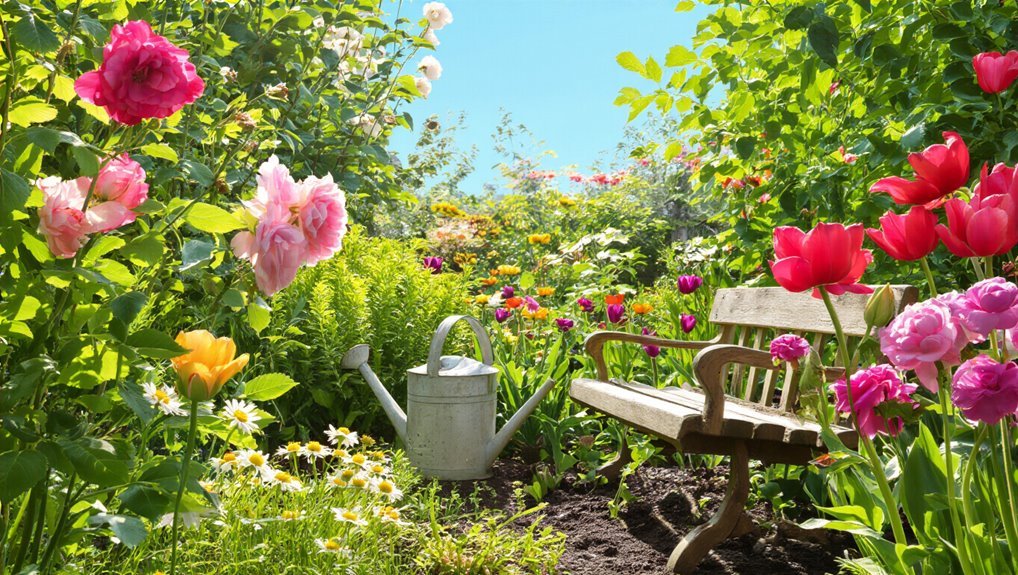
When you’re selecting flowers for your garden, how do you know which ones will thrive in your space?
Start by assessing your garden’s sunlight and soil type. Some flowers prefer full sun, while others thrive in shade. Check your soil’s drainage and pH to ensure it meets the needs of your chosen plants. Using beautiful plant pots can also help you control soil quality and drainage for specific flowers.
Next, consider your climate zone. Native flowers often adapt better and require less maintenance.
Think about the seasonality of blooms, aiming for a mix that provides color year-round. Don’t forget to factor in height and spread; you want to create a balanced look.
Lastly, choose flowers that resonate with your style, whether it’s vibrant annuals or elegant perennials. This thoughtful selection sets the stage for a thriving garden. For a unique and flavorful addition, consider planting edible flower seeds to enjoy both beauty and taste from your garden.
Seasonal Flower Planting Guide
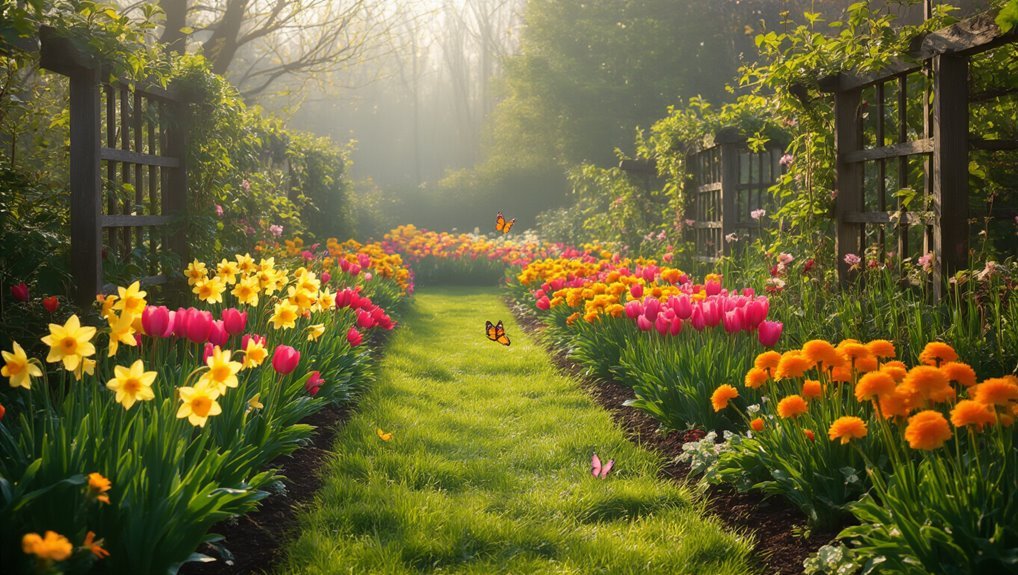
To create a vibrant garden that flourishes throughout the year, it’s essential to understand the timing of planting your flowers.
In spring, plant hardy annuals like pansies and snapdragons, as they thrive in cool weather. Starting your garden with Herb Garden Kits can make it easy to grow fresh herbs alongside your spring flowers.
Summer’s heat is perfect for vibrant blooms like zinnias and sunflowers.
As fall approaches, consider planting chrysanthemums and ornamental kale for stunning autumn displays.
During winter, focus on planning for spring by starting seeds indoors or choosing winter-hardy perennials.
Always check local frost dates to avoid damage.
For the best results when starting seeds indoors, consider using seed starting kits to ensure strong, healthy seedlings ready for transplanting once the weather warms.
By synchronizing your planting schedule with the seasons, you’ll ensure that your garden bursts with color, transforming your outdoor space with beauty and life all year long.
Happy planting!
Designing Your Flower Garden Layout
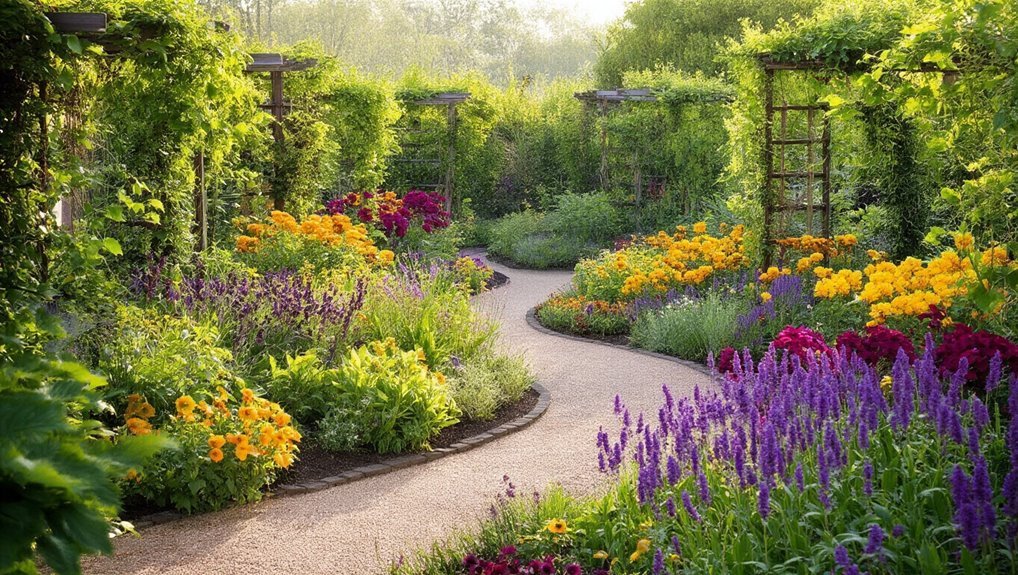
Creating a well-designed flower garden layout can significantly enhance your outdoor space, making it both visually appealing and functional.
Start by assessing your area’s sunlight, soil type, and drainage. Consider using a focal point, like a striking flower or ornamental feature, to draw the eye. Adding a compost bin to your garden design can help improve soil fertility and reduce waste.
Arrange plants in groups for a more natural look, mixing heights and colors to create depth. Don’t forget to include pathways for easy access and maintenance. Use curves instead of straight lines for a softer aesthetic.
Additionally, think about seasonal blooms to ensure your garden remains vibrant throughout the year.
Finally, sketch your layout before planting to visualize the final result and make adjustments as needed.
For gardeners seeking added structure and better soil control, incorporating raised garden beds into your design can further enhance the organization and health of your flower garden.
Happy gardening!
Essential Flower Garden Maintenance Tips
While your flower garden may be beautifully designed, regular maintenance is crucial to keep it thriving and vibrant. Here are some essential tips to help you maintain your garden effectively:
| Task | Frequency |
|---|---|
| Watering | 2-3 times a week |
| Deadheading | Weekly |
| Fertilizing | Monthly |
Make sure to water your flowers deeply, especially during dry spells. Remove spent blooms (deadheading) to encourage new growth and keep your garden looking neat. Additionally, fertilize your plants monthly to provide the nutrients they need. Feeding your plants with plant food options can significantly improve their growth and resilience throughout the year. Regularly check for weeds and pests, and address issues promptly to prevent larger problems. By following these tips, you’ll ensure your flower garden remains a stunning focal point throughout the seasons. You can further boost plant health by using Plant Fertilizer Tablets specifically formulated to support robust growth and flowering in your garden.
Attracting Pollinators to Your Garden
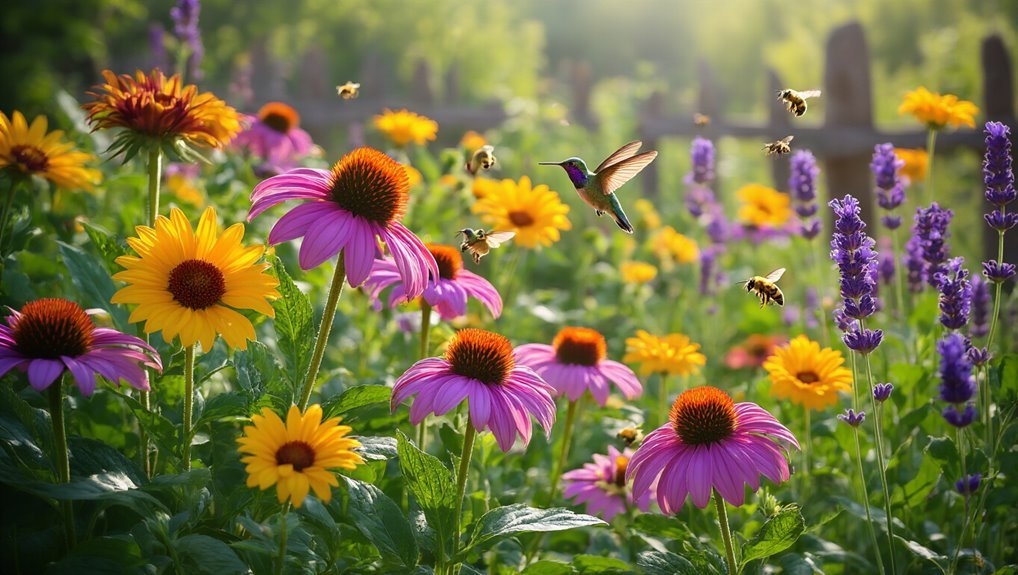
A thriving flower garden not only brightens your landscape but also plays a vital role in supporting local ecosystems.
To attract pollinators like bees, butterflies, and hummingbirds, choose a diverse range of flowers that bloom at different times throughout the seasons. Native plants are particularly effective, as they provide the forage these creatures need. Incorporating insect repellent plants such as citronella can help naturally deter unwanted pests without harming beneficial pollinators.
Avoid using pesticides, as they can harm beneficial insects. Instead, create a welcoming environment with water sources, like shallow dishes or birdbaths, and plenty of sunny spots.
Grouping flowers in clusters makes them more visible to pollinators. Lastly, consider adding plants with varying shapes and colors to appeal to different species.
With these strategies, you’ll create a vibrant garden buzzing with life. For even greater pollinator support, consider installing a bee hotel to provide essential nesting habitats for solitary bees in your garden.
Creative Ideas for Flower Arrangements and Displays
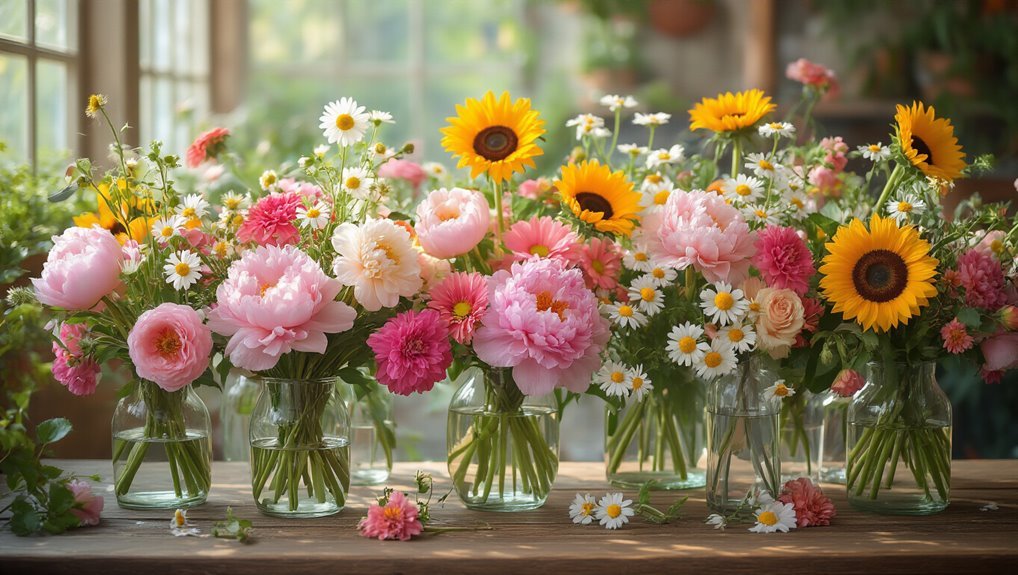
When you want to elevate your space with flower arrangements, think beyond traditional vases and explore unique displays that catch the eye.
Consider using wooden crates or vintage teacups for a rustic touch. Hanging jars filled with blooms can create a whimsical feel; suspend them at varying heights for added visual interest. Adding garden statues to your display can serve as elegant focal points and enhance the charm of your arrangements.
You can also repurpose items like old books or wine bottles as charming bases for your arrangements. Group different flowers in color-coordinated clusters for a striking effect, or mix textures by combining soft petals with bold foliage.
Don’t forget to include natural elements like stones or twigs to enhance the arrangement. Get creative and have fun experimenting with various elements to make your displays truly one-of-a-kind! For an extra touch of garden charm, try incorporating decorative birdhouses for gardens among your arrangements to blend beauty with functionality.
Frequently Asked Questions
What Tools Are Essential for Flower Gardening?
For flower gardening, you’ll need essential tools like a spade, trowel, pruning shears, gloves, and a watering can. These tools help you plant, maintain, and nurture your blooms effectively throughout the growing season.
How Can I Start a Flower Garden on a Budget?
To start a flower garden on a budget, you can use seeds instead of plants, repurpose containers, and choose native flowers that thrive without much care. It’s all about creativity and resourcefulness!
What Are the Best Soil Types for Flowers?
To grow vibrant flowers, you’ll want well-draining soil, rich organic matter, and balanced pH levels. Mix compost for nutrients, add perlite for aeration, and ensure it retains moisture without becoming waterlogged. Your flowers will thrive!
How Do I Prevent Pests in My Flower Garden?
To prevent pests in your flower garden, regularly inspect plants, encourage beneficial insects, and use natural repellents like neem oil. Maintaining healthy soil and proper watering also helps strengthen plants against pest infestations.
Can I Grow Flowers Indoors Successfully?
Did you know that 70% of indoor plants thrive better than those outside? You can definitely grow flowers indoors successfully! Just ensure they get enough light, water, and proper potting for vibrant blooms year-round.
Conclusion
In conclusion, flower gardening can truly transform your outdoor space into a vibrant oasis. Remember, “Bloom where you’re planted.” By choosing the right flowers, planning your layout, and maintaining your garden, you’ll create a flourishing environment that brings joy throughout the seasons. Don’t forget to invite pollinators and get creative with arrangements to add that personal touch. So grab your gardening tools, embrace the beauty of nature, and watch your garden thrive!