To grow gorgeous lilies, choose varieties that suit your climate and garden conditions. Plant in well-draining, nutrient-rich soil in a sunny spot with at least six hours of sunlight daily. Water deeply but infrequently, and fertilize in early spring. Keep an eye out for pests like aphids and spider mites, and monitor moisture levels throughout the growing season. With some maintenance and care, you’ll see stunning blooms. Learn more about seasonal care and tips for optimal growth.
Key Takeaways
- Choose the right lily varieties based on your climate and garden conditions for optimal growth.
- Plant in well-draining, nutrient-rich soil with at least six hours of sunlight daily.
- Water deeply but infrequently, ensuring the top inch of soil is dry before watering again.
- Regularly monitor for pests and promote air circulation to prevent diseases.
- Deadhead spent blooms and mulch in fall to protect plants during winter dormancy.
Choosing the Right Lily Varieties
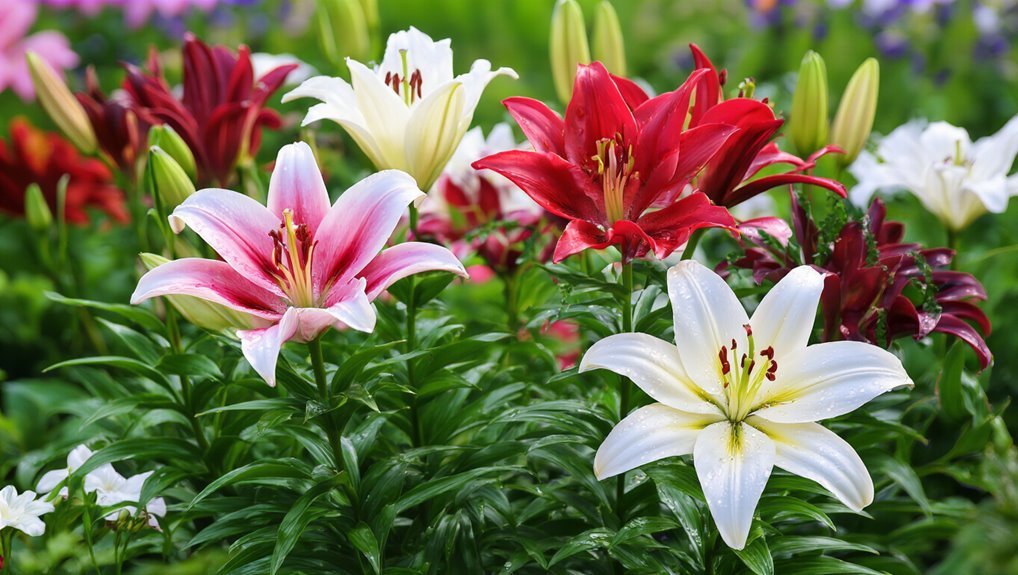
When you’re choosing the right lily varieties for your garden, it’s essential to consider your climate and the specific conditions of your space.
Think about factors like temperature, sunlight, and soil type. For warmer regions, Asiatic and Oriental lilies thrive with their vibrant colors and fragrant blooms. Incorporating raised garden beds into your garden design can help you control soil quality and drainage, which is especially beneficial for lilies.
If you’re in a cooler climate, consider the hardier trumpet lilies, which can withstand lower temperatures.
You should also pay attention to the bloom time; some lilies flower early, while others bloom late in the season.
Don’t forget about height and spread, as these factors will impact your garden’s overall design.
Planting your lilies in beautiful plant pots can also elevate the look of your space while providing flexibility for changing conditions.
Ideal Planting Conditions
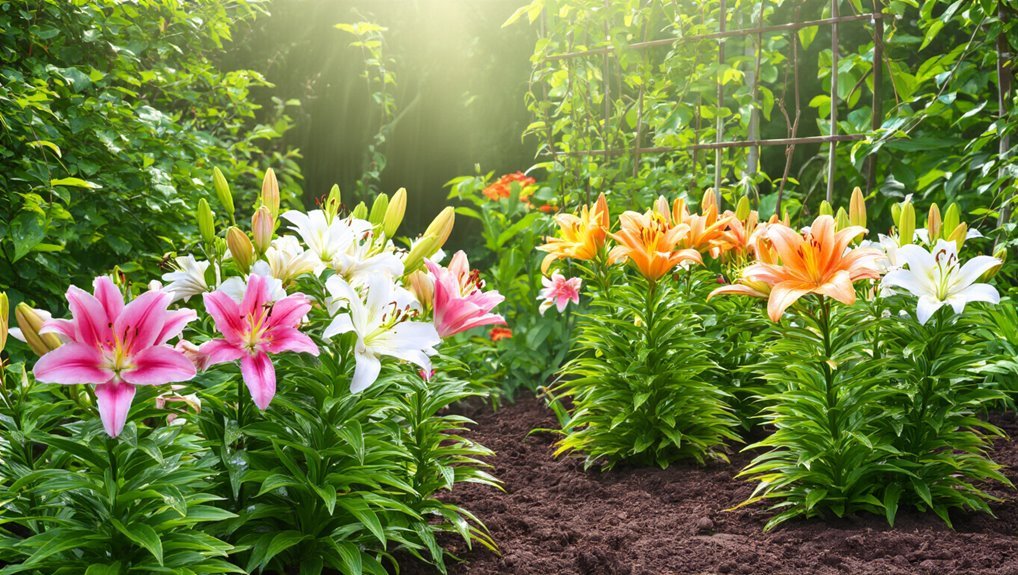
For the best results in planting lilies, aim for well-draining soil enriched with organic matter, ideally with a pH between 6.0 and 6.8.
Choose a sunny spot that receives at least six hours of sunlight daily. Lilies thrive in a range of climates, but they prefer mild temperatures. To further nourish your lilies and retain soil moisture, consider using organic mulching materials such as straw around your plants.
Here are three key factors to consider:
- Soil Type: Use sandy or loamy soil that drains well to prevent root rot.
- Sunlight: Ensure your lilies get adequate sunlight; too much shade can hinder blooming.
- Spacing: Plant bulbs about six to twelve inches apart to allow for healthy growth.
For optimal growth, consider using the best garden soil specifically formulated for thriving plants to further enhance lily development.
Watering and Fertilizing Techniques
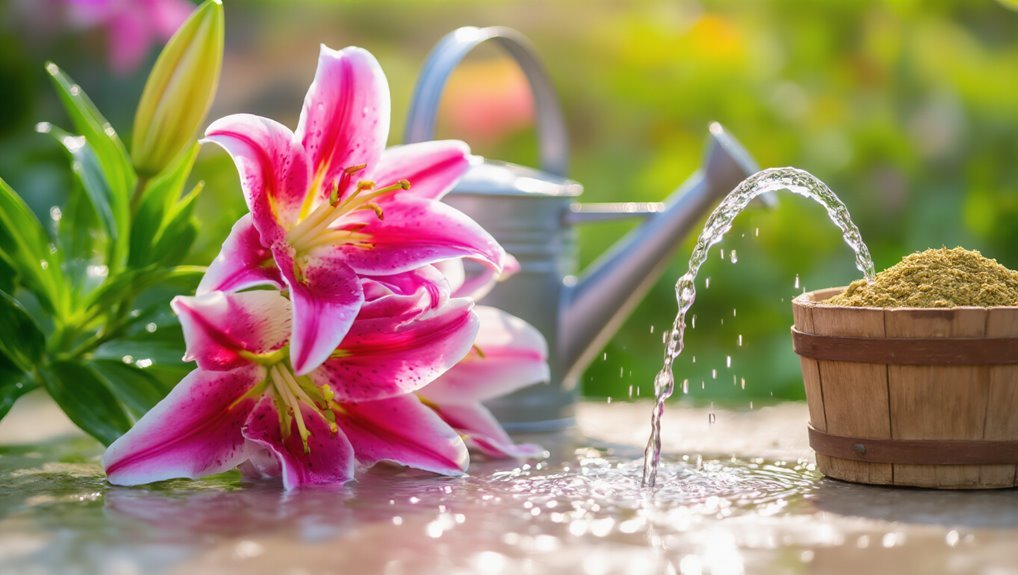
Although proper watering and fertilizing are crucial for healthy lilies, it’s important to find the right balance to avoid overwatering or nutrient burn.
Water your lilies deeply but infrequently; aim for about an inch of water weekly, adjusting for rainfall. Always check the soil moisture first—if the top inch feels dry, it’s time to water. For added convenience and consistent results, consider using plant fertilizer tablets to deliver nutrients slowly over time.
When it comes to fertilizing, use a balanced, slow-release fertilizer in early spring. Follow the package instructions, as too much fertilizer can damage your plants.
You can also apply a diluted liquid fertilizer every few weeks during the growing season for an extra boost.
For best results, explore plant food options specifically formulated to nourish your lilies and support vibrant blooms.
Pest and Disease Management
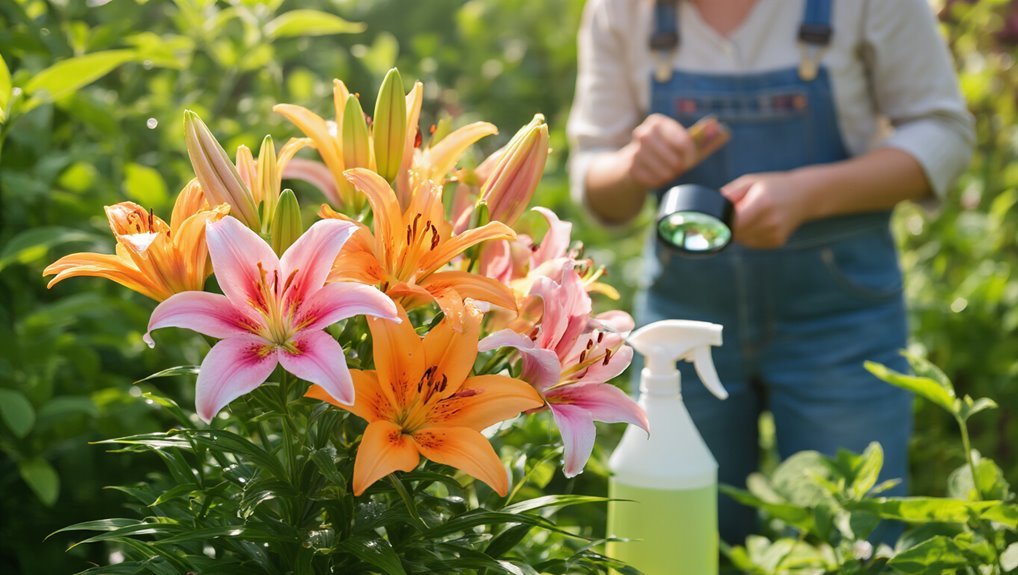
Pest and disease management is essential to keep your lilies thriving and blooming beautifully.
To protect your plants, follow these steps:
- Inspect Regularly: Keep an eye out for pests like aphids and spider mites. Early detection can prevent major infestations. For more effective monitoring, consider placing sticky traps near your lilies to catch and identify common pests early.
- Use Natural Remedies: Introduce beneficial insects like ladybugs or use insecticidal soap to tackle pests without harming your lilies.
- Promote Good Air Circulation: Ensure your lilies are spaced properly to reduce humidity, which can lead to fungal diseases like botrytis.
For persistent issues, consider using pest control products specifically designed to effectively target common garden pests while keeping your lilies healthy.
Seasonal Care and Maintenance
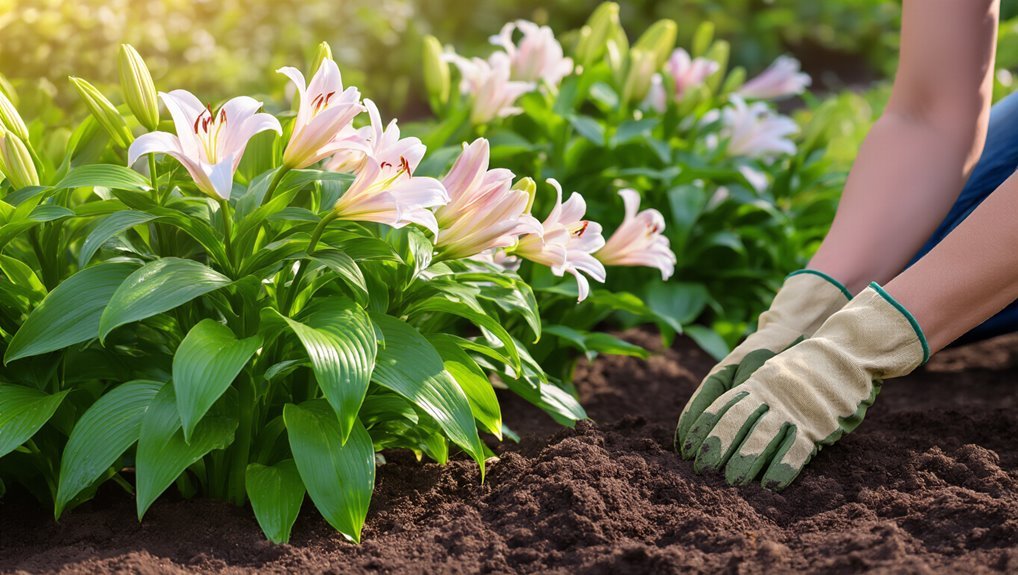
To ensure your lilies flourish throughout the year, it’s crucial to adapt your care routine with the changing seasons.
In spring, focus on fertilizing and watering to stimulate growth. As summer hits, keep an eye on moisture levels, ensuring the soil is consistently damp but not waterlogged. Regular deadheading will encourage more blooms, so don’t forget to snip off spent flowers. For gardeners interested in enhancing their soil, incorporating outdoor composting systems can provide nutrient-rich compost that benefits lily growth.
In fall, reduce watering as the plants prepare for dormancy. It’s also a good time to mulch your lilies to protect them from winter’s chill, as mulch provides added insulation and helps retain soil moisture.
Finally, during winter, avoid overwatering and ensure proper drainage to prevent rot.
Frequently Asked Questions
Can Lilies Be Grown in Containers?
Yes, you can grow lilies in containers! Just make sure the pot has drainage holes, use quality potting soil, and provide adequate sunlight. Regular watering and occasional fertilizing will help your lilies thrive beautifully.
How Long Do Lily Bulbs Last?
Lily bulbs can last up to five years if stored properly. You’ll want to keep them in a cool, dry place to maintain their vitality, ensuring you enjoy beautiful blooms season after season.
Are Lilies Toxic to Pets?
Yes, lilies are toxic to cats and can cause severe kidney damage. If you have pets, it’s best to keep them away from lilies and opt for safer flowers to ensure their health and safety.
When Is the Best Time to Plant Lilies?
The best time to plant lilies is in spring or fall. You’ll want to choose a well-drained spot with plenty of sunlight. Just make sure the soil temperature is warm enough for optimal growth!
Do Lilies Attract Bees and Butterflies?
Yes, lilies dance in the garden, beckoning bees and butterflies with their vibrant colors and sweet scents. You’ll find these pollinators flitting about, drawn to the blooms like stars to a night sky.
Conclusion
By following these tips, you’ll have lilies that bloom like vibrant fireworks in your garden. Remember to choose the right varieties, provide ideal conditions, and stay on top of watering and pest management. With a little care and attention, your lilies will thrive, bringing joy and beauty to your outdoor space. So get your hands in the soil and enjoy the rewarding process of nurturing these stunning flowers! Happy gardening!