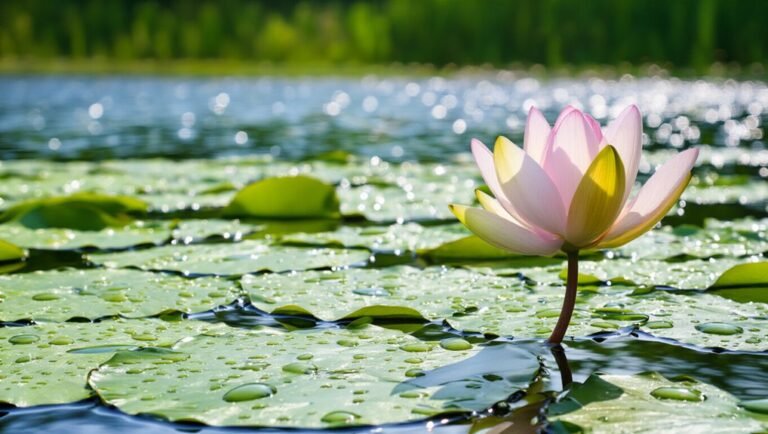
Growing lotus flowers brings beauty to your garden. Start by choosing the right variety for your climate and space. Create an ideal aquatic environment with 12 to 18 inches of water and plenty of sunlight. Care for your plants by fertilizing every few weeks and removing dead leaves. Watch for pests and manage them naturally. Lastly, when blooms are ready, harvest them delicately for stunning arrangements. You’ll discover even more tips to enhance your lotus-growing experience.
Key Takeaways
- Choose the right lotus variety based on climate, space, and desired bloom color for successful growth.
- Create an ideal aquatic environment with 12-18 inches of water depth and a pH of 6.0 to 7.5.
- Ensure lotus plants receive at least six hours of sunlight daily for optimal flowering and growth.
- Fertilize every 4-6 weeks with slow-release aquatic fertilizer and remove dead leaves to promote new growth.
- Regularly check for pests and maintain healthy conditions to prevent diseases and encourage robust blooms.
Choosing the Right Lotus Flower Variety for Your Garden
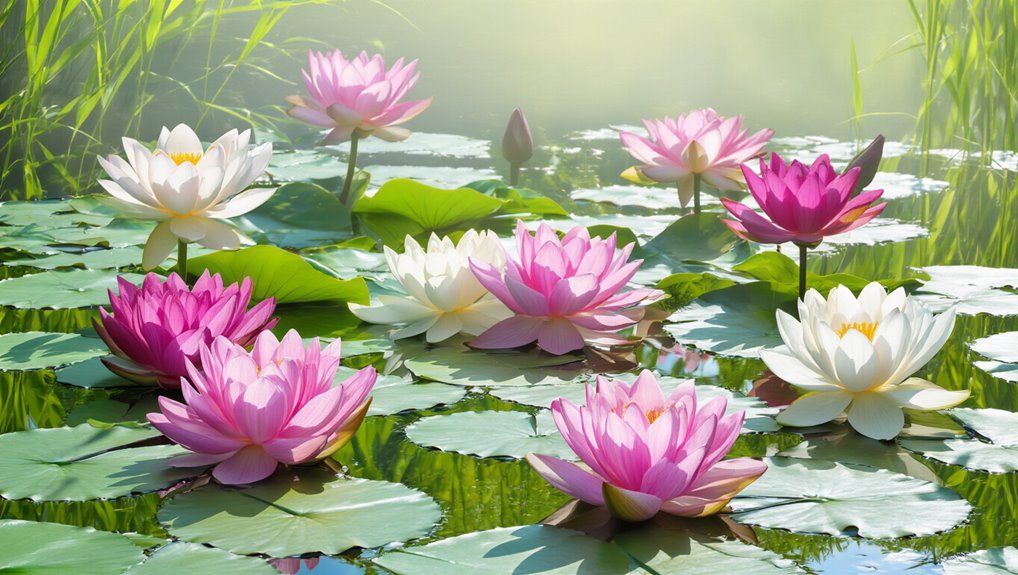
When you’re choosing the right lotus flower variety for your garden, consider your climate and available space to ensure they thrive. Different species, like the American Lotus or the Sacred Lotus, have unique requirements and characteristics.
If you live in a warmer area, opt for varieties that can handle heat and humidity. For smaller spaces, dwarf varieties work well, while larger gardens can accommodate the majestic giants.
Think about the bloom colors and sizes you prefer, too—there’s a stunning range from whites to pinks. Finally, check how much sunlight each variety needs, as some flourish in full sun while others tolerate partial shade.
Selecting the right type will set the stage for a breathtaking aquatic display in your garden.
Creating the Ideal Aquatic Environment for Lotus Plants
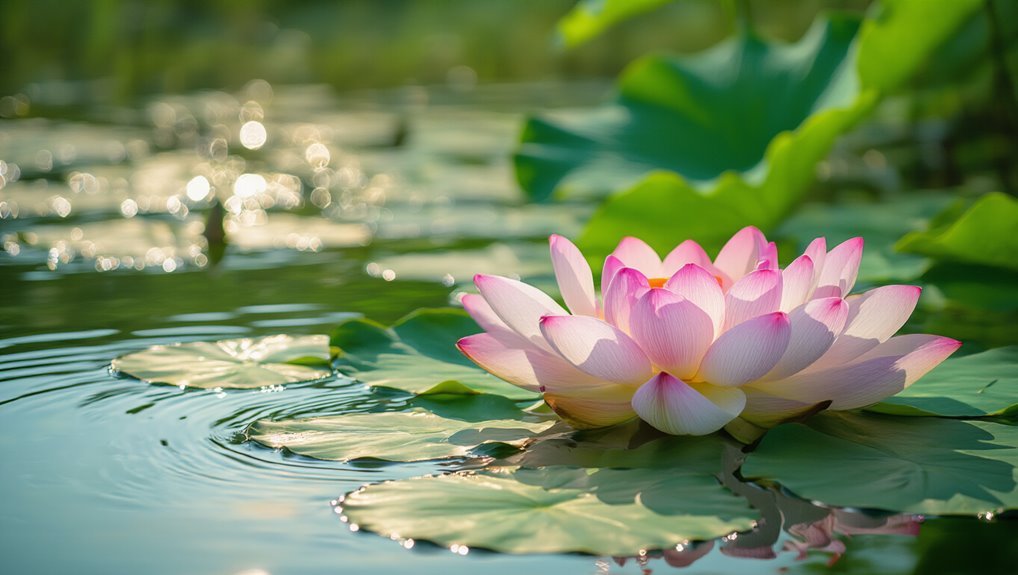
To create the ideal aquatic environment for your lotus plants, you’ll need to consider several key factors. Start by ensuring they’ve enough sunlight, as lotus plants thrive in bright conditions.
You’ll also want to maintain a suitable water depth—typically around 12 to 18 inches—so their roots can establish properly.
Here are some essential elements to keep in mind:
- Water Temperature: Lotus prefer warm water, ideally between 70°F and 90°F.
- pH Level: Aim for a pH of 6.0 to 7.5 for optimal growth.
- Substrate: Use a heavy clay soil to anchor roots and retain nutrients.
- Water Quality: Keep the water clean and free from debris to promote healthy growth.
Key Care Practices for Healthy Lotus Plants
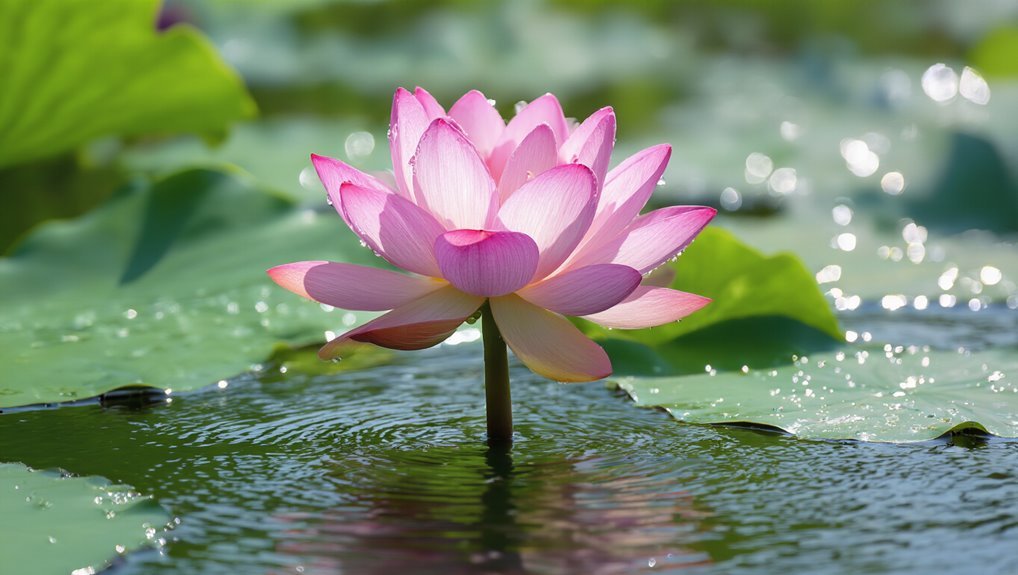
Caring for lotus plants requires attention to their unique needs to ensure vibrant growth and stunning blooms.
First, make sure they receive at least six hours of sunlight daily; this helps maximize their flowering potential.
Keep the water level consistent, ideally between 12 to 18 inches, as lotus roots prefer stable conditions.
Fertilize your lotus plants every 4-6 weeks during the growing season with a slow-release aquatic fertilizer to promote healthy growth.
Regularly remove any dead leaves or spent flowers to encourage new growth and prevent disease.
Lastly, be patient; lotus plants can take time to establish, but with proper care, you’ll be rewarded with breathtaking blooms.
Follow these practices, and your lotus plants will thrive beautifully!
How to Protect Your Lotus From Common Pests and Diseases
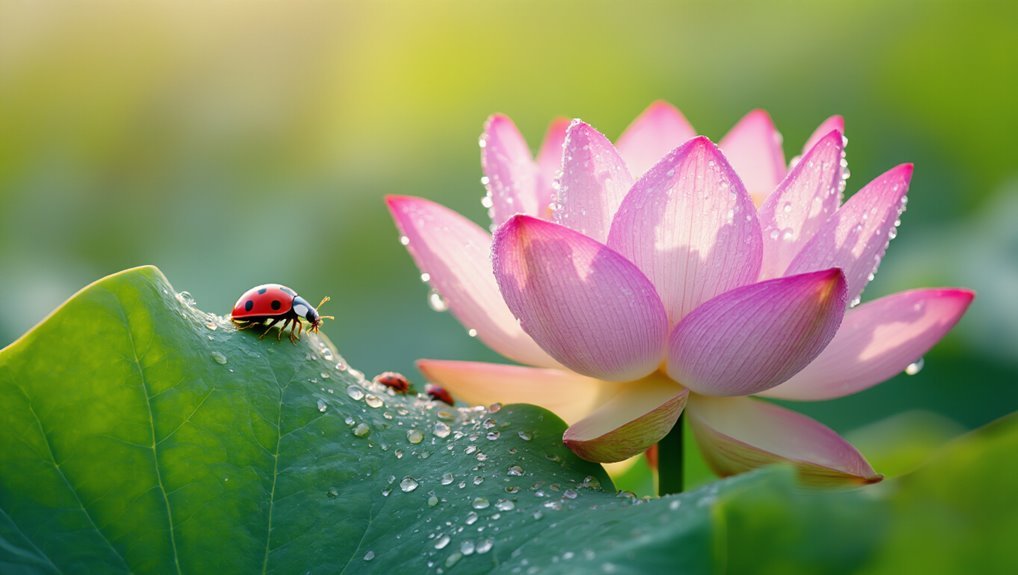
While lotus plants are stunning additions to any garden, they can be susceptible to various pests and diseases that threaten their health.
To keep your lotus thriving, here are some effective protection strategies:
- Inspect Regularly: Check your plants frequently for signs of pests like aphids or snails.
- Use Neem Oil: This natural pesticide can help control infestations without harming beneficial insects.
- Promote Healthy Growth: Ensure your lotus has proper sunlight, water, and nutrients to strengthen its defenses against diseases.
- Remove Debris: Clear away any dead leaves or debris in the water to minimize fungal infections.
How to Harvest and Enjoy Lotus Blooms?
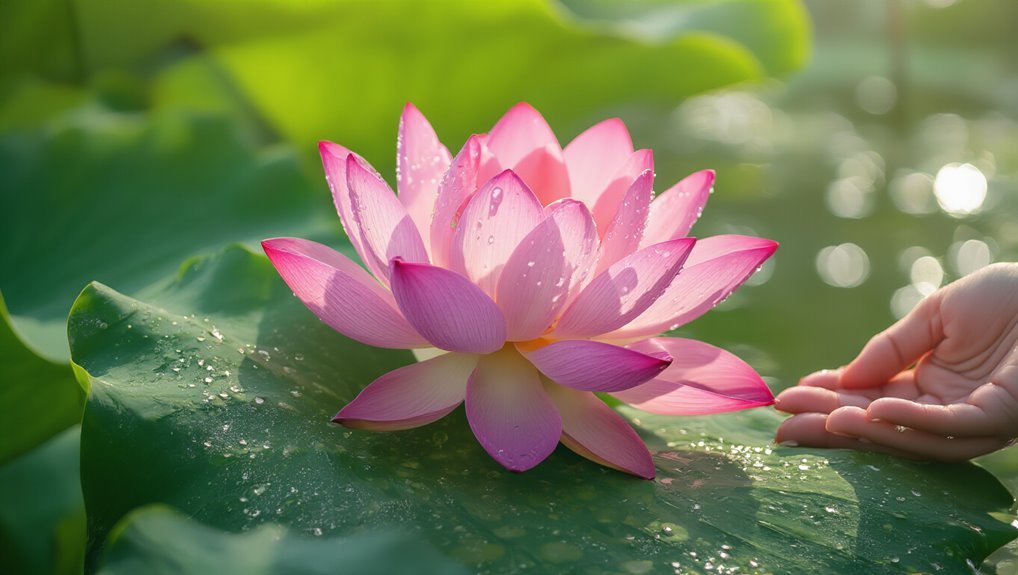
Although harvesting lotus blooms can seem daunting, it’s a rewarding experience that lets you enjoy the beauty and fragrance of these stunning flowers.
To start, choose a sunny morning when the blooms are fully open. Gently grasp the stem near the water’s surface and use sharp scissors to cut the stem at an angle. This helps the flower absorb water better.
Once you’ve harvested your blooms, place them in a vase with fresh water, adding a bit of sugar to nourish them. Enjoy the blossoms indoors or use them for special occasions.
You can also create stunning floral arrangements or float them in bowls for a serene centerpiece. Remember, lotus blooms are delicate, so handle them with care!
Frequently Asked Questions
Can Lotus Flowers Grow in Containers or Just in Ponds?
Yes, you can grow lotus flowers in containers as well as ponds. Just ensure the container is deep enough, has plenty of sunlight, and provides adequate water to support their beautiful growth and blooming.
What Is the Best Time of Year to Plant Lotus Flowers?
The best time to plant lotus flowers is in late spring or early summer when temperatures are consistently warm. This encourages healthy growth and blooming, so make sure to prepare your containers or ponds accordingly!
How Long Does It Take for Lotus Blooms to Appear?
Lotus blooms usually appear within 8 to 14 weeks after planting. Don’t worry if they take a bit longer; patience pays off, and witnessing those stunning flowers will make all the waiting worthwhile!
Are Lotus Flowers Safe for Fish and Other Aquatic Life?
Yes, lotus flowers are safe for fish and other aquatic life. They provide shade and shelter, promoting a healthier ecosystem. Just ensure your pond’s environment supports both the lotus and its aquatic inhabitants effectively.
Can Lotus Plants Survive Winter in Colder Climates?
Absolutely, lotus plants can survive winter in colder climates if you properly prepare them. You’ll feel like a gardening superhero when you insulate their pots or move them indoors to protect against frost.
Conclusion
In conclusion, with the right variety, environment, and care, you can enjoy stunning lotus blooms in your garden. For instance, imagine a backyard pond filled with vibrant pink lotus flowers, attracting butterflies and creating a serene escape. By regularly checking for pests and maintaining water quality, you’ll ensure your lotus thrives. Embrace the beauty of these aquatic wonders, and you’ll find that caring for them brings both joy and tranquility to your outdoor space.