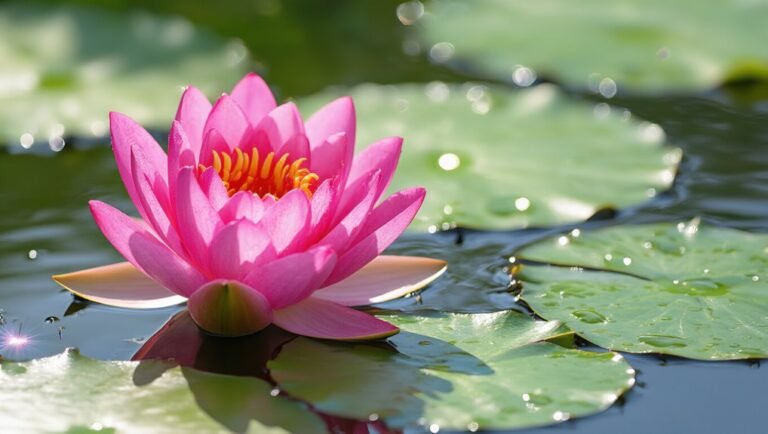
To grow a lotus flower, start by choosing the right variety for your climate and space. Prepare a deep container with heavy soil and ensure it gets at least 6 hours of sunlight daily. Plant your soaked seeds on the soil surface or bury tubers a few inches deep, then fill the container with water. Care for your lotus by maintaining water depth, applying slow-release fertilizer, and keeping an eye out for pests. There’s more to discover for successful growth!
Key Takeaways
- Choose the appropriate lotus variety based on climate, space, color preference, and growth habits for successful growth.
- Prepare a deep container with heavy soil mix, filling it with 2-4 inches of water above the soil.
- Plant seeds after soaking for 24 hours, or bury tubers 2-3 inches deep, ensuring water covers them.
- Provide at least 6 hours of direct sunlight daily and maintain water depth of 12 to 18 inches.
- Regularly monitor for pests and diseases, applying treatments as needed to ensure plant health.
How to Choose the Right Lotus Variety for Your Garden
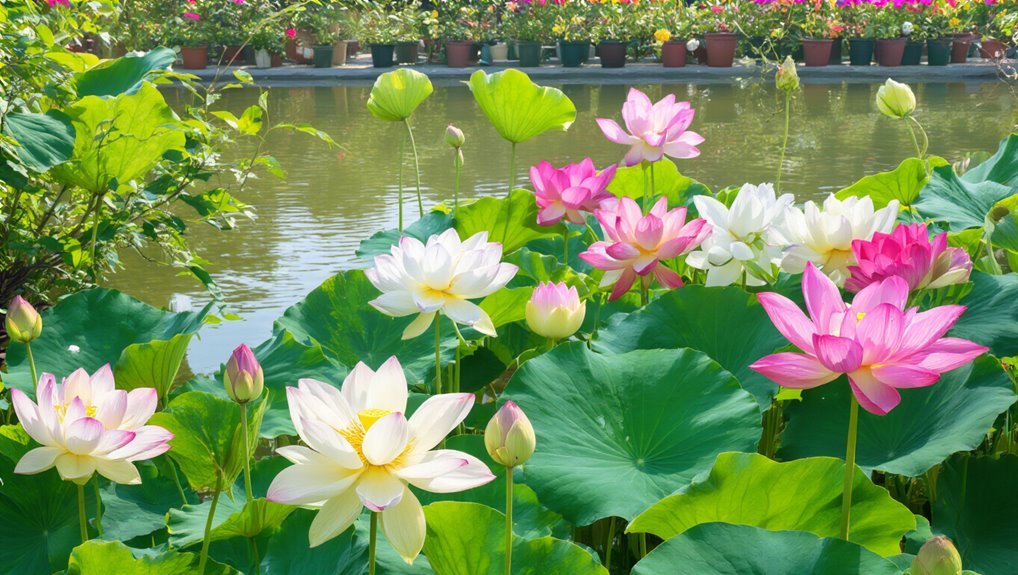
Choosing the right lotus variety for your garden can feel overwhelming, given the numerous options available.
First, consider your climate. Tropical lotuses thrive in warmer regions, while hardy varieties can survive colder temperatures.
Next, think about the space you have. Some varieties grow large, needing ample room, while others are compact and fit well in smaller ponds or containers.
Color and flower size also play a role. You might prefer the classic white or pink blooms, or you may want something more vibrant like blue or red.
Lastly, research the growth habits, as some varieties spread quickly.
Preparing the Perfect Planting Environment for Your Lotus
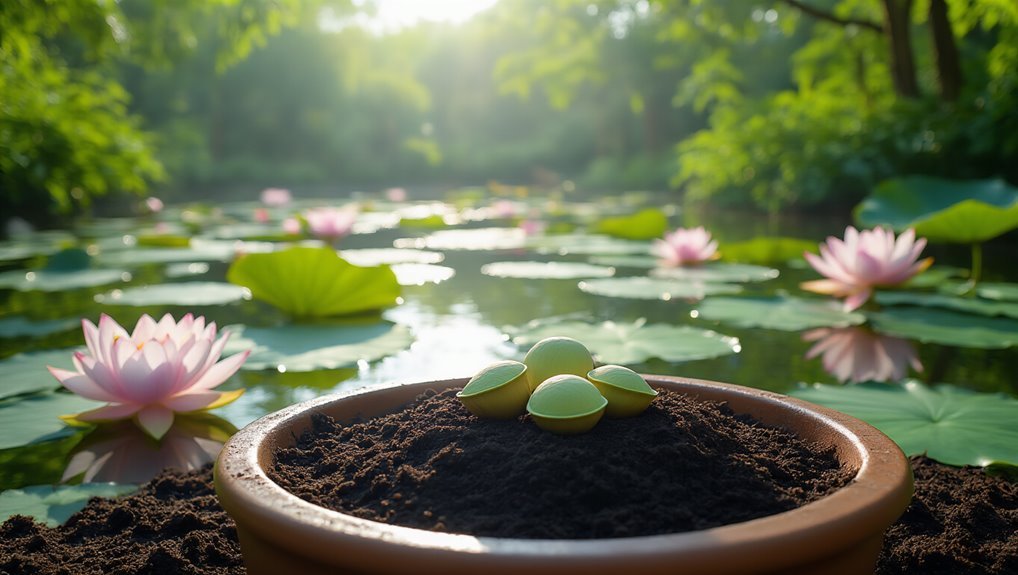
To successfully grow a lotus, you need to create an environment that mimics its natural habitat.
Start by selecting a container that’s deep enough; at least 12 inches works well. Use a heavy soil mix, like clay, to anchor the roots and prevent floating. Fill the container with water until it’s about 2-4 inches above the soil.
Place the container in a sunny spot where it can receive at least 6 hours of sunlight daily. Ensure the water temperature stays warm, ideally between 70°F and 80°F.
To maintain water quality, consider adding aquatic plants, which can help balance nutrients. Regularly check for debris and keep the water clean to promote healthy growth.
Your lotus will thrive in this carefully prepared setting.
How to Plant Your Lotus Seeds or Tubers
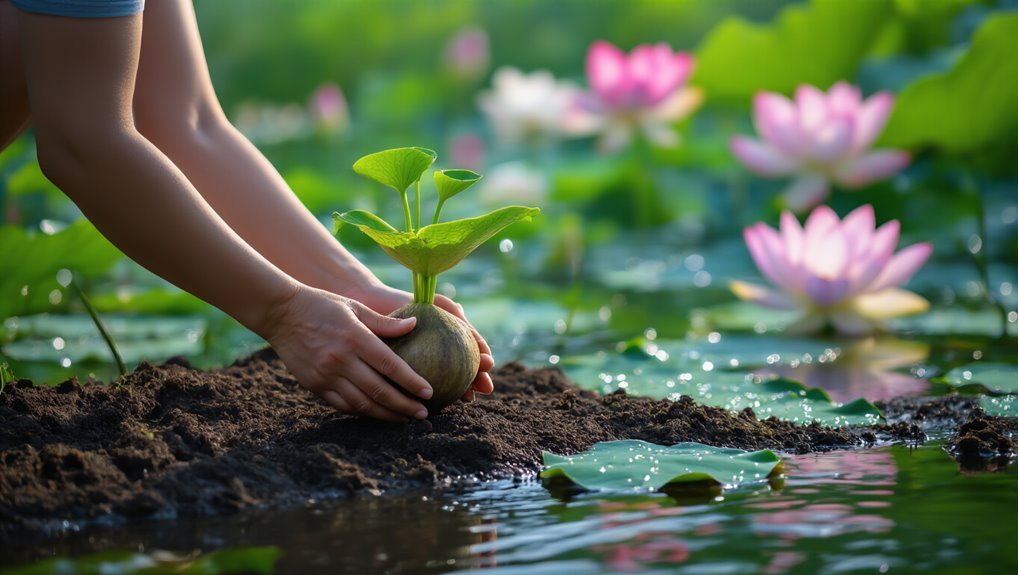
Once you’ve prepared the perfect environment, planting your lotus seeds or tubers is the next crucial step. Follow these straightforward instructions to ensure successful planting:
- Choose Your Container: Select a wide, shallow pot; lotus roots need space to spread.
- Prepare the Soil: Use a heavy clay soil mix, which helps anchor the tubers and retains moisture.
- Plant the Seeds/Tubers: If using seeds, soak them in water for 24 hours, then place them on the soil surface. For tubers, bury them about 2-3 inches deep.
- Add Water: Fill the pot with water until it covers the seeds or tubers by a few inches, ensuring they’re submerged but not overly deep.
Now you’re ready to watch your lotus thrive!
Caring for Your Lotus: Water, Sunlight, and Fertilization Needs
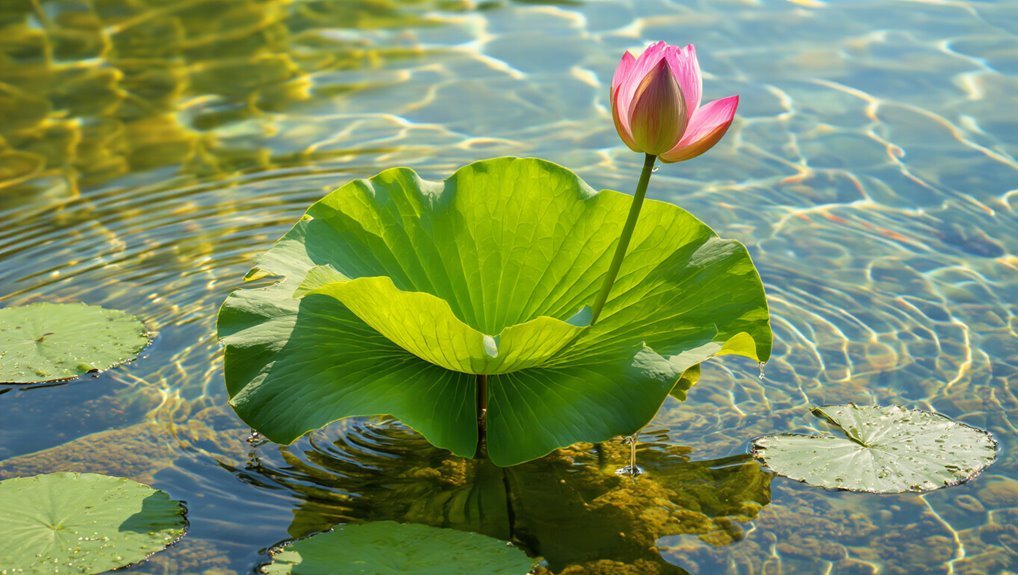
After planting your lotus seeds or tubers, proper care is vital for their growth. First, ensure your lotus has plenty of water—ideally, it should be submerged in 12 to 18 inches. Change the water regularly to keep it fresh.
Next, provide ample sunlight; lotus flowers thrive in at least 6 hours of direct sunlight daily. If you notice the leaves stretching, it might be a sign they need more light.
Fertilization is equally important. Use a slow-release aquatic fertilizer every four to six weeks during the growing season. This helps supply essential nutrients for healthy growth.
Keep an eye on your lotus, adjusting water levels and sunlight as needed, and you’ll enjoy beautiful blooms in no time!
Common Lotus Pests and Diseases: Prevention and Treatment
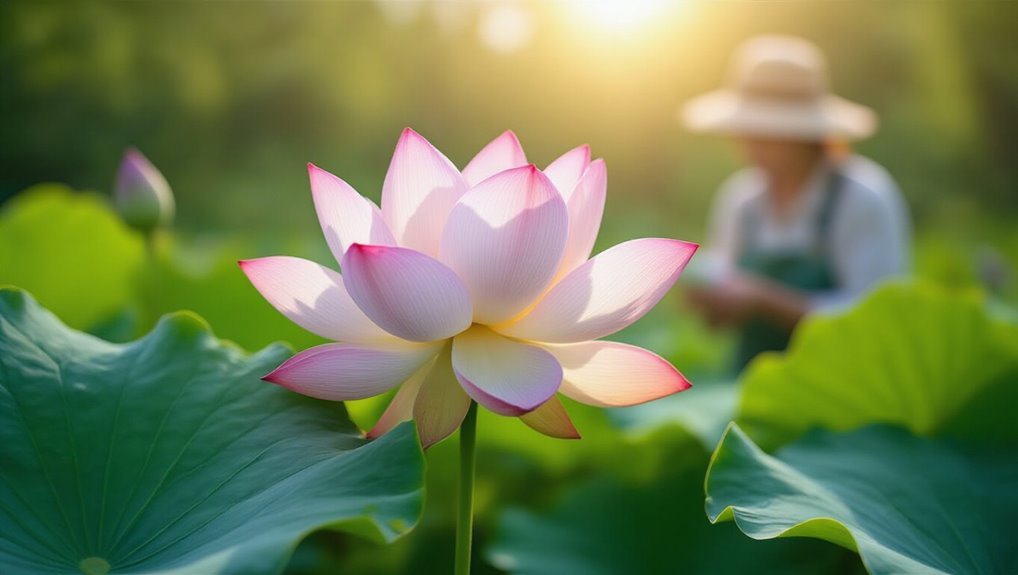
While nurturing your lotus flowers, it’s crucial to stay vigilant against common pests and diseases that can threaten their health. Here are some to watch for:
- Aphids: Tiny pests that suck sap and can cause stunted growth. Use insecticidal soap for treatment.
- Snails and Slugs: These can munch on leaves. Set out beer traps or use diatomaceous earth to deter them.
- Powdery Mildew: This fungal disease appears as a white powder. Improve air circulation and apply a fungicide to combat it.
- Crown Rot: Caused by overwatering, it leads to root decay. Ensure proper drainage and avoid waterlogged conditions.
Tips for Overwintering Your Lotus Plants
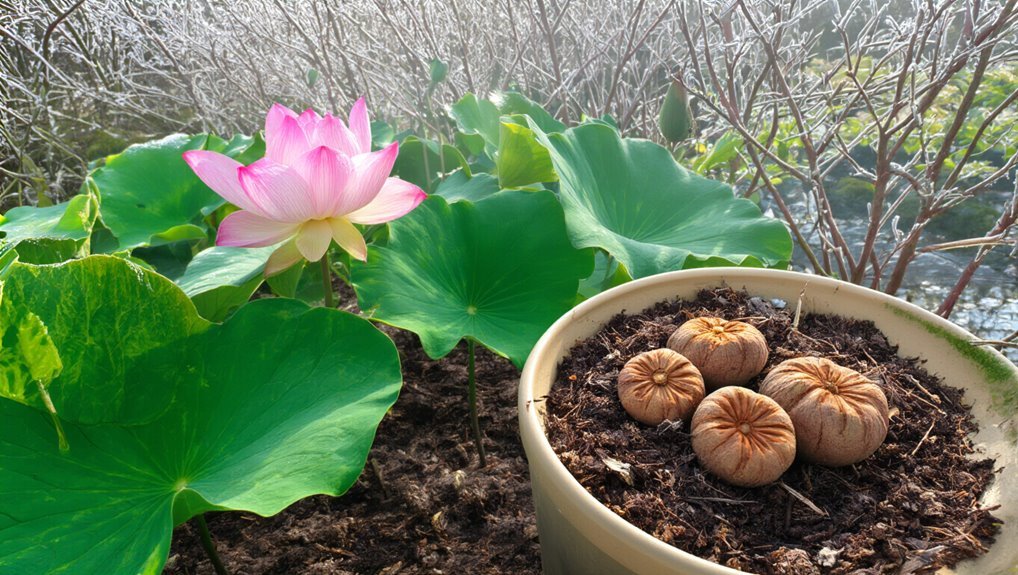
To successfully overwinter your lotus plants, you need to prepare them for the colder months ahead.
Start by cutting back the foliage once it turns yellow. If your lotus is in a pot, move it to a sheltered location, like a garage or basement, where temperatures stay above freezing.
For garden-grown plants, you can either leave them in the pond or dig them up. If you choose to dig them, gently remove the tubers and store them in moist sand or peat in a container.
Ensure they remain at a stable temperature to prevent freezing. Regularly check them throughout winter to ensure they stay moist but not waterlogged.
With these steps, your lotus will thrive come spring!
How to Harvest and Enjoy Your Lotus Blooms
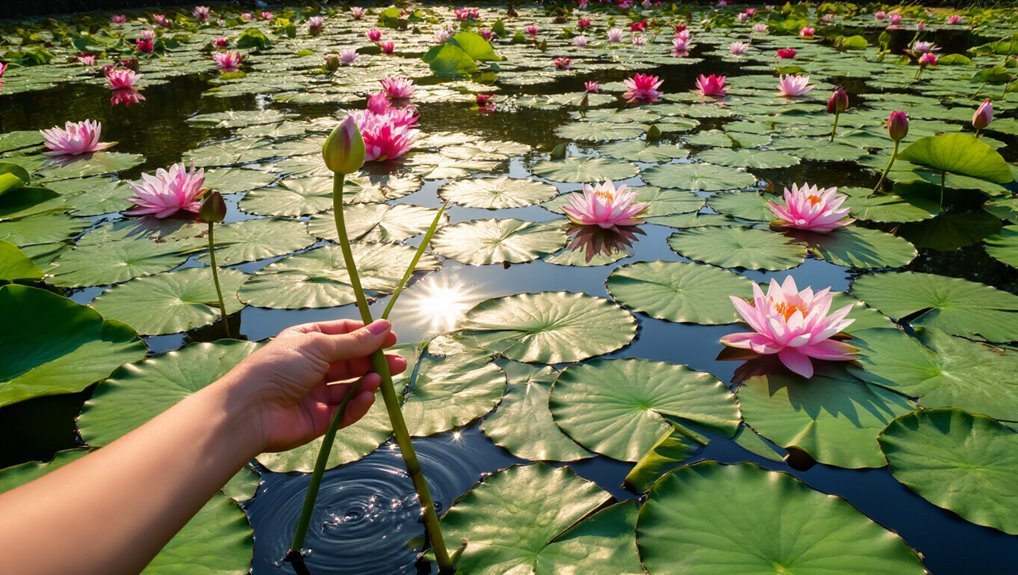
As your lotus plants emerge from their winter slumber, it’s time to think about harvesting those stunning blooms. To ensure you enjoy them at their best, follow these steps:
- Timing: Harvest blooms early in the morning when they’re fully open, offering the best fragrance and color.
- Cutting: Use sharp scissors or garden shears to snip the stem about 6 inches below the flower, avoiding damage to the plant.
- Handling: Place the cut blooms in water immediately to keep them hydrated and fresh.
- Arranging: Enjoy your blooms in a vase, or add them to a special dish, letting their beauty and scent elevate your space or meal.
With these tips, you’ll truly savor your lotus flowers!
Frequently Asked Questions
Can Lotus Flowers Grow in Non-Water Garden Settings?
No, lotus flowers can’t thrive in non-water garden settings. They need submerged roots in water to grow properly. If you want them, consider creating a pond or using large containers filled with water.
How Long Does It Take for Lotus Seeds to Germinate?
Lotus seeds usually germinate within 7 to 30 days, depending on conditions. You might find it fascinating that patience often leads to beautiful blooms, just like waiting for a friend to arrive unexpectedly!
Are Lotus Flowers Toxic to Pets or Humans?
Lotus flowers aren’t toxic to pets or humans, so you don’t have to worry if your furry friends get curious. Just keep an eye on them, as some plants can still cause mild stomach upset.
What Climate Conditions Are Best for Growing Lotus Flowers?
What’s the ideal climate for lotus flowers? They thrive in warm, sunny conditions with temperatures between 70°F and 90°F. Ensure plenty of sunlight and a still water environment for optimal growth and stunning blooms.
Can I Grow Lotus Flowers Indoors Successfully?
Yes, you can grow lotus flowers indoors successfully! Just ensure they have plenty of sunlight, warm temperatures, and a large enough container filled with water. Regular care will help them thrive beautifully in your space.
Conclusion
Growing lotus flowers can be a rewarding experience, with some varieties blooming for up to 100 days in a season! By choosing the right type, preparing a suitable environment, and providing proper care, you’ll create a stunning centerpiece in your garden. Remember, patience is key—these beautiful plants thrive with time. So, get ready to enjoy the serene beauty of your lotus blooms, all while knowing they’ve been cherished for centuries in cultures around the world!